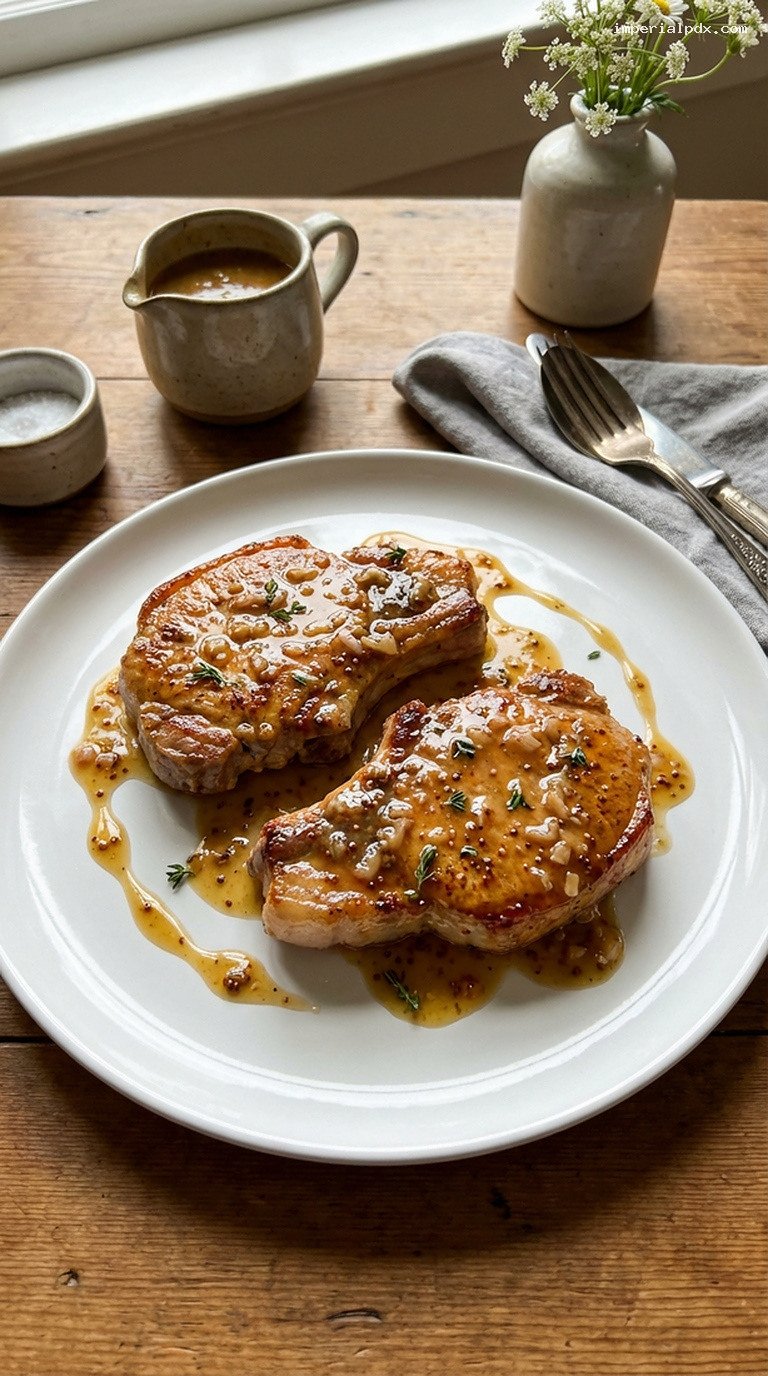
Quick Recipe Version (TL;DR)
Quick Ingredients
- 2 tablespoons unsalted butter, divided
- 1 medium shallot, finely minced (about 2 tablespoons)
- 1 teaspoon fresh thyme leaves (or 1/4 teaspoon dried)
- 1/2 cup apple cider (not vinegar)
- 1/4 cup low-sodium chicken or vegetable broth
- 1 tablespoon Dijon mustard
- 1 tablespoon whole-grain mustard
- 1–2 teaspoons apple cider vinegar, to taste
- 1–2 teaspoons maple syrup or honey, to taste
- Kosher salt and freshly ground black pepper
Do This
- 1. In a medium skillet over medium heat, melt 1 tablespoon butter. Add minced shallot and thyme; cook 2–3 minutes until soft and fragrant.
- 2. If you cooked pork chops or turkey in the pan, leave browned bits in place. If not, let the shallots get lightly golden for extra flavor.
- 3. Pour in apple cider and broth. Scrape up browned bits from the pan with a wooden spoon.
- 4. Bring to a brisk simmer and reduce by about half, 5–7 minutes, until slightly syrupy.
- 5. Whisk in Dijon, whole-grain mustard, 1 teaspoon cider vinegar, and 1 teaspoon maple syrup or honey. Simmer 1–2 minutes.
- 6. Turn heat to low. Whisk in remaining 1 tablespoon cold butter until glossy. Taste and adjust salt, pepper, vinegar, and sweetness. Spoon over pork chops, turkey cutlets, or roasted root vegetables.
Why You’ll Love This Recipe
- Balanced tangy-sweet flavor from real apple cider, mustard, and a touch of maple or honey.
- Turns simple pork chops, turkey cutlets, or roasted veggies into a company-worthy dinner.
- Ready in under 30 minutes, using one pan and everyday ingredients.
- Beginner-friendly: clear steps, easy to rescue if it gets too thick or too tangy.
Grocery List
- Produce: Shallot, fresh thyme (or dried thyme), your choice of pork chops, turkey cutlets, or root vegetables (carrots, parsnips, sweet potatoes, etc.) if serving with the sauce.
- Dairy: Unsalted butter.
- Pantry: Apple cider (not vinegar), low-sodium chicken or vegetable broth, Dijon mustard, whole-grain mustard, apple cider vinegar, maple syrup or honey, kosher salt, black pepper, cooking oil (for searing meat or roasting veggies).
Full Ingredients
Apple Cider Mustard Pan Sauce
- 2 tablespoons unsalted butter, divided (cut into 1-tablespoon pieces and kept cold)
- 1 medium shallot, finely minced (about 2 tablespoons)
- 1 teaspoon fresh thyme leaves, finely chopped
- or 1/4 teaspoon dried thyme, crushed between your fingers
- 1/2 cup apple cider (not apple cider vinegar)
- 1/4 cup low-sodium chicken broth
- or vegetable broth for a vegetarian-friendly sauce
- 1 tablespoon Dijon mustard
- 1 tablespoon whole-grain or coarse-ground mustard
- 1–2 teaspoons apple cider vinegar, to taste
- 1–2 teaspoons pure maple syrup or honey, to taste
- 1/4–1/2 teaspoon kosher salt, to taste
- 1/4 teaspoon freshly ground black pepper, plus more to taste
Suggested Pairings (Optional, Not Included in Nutrition)
- For Pork Chops:
- 4 boneless center-cut pork chops, 3/4–1 inch thick
- 1 tablespoon neutral cooking oil (such as canola or avocado)
- Kosher salt and black pepper
- For Turkey Cutlets:
- 4 turkey cutlets (about 1 1/4 pounds total)
- 1 tablespoon neutral cooking oil
- Kosher salt and black pepper
- For Roasted Root Vegetables:
- 1 1/2 pounds mixed root vegetables (carrots, parsnips, sweet potatoes, turnips), cut into 1-inch chunks
- 2 tablespoons olive oil
- Kosher salt, black pepper, and extra thyme sprigs (optional)
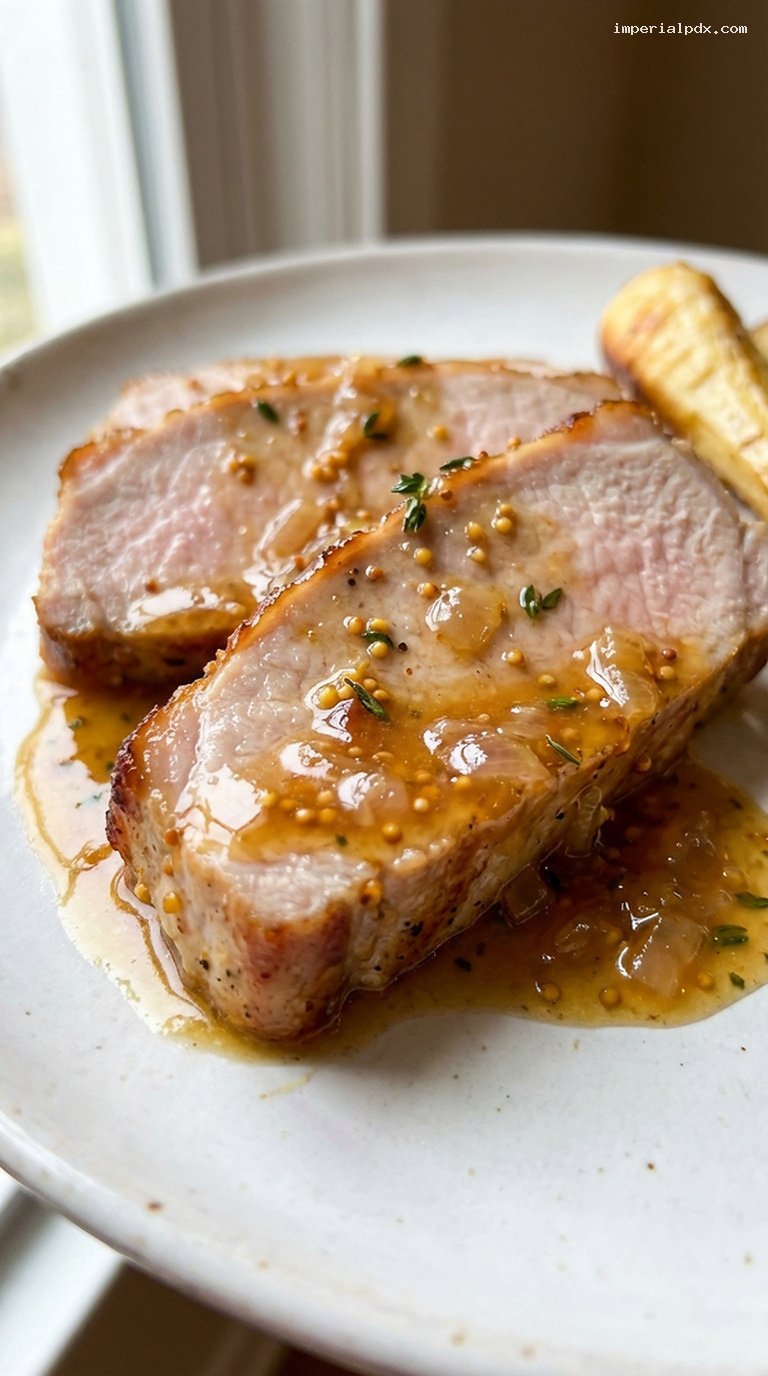
Step-by-Step Instructions
Step 1: Prep your ingredients and pan
Finely mince the shallot and chop the thyme leaves. Measure out the apple cider, broth, mustards, vinegar, and sweetener so they are ready to go. Cut the butter into 1-tablespoon pieces and keep it in the fridge; cold butter helps the sauce emulsify into a glossy finish.
If you are making pork chops or turkey cutlets, sear and cook them first in a medium to large skillet (8–10 inches wide) over medium-high heat with a tablespoon of oil, seasoning the meat with salt and pepper. Once cooked, transfer the meat to a plate, tent loosely with foil to keep warm, and pour off excess fat, leaving about 1 tablespoon in the pan plus all the browned bits. If you are only making the sauce, start with a clean skillet and add 1 tablespoon butter when you begin cooking the shallots.
Step 2: Soften the shallots and thyme
Place the skillet over medium heat. If you cooked meat in the pan, there should still be about 1 tablespoon of fat in the pan; if not, add 1 tablespoon unsalted butter. Once melted and foaming, add the minced shallot and thyme. Cook, stirring often, for 2–3 minutes until the shallots are softened, fragrant, and just beginning to turn golden at the edges. Avoid browning them deeply, which can make the sauce a bit bitter; a pale golden color is perfect.
Step 3: Deglaze with apple cider and broth
Pour in the apple cider and chicken (or vegetable) broth. Immediately use a wooden spoon or spatula to scrape up any browned bits stuck to the bottom of the pan; these add a lot of flavor to your sauce. Increase the heat slightly to bring the mixture to a lively simmer.
Let it bubble steadily, not violently, for 5–7 minutes, stirring occasionally, until the liquid has reduced by about half. You should see the bubbles get slower and the liquid start to look slightly syrupy and coat the back of a spoon.
Step 4: Add mustard, tang, and sweetness
Turn the heat down to medium-low. Whisk in the Dijon mustard and whole-grain mustard until fully dissolved and the sauce looks smooth, with visible whole mustard seeds from the whole-grain mustard. Add 1 teaspoon apple cider vinegar and 1 teaspoon maple syrup or honey to start.
Let the sauce simmer for 1–2 minutes to meld the flavors. Taste carefully. If you want more brightness, add up to 1 additional teaspoon vinegar. If you prefer a slightly sweeter balance, add up to 1 more teaspoon maple syrup or honey. Adjust the salt and pepper a bit at this stage, but remember you will taste again after adding butter.
Step 5: Finish with butter for a glossy, silky sauce
Reduce the heat to low. Add the remaining 1 tablespoon cold butter. Whisk constantly as the butter slowly melts into the sauce, turning it glossy and slightly thickened. This technique, called mounting with butter, gives the sauce a silky texture and beautiful sheen.
If the sauce ever starts to look greasy or the butter seems to separate, remove the pan from the heat and whisk vigorously until it comes back together. Return to very low heat only if needed. The finished sauce should lightly coat the back of a spoon and run in a smooth ribbon when you pour it.
Step 6: Taste, adjust, and serve
Give the sauce a final taste. Add a pinch more salt or pepper if needed. If it is too sharp, whisk in a splash more apple cider or a tiny bit of maple/honey; if it is too sweet, balance it with an extra drop or two of cider vinegar. For a thinner sauce, whisk in an extra tablespoon or two of warm broth; for a thicker, more concentrated sauce, simmer on very low heat for another 1–2 minutes.
Spoon the warm sauce generously over seared pork chops or turkey cutlets, or drizzle it over a platter of roasted root vegetables. Garnish with a few extra fresh thyme leaves or a crack of black pepper just before serving for a fresh, restaurant-style finish.
Pro Tips
- Use real apple cider, not juice: Unfiltered apple cider has deeper flavor and a slight tang that makes the sauce more complex. If you only have clear apple juice, reduce it a little longer for more flavor.
- Do not rush the reduction: Letting the cider and broth reduce until syrupy is what concentrates the tangy-sweet base. If you stop too early, the sauce will taste thin and watery.
- Keep the butter cold: Cold butter incorporates more smoothly and gives you that glossy, restaurant-style finish. Add it off or on very low heat to prevent breaking.
- Taste in layers: Add vinegar and sweetener gradually, tasting after each addition. It is much easier to add more than to fix an overly tangy or sweet sauce.
- Save a little pan fond: If you are cooking meat, avoid scrubbing the pan clean between searing and making the sauce; those browned bits are free flavor boosters.
Variations
- Creamy cider mustard sauce: After reducing the cider and broth, stir in 1/4 cup heavy cream before adding the mustards. Simmer for 2–3 minutes, then finish with butter as directed. This version is especially good with pork and turkey.
- Herb-forward version: Add 1 teaspoon finely chopped fresh rosemary along with the thyme, or finish the sauce with 1 tablespoon chopped fresh parsley for a greener, more herbal flavor.
- Spiced autumn twist: Add a small pinch (1/8 teaspoon) ground cinnamon or allspice to the reducing cider and broth for a subtle warm spice note that pairs beautifully with roasted root vegetables.
Storage & Make-Ahead
This sauce is best freshly made, but it stores surprisingly well. Let the finished sauce cool to room temperature, then transfer to an airtight container and refrigerate for up to 3 days. To reheat, warm gently in a small saucepan over low heat, whisking constantly. If the sauce seems too thick, whisk in a tablespoon or two of warm broth or water. If it loses a bit of its gloss, you can whisk in a small knob (about 1 teaspoon) of cold butter right before serving to bring back the shine.
You can also make the base ahead by reducing the cider, broth, shallots, thyme, and mustards, then refrigerating. When ready to serve, gently reheat, adjust thickness with a splash of broth, and finish with cold butter, vinegar, and sweetener to taste.
Nutrition (per serving)
Approximate values for 1/4 of the sauce (without meat or vegetables): about 110 calories; 9 g fat; 6 g carbohydrates; 0.5 g protein; 0.5 g fiber; 4–5 g sugars; 220 mg sodium (will vary based on broth, salt, and sweetener used).