Quick Recipe Version (TL;DR)
Quick Ingredients
- 1/2 cup (120 ml) soy sauce
- 1/3 cup (80 ml) mirin
- 1/4 cup (60 ml) sake
- 1/4 cup (60 ml) honey
- 1 tbsp rice vinegar
- 1 tbsp finely grated fresh ginger
- 3 garlic cloves, finely minced
- 1/4 cup (60 ml) water + 1 tbsp cornstarch (for slurry)
- 1 tsp toasted sesame oil
- 4 salmon fillets (about 170 g each) or 680 g boneless chicken, cubed
- 1 tsp kosher salt, 1/2 tsp black pepper
- 2 tbsp neutral oil (for pan or grill)
- Sesame seeds and sliced scallions for garnish (optional)
- Cooked rice, for serving (optional)
Do This
- 1. In a small saucepan, combine soy sauce, mirin, sake, honey, rice vinegar, ginger, and garlic.
- 2. Simmer on medium heat 6–8 minutes until slightly reduced, then stir in cornstarch mixed with water; cook until glossy and thick. Finish with sesame oil.
- 3. Cool slightly, then set aside about 1/2 cup glaze for marinating and keep the rest for brushing and serving.
- 4. Season salmon fillets or chicken pieces with salt and pepper. Toss with reserved marinade and chill 15–30 minutes.
- 5. For chicken, thread onto skewers. Grill or pan-sear salmon or skewers over medium-high heat with a little oil until almost cooked through.
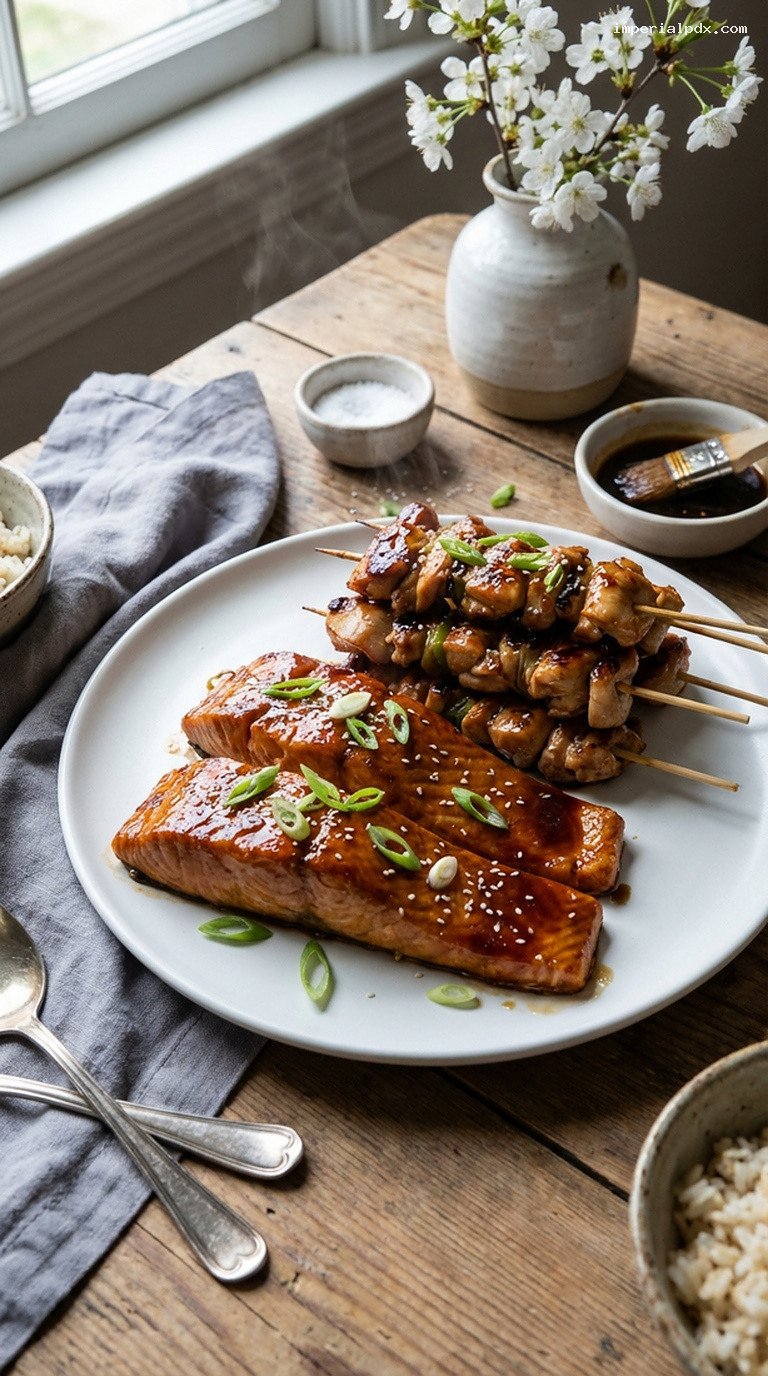
- 6. Brush generously with glaze during the last few minutes of cooking, turning to lacquer all sides until shiny and sticky. Garnish and serve over rice.
Why You’ll Love This Recipe
- Classic Japanese-inspired teriyaki flavor: salty, tangy, sweet, and deeply savory.
- One versatile glaze works beautifully on both salmon fillets and grilled chicken skewers.
- Mostly pantry ingredients; the sauce comes together in about 10 minutes on the stovetop.
- Perfect for weeknights but impressive enough for guests, especially when lacquered until shiny and sticky.
Grocery List
- Produce: Fresh ginger, garlic, scallions (green onions), optional cucumber or salad greens for serving.
- Dairy: None.
- Pantry: Soy sauce, mirin, sake, honey, rice vinegar, cornstarch, toasted sesame oil, neutral cooking oil, sesame seeds, kosher salt, black pepper, rice (for serving, optional).
- Protein: Salmon fillets and/or boneless skinless chicken thighs or breasts.
Full Ingredients
Teriyaki Glaze
- 1/2 cup (120 ml) soy sauce (regular or low-sodium)
- 1/3 cup (80 ml) mirin
- 1/4 cup (60 ml) sake
- 1/4 cup (60 ml) honey
- 1 tbsp rice vinegar
- 1 tbsp finely grated fresh ginger (about a 2.5 cm piece)
- 3 garlic cloves, finely minced
- 1/4 cup (60 ml) water
- 1 tbsp cornstarch
- 1 tsp toasted sesame oil
Salmon Option
- 4 salmon fillets, about 170 g each (skin-on or skinless, 2–3 cm thick)
- 1/2 tsp kosher salt
- 1/4 tsp freshly ground black pepper
- 1 tbsp neutral oil (canola, grapeseed, sunflower, or vegetable oil)
Chicken Skewer Option
- 680 g (about 1.5 lb) boneless skinless chicken thighs or breasts, cut into 2.5 cm (1-inch) cubes
- 1/2 tsp kosher salt
- 1/4 tsp freshly ground black pepper
- 1 tbsp neutral oil (for grill pan or grates)
- 8–10 skewers (if wooden, soak in water for at least 20 minutes)
For Serving (Optional but Recommended)
- 2 tsp toasted sesame seeds
- 2 scallions (green onions), thinly sliced on the diagonal
- Cooked white or brown rice
- Thinly sliced cucumber, steamed broccoli, or a simple green salad
Step-by-Step Instructions
Step 1: Make the teriyaki base
In a small saucepan, combine the soy sauce, mirin, sake, honey, rice vinegar, grated ginger, and minced garlic. Stir well so the honey starts to dissolve into the liquids.
Place the pan over medium heat and bring the mixture just up to a gentle simmer. Once it starts to bubble, reduce the heat to medium-low. You want soft, steady bubbling, not a hard boil, so the sugars do not scorch.
Step 2: Simmer and thicken the glaze
Let the sauce simmer for 6–8 minutes, stirring occasionally, until it smells fragrant and has reduced by roughly one-quarter. The surface should look slightly syrupy but still quite pourable.
In a small bowl, whisk together the water and cornstarch until completely smooth with no lumps. While whisking the simmering sauce, slowly pour in the cornstarch slurry. Continue cooking for 1–2 minutes, stirring constantly, until the glaze turns glossy and thick enough to coat the back of a spoon.
Turn off the heat and stir in the toasted sesame oil. Allow the glaze to cool for at least 5–10 minutes; it will thicken a bit more as it cools.
Step 3: Divide glaze and marinate the protein
Once the teriyaki glaze has cooled slightly, measure out about 1/2 cup (120 ml) into a bowl or zip-top bag. This portion will be used as a quick marinade. Keep the remaining glaze in the saucepan or transfer it to a small bowl for brushing and drizzling later.
For the salmon: Pat the fillets dry with paper towels. Season all over with the kosher salt and black pepper. Place them in a shallow dish or zip-top bag and pour over the 1/2 cup of glaze. Turn to coat evenly. Cover and refrigerate for 15–30 minutes while you prepare the pan or grill.
For the chicken: Place the chicken cubes in a bowl or bag. Season with the salt and pepper, then add the 1/2 cup of glaze. Toss well to coat all pieces. Cover and refrigerate for 15–30 minutes. If using wooden skewers, soak them in water during this time so they do not burn.
Step 4: Prep skewers (for chicken) and your cooking surface
If you are making chicken skewers, thread the marinated chicken pieces onto the soaked or metal skewers, packing them fairly tightly but without squashing them together. Leave a little space at the ends for easy turning.
For grilling: Preheat a gas or charcoal grill to medium-high heat (about 200–230°C / 400–450°F). Clean and lightly oil the grates with a folded paper towel dipped in neutral oil held with tongs.
For pan or grill pan cooking: Preheat a large nonstick or cast-iron skillet (or ridged grill pan) over medium-high heat. Add 1 tbsp neutral oil and swirl to coat the surface evenly.
Step 5: Cook the salmon or chicken
For salmon: Lift the fillets from the marinade, letting excess drip off. Discard any remaining marinade from the dish or bag. Place the salmon skin-side down (if using skin-on) on the grill or in the hot pan. Cook for 3–4 minutes, until the underside is nicely browned and the fish is about two-thirds cooked. Carefully flip and cook another 2–4 minutes, depending on thickness, until the salmon flakes easily and reaches your preferred doneness (about 52–54°C / 125–130°F for medium, or 63°C / 145°F for USDA fully cooked).
For chicken skewers: Shake off excess marinade (discard the left-behind marinade). Place skewers on the grill or in the pan. Cook for 8–10 minutes total, turning every 2–3 minutes, until the outside is nicely browned and the thickest piece reaches 74°C / 165°F in the center.
Step 6: Lacquer with sticky teriyaki glaze
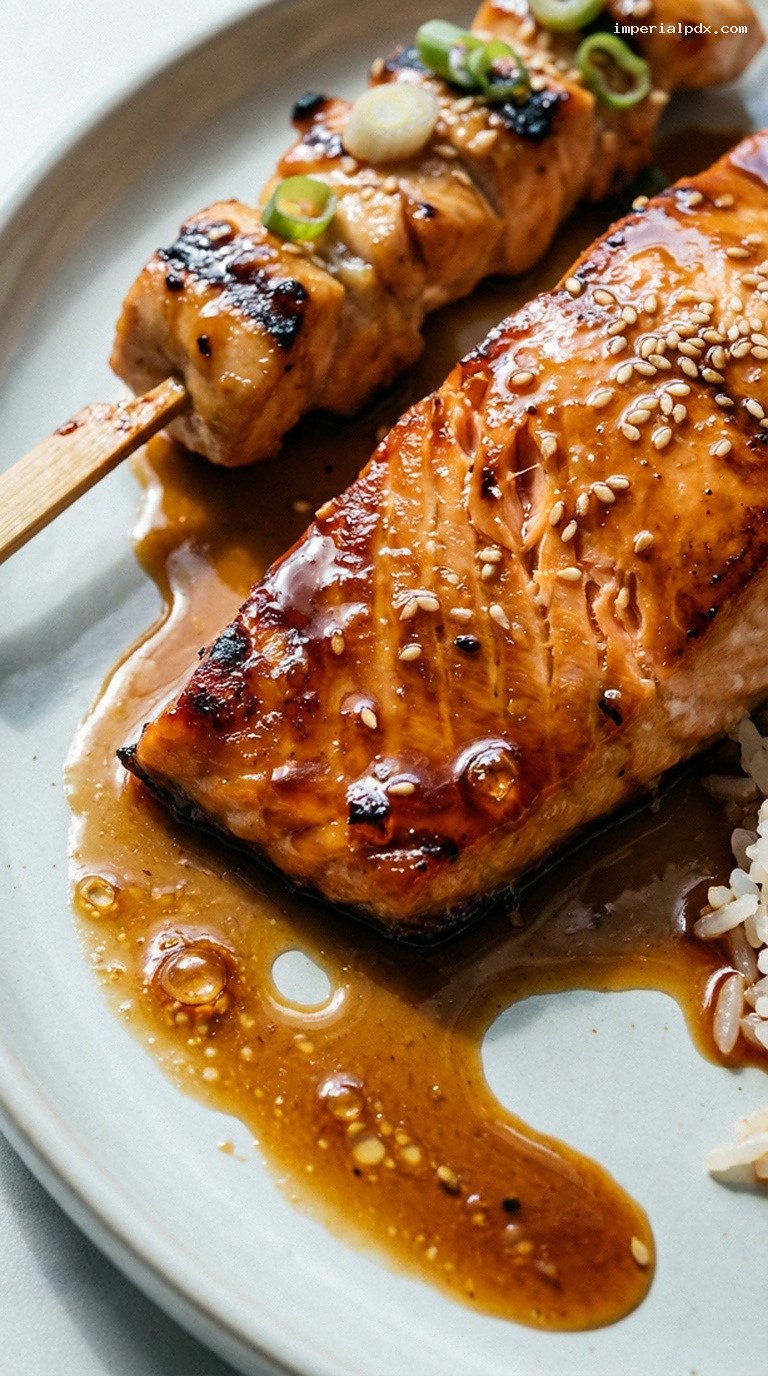
During the last 2–3 minutes of cooking, begin brushing the reserved, clean teriyaki glaze over the salmon fillets or chicken skewers. Turn and brush repeatedly, allowing each layer of sauce to bubble and set before adding the next. This layering is what creates that deep, shiny, restaurant-style lacquer.
Watch the heat at this stage: if it is too high, the sugars in the glaze can burn. Medium or medium-low heat is ideal for the final glazing. Remove the salmon or chicken from the heat as soon as it is cooked through and beautifully glossy with a thick, sticky coating.
Step 7: Garnish and serve
Transfer the glazed salmon fillets or chicken skewers to a serving platter or individual plates. If the glaze has thickened a lot while sitting, you can briefly warm it on low heat or loosen it with 1–2 tsp of water and stir until smooth. Drizzle a little additional warm glaze over the top for extra shine and flavor.
Sprinkle with toasted sesame seeds and sliced scallions. Serve right away over bowls of steamed rice with your choice of vegetables on the side. Offer any remaining glaze at the table for dipping or drizzling.
Pro Tips
- Do not reuse marinade as-is. Any glaze that touched raw meat or fish must be discarded or boiled hard for at least 1–2 minutes before using as a sauce. That is why this recipe separates a clean portion of glaze for brushing and serving.
- Adjust sweetness and saltiness to taste. Teriyaki is meant to be boldly flavored. If you prefer it less sweet, reduce the honey to 3 tbsp; if you like it richer, add 1 extra tbsp of honey.
- Control thickness. If your glaze becomes too thick, simply whisk in 1–2 tsp of water over low heat until it loosens. If it is too thin, simmer for another minute or two to reduce further.
- Use medium heat for the lacquer. High heat can take the glaze from shiny to burnt very quickly. Once you start brushing on the sauce, back the heat down if needed.
- Slice garnish just before serving. Freshly sliced scallions and a last-minute sprinkle of sesame seeds add a bright, fresh contrast to the rich, sticky glaze.
Variations
- Spicy teriyaki: Add 1–2 tsp of sriracha or a pinch of red pepper flakes to the glaze while it simmers for a gentle heat that complements the sweetness.
- Gluten-free version: Use tamari or a certified gluten-free soy sauce in place of regular soy sauce, and double-check labels on mirin and sake to ensure they are gluten-free.
- Teriyaki tofu or vegetables: Press firm tofu, cut into cubes, and pan-sear or bake until crisp, then brush with the glaze. You can also use this sauce to lacquer roasted vegetables like broccoli, eggplant, or mushrooms.
Storage & Make-Ahead
The teriyaki glaze itself keeps very well. Store any unused, untouched glaze (that did not come into contact with raw meat or fish) in an airtight container in the refrigerator for up to 1 week. Rewarm gently over low heat, adding a splash of water if needed to thin.
Cooked salmon or chicken with glaze can be refrigerated in an airtight container for up to 3 days. Reheat gently in a covered skillet over low heat with a spoonful of water, or in the oven at 160°C / 325°F until just warmed through to avoid drying it out.
You can also marinate the chicken or salmon up to 8 hours in advance in the fridge using a portion of the glaze. For food safety, always keep it refrigerated during marinating and discard the used marinade afterward.
Nutrition (per serving)
Approximate values for 1 of 4 servings using salmon (1 fillet plus about 2 tbsp glaze), not including rice or extra sides: about 480 calories; 30 g protein; 21 g fat; 36 g carbohydrates; 26 g sugars; 950 mg sodium. Values will vary based on the exact size of your fillets or chicken portions, the amount of glaze you use, and the specific brands of ingredients.