Quick Recipe Version (TL;DR)
Quick Ingredients
- 1 lb (450 g) skin-on trout fillet, pin bones removed
- 1/4 cup (60 g) kosher salt (Diamond Crystal; use less if table salt)
- 1/4 cup (50 g) granulated sugar
- 1 packed Tbsp orange zest (from 1 large orange)
- 1 tsp lemon zest
- 2 tsp coarsely cracked black pepper
- 1/2 tsp pink peppercorns, lightly crushed (optional)
- 1 Tbsp chopped fresh dill or fennel fronds (optional)
- To serve: lemon or orange wedges, dill, olive oil, rye bread or crackers, crème fraîche or yogurt (optional)
Do This
- 1. Check trout for pin bones and remove with tweezers; pat very dry with paper towels.
- 2. In a bowl, mix salt, sugar, orange zest, lemon zest, black pepper, pink peppercorns, and dill.
- 3. Spread half the cure in a shallow dish just larger than the trout; lay trout skin-side down on top.
- 4. Pack the remaining cure evenly over the flesh. Wrap tightly in plastic and weigh down with a small plate and a can or jar.
- 5. Refrigerate 24–36 hours, turning the fish once halfway. It is ready when firm to the touch and deeper in color.
- 6. Rinse off the cure quickly, pat very dry, chill uncovered 30–60 minutes, then slice very thinly on a diagonal and serve.
Why You’ll Love This Recipe
- Delivers restaurant-style cured fish at home with just a handful of ingredients.
- Bright citrus and cracked pepper make the trout incredibly fragrant and elegant.
- Almost all of the time is hands-off curing in the fridge.
- Perfect make-ahead centerpiece for brunch boards, picnics, or light starters.
Grocery List
- Produce: 1 large orange, 1 lemon, small bunch fresh dill or fennel fronds (optional), lemon/orange wedges for serving
- Dairy: Crème fraîche, sour cream, or full-fat plain yogurt (optional for serving)
- Pantry: 1 lb (450 g) skin-on trout fillet, kosher salt, granulated sugar, whole black peppercorns, pink peppercorns (optional), extra-virgin olive oil, rye bread or hearty crackers
Full Ingredients
For the Citrus-Pepper Cured Trout
- 1 lb (450 g) skin-on trout fillet, center-cut if possible, pin bones removed
- 1/4 cup (60 g) kosher salt
- If using Diamond Crystal: 1/4 cup (60 g)
- If using Morton kosher or fine sea salt: reduce to 3 Tbsp (about 45 g) to avoid over-salting
- 1/4 cup (50 g) granulated sugar
- 1 packed Tbsp finely grated orange zest (from 1 large orange)
- 1 tsp finely grated lemon zest
- 2 tsp coarsely cracked black pepper (from about 2 tsp whole peppercorns)
- 1/2 tsp pink peppercorns, lightly crushed (optional, for floral aroma and color)
- 1 Tbsp finely chopped fresh dill or fennel fronds (optional but recommended)
To Serve (Optional but Delicious)
- Lemon or orange wedges
- Extra fresh dill or fennel fronds
- Extra-virgin olive oil, for drizzling
- Rye bread, sourdough, or crispbread/crackers
- Crème fraîche, sour cream, or thick plain yogurt
- Thinly sliced red onion or quick-pickled onions (optional)
- Capers (optional)
Step-by-Step Instructions
Step 1: Prep the trout fillet
Lay the trout fillet skin-side down on a clean cutting board. Run your fingertips gently along the center line of the flesh to feel for pin bones. If you find any, grip them with clean fish tweezers or a small pair of kitchen-safe pliers and pull them out in the direction they are lying so you do not tear the flesh.
Once the bones are removed, use paper towels to pat the fish very dry on both the flesh and skin sides. Removing excess moisture now helps the cure work more evenly and gives you a nicer final texture. Trim off any thin, ragged belly pieces if you like; these cure faster and can become a bit salty. You can save trimmed bits for a quick cook in a pan later.
Step 2: Mix the citrus-pepper cure
In a small mixing bowl, combine the salt and sugar. Add the orange zest and lemon zest, rubbing them into the salt-sugar mixture with your fingertips for 20–30 seconds. This releases the citrus oils and perfumes the cure. Stir in the coarsely cracked black pepper, pink peppercorns (if using), and chopped dill or fennel fronds.
You are looking for a mixture with the texture of slightly damp sand that smells bright and peppery. Taste a tiny pinch: it should be noticeably salty and sweet with a bold citrus note and a gentle pepper heat.
Step 3: Pack the trout in the cure
Choose a shallow non-reactive dish (glass, ceramic, or stainless steel) just a bit larger than the trout fillet. Sprinkle about half of the cure mixture evenly over the bottom of the dish, roughly in the shape of your fillet, creating a thin, even bed.
Lay the trout on top, skin-side down, pressing lightly so the cure makes good contact with the skin. Sprinkle the remaining cure evenly over the flesh side, pressing it gently so it adheres and coats the whole surface, right up to the edges. You should not see any bare spots of fish; add a pinch more salt and sugar in equal parts if your fillet is quite large and a bit exposed.
Step 4: Wrap, weigh, and start curing
Cover the trout tightly with plastic wrap, pressing it directly against the surface of the fish, then wrap the entire dish well. Place a small plate or another flat dish directly on top of the wrapped fish and add a light weight, such as a can of tomatoes or a jar. This gentle pressure helps the cure draw out moisture and gives the trout a silky, dense texture.
Transfer the weighted dish to the refrigerator and note the time. During the first hour or two, the salt and sugar will draw liquid out of the fish, creating a fragrant brine in the dish. This is exactly what you want.
Step 5: Cure in the fridge (24–36 hours)
Let the trout cure in the refrigerator for at least 24 hours and up to 36 hours, depending on the thickness of your fillet and how firm/salty you prefer it. About halfway through the curing time (after 12–18 hours), carefully unwrap the fish, flip it flesh-side down into the brine, rewrap, reweight, and return it to the fridge. Flipping helps it cure evenly.
To test for doneness, press the thickest part of the fillet with a clean finger. It should feel noticeably firmer than when you started, almost like the pad at the base of your thumb, and the color will look deeper and slightly translucent. If it still feels very soft in the center, give it another 4–6 hours.
Step 6: Rinse, dry, and chill
When the trout is cured to your liking, remove it from the dish and discard the briny cure. Hold the fillet under a gentle stream of cold running water, quickly rinsing off any remaining salt, sugar, and pepper. Do not soak it; just rinse briefly. Pat the trout very dry on both sides with plenty of paper towels.
Place the dried fillet on a rack set over a tray or on a clean plate, skin-side down, uncovered, in the refrigerator for 30–60 minutes. This short rest allows the surface to dry slightly and form a delicate, tacky layer that makes slicing easier and improves the glossy finish of the cured fish.
Step 7: Slice and serve
For ultra-thin, neat slices, place the cured trout in the freezer for 10–15 minutes to firm it just a bit. Using a long, very sharp knife, hold the blade at a shallow angle and slice the trout diagonally across the grain into thin, almost translucent slices, starting at the tail end and working toward the head end. Aim for slices about 2–3 mm thick.
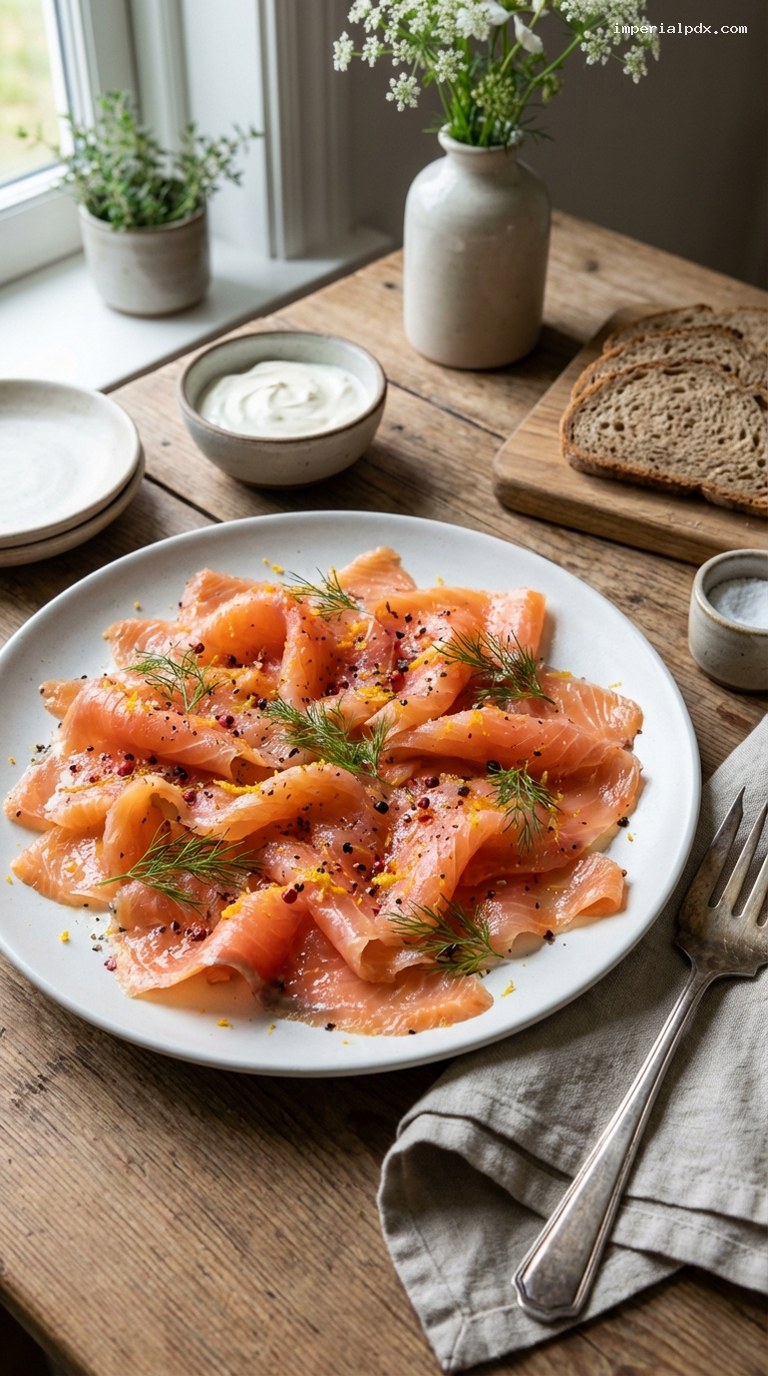
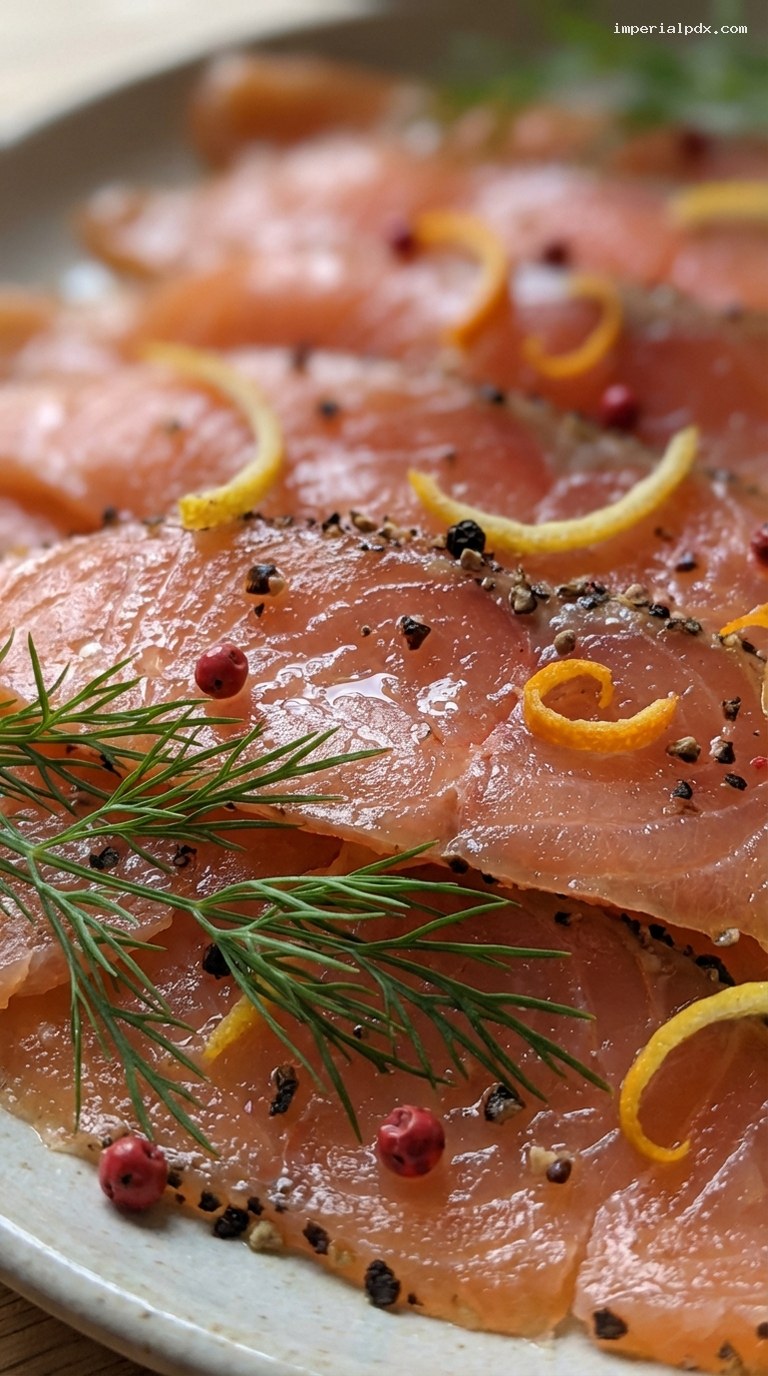
Fan the slices on a chilled plate or platter. Garnish with small sprigs of dill or fennel fronds, a twist of freshly cracked black pepper, and perhaps a few very fine strands of fresh orange zest. Serve with lemon or orange wedges, a drizzle of good olive oil, and accompaniments like rye bread or crackers, crème fraîche or yogurt, and pickled onions or capers. Enjoy it chilled, not icy cold, so the citrus and pepper aromas really come through.
Pro Tips
- Choose fresh, high-quality fish: Ask your fishmonger for the freshest possible trout, preferably previously frozen or “sushi-grade” if you plan to enjoy it very lightly cured. The cleaner and fresher the fish, the better the flavor and safety.
- Adjust cure time to thickness: A very thin fillet may be perfect at 18–24 hours, while a thick center-cut may need close to 36 hours. Use texture (firm but still supple) as your main guide.
- Control the salt level: If you are sensitive to salt or your fillet is quite thin, rinse the fish a bit more thoroughly and slightly earlier (around 20–22 hours), then taste a sliver and adjust next time.
- Slice with the right knife: A long, thin-bladed carving or slicing knife is ideal. Wipe the blade with a damp cloth between cuts for the cleanest, most translucent slices.
- Flavor variations: You can increase the amount of orange zest for a bolder citrus punch, or add a pinch of crushed coriander or fennel seed alongside the black pepper for extra aroma.
Variations
- Grapefruit-lime cure: Swap the orange zest for grapefruit zest and the lemon zest for lime zest. Add an extra teaspoon of sugar to balance grapefruit’s slight bitterness and keep the cracked black pepper as is.
- Herb-heavy cure: Increase the fresh dill or fennel fronds to 3 Tbsp and add 1 Tbsp finely chopped chives. This version is lovely served with boiled new potatoes and a mustard-dill sauce.
- Spicy citrus cure: Add 1/2–1 tsp crushed red pepper flakes or Aleppo pepper to the cure, along with the black pepper, for a gentle heat that pairs beautifully with the orange and lemon.
Storage & Make-Ahead
Cured trout is an excellent make-ahead dish. Once cured, rinsed, and dried, keep the fillet whole, tightly wrapped in parchment and then plastic wrap, in the coldest part of your refrigerator for up to 3 days. Slice just before serving for the best texture and moisture. If you have leftovers after slicing, arrange the slices in a shallow container, cover tightly, and refrigerate for up to 2 days; press a piece of parchment directly onto the surface to minimize air contact. Do not freeze fully cured, sliced trout, as the delicate texture will suffer. Always keep the fish chilled and discard it if it develops any off odors or looks dull or slimy.
Nutrition (per serving)
Approximate values per appetizer serving (about 1/6 of the recipe, cure rinsed off): 150 calories; 18 g protein; 8 g fat; 1 g carbohydrates; 0 g fiber; 1 g sugar; 600 mg sodium. Exact numbers will vary based on the trout’s fat content, how much cure remains on the fish, and your serving accompaniments (bread, dairy, olive oil, etc.).