Quick Recipe Version (TL;DR)
Quick Ingredients
- 900 g (2 lb) center-cut, skin-on salmon fillet, pin bones removed
- 2 medium beetroots (about 250 g), peeled and coarsely grated (about 2 cups)
- 1/4 cup (60 g) coarse kosher salt
- 1/4 cup (50 g) granulated sugar
- 1 tbsp coarsely cracked black peppercorns
- Zest of 1 lemon and 1 small orange
- 1 small bunch fresh dill, roughly chopped
- 2 tbsp gin or vodka (optional)
- To serve: rye bread or crispbread, crème fraîche, lemon wedges, extra dill
Do This
- 1. Check salmon for pin bones and remove them; pat the fillet very dry with paper towels.
- 2. In a bowl, mix grated beetroot, salt, sugar, pepper, citrus zests, dill, and gin/vodka until juicy.
- 3. Line a small rimmed tray with overlapping plastic wrap; spread half the beet cure in a salmon-sized rectangle.
- 4. Lay salmon skin-side down on the cure, spread remaining cure evenly on top, and wrap tightly in plastic; weight with a small pan.
- 5. Refrigerate at 4°C / 40°F or colder for about 36 hours, turning the wrapped salmon every 12 hours.
- 6. Unwrap, scrape or briefly rinse off cure, pat completely dry, chill 30 minutes, then slice very thinly on a diagonal to serve.
Why You’ll Love This Recipe
- Jewel-toned beet cure tints the salmon a deep magenta at the edges with a beautiful ombré interior.
- Classic Scandinavian-style gravlax flavor: silky salmon, fresh dill, citrus, and gentle sweetness.
- Almost entirely hands-off: a few minutes of prep, then the fridge does the work.
- Perfect make-ahead centerpiece for brunch, parties, or elegant canapés.
Grocery List
- Produce: 2 medium beetroots, 1 lemon, 1 small orange (optional but recommended), 1 small bunch fresh dill, extra dill and lemon wedges for serving, optional red onion or shallot for pickling.
- Dairy: Crème fraîche or sour cream (for serving, optional).
- Pantry: Center-cut skin-on salmon fillet (about 900 g / 2 lb), coarse kosher salt, granulated sugar, whole black peppercorns, gin or vodka (optional), rye bread or crispbread, capers or pickled onions, plastic wrap or parchment paper.
Full Ingredients
For the Beet-Cured Salmon
- 900 g (2 lb) center-cut salmon fillet, skin on, about 4–5 cm (1.5–2 inches) thick, pin bones removed
- 2 medium raw beetroots (about 250 g total), peeled and coarsely grated (about 2 tightly packed cups)
- 1/4 cup (60 g) coarse kosher salt
- If using Diamond Crystal: use full 1/4 cup (60 g).
- If using Morton kosher salt: reduce slightly to 3 tbsp (about 45 g) to avoid over-salting.
- 1/4 cup (50 g) granulated sugar
- 1 tbsp coarsely cracked black peppercorns
- Finely grated zest of 1 lemon (about 1 tbsp)
- Finely grated zest of 1 small orange (about 1 tbsp, optional for extra floral citrus notes)
- 1 small bunch fresh dill, roughly chopped (about 30 g / 1 loosely packed cup of fronds)
- 2 tbsp gin or vodka (optional but delicious for a subtle botanical aroma)
To Serve (Optional but Recommended)
- Rye bread, sourdough, or crispbread
- Crème fraîche or sour cream
- Lemon wedges
- Extra fresh dill fronds
- Capers, pickled onions, or thinly sliced red onion
Step-by-Step Instructions
Step 1: Choose and prep the salmon
Select a fresh, high-quality, skin-on salmon fillet, ideally center-cut so the thickness is fairly even (about 4–5 cm / 1.5–2 inches). For safety, use salmon that has been frozen to at least -20°C / -4°F for 7 days, or purchase sushi-grade fish from a trusted fishmonger. This helps reduce the risk of parasites when eating fish that is not heat-cooked.
Place the salmon skin-side down on a clean board. Run your fingertips along the center line to feel for pin bones. Use clean tweezers or fish bone pliers to pull them out, gripping firmly and pulling in the direction they are lying to avoid tearing the flesh. Pat the salmon very dry on all sides with paper towels; a dry surface helps the cure work evenly.
Step 2: Make the beet and dill cure mixture
In a medium mixing bowl, combine the grated beetroot, kosher salt, sugar, cracked black pepper, lemon zest, orange zest (if using), and chopped dill. If using, pour in the gin or vodka. Use a spoon or your hands (wear gloves to avoid staining) to mix everything thoroughly for 1–2 minutes.
As you mix, the salt and sugar will start drawing moisture from the beets, creating a vivid magenta, slightly syrupy mixture. This juicy texture is ideal: it helps the cure cling to the salmon and transfers the beet color and aromatics into the fish.
Step 3: Pack the salmon in the cure and wrap tightly
Line a small rimmed baking sheet or shallow dish with two large overlapping sheets of plastic wrap, long enough to fully wrap the salmon. Lightly oil the wrap or line with a sheet of baking parchment if you are concerned about sticking.
Spread half of the beet cure on the plastic wrap in a rectangle just a bit smaller than the fillet, about 0.5–1 cm (1/4–1/3 inch) thick. Place the salmon, skin-side down, onto this beet layer. Spread the remaining beet cure evenly over the top and sides of the salmon, pressing gently so the cure fully coats the flesh in an even layer.
Pull the plastic wrap tightly up and over the salmon, pressing out any air pockets, and wrap very snugly. Add another layer of wrap if needed; you want the juices to stay contained. Place the wrapped salmon in the dish. Set a smaller flat tray, plate, or cutting board on top and add a light weight (such as a small jar or can). This gentle pressure helps the cure penetrate more evenly.
Step 4: Cure in the refrigerator
Transfer the weighted, wrapped salmon to the refrigerator. Cure at 4°C / 40°F or colder for about 36 hours. Turn the whole package over every 12 hours so the fish cures evenly in its own juices; you will notice more liquid accumulating as time goes on.
After about 24 hours, you can start checking the texture. Carefully unwrap a corner and gently press the thickest part of the fillet: it should feel noticeably firmer than when you started but still supple. For a lightly cured, more delicate gravlax, 24–30 hours may be enough. For a firmer, slightly saltier result with deeper color, go up to 36–48 hours total. Rewrap tightly after each check.
Step 5: Rinse (or scrape), dry, and chill
When the salmon feels firm to the touch and smells clean, fresh, and pleasantly herbaceous, it is ready. Unwrap it over the sink or a tray to catch any juices. Scrape off most of the beet and dill cure with a spoon or your hands. At this point, you have two options:
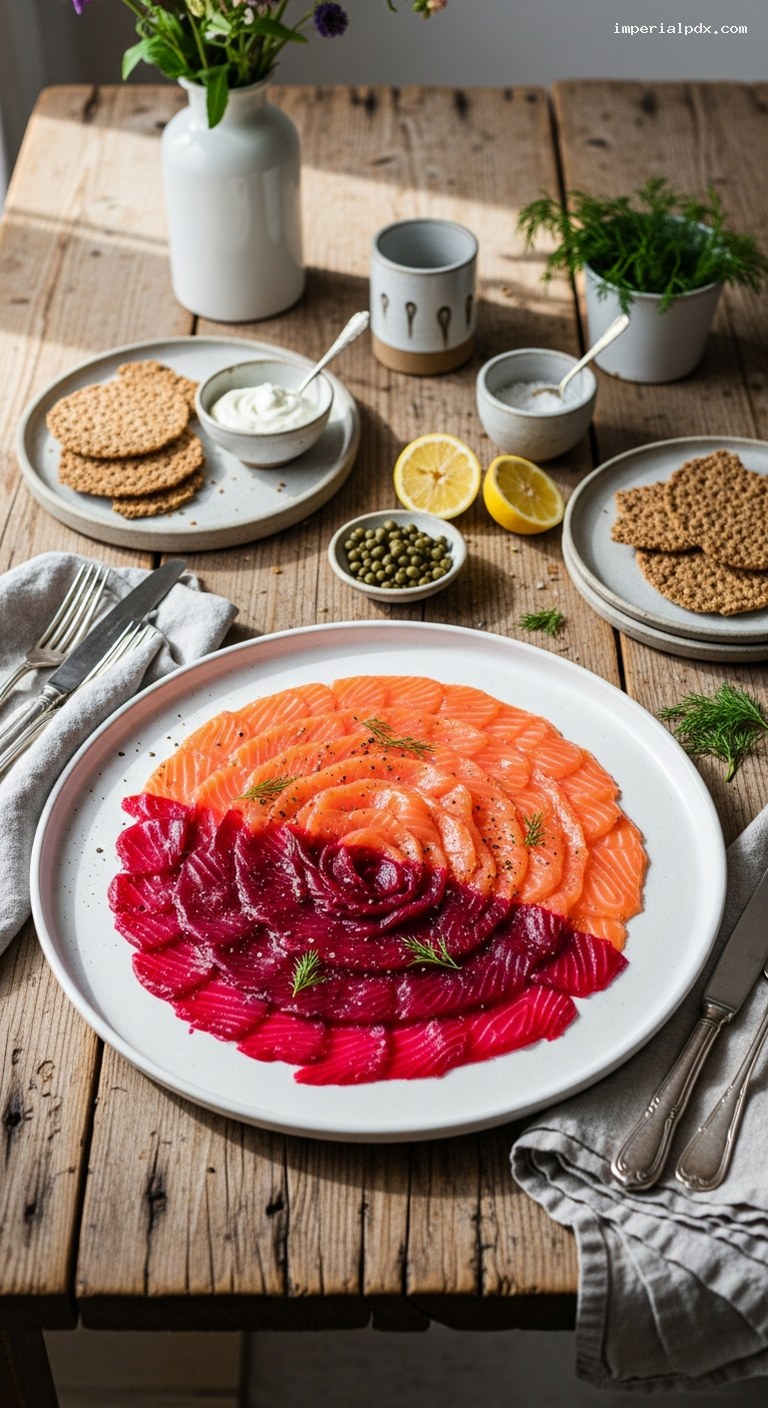
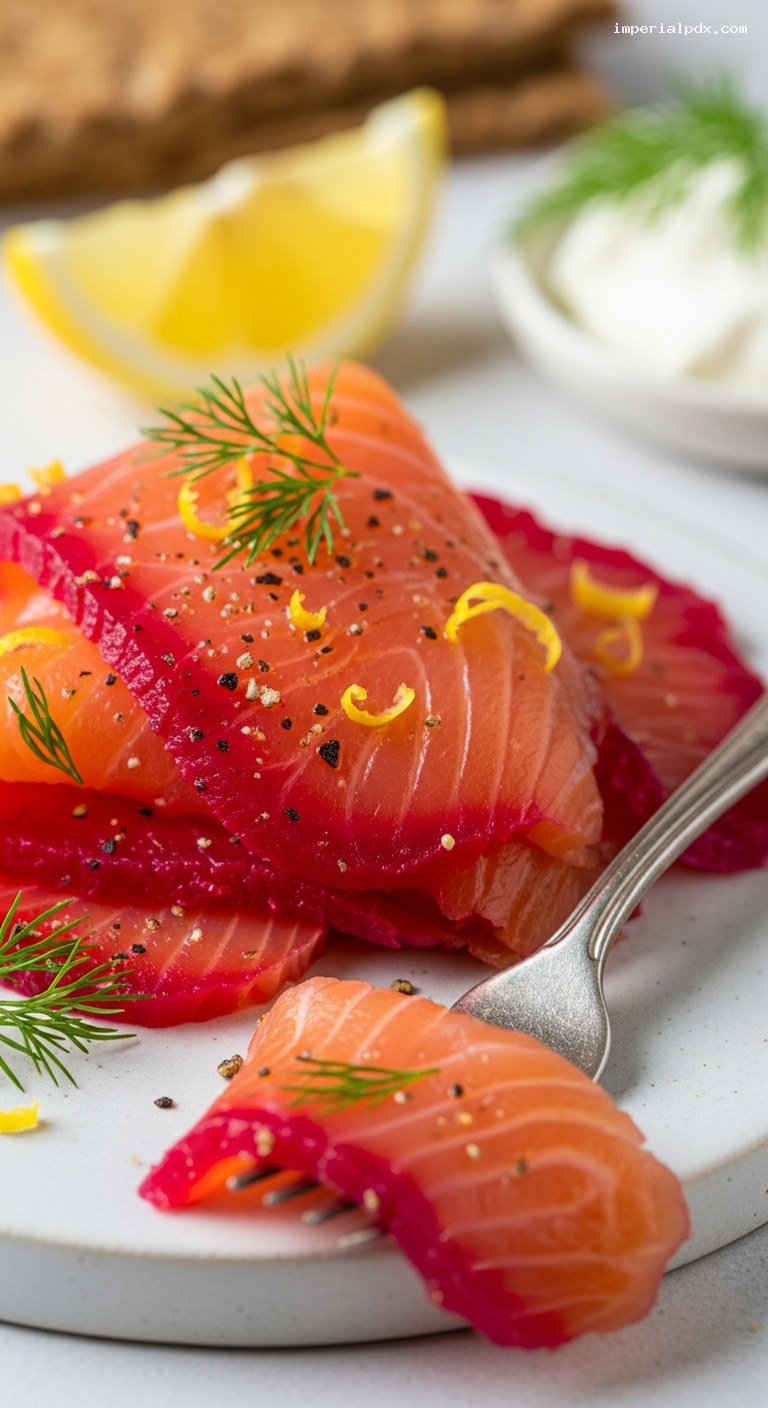
For a more intense outer flavor, simply scrape off the cure thoroughly and move on. For a milder surface flavor, briefly and gently rinse the salmon under cold running water to remove the excess cure, then pat it completely dry with plenty of paper towels. The flesh should be glossy, firm, and stained a deep magenta around the edges, fading to orange-pink toward the center.
Place the cured salmon, uncovered or loosely covered, flesh-side up on a clean plate. Chill in the refrigerator for about 30 minutes to firm up further and make slicing easier.
Step 6: Slice and serve
Using a long, sharp knife (a salmon slicer or carving knife is ideal), hold the salmon at a slight angle, skin-side down. Starting at the thinner tail end, slice in long, smooth strokes, cutting very thin slices (about 2–3 mm) on a slight diagonal. Let the knife glide rather than sawing; this helps keep the slices neat and silky.
Stop slicing when you reach the skin, then lay each slice on a platter, allowing the magenta edges to show. Arrange in gentle folds or overlapping fans. Garnish with extra dill fronds and lemon wedges. Serve with rye bread or crispbread, small dollops of crème fraîche, and capers or pickled onions. Enjoy the gravlax slightly chilled, not ice-cold, so the texture stays tender and the flavors are more expressive.
Pro Tips
- Choose the right cut: A center-cut fillet that is evenly thick gives you more consistent curing and prettier slices. Very thin tail pieces can over-cure quickly.
- Control the saltiness: For a gentler cure, stop at 24–30 hours; for a more assertive, firmer gravlax, cure up to 48 hours. Remember that the curing continues very slightly even after you remove the beet mixture.
- Slice as thinly as you can: Chill the salmon well and use a very sharp, long-bladed knife. Cutting in long strokes at a shallow angle gives elegant, translucent slices.
- Wear gloves for the beets: Beetroot will stain your hands and cutting board. Disposable gloves and a washable, non-porous board make cleanup easier.
- Stay food-safe: Keep the salmon refrigerated at or below 4°C / 40°F at all times, and use previously frozen or sushi-grade salmon when serving cured but not heat-cooked fish.
Variations
- Classic (no beet) gravlax: Omit the beetroot. Increase the dill to about 2 cups loosely packed, and add 1–2 tbsp crushed coriander seeds or juniper berries for a more traditional Scandinavian flavor.
- Citrus-forward gravlax: Add zest of 1 extra lemon and 1 extra orange, plus a splash of dry white wine instead of gin or vodka. The flavor will lean brighter and more aromatic, with a lighter color.
- Spiced beet gravlax: Add 1 tsp ground coriander and 1/2 tsp ground fennel or caraway seeds to the beet cure. These spices pair beautifully with rye bread and give the gravlax a gently warming, complex aroma.
Storage & Make-Ahead
Gravlax is ideal for making ahead. Once cured and dried, wrap the salmon tightly in plastic wrap or beeswax wrap, then in foil, and store it in the refrigerator at or below 4°C / 40°F. It will keep its best texture and flavor for about 4–5 days after curing. Slice only what you plan to serve and keep the rest wrapped to prevent drying out.
For longer storage, you can freeze the cured, unsliced salmon. Wrap it tightly as above, place in a freezer bag, press out excess air, and freeze for up to 2 months. Thaw overnight in the refrigerator before slicing. Because gravlax is served cold and thinly sliced, it thaws very well and remains silky when handled gently.
Nutrition (per serving)
Approximate values per serving (about 90 g / 3 oz gravlax, without bread or toppings): 200 kcal; 23 g protein; 11 g fat; 2 g carbohydrates; 1 g sugar; 0 g fiber; approximately 900–1,000 mg sodium (this will vary depending on cure time and how thoroughly the cure is removed). These numbers are estimates and will vary with the specific salmon, salt brand, and serving size.