Quick Recipe Version (TL;DR)
Quick Ingredients
- 1.4 kg (3 lb) pork shoulder, well-marbled, chilled
- 600 g (1 1/3 lb) beef chuck, chilled
- 30 g kosher salt (about 2 tbsp Diamond Crystal)
- 5 g pink curing salt #1 (Prague Powder #1)
- 8 cloves garlic, finely minced (about 3 tbsp)
- 2 tbsp dried marjoram
- 2 tsp freshly ground black pepper
- 1 tsp sugar
- 1/2 tsp ground allspice (optional, traditional)
- 200 ml (3/4 cup + 1 tbsp) ice-cold water
- 3.5–4 m (12–14 ft) hog casings, 32–35 mm, soaked
- Wood chips/chunks for smoking (apple, cherry, or hickory)
Do This
- 1. Cut pork and beef into 2.5 cm (1 inch) cubes, chill until very cold but not frozen.
- 2. Grind meat through a coarse plate; keep everything as cold as possible.
- 3. Mix ground meat with salts, spices, garlic, and ice-cold water until sticky and well-bound; refrigerate 8–12 hours.
- 4. Soak and rinse hog casings; load onto sausage stuffer.
- 5. Stuff sausages firmly but not too tight; twist into 15–18 cm (6–7 inch) links.
- 6. Air-dry links, then smoke at 65–80°C (150–175°F) until internal temp reaches 68–70°C (155–158°F).
- 7. Rinse with cool water, chill completely, let bloom at room temp 30–60 minutes; slice and serve or chill for later.
Why You’ll Love This Recipe
- Classic Polish-inspired kielbasa flavor: garlicky, gently smoky, and fragrant with marjoram.
- Coarse, juicy texture that slices beautifully for grilling, pan-searing, or charcuterie boards.
- Step-by-step guidance for home smokers, including safe curing and easy timing.
- Makes a big batch that freezes well for quick, hearty meals later.
Grocery List
- Produce: Garlic, fresh herbs for garnish (optional: parsley or marjoram).
- Dairy: None required.
- Pantry: Kosher salt, pink curing salt #1, dried marjoram, black pepper, sugar, ground allspice, hog casings, wood chips/chunks for smoking.
Full Ingredients
Meat & Fat
- 1.4 kg (3 lb) pork shoulder (pork butt), well-marbled, excess silverskin removed
- 600 g (1 1/3 lb) beef chuck roast, trimmed of gristle
Cure & Seasonings
- 30 g kosher salt (about 2 tbsp Diamond Crystal; if using Morton’s, about 1 tbsp + 1 tsp — weighing is strongly recommended)
- 5 g pink curing salt #1 (Prague Powder #1, 6.25% sodium nitrite) – about 1 level tsp, but weigh if possible
- 8 medium cloves garlic, very finely minced or pressed (about 3 tbsp packed)
- 2 tbsp dried marjoram
- 2 tsp freshly ground black pepper
- 1 tsp sugar (white or light brown)
- 1/2 tsp ground allspice (optional but traditional and delicious)
Liquid
- 200 ml (3/4 cup + 1 tbsp) ice-cold water, or a mix of water and crushed ice
Casings
- 3.5–4 m (12–14 ft) natural hog casings, 32–35 mm (usually one standard “hank” portion is plenty)
For Smoking
- Wood chips or chunks: apple, cherry, or a mild hickory are ideal
- Smoker, kettle grill set up for indirect heat, or electric smoker with good temperature control
Step-by-Step Instructions
Step 1: Chill and Prep the Meat
Cut the pork shoulder and beef chuck into roughly 2.5 cm (1 inch) cubes. Trim away any heavy connective tissue or silverskin, but keep the fat – it is essential for juicy sausage.
Spread the cubes on a tray in a single layer and place in the freezer for 20–30 minutes, just until the surface is very cold and the meat is starting to firm up. Cold meat grinds cleaner and helps maintain a good texture.
While the meat chills, set up your grinder with a coarse plate (8–10 mm), and place the grinder parts and a large mixing bowl in the refrigerator or freezer to chill as well.
Step 2: Coarse-Grind the Meat
Working in batches, grind the chilled pork and beef through the coarse plate into the chilled mixing bowl. Alternate pork and beef as you feed them into the grinder so they distribute evenly.
If at any point the meat starts to smear or feel soft, pause and chill it again for 10–15 minutes, then continue. Keeping the meat very cold (just above freezing) is one of the keys to a juicy, well-textured sausage.
Step 3: Season, Cure, and Mix to Develop Bind
To the ground meat, add the kosher salt, pink curing salt #1, minced garlic, dried marjoram, black pepper, sugar, and allspice (if using). Pour in the ice-cold water.
Using clean hands, mix thoroughly for 3–5 minutes. At first the mixture will look loose, then it will start to thicken and become sticky and cohesive. This “sticky” stage means the proteins have bound and will give you a firm but juicy texture. Do not skip this step.
Optional but recommended: take a small spoonful of the mixture and pan-fry it in a skillet until cooked through. Taste and adjust seasoning slightly if needed (more pepper, garlic, or marjoram), mixing very thoroughly again if you add anything.
Cover the bowl tightly and refrigerate 8–12 hours, or overnight. This rest lets the cure distribute evenly and the flavors develop.
Step 4: Prepare the Casings and Stuffing Equipment
At least 30–60 minutes before stuffing, rinse the hog casings under cool running water. Then soak them in a bowl of fresh, lukewarm water to soften. Run water through each length to flush out excess salt and check for any holes.
Set up your sausage stuffer (or grinder with stuffing attachment) according to the manufacturer’s instructions. Lightly oil the stuffing tube. Slide the open end of a casing over the tube and gently gather most of the length onto the tube, leaving 10–15 cm (4–6 inches) free at the end for tying.
Step 5: Stuff and Link the Sausages
Transfer the chilled sausage mixture into the stuffer. Start cranking slowly until the meat just reaches the end of the tube. Tie a knot in the end of the casing, or pinch and twist to close it off.
Stuff the casing firmly but not so tight that it risks bursting. Aim for an even, gently plump feel – you can always compress lightly with your fingers as the sausage comes off the tube. When you reach the end of a casing, leave 5–8 cm (2–3 inches) of empty casing and cut; tie off or twist the end.
To form links, lay the long coil on the counter. Measure about 15–18 cm (6–7 inches) for each sausage. Pinch at each interval, then twist every other link in the opposite direction (for example, first link forward, second link backward). This keeps the twists from unraveling. Prick any visible air pockets gently with a sterilized needle or sausage pricker.
Step 6: Dry the Sausages Before Smoking
Arrange the linked sausages on racks or hang them on smoke sticks so they are not touching. Let them air-dry uncovered in the refrigerator for 1–2 hours, or at cool room temperature (no warmer than 20°C / 68°F) for about 45 minutes. The goal is to dry the surface slightly so smoke adheres better and the casings do not burst.
If your smoker allows, you can also dry the sausages directly in the smoker at a low temperature (about 45–50°C / 110–120°F) with no smoke for 30–60 minutes before you begin smoking.
Step 7: Gently Smoke to a Juicy Finish
Preheat your smoker to about 55–60°C (130–140°F). Add your preferred wood (apple or cherry for sweetness, a touch of hickory for a stronger smoke). Place the sausages on racks or hang them so they are not touching.
Smoke at 55–60°C (130–140°F) for about 45–60 minutes to build color and smoke flavor. Then gradually increase the smoker temperature to 70–80°C (160–175°F) and continue smoking until the sausages reach an internal temperature of 68–70°C (155–158°F) in the center of the thickest link. This typically takes another 1.5–2.5 hours, depending on your smoker and sausage diameter.
Avoid letting the smoker go above 82°C (180°F) or the fat can render out, leading to a dry, greasy sausage.
Step 8: Cool, Bloom, and Serve
Once the sausages hit 68–70°C (155–158°F) internally, remove them from the smoker. Immediately shower them with cool (not icy) water or rinse gently under a cool tap until the surface temperature drops and the casings tighten slightly. This helps prevent wrinkling and overcooking.
Pat dry and let the sausages rest at room temperature for 30–60 minutes to “bloom” – the color will deepen and even out. Then refrigerate uncovered until completely chilled, at least 2–3 hours, before wrapping or slicing.
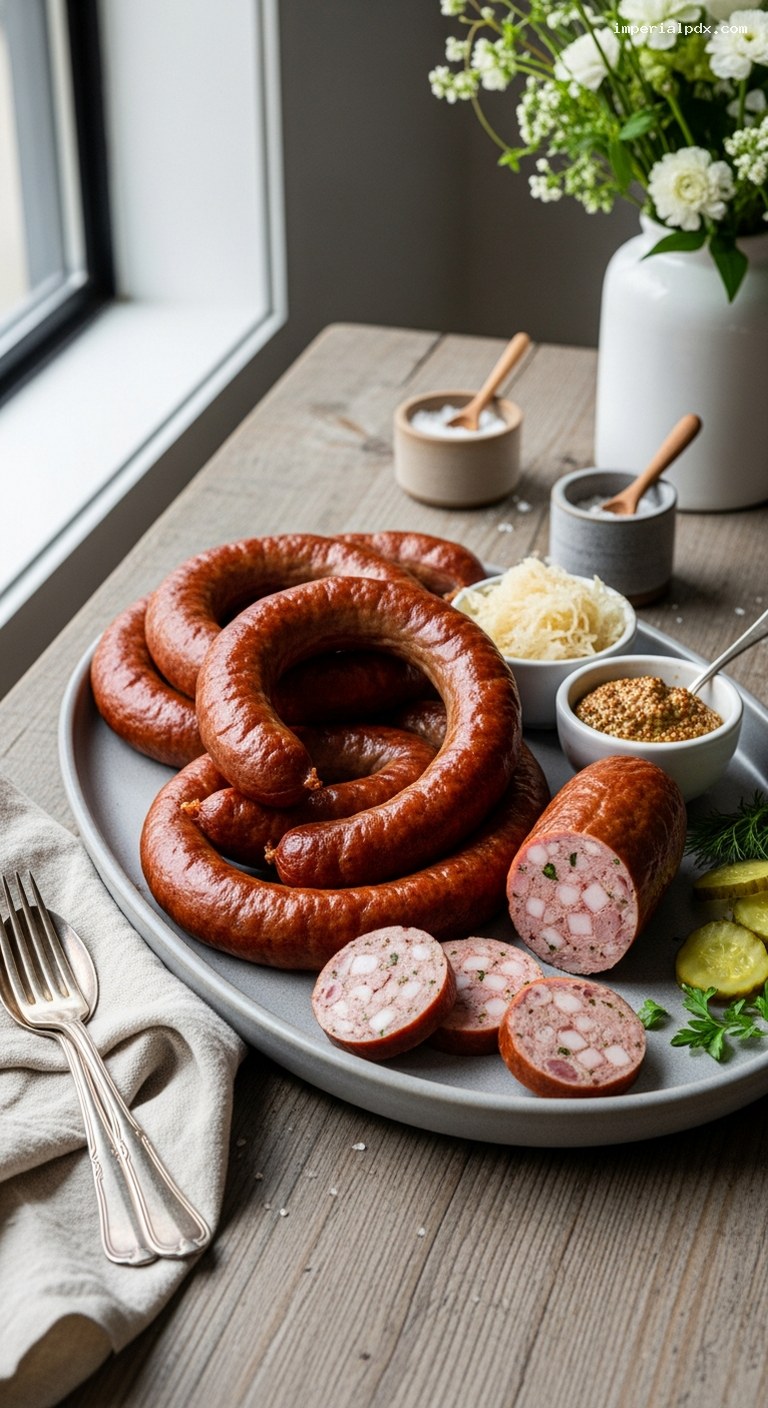
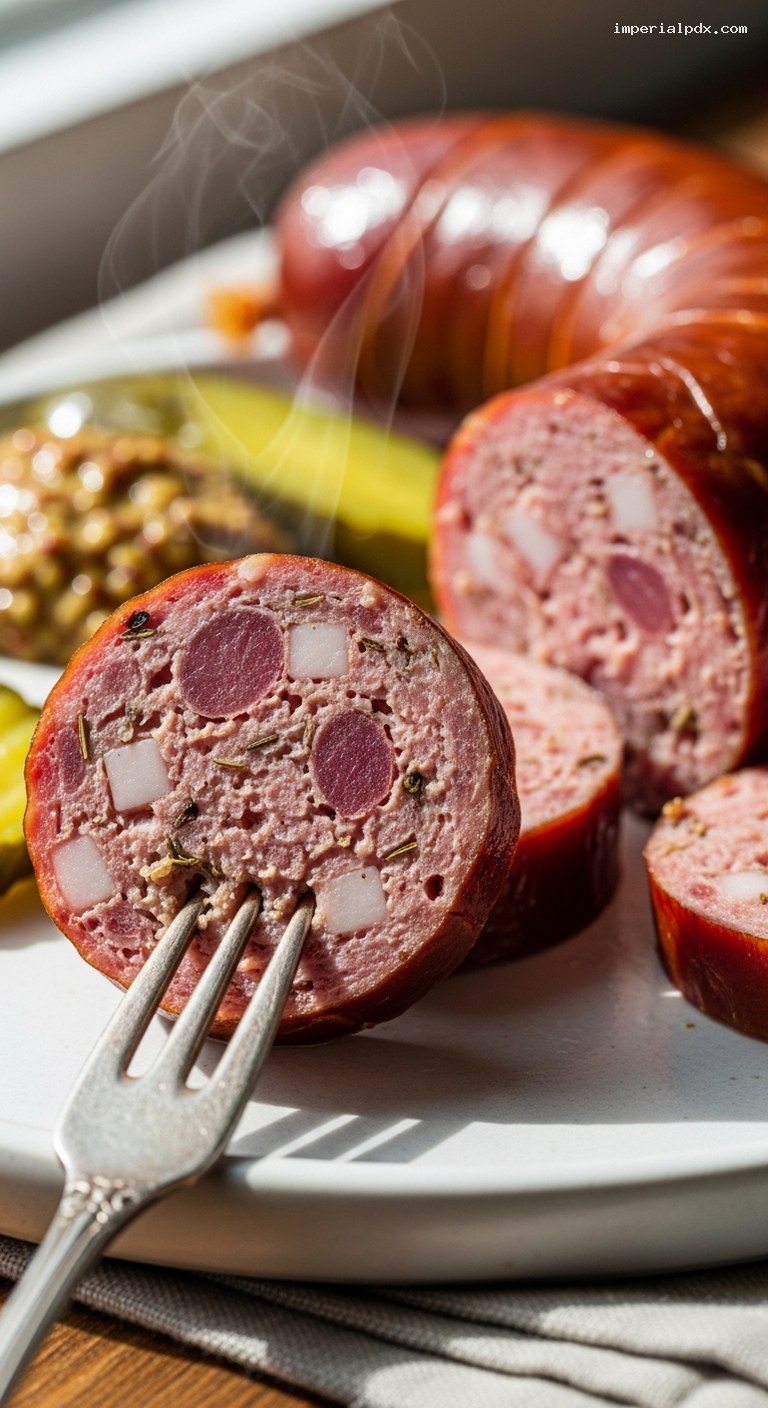
Serve sliced and gently reheated (grilled, pan-seared, or simmered) with mustard, rye bread, pickles, or sauerkraut. Fully smoked kielbasa is ready to eat once it has reached the proper internal temperature, but it shines when lightly browned just before serving.
Pro Tips
- Weigh your ingredients: For cured sausages, accurate salt and cure levels matter. A small digital scale makes a big difference in flavor and safety.
- Keep it cold: Chill meat, grinder parts, and even your mixing bowl. Cold temperatures protect texture and keep the fat from smearing.
- Do the “tacky” test: Mix until the sausage paste clings to your hand when you turn it upside down. That protein bind is what gives kielbasa its characteristic sliceable, springy texture.
- Go slow with heat: A gentle climb from 55–60°C to 70–80°C (130–175°F) in the smoker prevents fat-out and keeps the sausage juicy.
- Test a patty: Fry a small portion of the seasoned mix before stuffing to check salt and spice levels; adjust before committing to the casings.
Variations
- Spicier kielbasa: Add 1–2 tsp hot paprika or chili flakes and 1 tsp smoked paprika to the seasoning mix for a gentle heat that still tastes traditional.
- Fresh (unsmoked) version: Omit the pink curing salt; increase kosher salt by 2–3 g. Stuff as directed, then cook fresh sausages by gently simmering and pan-searing or grilling. Do not low-temp smoke without cure.
- All-pork kielbasa: Use 2 kg (4 1/2 lb) pork shoulder and omit the beef. The flavor will be slightly sweeter and richer, very classic and comforting.
Storage & Make-Ahead
Once fully smoked and chilled, keep the sausages refrigerated in an airtight container or tightly wrapped for up to 5 days. For longer storage, freeze whole links or sliced sausage, well wrapped, for up to 3 months. Thaw overnight in the refrigerator.
To reheat, avoid boiling vigorously (which can split the casings). Instead, warm gently in 75–80°C (170–175°F) water for 10–15 minutes, or slice and brown in a skillet over medium heat until heated through and lightly crisped on the edges.
The seasoned meat mixture can also be prepared and cured in the refrigerator up to 24 hours before stuffing, which is handy if you want to break the project into two shorter sessions.
Nutrition (per serving)
Approximate values per serving (about 1 medium link / 120–140 g): 320–360 calories, 26–30 g fat, 17–20 g protein, 1–2 g carbohydrates, 0–1 g fiber, and about 900–1,000 mg sodium. Actual values will vary based on exact meat choice, fat content, and smoking time.