Quick Recipe Version (TL;DR)
Quick Ingredients
- 2 skin-on duck breasts (magrets), 600–700 g total (about 1 1/3–1 1/2 lb)
- 45 g (3 tbsp) kosher salt
- 25 g (2 tbsp) light brown sugar
- 1 tsp freshly ground black pepper
- 6 juniper berries, 2 bay leaves, 3 sprigs thyme, 1 small garlic clove
- 1 tsp sweet smoked paprika (optional)
- 15 ml (1 tbsp) brandy, Cognac, or dry sherry
- Apple or cherry wood chips for smoking
- Optional to serve: baguette, salad greens, fig jam or honey, cornichons
Do This
- 1. Trim any silverskin from duck; lightly score skin in a crosshatch without cutting into the meat.
- 2. Mix salt, sugar, pepper, juniper, bay, thyme, garlic, smoked paprika, and brandy into a damp rub.
- 3. Rub duck all over, place in a snug nonreactive dish, cover, and cure in the refrigerator for 24 hours, turning once halfway.
- 4. Rinse off the cure briefly, pat completely dry, and refrigerate uncovered on a rack for 12 hours to form a tacky pellicle.
- 5. Set up a cold smoker or grill for cold smoking at 15–25°C (59–77°F), using apple or cherry wood.
- 6. Smoke duck for 3 hours, keeping chamber below 27°C (80°F), until the exterior is deep rosy-brown and fragrant.
- 7. Wrap and chill at least 4 hours, then slice very thinly across the grain and serve slightly chilled or at cool room temperature.
Why You’ll Love This Recipe
- Gives you French-style magret fumé at home: rich, ruby slices with silky texture and gentle smoke.
- The cure is simple and forgiving, but tastes impressively complex thanks to juniper, bay, and thyme.
- Perfect for make-ahead entertaining: prepare days in advance, then just slice and plate.
- Versatile on a charcuterie board, in salads, or on toasted bread with something sweet and tangy.
Grocery List
- Produce: 1 small garlic clove, fresh thyme sprigs, optional salad greens (arugula or frisée), optional fresh figs or apples (for serving)
- Dairy: Unsalted butter (optional, for toasting bread)
- Pantry: Skin-on duck breasts (magrets), kosher salt, light brown sugar, black pepper, juniper berries, bay leaves, sweet smoked paprika, brandy/Cognac/dry sherry, apple or cherry wood chips or pellets, baguette or rustic bread, fig jam or honey, cornichons or pickled onions, flaky sea salt
Full Ingredients
For the Cured Smoked Duck
- 2 skin-on duck breasts (magrets), 600–700 g total (about 1 1/3–1 1/2 lb)
- 45 g kosher salt (about 3 tbsp)
- 25 g light brown sugar, packed (about 2 tbsp)
- 1 tsp freshly ground black pepper
- 6 juniper berries, lightly crushed
- 2 dried bay leaves, crumbled
- 3 sprigs fresh thyme, leaves only (or 1 tsp dried thyme)
- 1 small garlic clove, smashed
- 1 tsp sweet smoked paprika (optional, for deeper color and subtle warmth)
- 15 ml brandy, Cognac, or dry sherry (1 tbsp)
For Smoking
- 2 large handfuls applewood or cherry wood chips, soaked in water for 30 minutes and drained
- or wood pellets in a cold-smoke tube, following manufacturer’s instructions
- Ice in a shallow pan (optional but helpful for keeping smoking temperature low in a grill)
For Serving (Optional)
- 1 baguette or small rustic loaf, sliced and lightly toasted (optionally in butter)
- Small handful of arugula or frisée
- 2–3 tbsp fig jam or runny honey
- 8–12 cornichons or a small handful of pickled onions
- Flaky sea salt and extra freshly ground black pepper
Step-by-Step Instructions
Step 1: Trim and score the duck breasts
Pat the duck breasts dry with paper towels. Place them skin-side up on a cutting board. Trim away any stray bits of fat or ragged edges. If you see any silverskin or tough white membrane on the meat side, carefully remove it with a sharp knife so the cure can penetrate evenly.
With the duck still skin-side up, use a very sharp knife to lightly score the skin in a crosshatch pattern. Make shallow cuts about 1 cm (1/3 inch) apart, taking care not to cut down into the meat. Scoring helps the cure penetrate and allows smoke to cling to the surface, while keeping the fat cap intact.
Step 2: Mix the aromatic curing blend
In a small bowl, combine the kosher salt, brown sugar, black pepper, crushed juniper berries, crumbled bay leaves, thyme leaves, smashed garlic clove, and smoked paprika (if using). Add the brandy, Cognac, or dry sherry. Mix with a spoon or your fingers until the mixture resembles a damp, fragrant sand that clumps slightly when pressed.
The balance here is intentional: enough salt to gently cure and firm the meat, sugar to round out the flavor, and aromatic herbs and juniper for that classic French-style magret fumé profile.
Step 3: Cure the duck for 24 hours
Place the duck breasts in a shallow nonreactive dish (glass or ceramic is ideal), meat-side up. Rub about one-third of the curing mixture over the meat sides, then flip so the skin sides are facing up. Massage the remaining cure all over the skin and sides of the breasts, pressing some into the scored cuts.
Arrange the breasts snugly in the dish; it is fine if they touch. Cover tightly with plastic wrap or a lid, and refrigerate for 24 hours. Halfway through (around the 12-hour mark), turn the breasts over and redistribute any liquid and cure that has collected in the dish. By the end of 24 hours, the meat will feel a bit firmer and darker in color, and you will see some brine in the bottom of the dish.
Step 4: Rinse, dry, and form a pellicle
Remove the duck from the cure and quickly rinse each breast under cold running water to remove excess salt and aromatics. Do not soak; a brief rinse is enough. Pat the breasts very thoroughly dry with paper towels on all sides. Getting them as dry as possible at this stage is key.
Set a wire rack over a rimmed baking sheet. Place the duck breasts on the rack, skin-side up, making sure air can circulate around them. Refrigerate uncovered for 12 hours. During this time, the surface will dry slightly and become tacky to the touch. This tacky layer is called a pellicle, and it is essential for good cold smoking: it helps smoke adhere evenly and gives a beautiful glossy sheen to the finished duck.
Step 5: Prepare your smoker for cold smoking
About 30–45 minutes before you plan to smoke, set up your smoker or grill for cold smoking. Your goal is smoke without significant heat: a chamber temperature between 15 and 25°C (59–77°F), and always below 27°C (80°F). If you are using a dedicated cold smoker or a cold-smoke tube, follow the manufacturer’s directions and place the duck on a rack away from the smoke source.
For a charcoal grill setup, place a small pile of lit charcoal or a cold-smoke generator on one side of the grill and a pan of ice on the other side to absorb heat. Add your soaked and drained apple or cherry wood chips to the heat source so they smolder gently, not flaming. Place the duck breasts on the opposite side from the heat, skin-side up, on the grill grate. Close the lid, leaving the vents barely open so the smoke can flow without building too much heat. Use a thermometer to monitor the chamber temperature, adjusting vents and ice as needed.
Step 6: Cold-smoke the duck breasts
Once your chamber is in the 15–25°C (59–77°F) range and producing a steady stream of pale blue smoke, add the duck (if it is not already in place). Arrange the breasts with some space between them so smoke can circulate. Close the lid and smoke for 3 hours, keeping the chamber temperature below 27°C (80°F) throughout. Add more wood chips or pellets as needed to maintain gentle smoke, and replenish ice if the chamber warms.
The duck will not cook through; it will gently firm and take on color and aroma, similar to smoked salmon or cured ham. After 3 hours, the exterior should be a deeper rosy-brown, the fat slightly translucent and glossy, and the meat firm but still yielding when pressed. If you prefer a slightly lighter smoke, you can begin checking flavor after about 2 1/2 hours and remove the duck earlier next time you make it.
Step 7: Chill, slice, and serve
When you are satisfied with the smoke level, remove the duck from the smoker. Wrap each breast tightly in parchment or wax paper, then in foil or a resealable bag, and refrigerate for at least 4 hours and up to overnight. This resting time allows the smoke to mellow and distribute evenly through the meat, and makes slicing much easier.
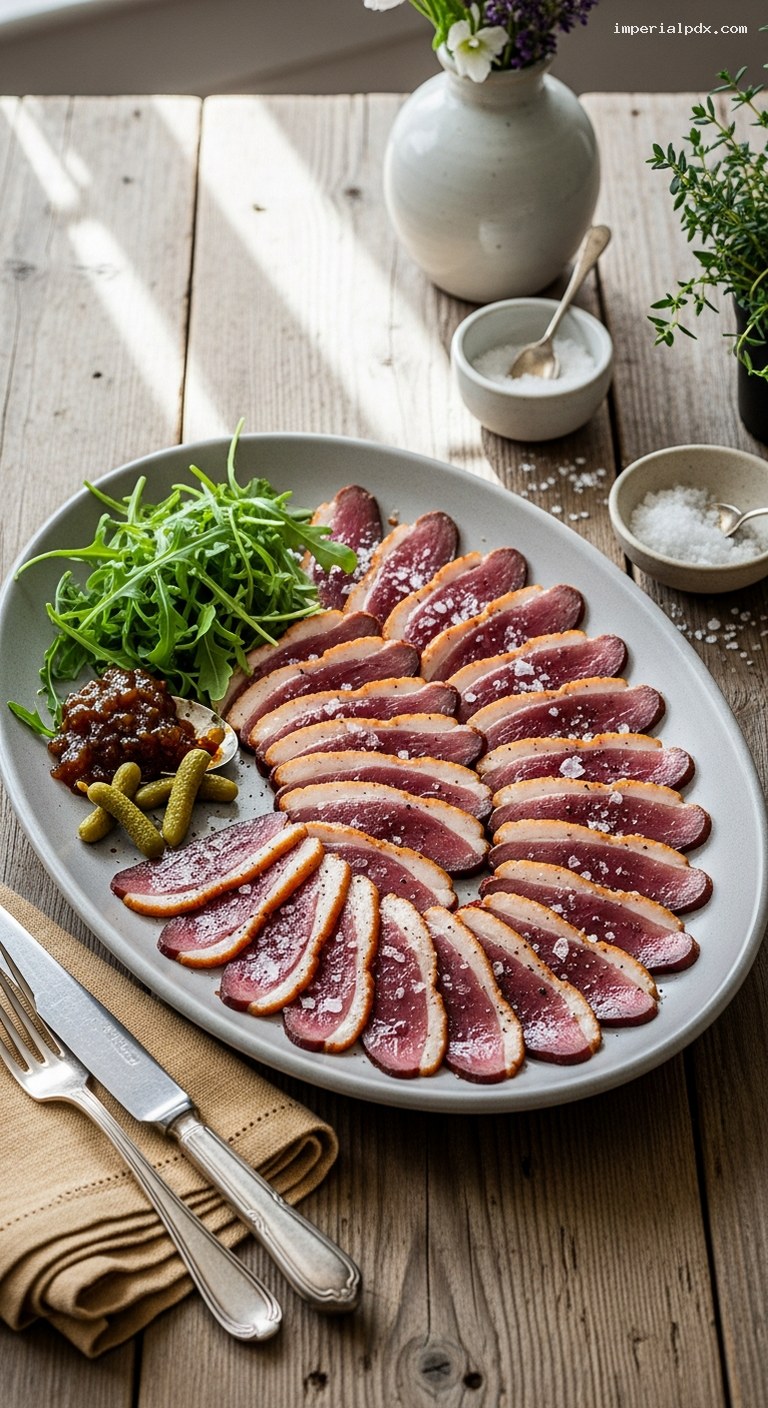
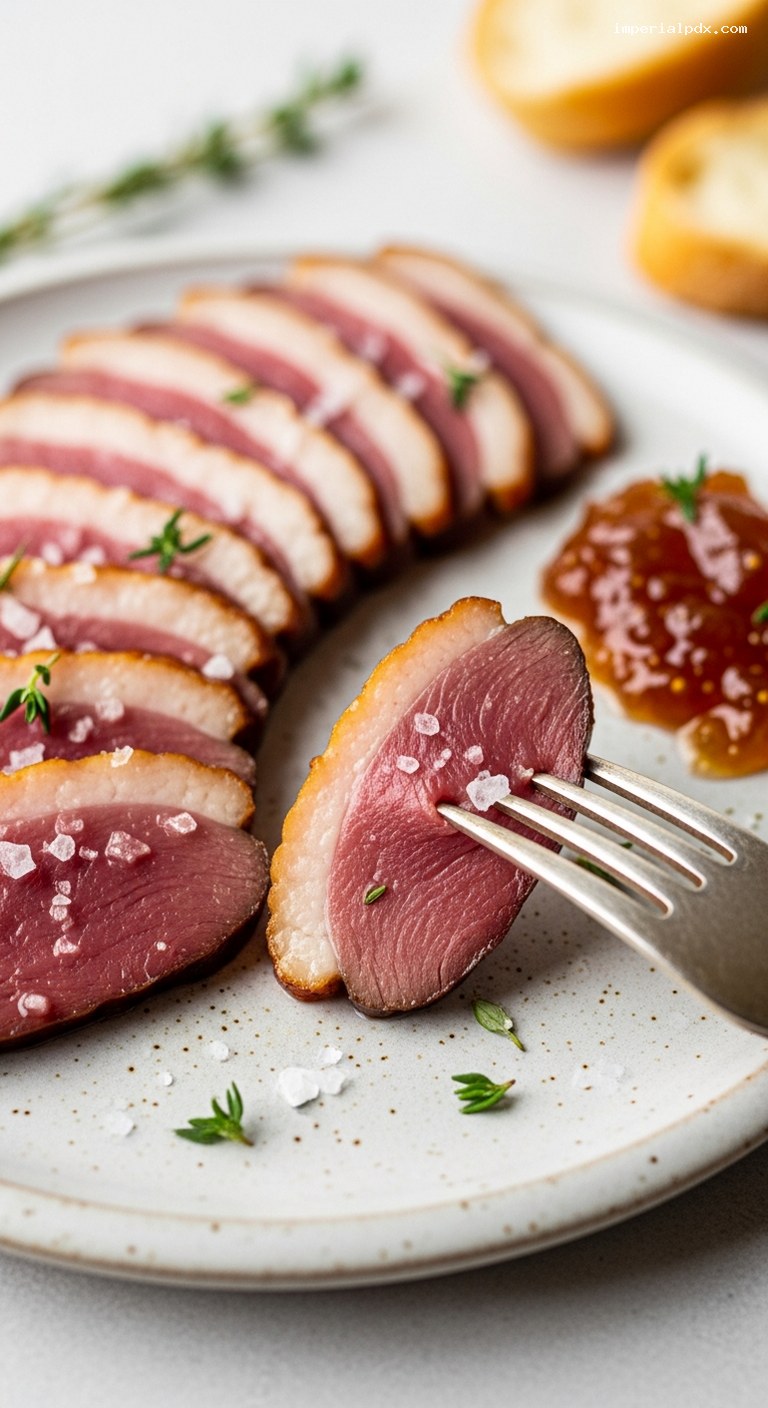
To serve, unwrap the duck and place it skin-side down on a cutting board. Using a very sharp knife, slice thinly across the grain, aiming for slices about 2–3 mm (1/16–1/8 inch) thick. Arrange the slices in a loose fan on a platter or individual plates, showing off the contrast between the golden fat, smoky outer ring, and rich ruby center.
Serve slightly chilled or at cool room temperature with toasted baguette, a small handful of peppery greens, a dab of fig jam or honey, and some cornichons or pickled onions. Finish with a light sprinkle of flaky sea salt and freshly ground black pepper just before serving.
Pro Tips
- Use a scale if you can. Measuring the salt and sugar by weight (45 g and 25 g) gives consistent curing and avoids an overly salty result.
- Keep everything cold. For food safety and the best texture, keep the duck refrigerated during curing and pellicle formation, and make sure your smoker stays below 27°C (80°F) during smoking.
- Dry surface = better smoke. Do not rush the pellicle step. A tacky, dry surface is crucial for an even, glossy smoke finish.
- Choose mild fruitwood. Apple or cherry wood keeps the smoke gentle and slightly sweet, which suits duck beautifully; avoid very strong woods like mesquite.
- Slice when very cold. For neat, translucent slices, carve the duck straight from the fridge with a long, sharp knife and a smooth slicing motion.
Variations
- Spiced orange magret fumé: Add 1 tsp finely grated orange zest and a pinch (about 1/4 tsp) Chinese five-spice powder to the cure. Omit the juniper if you prefer a softer flavor, and serve with orange segments.
- Herbes de Provence twist: Replace the thyme with 1 tsp herbes de Provence and add 1 crushed garlic clove more for a more herbal, floral note.
- Warm-smoked and fully cooked: If you are not comfortable with cold smoking, smoke the duck at 90–95°C (195–205°F) until the internal temperature reaches 57–63°C (135–145°F) for medium to medium-well. The texture will be more like traditional smoked meat than cured ham, but still delicious.
Storage & Make-Ahead
Smoked duck breast is ideal for advance preparation. Once smoked and fully chilled, keep the breasts wrapped tightly in parchment or wax paper, then in foil or an airtight container. Refrigerate for up to 5 days. Slice only what you need; leaving the rest as a whole piece helps it stay moist and flavorful.
For longer storage, wrap well (first in parchment, then in foil, then in a freezer bag) and freeze for up to 2 months. Thaw overnight in the refrigerator, still wrapped, before slicing. Do not leave smoked duck at room temperature for extended periods; treat it like other cured meats and return any leftovers to the fridge within 2 hours.
Nutrition (per serving)
Approximate values per serving (based on 8 appetizer portions, without bread or accompaniments): about 180 kcal; 11 g fat (3.5 g saturated); 18 g protein; 1 g carbohydrates; 0 g fiber; 0–2 g sugars; approximately 480 mg sodium. Actual values will vary depending on the size of the duck breasts, how thinly you slice, and how much cure is rinsed away.