Quick Recipe Version (TL;DR)
Quick Ingredients
- 1 kg (2.2 lb) beef eye of round, well trimmed
- 30 g kosher salt (about 2 tbsp)
- 5 g sugar (1 tsp)
- 2.5 g Prague Powder #2 curing salt (about 1/2 tsp, optional but recommended)
- 2 tsp cracked black pepper
- 6 juniper berries, crushed (or 1/2 tsp ground)
- 2 tsp dried rosemary
- 2 tsp dried thyme
- 3 garlic cloves, smashed
- 120 ml (1/2 cup) dry red wine
- 60 ml (1/4 cup) extra-virgin olive oil (for serving)
- 4 large handfuls arugula
- 60 g (2 oz) Parmigiano Reggiano, shaved
- 1 lemon, cut into wedges
- Flaky sea salt, extra black pepper (for serving)
Do This
- 1. Trim beef of all surface fat and silver skin, leaving a smooth, even log.
- 2. Mix salt, sugar, curing salt, pepper, juniper, rosemary, thyme, and garlic; rub all over beef, coat well, and seal in a nonreactive container or zip bag.
- 3. Cure in the refrigerator 7–10 days at 2–4°C (36–39°F), turning and massaging once per day.
- 4. Rinse, pat dry, splash with red wine, then pat dry again. Tie tightly with kitchen twine, place in netting if you have it, and weigh the meat (note the starting weight).
- 5. Hang in a cool, well-ventilated space or curing chamber at 10–15°C (50–59°F) and 70–80% humidity for 4–6 weeks, until 35–40% of its weight is lost.
- 6. Chill thoroughly, then slice wafer-thin across the grain.
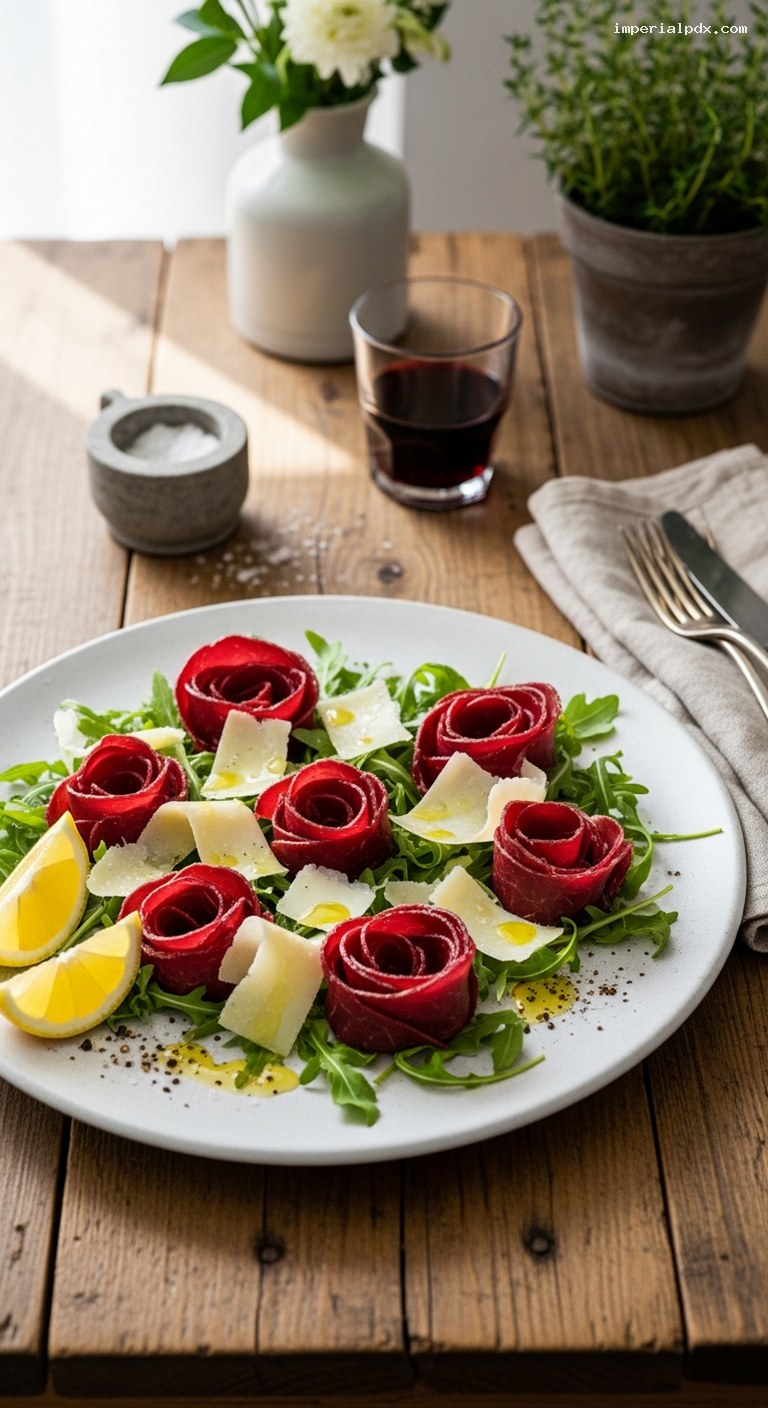
- 7. Serve on a platter with arugula, parmesan shavings, lemon wedges, olive oil drizzle, flaky salt, and black pepper.
Why You’ll Love This Recipe
- Turns a simple, lean cut of beef into something luxurious, rosy, and intensely flavored.
- Almost entirely hands-off once it is hanging; the fridge or curing chamber does the work.
- Perfect for entertaining: a beautiful, make-ahead starter that slices and serves in minutes.
- Customizable aromatics, so you can create your own signature house bresaola.
Grocery List
- Produce: Garlic, arugula, lemon.
- Dairy: Parmigiano Reggiano (or other aged parmesan-style cheese).
- Pantry: Beef eye of round, kosher salt, sugar, Prague Powder #2 (curing salt), whole black peppercorns, juniper berries, dried rosemary, dried thyme, dry red wine, extra-virgin olive oil, flaky sea salt, kitchen twine.
Full Ingredients
For the Bresaola (Air-Dried Beef)
- 1 kg (2.2 lb) beef eye of round, center-cut, well trimmed of all surface fat and silverskin
- 30 g kosher salt (about 2 tbsp; ideally weighed)
- 5 g granulated sugar (1 tsp)
- 2.5 g Prague Powder #2 curing salt (about 1/2 tsp; optional but strongly recommended for safety over long curing times)
- 2 tsp cracked black pepper
- 6 juniper berries, lightly crushed (or 1/2 tsp ground juniper)
- 2 tsp dried rosemary, lightly crushed between fingers
- 2 tsp dried thyme
- 3 garlic cloves, lightly smashed
- 120 ml (1/2 cup) dry red wine (Chianti, Sangiovese, or similar)
For Serving
- 4 large handfuls fresh arugula (about 120 g / 4 oz)
- 60 g (2 oz) Parmigiano Reggiano, shaved into thin curls
- 60 ml (1/4 cup) extra-virgin olive oil
- 1 lemon, cut into wedges
- Flaky sea salt, to taste
- Freshly ground black pepper, to taste
Step-by-Step Instructions
Step 1: Choose and Trim the Beef
Start with a whole beef eye of round weighing about 1 kg (2.2 lb). This cut is naturally lean and evenly shaped, which helps it cure and dry evenly. Place the beef on a clean cutting board and use a sharp knife to carefully remove all visible surface fat, membrane, and silverskin. Take your time: any tough silverskin left on will remain chewy in the final bresaola. Aim for a smooth, rounded cylinder with no flaps or pockets where cure could collect.
Pat the trimmed beef dry with paper towels. If there are any very thin or ragged ends, you can square them off slightly so the piece is a fairly even thickness from end to end. This helps with even drying later on.
Step 2: Mix the Cure and Rub the Beef
In a small bowl, combine the kosher salt, sugar, Prague Powder #2 (if using), cracked black pepper, crushed juniper berries, dried rosemary, dried thyme, and smashed garlic cloves. Stir well to evenly distribute the curing salt and aromatics.
Place the beef in a nonreactive container (glass or food-safe plastic) or a heavy-duty zip-top bag. Sprinkle the cure mixture all over the beef, pressing and massaging it into every surface so the entire roast is evenly coated. Make sure no spots are left bare. If using a container, scatter any loose cure over and under the meat; if using a bag, pour all remaining cure into the bag with the beef and seal it.
Step 3: Cure the Beef in the Refrigerator
Refrigerate the beef at 2–4°C (36–39°F) for 7–10 days. Once a day, turn the beef over and massage it gently in the accumulated liquid (which will gradually form as the salt pulls moisture from the meat). This helps the cure penetrate evenly.
By day 7, the beef should feel noticeably firmer all over. For a 1 kg piece, 7 days is often sufficient, but if the center still feels a little soft compared to the ends, give it an extra 1–3 days, continuing to turn it daily. The curing stage sets the flavor and helps protect the meat during the drying phase, so do not rush it.
Step 4: Rinse, Dry, Wine-Soak, and Tie
When the beef is fully cured, remove it from the bag or container and discard the curing liquid and garlic. Rinse the beef quickly but thoroughly under cold running water to remove excess surface salt and aromatics. Pat it completely dry with clean paper towels.
Place the beef in a shallow dish and pour over the red wine, turning to coat all sides. Let it sit for 15–20 minutes, turning once or twice. This step perfumes the surface and adds a gentle wine aroma, but does not significantly change the moisture content. Remove from the wine and pat dry again.
Now, tie the beef. Using kitchen twine, make a loop around one end of the roast and knot it firmly. Continue tying loops every 2–3 cm (about 1 inch) along the length of the beef, pulling each loop snug to give the roast a uniform cylindrical shape. Finally, run a length of twine along the roast and tie it through the loops to stabilize. Leave a longer loop at one end for hanging. If you have elastic curing netting, you can slide the tied roast into the net as an extra support, but it is not essential.
Weigh the tied beef with a kitchen scale and write down the starting weight. This number is crucial: you will dry the bresaola until it loses 35–40% of this weight.
Step 5: Hang to Air-Dry
Hang the tied beef by its loop in a cool, clean, well-ventilated place or in a temperature- and humidity-controlled curing chamber. Ideal conditions are 10–15°C (50–59°F) and 70–80% relative humidity. This balance allows the meat to dry slowly, preventing the outside from hardening before the inside has time to lose moisture.
If you do not have a curing chamber, the next best option is a very cold, clean refrigerator. In that case, hang the beef or place it on a rack set over a tray, uncovered, ensuring air can circulate all around. The lower humidity of a fridge can make drying faster and the outer layer firmer, so check more frequently for weight and texture.
Allow the beef to dry for 4–6 weeks under ideal curing-chamber conditions, or up to 8 weeks in a regular fridge. Weigh the meat once a week. When it has lost 35–40% of its original weight, it should be safe and pleasantly firm but not hard.
Step 6: Check for Doneness and Slice Thinly
Once the target weight loss (35–40%) is reached, take the beef down. It should feel firm throughout, with a slightly springy give when squeezed. Cut off the twine and any netting. Slice a thin test piece from one end: the interior should be a deep, even ruby red with no raw, mushy center and no gray or brown patches.
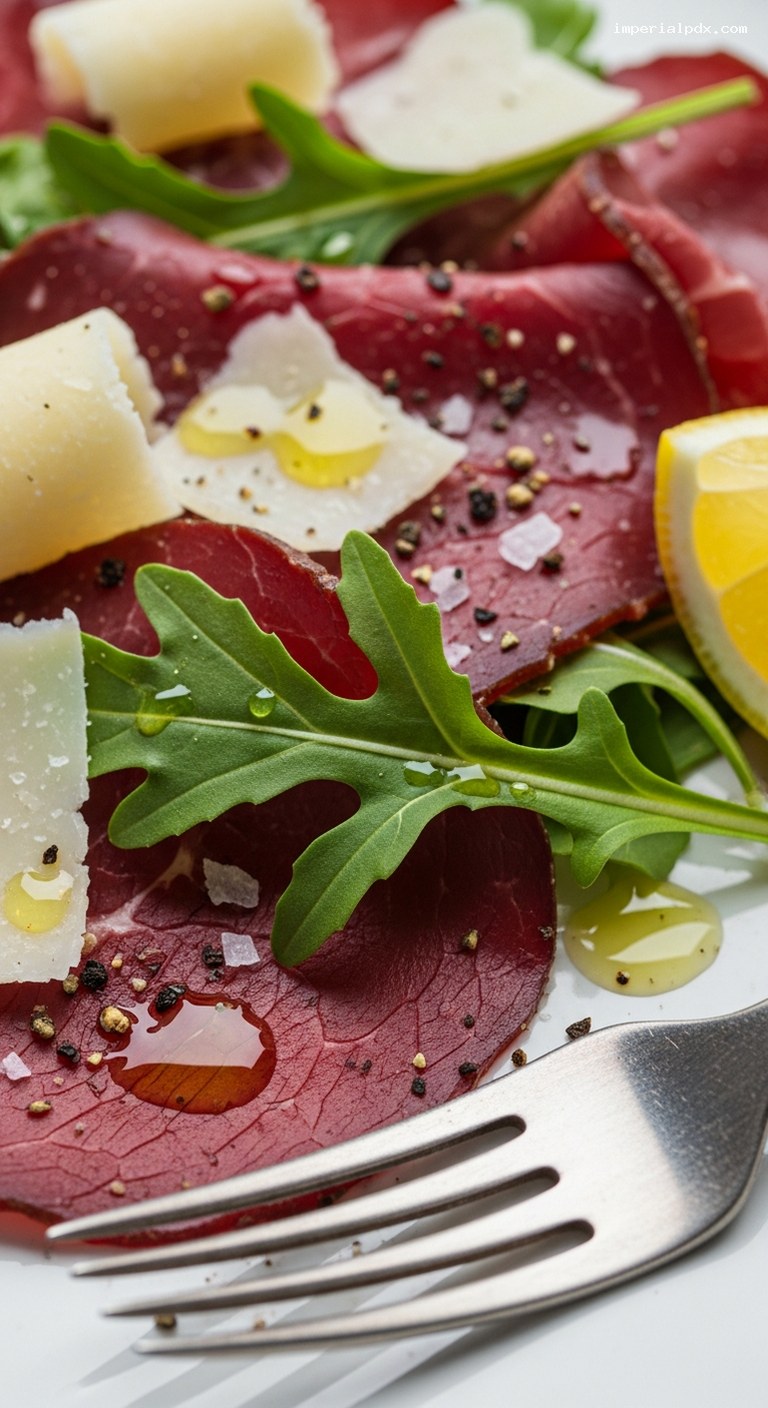
For wafer-thin slices, it helps if the bresaola is well chilled. You can even place it in the freezer for 30–45 minutes to firm it up before slicing. Using a very sharp slicing knife or a meat slicer, cut across the grain into paper-thin slices, almost transparent at the edges. Arrange slices in loose folds on a large platter or individual plates.
Step 7: Plate with Arugula, Parmesan, and Lemon
Scatter a handful of fresh arugula over each plate or onto a serving platter. Lay the bresaola slices over the arugula in overlapping layers or small rosettes. Use a vegetable peeler to shave curls of Parmigiano Reggiano over the top.
Drizzle everything lightly with extra-virgin olive oil. Finish with a pinch of flaky sea salt (go gently, as the bresaola is already seasoned) and a generous grind of fresh black pepper. Add lemon wedges on the side, to squeeze over just before eating. Serve immediately as an elegant antipasto or light starter with crusty bread.
Pro Tips
- Weigh everything: Use a digital scale for both the meat and the curing ingredients, especially the Prague Powder #2. Accurate ratios make for safer, more consistent results.
- Do not exceed curing salt: Use Prague Powder #2 exactly as specified (about 0.25% of meat weight). More is not better; never guess by eye.
- Control air flow, not draft: Gentle circulation is ideal. Avoid strong direct fans, which can dry the surface too quickly and cause a tough outer ring.
- Slicing trick: For ultra-thin slices without a slicer, chill or partially freeze the bresaola first, then use a long, very sharp knife in smooth, even strokes.
- Watch the surface: A thin, white powdery mold can be normal in a curing chamber and is often beneficial; wipe off any fuzzy, brightly colored, or strong-smelling growth with vinegar and reassess conditions.
Variations
- Citrus-herb bresaola: Add 1 tsp finely grated orange zest and 1 tsp finely grated lemon zest to the cure, and swap thyme for dried oregano for a brighter, Mediterranean profile.
- Spiced bresaola: Add 1 tsp ground coriander and 1/2 tsp crushed red pepper flakes to the cure for a gently spicy, aromatic version.
- Rosemary-garlic forward: Double the rosemary and garlic, and omit juniper, for a more rustic, Italian countryside flavor.
Storage & Make-Ahead
One of the best things about bresaola is that it is almost entirely make-ahead. Once it has dried to 35–40% weight loss, wrap the whole piece tightly in parchment and then in plastic wrap, or vacuum-seal it. Store in the refrigerator for up to 2–3 weeks for best flavor and texture.
After slicing, keep leftovers covered and refrigerated; use within 3–4 days for optimal quality. To prevent slices from drying out, layer them between sheets of parchment or wax paper in an airtight container. For longer storage, you can freeze the whole unsliced bresaola, well wrapped or vacuum-sealed, for up to 3 months. Thaw overnight in the refrigerator before slicing.
Nutrition (per serving)
Approximate values per serving (about 50 g / 1.8 oz bresaola plus arugula, parmesan, olive oil, and lemon): 180 calories; 12 g fat; 3 g saturated fat; 18 g protein; 1 g carbohydrates; 0 g fiber; 1 g sugar; 650–800 mg sodium. Values will vary based on exact thickness of slices, saltiness, and how much oil and cheese you use.