Quick Recipe Version (TL;DR)
Quick Ingredients
- 1.5 kg (3 1/3 lb) boneless pork shoulder, cut in 5 cm (2 in) chunks
- 600 g (1 1/3 lb) pork lard, duck fat, or mix, divided (about 2 3/4 cups)
- 18 g kosher salt (about 3 tsp Diamond Crystal)
- 1/2 tsp freshly ground black pepper, plus more to taste
- 6 garlic cloves, smashed
- 3 shallots or 1 small onion, sliced
- 4 thyme sprigs (or 1 tsp dried), 2 bay leaves
- 120 ml (1/2 cup) dry white wine + 120 ml (1/2 cup) water
- Pinch ground cloves and nutmeg (optional)
- Crusty bread, cornichons, Dijon mustard, and chopped parsley to serve
Do This
- 1. Toss pork with salt, pepper, garlic, and optional spices; let sit while you prepare everything else (or up to overnight in the fridge).
- 2. Heat 500 g fat in a heavy ovenproof pot over low heat until just melted. Add pork, shallots, thyme, bay, wine, and water.
- 3. Bring to a gentle simmer, cover, and cook in a 150°C / 300°F oven for 3–3 1/2 hours until the pork is completely tender.
- 4. Lift pork into a bowl. Strain cooking liquid, discarding solids. Shred meat with forks, mixing in enough of the warm fat/liquid for a soft, spreadable texture.
- 5. Taste and adjust seasoning. Pack pork into small jars or ramekins, pressing down to remove air pockets.
- 6. Gently melt remaining 100 g fat and pour a 0.5–1 cm (1/4–3/8 in) layer over the top of each jar to seal.
- 7. Chill at least 8 hours until firm. Serve cool or at room temperature with toasted bread, cornichons, and mustard.
Why You’ll Love This Recipe
- Deep, luxurious pork flavor from slow braising in its own fat and aromatics.
- Mostly hands-off: the oven does the work while the pork becomes fork-tender.
- Excellent make-ahead appetizer that keeps well and feels restaurant-level special.
- Perfect for entertaining: serve in little jars with crusty bread and pickles for an impressive but easy spread.
Grocery List
- Produce: Garlic, shallots (or 1 small onion), fresh thyme (or dried), fresh parsley (optional, for garnish)
- Dairy: None required
- Pantry: Boneless pork shoulder, pork lard and/or duck fat, dry white wine, bay leaves, whole black peppercorns, ground cloves, nutmeg, kosher salt, crusty bread or baguette, cornichons, Dijon mustard, flaky sea salt (optional)
Full Ingredients
Pork Rillettes
- 1.5 kg (3 1/3 lb) boneless pork shoulder (Boston butt), skin removed, excess surface fat trimmed, cut into 5 cm (2 in) chunks
- 18 g kosher salt (about 3 tsp Diamond Crystal; use about 2 tsp if using Morton kosher) – or 1.2% of meat weight
- 1/2 tsp freshly ground black pepper, plus more to taste
- 600 g (1 1/3 lb) pork lard, duck fat, or a mix, divided:
- 500 g (about 2 1/4 cups) for braising
- 100 g (about 1/2 cup) reserved for sealing the jars
- 6 garlic cloves, peeled and lightly smashed
- 3 medium shallots, thinly sliced (or 1 small yellow onion, thinly sliced)
- 4 fresh thyme sprigs (or 1 tsp dried thyme)
- 2 bay leaves
- 1 1/2 tsp whole black peppercorns, lightly crushed
- 1/8 tsp ground cloves (or 2 whole cloves) – optional but traditional and aromatic
- 1/4 tsp freshly grated nutmeg – optional
- 120 ml (1/2 cup) dry white wine
- 120 ml (1/2 cup) water
To Serve (Optional but Recommended)
- Crusty baguette or country bread, sliced and lightly toasted
- Cornichons or other small tart pickles
- Dijon mustard
- Flaky sea salt and freshly ground black pepper
- Finely chopped fresh parsley or thyme leaves for garnish
Step-by-Step Instructions
Step 1: Season the pork
Place the pork shoulder chunks in a large bowl. Sprinkle evenly with the kosher salt and the 1/2 tsp of freshly ground black pepper. Add the smashed garlic, ground cloves, and nutmeg (if using), and toss everything together so the pork is evenly coated with seasonings.
If you have time, cover and refrigerate for 4–24 hours. This dry brine lightly cures the meat, deepens the flavor, and improves the texture. If you are in a hurry, you can proceed immediately; the rillettes will still be delicious.
Step 2: Build the braise with fat and aromatics
Preheat your oven to 150°C / 300°F.
In a heavy, ovenproof pot with a tight-fitting lid (such as a Dutch oven, 4–5 liters / quarts capacity), add 500 g of the pork lard or duck fat. Warm over low heat just until the fat is fully melted and fluid, but not sizzling.
Add the seasoned pork, making sure to scrape in any garlic and spices left in the bowl. Add the sliced shallots (or onion), thyme sprigs, bay leaves, and crushed whole peppercorns. Pour in the white wine and water. Stir gently to distribute the aromatics, then smooth the top so the pork sits in an even layer. The meat should be mostly submerged in fatty liquid; if needed, add a splash more water.
Step 3: Slow-cook until meltingly tender
Bring the pot just to a gentle simmer on the stovetop over medium-low heat. You should see only a few small bubbles breaking the surface. As soon as it simmers, cover the pot with the lid and transfer it to the preheated oven.
Braise for 3–3 1/2 hours, until the pork is completely soft and can be pulled apart easily with a fork. Check once or twice during cooking: if the pot ever looks dry on top, stir gently and add a little more water (2–4 tbsp) to keep everything moist. Avoid letting the fat boil vigorously; slow and gentle is key for a silky texture.
When done, remove the pot from the oven and let it cool for 10–15 minutes so it is easier to handle.
Step 4: Shred the pork and adjust the texture
Using a slotted spoon, transfer the pork pieces into a large, clean bowl. Remove and discard the thyme stems, bay leaves, and any whole cloves if you used them.
Pour the remaining contents of the pot (fat and juices) through a fine mesh strainer into a measuring jug or bowl. Press on the solids to extract as much flavorful liquid as possible, then discard the solids.
With two forks or very clean hands, shred the warm pork into fine strands. You can make it as rustic or as smooth as you like; traditional rillettes are quite finely shredded but not a paste.
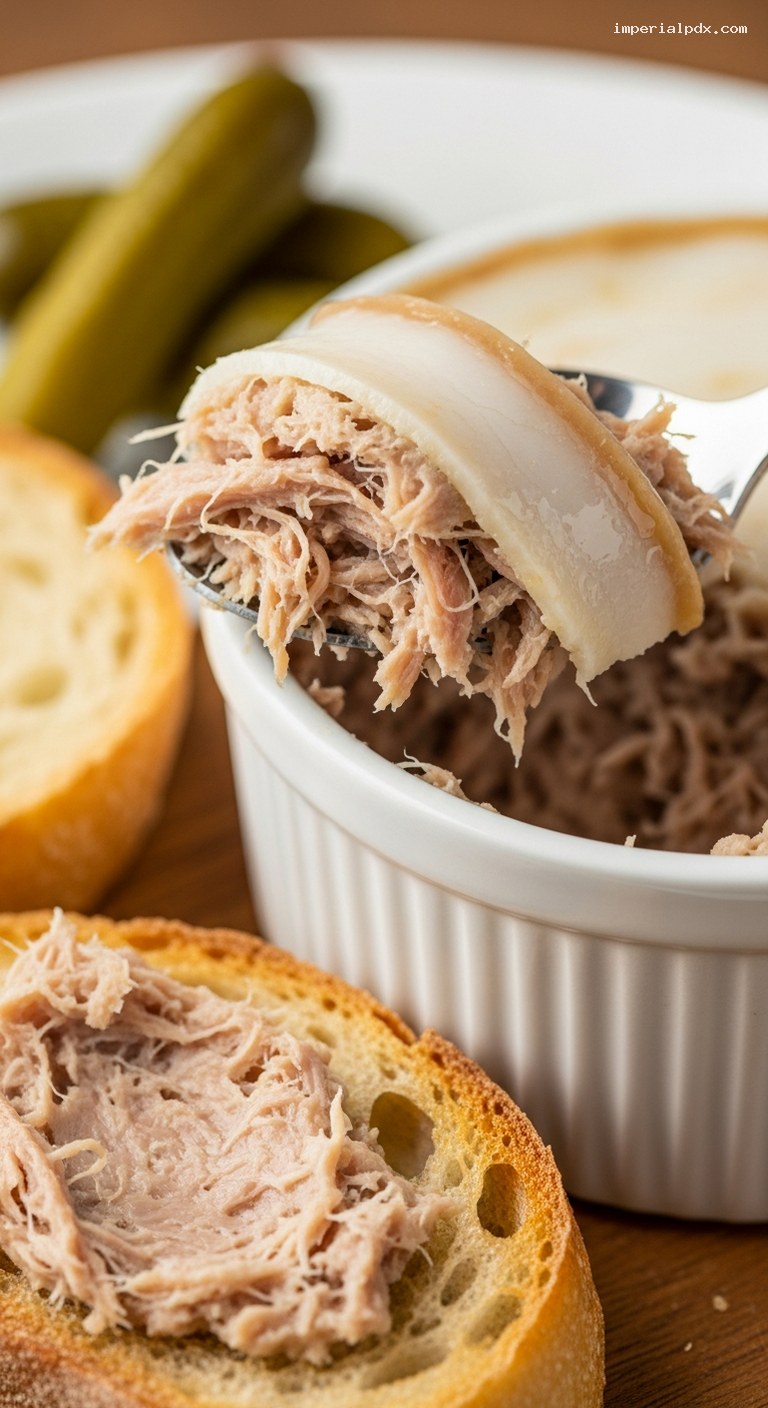
Gradually add the warm strained fat and juices to the shredded pork, a few tablespoons at a time, stirring and mashing as you go. You are aiming for a soft, spreadable consistency similar to a thick, chunky pâté. You may not need all the liquid; stop when the mixture looks moist and glossy but holds its shape on a spoon.
Taste and adjust seasoning with more salt and freshly ground black pepper if needed. Remember it will be eaten cold on bread, so it should be seasoned just slightly more than you would a hot dish.
Step 5: Pack into jars and seal with fat
Choose small glass jars, ramekins, or ceramic pots (4–6 containers of 150–200 ml each work well). Make sure they are very clean and completely dry.
Spoon the warm pork mixture into the containers, pressing down firmly with the back of a spoon to eliminate air pockets and level the surface. Leave about 1 cm (3/8 in) of space at the top of each container for the fat seal.
In a small saucepan, gently melt the remaining 100 g of fat over low heat until completely liquid but not hot and smoking. Carefully pour a thin, even layer (about 0.5–1 cm / 1/4–3/8 in) of melted fat over the surface of each container, tilting gently if needed so the entire top is covered. This fat layer is important: it protects the meat from air and helps it keep longer.
Step 6: Chill, rest, and serve
Allow the filled containers to cool to room temperature, uncovered. Once cool, cover each jar tightly with a lid or plastic wrap and refrigerate for at least 8 hours, preferably overnight. This resting time allows the flavors to meld and the texture to firm up into a beautifully spoonable spread.
To serve, remove the rillettes from the fridge 15–20 minutes before eating to soften slightly. Crack through the fat cap with a spoon and scoop out the pork, making sure to take some of the flavorful fat with each serving.
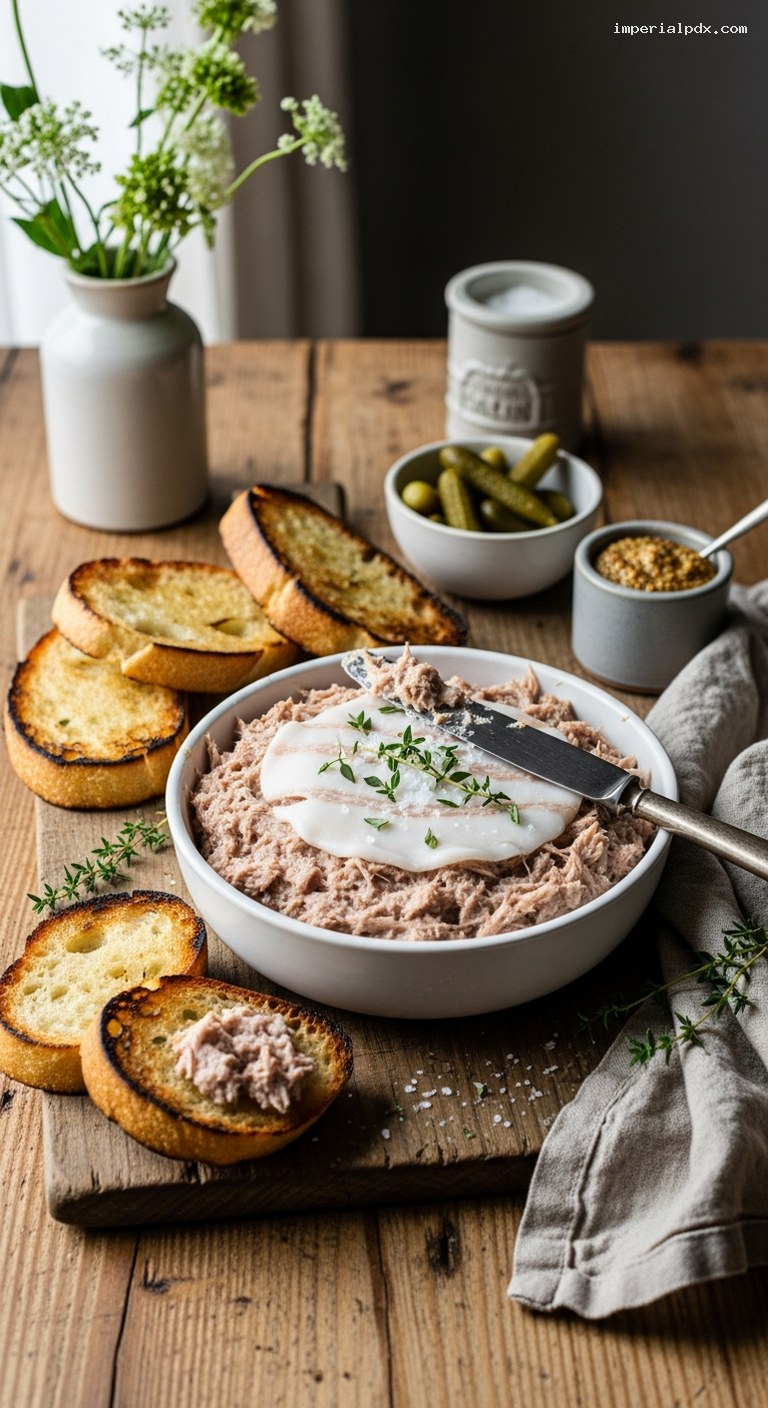
Spread generously on warm, toasted slices of crusty bread. Garnish with flaky sea salt, black pepper, and a few thyme leaves or chopped parsley. Serve with cornichons and a little Dijon mustard on the side for brightness and contrast.
Pro Tips
- Use shoulder, not lean cuts. Pork shoulder (Boston butt) has the perfect balance of fat and connective tissue. Leaner cuts like loin will turn stringy and dry instead of silky.
- Keep the heat low and gentle. If the fat ever boils hard, the meat toughens. Aim for just a few lazy bubbles in the oven so the collagen melts gradually.
- Adjust texture with the cooking fat. Too dry? Stir in more of the strained fat and juices. Too loose? Chill briefly, then stir again. The mixture should be easily spreadable, not greasy soup.
- Go bold on seasoning. Because rillettes are eaten chilled on bread, they need slightly more salt and pepper than a warm stew to taste vivid.
- Use small jars. Packing into several small jars instead of one large container lets you open them as needed, keeping the rest well-sealed and fresh.
Variations
- Herb-forward rillettes: Add a handful of fresh herbs (thyme, parsley, tarragon) finely chopped to the shredded pork before packing. This gives a greener, fresher flavor and pretty flecks of color.
- Garlic and brandy twist: Increase garlic to 8 cloves and stir in 1–2 tbsp of brandy or Cognac to the shredded meat along with the fat. The alcohol will mellow as it chills, adding depth and warmth.
- Smoky version: Substitute 150 g (about 1/3 lb) of the pork shoulder with smoked pork shoulder or add 1/2 tsp smoked paprika when shredding for a subtle smokiness.
Storage & Make-Ahead
Rillettes are ideal for making ahead. Once sealed with a solid layer of fat and kept refrigerated, they will keep well for about 7–10 days. Always use a clean spoon when serving to prevent contamination, and try to keep the fat layer as intact as possible. If you want to store them longer, you can freeze the jars (as long as they are freezer-safe and not filled to the very top) for up to 3 months; thaw overnight in the refrigerator before serving. Do not water-bath can or room-temperature store these unless you are following a tested, food-safe preserving method. For best flavor and texture, serve slightly cool but not ice cold, giving the jars a little time at room temperature before bringing them to the table.
Nutrition (per serving)
Approximate values for 1 of 10 appetizer servings (about 70–75 g rillettes, without bread or accompaniments): about 430 calories; 40 g fat; 15 g protein; 1 g carbohydrate; 0 g fiber; 850 mg sodium. Actual values will vary based on the specific fat you use, how much cooking liquid is incorporated, and your final seasoning.