Quick Recipe Version (TL;DR)
Quick Ingredients
- 1 lb (450 g) chicken livers, trimmed
- 8 Tbsp (115 g) unsalted butter, divided
- 2 medium shallots, minced
- 2 garlic cloves, sliced
- 1 tsp fresh thyme leaves (or 1/2 tsp dried)
- 1 bay leaf
- 1/3 cup (80 ml) cognac or brandy
- 1/2 cup (120 ml) cold heavy cream
- 1–2 tsp lemon juice
- Kosher salt, black pepper, flaky sea salt
- Baguette or brioche, cornichons, fresh herbs for serving
Do This
- 1. Trim chicken livers of any green bits or tough sinew; pat dry. Mince shallots and slice garlic.
- 2. In a skillet, melt 2 Tbsp butter over medium heat; soften shallots with a pinch of salt for 4–5 minutes. Add garlic, thyme, and bay leaf; cook 1–2 minutes. Transfer to a bowl.
- 3. Add 2 Tbsp butter to the same pan over medium-high heat. Sear livers, seasoned with salt and pepper, 2–3 minutes per side until browned outside but rosy inside (145–150°F / 63–66°C).
- 4. Return shallots to the pan; add cognac and simmer 1–2 minutes until mostly reduced. Discard bay leaf. Let cool 5 minutes.
- 5. Blend warm livers and pan juices with remaining 4 Tbsp cold butter, a pinch of spice (optional), and lemon juice until smooth. With the blender running, pour in cold cream until silky.
- 6. Push mousse through a fine-mesh sieve; divide into ramekins, smooth tops, cover, and chill until set, at least 2 hours.
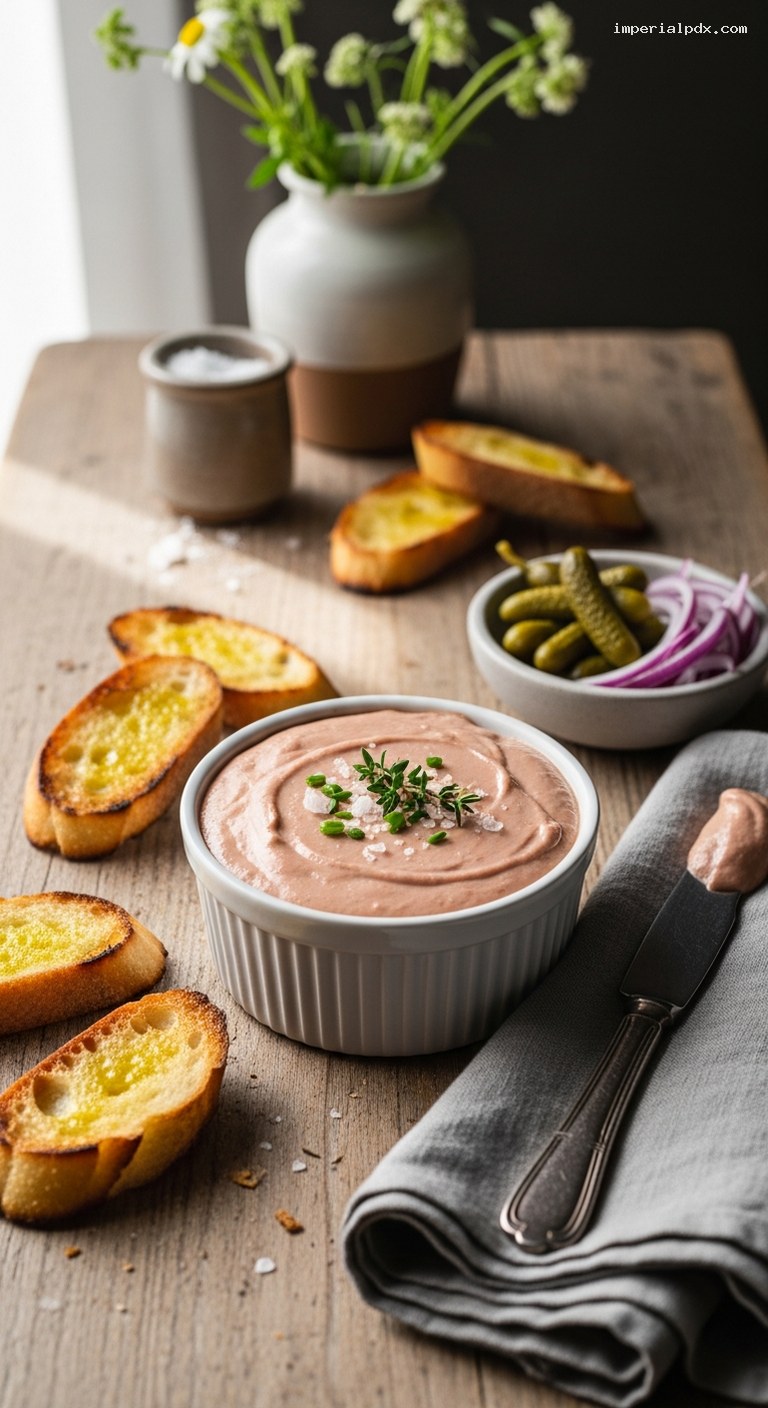
- 7. Before serving, let sit 20–30 minutes at room temperature. Sprinkle with flaky salt and herbs; serve with toasted baguette and cornichons.
Why You’ll Love This Recipe
- Ultra-smooth and luxurious, but surprisingly simple to make on the stovetop.
- Balanced flavor: rich chicken liver, gentle sweetness from shallots, and a lift of cognac and lemon.
- Perfect make-ahead appetizer for parties, date nights, or holidays.
- Impressive restaurant-style results with basic home kitchen tools.
Grocery List
- Produce: Chicken livers, shallots, garlic, fresh thyme (or dried), lemon, fresh herbs for garnish (thyme, chives, or parsley)
- Dairy: Unsalted butter, heavy cream, optional milk for soaking livers
- Pantry: Cognac or brandy, bay leaf, kosher salt, black pepper, flaky sea salt, optional ground allspice or nutmeg, baguette or brioche, olive oil (for toasts), cornichons
Full Ingredients
For the Silky Chicken-Liver Mousse
- 1 lb (450 g) chicken livers, trimmed of sinew and any green spots
- 8 Tbsp (115 g) unsalted butter, divided (4 Tbsp for cooking, 4 Tbsp cold for blending)
- 2 medium shallots, finely minced (about 1/2 cup)
- 2 small garlic cloves, thinly sliced
- 1 tsp fresh thyme leaves, chopped (or 1/2 tsp dried thyme)
- 1 bay leaf
- 1/3 cup (80 ml) cognac or brandy
- Optional: 1 Tbsp dry sherry or Madeira (for extra depth)
- 1/2 tsp kosher salt, plus more to taste
- 1/4 tsp freshly ground black pepper, plus more to taste
- Optional: 1/8 tsp ground allspice or nutmeg (classic French-style warmth)
- 1/2 cup (120 ml) heavy cream, very cold
- 1–2 tsp fresh lemon juice, to taste
- Flaky sea salt, for finishing
For Serving
- 1 baguette or small brioche loaf, sliced 1/2 inch (1.25 cm) thick
- 2–3 Tbsp olive oil or melted butter (for brushing the toasts)
- Cornichons or small pickles
- Optional: thinly sliced red onion or shallot
- Fresh thyme leaves, chives, or parsley, finely chopped, for garnish
Step-by-Step Instructions
Step 1: Prep and Trim the Chicken Livers
Rinse the chicken livers under cool water and pat them very dry with paper towels. Use a small sharp knife to trim away any visible green spots (these can taste bitter) and tough white connective tissue or sinew. Cut any very large pieces in half so that the livers are roughly similar in size for even cooking.
Optional but helpful if you have extra time: Place the trimmed livers in a bowl and cover with cold milk. Refrigerate for 30–60 minutes to mellow their flavor, then drain and pat dry extremely well before proceeding. The drier they are, the better they will brown.
Step 2: Soften the Shallots and Aromatics
In a large skillet, melt 2 Tbsp of the butter over medium heat. Add the minced shallots and a small pinch of kosher salt. Cook, stirring often, until the shallots are soft and translucent but not browned, about 4–5 minutes.
Add the sliced garlic, thyme, and bay leaf. Cook for another 1–2 minutes, just until very fragrant. If using dried thyme, add it here. Do not let the garlic brown, or it will add bitterness.
Transfer the shallot mixture to a small bowl and set aside, leaving as much of the butter in the pan as possible.
Step 3: Sear the Chicken Livers
Return the skillet to the stove over medium-high heat and add the remaining 2 Tbsp butter. When the butter melts and the foaming subsides, add the dried chicken livers in a single layer. Do not crowd the pan; work in two batches if needed.
Season the livers lightly with 1/2 tsp kosher salt and 1/4 tsp black pepper. Sear without moving them for 2–3 minutes, until they develop a nice brown crust. Flip and cook for another 2–3 minutes. The livers should be browned on the outside but still rosy pink in the center. An instant-read thermometer inserted into a thick piece should read about 145–150°F (63–66°C). This slightly pink interior is key for a silky mousse; fully cooked (gray) livers will make the texture grainy.
Step 4: Deglaze with Cognac and Reduce
Return the cooked shallot mixture to the skillet with the livers. Add the cognac (and the sherry or Madeira, if using). The liquid will bubble vigorously. Simmer over medium heat for 1–2 minutes, scraping up any browned bits from the bottom of the pan, until the alcohol smell has mostly cooked off and the liquid is reduced by about half. Turn off the heat and remove the bay leaf.
Let the mixture cool in the pan for about 5 minutes. You want it warm but not piping hot when it goes into the blender, so the butter and cream emulsify smoothly without breaking.
Step 5: Blend to a Smooth Mousse
Cut the remaining 4 Tbsp butter into small cubes and keep it cold. Transfer the warm livers, shallots, and all pan juices into a blender or food processor. Add the cold butter cubes, optional allspice or nutmeg, and 1 tsp lemon juice.
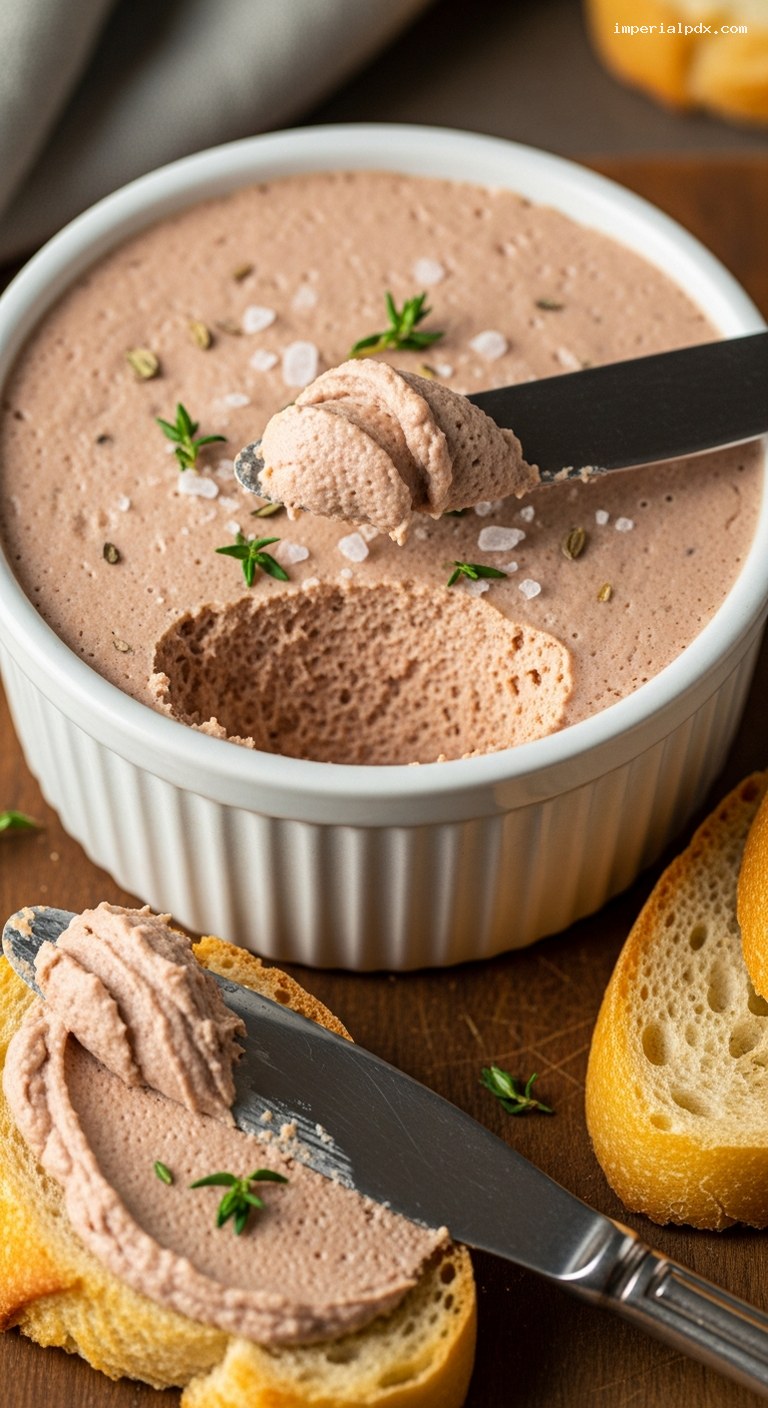
Blend on high until very smooth, about 30–60 seconds, stopping to scrape down the sides as needed. With the blender running on low speed, slowly pour in the very cold heavy cream in a thin stream. Continue blending until the mixture is silky and aerated, another 30–60 seconds. Taste carefully (it will still be warm): add more salt, pepper, or an extra 1/2–1 tsp lemon juice if you want more brightness.
Step 6: Strain and Portion the Mousse
For an ultra-smooth, restaurant-style texture, press the warm mousse through a fine-mesh sieve into a bowl or large measuring jug. Use a rubber spatula to push it through, scraping the underside of the sieve to collect every bit. This step removes any tiny bits of sinew or graininess and is worth the effort.
Divide the strained mousse among small ramekins, jars, or spread it into a small terrine dish. Tap the containers gently on the counter to remove any air bubbles, then smooth the tops with the back of a spoon or spatula.
Step 7: Chill, Garnish, and Serve
Press a piece of plastic wrap directly onto the surface of the mousse to prevent a skin from forming. Refrigerate until fully chilled and set, at least 2 hours and up to overnight. For the best flavor and texture, let the mousse sit at room temperature for 20–30 minutes before serving so it softens slightly.
While the mousse warms slightly, prepare your toasts: Preheat the oven to 375°F (190°C). Arrange baguette or brioche slices on a baking sheet, brush lightly with olive oil or melted butter, and toast for 8–10 minutes, turning once, until lightly golden at the edges.
Just before serving, remove the plastic wrap from the mousse. Sprinkle the tops with flaky sea salt and a few thyme leaves, snipped chives, or parsley. Serve with warm toasts, cornichons, and, if you like, a few slices of red onion or shallot.
Pro Tips
- Do not overcook the livers. Aim for rosy pink in the center (145–150°F / 63–66°C). Overcooked livers turn grainy and lose their delicate flavor.
- Keep the butter and cream cold. Adding cold dairy to warm (not boiling hot) livers helps create a stable, silky emulsion.
- Strain for restaurant-quality texture. Pushing the mousse through a fine-mesh sieve is the key step that transforms “good” into “incredibly smooth.”
- Adjust acidity at the end. Lemon juice brightens the richness. Add a little at a time, tasting as you go so you do not overpower the delicate flavor.
- Make a butter seal for longer storage. For parties, you can cover the set mousse with a thin layer of melted clarified butter to help it keep longer and add an extra touch of luxury.
Variations
- Herb and citrus twist: Add finely grated lemon zest and a small handful of chopped fresh herbs (parsley, chives, or tarragon) to the blender at the end for a brighter, more aromatic mousse.
- Smoky version: Fry 2–3 strips of bacon or pancetta until crisp; remove, then cook the shallots in the rendered fat (reduce the butter slightly). Crumble the bacon and stir some into the strained mousse or sprinkle on top before serving.
- Port and thyme: Replace half of the cognac with ruby port, and increase the thyme slightly. The port adds a gentle sweetness that pairs beautifully with toasted brioche.
Storage & Make-Ahead
Chicken-liver mousse is an excellent make-ahead appetizer. Once portioned and covered, refrigerate for at least 2 hours and up to 3 days for best quality. For slightly longer storage (up to 5 days), pour a thin layer of melted clarified butter over the chilled mousse to create a fat “seal,” then cover and keep refrigerated. Always let the mousse sit at room temperature for 20–30 minutes before serving so it becomes soft and spreadable again.
Freezing is possible for up to 1 month if the mousse is very well wrapped, but the texture can become a bit less silky after thawing. If you do freeze it, thaw overnight in the refrigerator and whisk or briefly re-blend to restore some of the smoothness before serving.
Nutrition (per serving)
Approximate values for 1 of 8 servings of mousse (without bread or garnishes): about 230 calories; 16 g fat; 9 g saturated fat; 14 g protein; 3 g carbohydrates; 0 g fiber; 160 mg cholesterol; 260 mg sodium. Actual values will vary based on exact ingredients and portion sizes.