Quick Recipe Version (TL;DR)
Quick Ingredients
- 1 lb (450 g) very fresh firm white fish, cut in 1.3 cm cubes
- 1 cup (240 ml) fresh lime juice (about 8–10 limes)
- 1/2 small red onion, very thinly sliced
- 1–2 fresh chilies (aji limo/aji amarillo or red jalapeño), thinly sliced
- 2 tbsp chopped fresh cilantro (coriander leaves)
- 1 small garlic clove, finely grated (optional)
- 1/2 tsp fine sea salt, plus more to taste
- 1/4 tsp freshly ground black pepper
- 1 cup Peruvian cancha (toasted corn) or other large-kernel corn
- 1 tbsp neutral oil (for toasting corn)
- Optional for serving: cooked sweet potato slices, lettuce leaves
Do This
- 1. Chill a non-reactive bowl (glass/ceramic). Keep fish very cold until using.
- 2. Thinly slice red onion; soak in ice water with a pinch of salt for 10 minutes, then drain and pat dry.
- 3. In the chilled bowl, combine lime juice, salt, pepper, grated garlic (if using), half the cilantro, and half the sliced chili.
- 4. Add fish cubes to the lime mixture, stir gently, and marinate 10–15 minutes in the fridge until the outside turns opaque but the center is still tender.
- 5. While fish cures, toast the corn in oil in a dry skillet over medium heat, stirring often, 8–10 minutes until golden and crackling; season with salt.
- 6. Gently fold in drained red onion and remaining chili into the ceviche; adjust lime, salt, and pepper to taste.
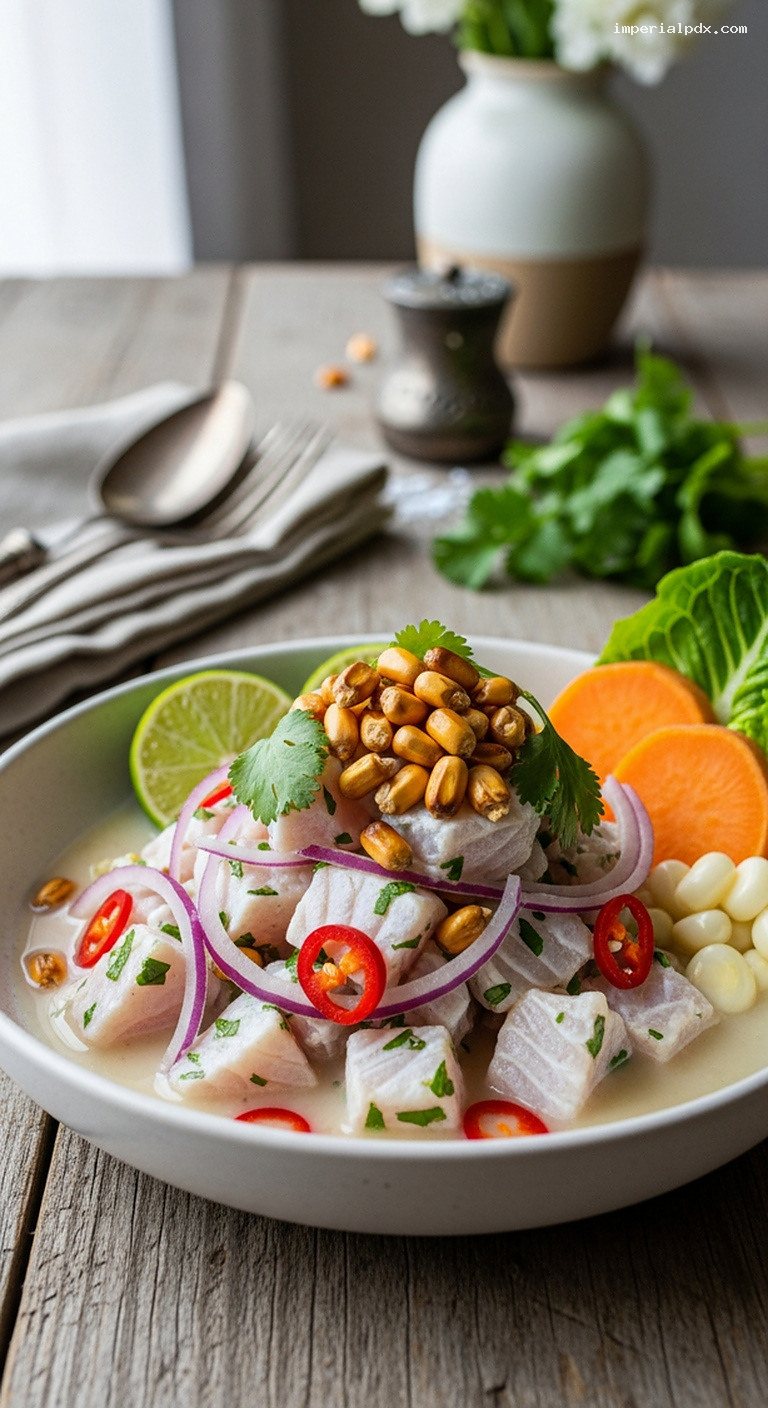
- 7. Serve immediately in shallow bowls with toasted corn on top, a sprinkle of cilantro, and optional sweet potato and lettuce on the side.
Why You’ll Love This Recipe
- Bright, fresh, and zesty: lime, chili, and cilantro make every bite pop with flavor.
- No stove required: the fish is gently “cooked” in lime juice, making this perfect for warm days.
- Textural contrast: silky fish, crisp red onion, and irresistibly crunchy toasted corn.
- Restaurant-level Peruvian ceviche, broken down into simple, reliable steps for home cooks.
Grocery List
- Produce: Fresh limes, red onion, fresh chilies (aji limo/aji amarillo or jalapeño), fresh cilantro, garlic (optional), sweet potato (optional), lettuce leaves (optional).
- Dairy: None required.
- Pantry: Very fresh firm white fish (sea bass, halibut, corvina, snapper, or similar), Peruvian cancha or large-kernel corn, neutral oil (vegetable, canola, or grapeseed), fine sea salt, black pepper.
Full Ingredients
For the Ceviche Base
- 1 lb (450 g) very fresh firm white fish fillet, skin and bones removed, cut into 1.3 cm (1/2 inch) cubes
- 1 cup (240 ml) freshly squeezed lime juice (about 8–10 limes, ideally Peruvian limes or similar small, aromatic limes)
- 1/2 small red onion, very thinly sliced (about 1/2 cup loosely packed)
- 1–2 fresh chilies, very thinly sliced:
- Traditional: aji limo or aji amarillo
- Substitute: 1 red jalapeño or 1 serrano chili
- 2 tbsp finely chopped fresh cilantro (coriander leaves), plus extra for garnish
- 1 small garlic clove, finely grated or minced (optional but recommended)
- 1/2 tsp fine sea salt, plus more to taste
- 1/4 tsp freshly ground black pepper
For the Toasted Corn (Crunchy Topping)
- 1 cup Peruvian cancha (chulpe corn) or other large-kernel corn, dried
- 1 tbsp neutral oil (such as vegetable, canola, or grapeseed)
- 1/4 tsp fine sea salt (or to taste)
For Serving (Traditional Peruvian Style, Optional but Recommended)
- 1 small orange sweet potato, boiled or steamed until tender, peeled and sliced into 1 cm rounds
- A few crisp lettuce leaves (such as romaine or butter lettuce)
- Extra lime wedges
Step-by-Step Instructions
Step 1: Choose and Prep the Fish
Use the very freshest fish you can find; ask your fishmonger for sashimi-grade or fish that is safe to eat raw. Firm white fish such as sea bass, halibut, corvina, snapper, or mahi-mahi work best. Avoid oily fish here.
Rinse the fillet briefly under cold water and pat completely dry with paper towels. Using a sharp knife, trim away any dark or stringy bits. Cut the fish into even 1.3 cm (1/2 inch) cubes so they cure at the same rate. Place the cubes in a glass or ceramic bowl (avoid metal) and keep chilled in the refrigerator while you prep the rest.
Step 2: Prep the Red Onion and Chili
Very thin slices of onion and chili give ceviche its brightness without overpowering the fish. Peel the red onion and slice it as thinly as you can into half-moons. Place the slices in a bowl of ice-cold water with a pinch of salt and let them sit for 10 minutes. This step mellows the onion’s sharpness and makes it extra crisp.
Meanwhile, slice your chili lengthwise, remove seeds and membranes if you prefer less heat, and cut into very thin rings or slivers. Traditional Peruvian ceviche uses aji limo or aji amarillo, but a red jalapeño or serrano works well in most home kitchens. Set half of the sliced chili aside for mixing and reserve the rest for garnish.
Step 3: Mix the Lime Marinade (Leche de Tigre)
Juice the limes until you have 1 cup (240 ml) of fresh lime juice. Avoid bottled juice; its flavor is dull and can be bitter. Pour the lime juice into a chilled glass or ceramic mixing bowl.
Whisk in 1/2 teaspoon fine sea salt, 1/4 teaspoon black pepper, the finely grated garlic clove (if using), and about half of the chopped cilantro. Add half of the sliced chili. Stir to combine, then taste: the marinade should be bright, salty, and slightly spicy. It should taste a bit more intense than you want the final ceviche, since it will season the fish.
Step 4: “Cook” the Fish in Lime Juice
Remove the fish from the fridge and pour the lime marinade over the fish cubes in their non-reactive bowl. Gently stir to coat every piece. Cover the bowl and refrigerate.
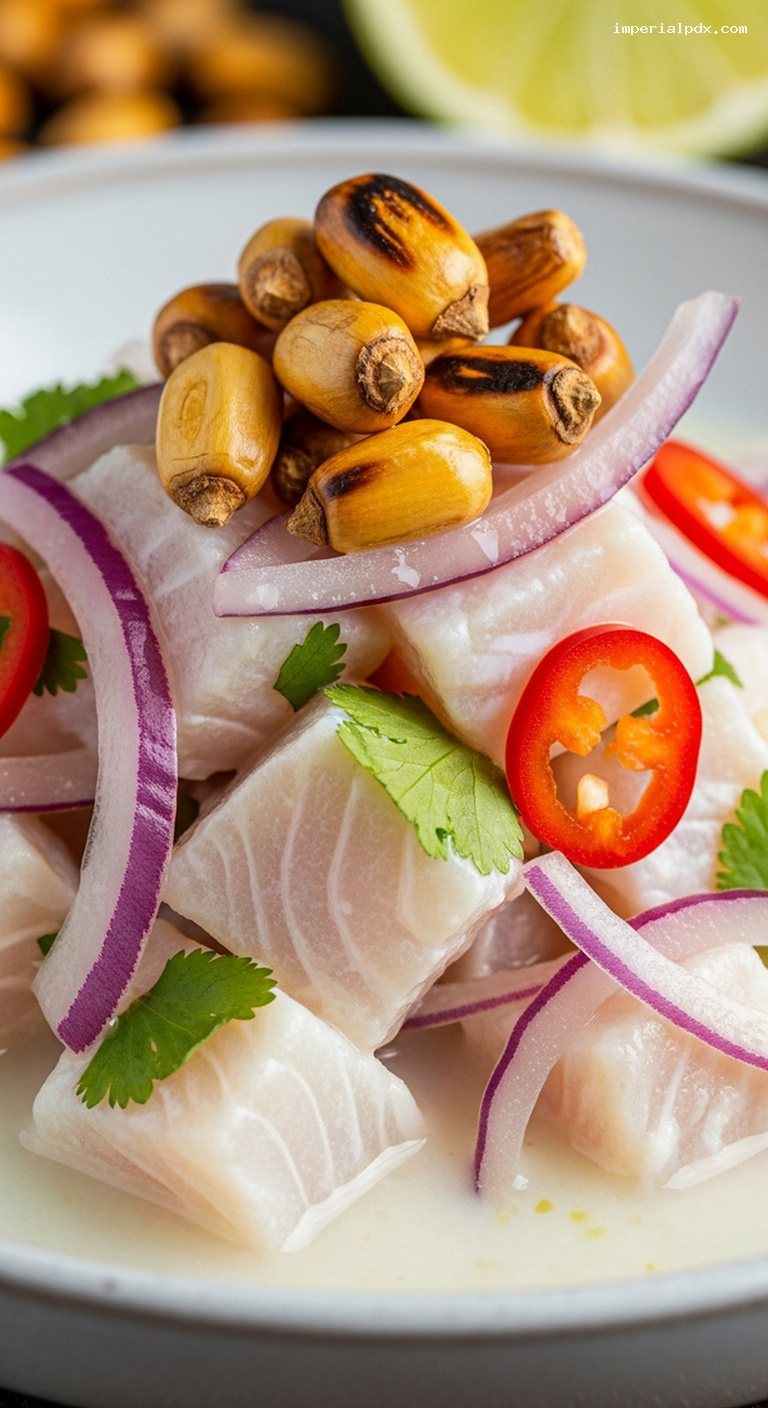
Let the fish cure in the lime juice for 10–15 minutes. You will see the outside of each cube turn opaque and firm while the center stays tender. For a more traditional Peruvian texture, aim for about 10–12 minutes; for a firmer, more “cooked” texture, go up to 15 minutes, but avoid going much longer or the fish will become chalky.
Step 5: Toast the Corn for Crunch
While the fish is curing, toast the corn. In a dry skillet, heat 1 tablespoon neutral oil over medium heat. Add the cancha (or other large-kernel corn) in a single layer. Stir or shake the pan frequently so the kernels toast evenly.
Cook for 8–10 minutes, until the corn is golden in spots, fragrant, and some kernels begin to crackle or puff slightly. Lower the heat if they start to burn. Sprinkle with 1/4 teaspoon salt (or to taste), toss, and remove from the heat. Let the toasted corn cool slightly; it will crisp up as it sits.
Step 6: Finish the Ceviche with Onion and Herbs
Drain the red onion slices very well and pat dry with a clean kitchen towel or paper towels. You want them crisp, not watery, so they do not dilute the marinade.
Remove the bowl of curing fish from the fridge. The fish should now be mostly opaque on the outside. Gently fold in the drained red onion and the remaining sliced chili. Taste a spoonful of fish and marinade. Adjust with a little more lime juice, salt, or pepper as needed. Finally, sprinkle in the remaining chopped cilantro, reserving a bit for garnish, and fold once more.
Step 7: Plate and Serve Immediately
Ceviche is at its best right after the curing time, when the fish is silky and the lime juice is vibrant. Arrange a few lettuce leaves on each plate or in shallow bowls. If using, add slices of cooked sweet potato on one side.
Spoon the ceviche into the center, making sure each serving includes plenty of fish, onion, chili, and some of the lime “leche de tigre” marinade. Top generously with toasted corn for crunch and a final sprinkle of fresh cilantro. Serve right away with extra lime wedges on the side.
Pro Tips
- Keep everything cold: Chill your bowl, lime juice, and fish. A cold environment keeps the fish texture firm and the flavors bright.
- Do not over-cure: More lime time is not better. Around 10–15 minutes is ideal; much longer and the fish can turn tough and dry.
- Use fresh limes only: Bottled lime juice lacks aroma and can be bitter. Freshly squeezed juice is critical for a good ceviche.
- Slice onions and chili very thinly: Thinner slices blend into the dish, giving flavor and crunch without overwhelming the fish.
- Serve immediately: Ceviche waits for no one. Have your bowls, sides, and toasted corn ready before you mix everything together.
Variations
- Mixed seafood ceviche: Use a combination of white fish, small shrimp, and scallops. Cure shrimp and scallops the same way, but be sure they are extremely fresh and all cut to similar sizes.
- Mild and citrusy: Skip most of the chili and add a splash of orange juice (2–3 tbsp) to the lime for a rounder citrus flavor. Great for those who prefer less heat.
- Tropical ceviche: Stir in 1/2 cup small cubes of ripe mango or pineapple just before serving for a sweet contrast to the lime and chili.
Storage & Make-Ahead
Ceviche is best eaten fresh, within 15–20 minutes of curing. After about 1 hour, the fish will continue to “cook” in the lime juice and become firmer and less delicate. If you must store leftovers, cover and refrigerate for up to 12–18 hours, understanding the texture will be more fully cooked and less silky.
For make-ahead prep, you can:
- Slice the onion and chili, chop cilantro, and store them separately in the fridge for up to 1 day.
- Juice the limes up to 1 day ahead and keep the juice in a tightly sealed jar in the refrigerator.
- Toast the corn up to 1 day ahead; cool completely and store in an airtight container at room temperature.
Do not cut or cure the fish ahead of time. Cut the fish and combine with lime juice only shortly before serving for the best texture and food safety.
Nutrition (per serving)
Approximate values per appetizer serving (1 of 4): 250 calories; 20 g protein; 10 g fat; 20 g carbohydrates (mostly from corn and optional sweet potato); 2 g fiber; 2 g sugar; 520 mg sodium. Actual values will vary based on the specific fish used, portion sizes, and sides.