Quick Recipe Version (TL;DR)
Quick Ingredients
- 1 1/4 cups (150 g) all-purpose flour
- 1/4 cup (30 g) almond flour (optional but recommended)
- 1/2 cup (60 g) powdered sugar
- 1/4 teaspoon fine sea salt
- 7 tablespoons (100 g) cold unsalted butter, cubed (for dough)
- 1 large egg yolk
- 1–2 tablespoons ice-cold water or heavy cream, as needed
- 1 3/4 pounds (800 g) ripe mirabelle plums, pitted and halved
- 1/2 cup (100 g) granulated sugar, divided
- 3 tablespoons (40 g) unsalted butter, very soft or melted (for filling)
- 1 tablespoon (8 g) cornstarch
- 1 teaspoon fresh lemon juice
- 1 tablespoon apricot jam + 1 teaspoon water (optional glaze)
Do This
- 1. Make dough: pulse flours, powdered sugar, and salt; cut in cold butter, then mix in egg yolk and just enough cold water to form a soft dough. Flatten into a disk, wrap, and chill 45 minutes.
- 2. Roll dough to a 11–12 inch (28–30 cm) circle. Fit into a 9 inch (23 cm) tart pan with removable bottom, trim, and chill 15 minutes while heating the oven to 375°F (190°C).
- 3. Line the chilled shell with parchment and fill with pie weights. Blind-bake 15 minutes, remove weights, and bake 5 minutes more until just turning golden.
- 4. Sprinkle the warm crust with cornstarch. Mix 1/4 cup (50 g) sugar with lemon juice and toss gently with the halved mirabelles.
- 5. Sprinkle remaining 1/4 cup (50 g) sugar over the crust, dot or drizzle with 3 tablespoons soft butter, then tightly arrange plums (cut side up) in concentric circles.
- 6. Bake 30–35 minutes until the plums are soft, edges caramelized, and juices bubbling. Brush with melted apricot jam, cool until just warm, and serve.
Why You’ll Love This Recipe
- A classic French tart that lets fragrant mirabelle plums shine with minimal ingredients.
- Thin, crisp, buttery crust with caramelized, jammy fruit and lightly chewy edges.
- Simple, homey technique that delivers an elegant bakery-style dessert.
- Works beautifully with fresh mirabelles from the market, orchard, or garden.
Grocery List
- Produce: 1 3/4 pounds (800 g) mirabelle plums, 1 lemon
- Dairy: Unsalted butter, 1 large egg (for yolk), optional heavy cream for serving
- Pantry: All-purpose flour, almond flour (optional), powdered sugar, granulated sugar, fine sea salt, cornstarch, apricot jam (optional), vanilla extract or vanilla sugar (optional)
Full Ingredients
Sweet Tart Dough (Pâte Sucrée)
- 1 1/4 cups (150 g) all-purpose flour
- 1/4 cup (30 g) almond flour (for flavor and to help absorb juices; can substitute more all-purpose flour)
- 1/2 cup (60 g) powdered sugar
- 1/4 teaspoon fine sea salt
- 7 tablespoons (100 g) cold unsalted butter, cut into small cubes
- 1 large egg yolk
- 1–2 tablespoons ice-cold water or cold heavy cream, as needed
Mirabelle Plum Filling
- 1 3/4 pounds (800 g) ripe mirabelle plums, washed, pitted, and halved
- 1/2 cup (100 g) granulated sugar, divided
- 3 tablespoons (40 g) unsalted butter, very soft or gently melted
- 1 tablespoon (8 g) cornstarch
- 1 teaspoon fresh lemon juice
- 1/2 teaspoon vanilla extract or 1 teaspoon vanilla sugar (optional, for a subtle aroma)
- Pinch of fine sea salt
Optional Glaze & Serving
- 1 tablespoon apricot jam
- 1 teaspoon water
- Lightly whipped cream, crème fraîche, or vanilla ice cream, for serving (optional)
Step-by-Step Instructions
Step 1: Make the sweet tart dough
In a medium bowl, whisk together the all-purpose flour, almond flour, powdered sugar, and salt. If you prefer, you can do this in a food processor.
Add the cold cubed butter. Using your fingertips, a pastry cutter, or short pulses in the food processor, cut the butter into the dry ingredients until the mixture looks like coarse crumbs with some pea-sized bits of butter remaining. These little pieces of butter will help create a tender, crisp crust.
Add the egg yolk and 1 tablespoon of ice-cold water or cream. Mix gently with a fork (or pulse) until the dough just begins to clump together. If it is still very dry and sandy, add up to 1 more tablespoon of cold water, a teaspoon at a time, just until it forms moist clumps when pressed.
Turn the dough onto a lightly floured surface and gently press it together into a disk. Do not knead; handle it as little as possible to keep it tender.
Step 2: Chill and roll out the dough
Wrap the dough disk tightly in plastic wrap or place it in a covered container. Chill for at least 45 minutes, or up to 2 days. Chilling relaxes the gluten and firms the butter, which prevents shrinkage and creates a crisp crust.
When ready to roll, lightly flour your work surface and rolling pin. Unwrap the chilled dough and let it sit for 2–3 minutes at room temperature if it is very firm. Roll it out into an even circle about 11–12 inches (28–30 cm) in diameter and about 1/8 inch (3 mm) thick, rotating the dough and dusting lightly with flour as needed to prevent sticking.
Step 3: Line the tart pan and chill again
Carefully transfer the rolled dough to a 9 inch (23 cm) fluted tart pan with a removable bottom. The easiest way is to loosely roll the dough around the rolling pin, then unroll it over the pan.
Gently ease the dough into the corners and up the sides, pressing it into the flutes without stretching. Patch any tears with extra dough scraps. Trim excess dough by rolling the pin over the top edge or by cutting with a small knife.
Prick the base lightly with a fork (do not go all the way through). Place the lined tart pan in the refrigerator to chill for 15–20 minutes while you heat the oven. This second chill helps the dough keep its shape.
Step 4: Blind-bake the crust
Preheat the oven to 375°F (190°C) with a rack in the middle position. Place a baking sheet in the oven to heat; baking the tart on a hot sheet helps crisp the bottom.
Cut a piece of parchment paper large enough to cover the tart shell. Press it gently into the chilled shell and fill with pie weights, dried beans, or uncooked rice, spreading them evenly.
Place the tart pan on the preheated baking sheet and bake for 15 minutes. Then carefully lift out the parchment and weights. Return the bare shell to the oven and bake for another 5 minutes, until the base looks set and just barely golden, but not browned. Remove the pan from the oven and leave the oven on at 375°F (190°C).
Step 5: Prepare the mirabelles and the sugar-butter bed
While the shell is blind-baking, prepare the plums. Wash the mirabelles, dry them well, then halve each one along the natural seam and remove the pit. Because they are small, a small paring knife works best. Set the halved plums in a bowl.
Sprinkle the plums with 1/4 cup (50 g) of the granulated sugar, the cornstarch, lemon juice, vanilla (if using), and a tiny pinch of salt. Toss gently just to coat. The cornstarch will lightly thicken the juices as they bake, preventing a soggy base.
When the tart shell comes out of the oven, immediately sprinkle any remaining dry cornstarch from the bowl evenly over the warm crust base (if some is left), or dust the base with a small extra pinch of cornstarch if needed. This creates a barrier for the juices.
Next, sprinkle the remaining 1/4 cup (50 g) granulated sugar evenly over the bottom of the warm tart shell. Dot or drizzle the very soft or melted 3 tablespoons (40 g) butter over this sugar layer. This combination forms a thin bed that will caramelize around the fruit, giving you those delicious golden edges.
Step 6: Arrange the plums and bake the tart
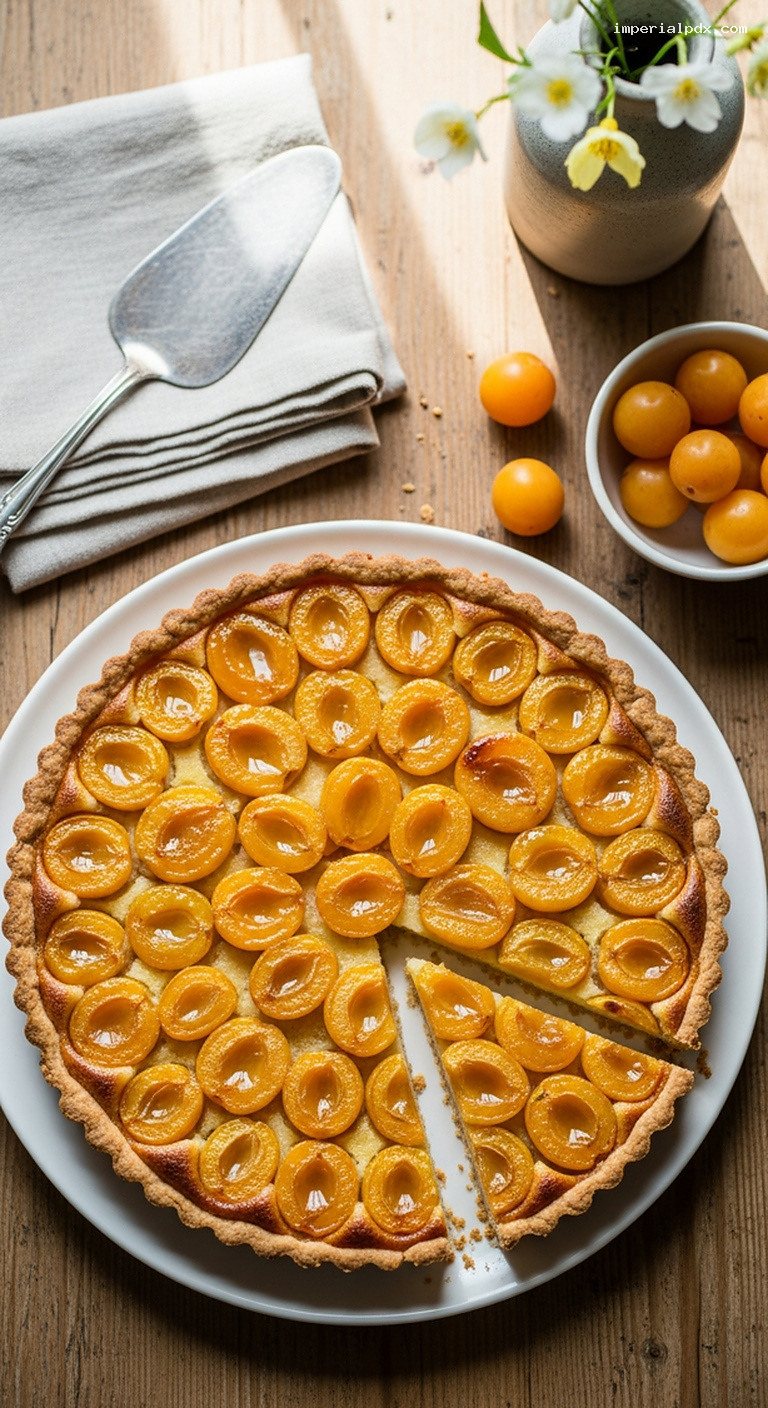
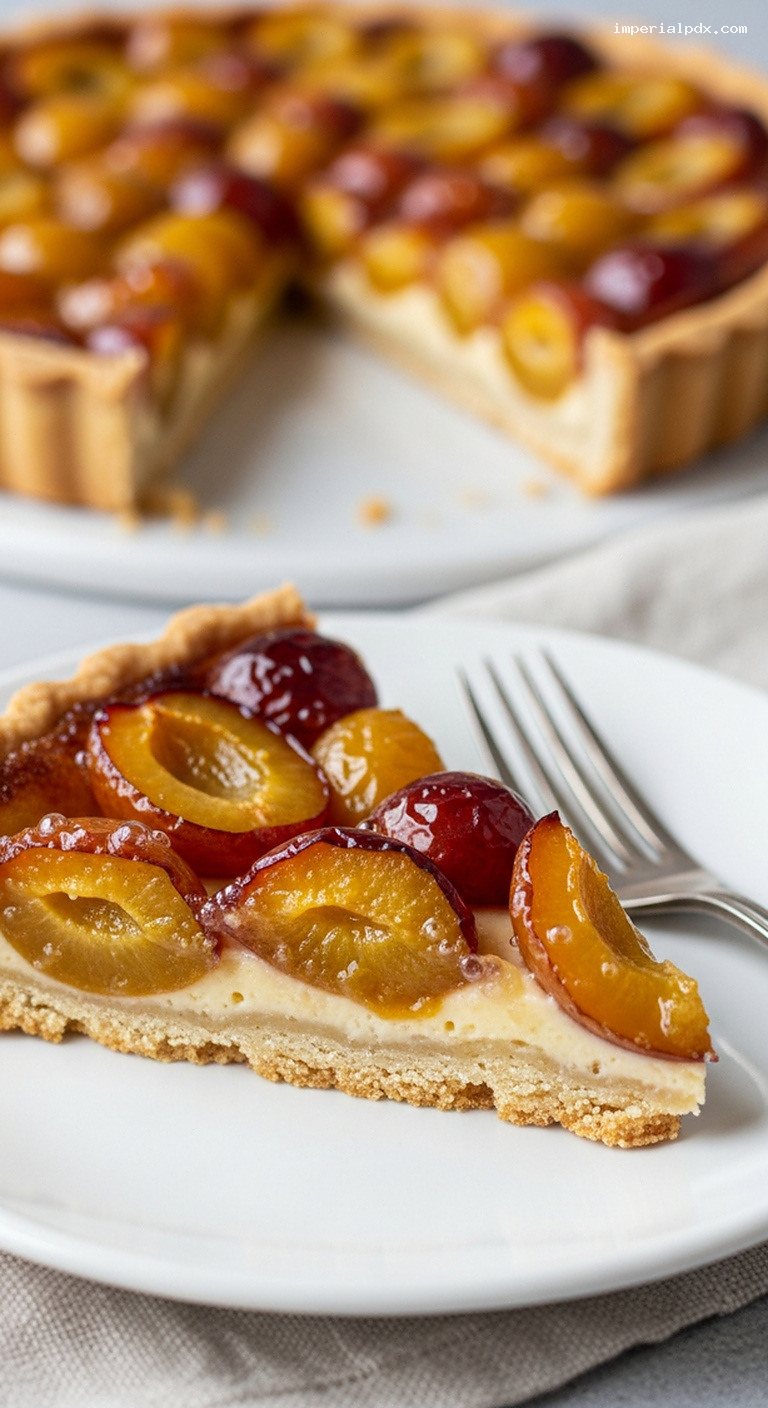
Arrange the mirabelle halves over the sugar-butter layer, cut side up, packing them in tightly in concentric circles from the outer edge toward the center. Because mirabelles shrink slightly as they bake, it is better to crowd them generously now; this gives the tart a full, abundant look later.
Pour any juices left in the bowl evenly over the plums. Place the tart pan back onto the hot baking sheet and bake at 375°F (190°C) for 30–35 minutes. The tart is done when:
- The crust edges are a deep golden brown.
- The plums are soft and slightly wrinkled on top.
- The juices are bubbling and look syrupy and lightly caramelized around the edges.
If the crust browns too quickly before the plums are done, loosely tent the edges with strips of foil and continue baking.
Step 7: Glaze, cool, and serve
Transfer the baked tart to a cooling rack. If using the apricot glaze, gently warm the apricot jam with 1 teaspoon water in a small saucepan or microwave until fluid. Brush it lightly over the hot plums to give them a beautiful sheen and a hint of extra fruitiness.
Let the tart cool for at least 20–30 minutes before unmolding. To unmold, place the tart pan on an upside-down bowl or can and let the ring drop away. Slide the tart carefully onto a serving plate or leave it on the pan base for ease.
Serve the tarte aux mirabelles slightly warm or at room temperature, plain or with softly whipped cream, crème fraîche, or a small scoop of vanilla ice cream. The contrast of buttery crust, fragrant plums, and caramelized edges is at its best the day it is baked.
Pro Tips
- Use ripe but not mushy plums. Mirabelles should be fragrant and sweet, with a little give when pressed, but they should still hold their shape when halved.
- Keep the dough cold. Cold butter and well-chilled dough prevent shrinking and produce a crisper, more delicate crust. If the dough softens while working, pop it back into the fridge for 10 minutes.
- Pack the plums tightly. Mirabelles shrink as they bake. Arrange them snugly so the baked tart looks full and the fruit layer is generous.
- Use a hot baking sheet. Preheating the baking sheet under the tart helps set the bottom quickly, preventing sogginess from the plum juices.
- Adjust sweetness to taste. Mirabelles vary in sweetness. If your plums are very tart, increase the sugar in the filling by 1–2 tablespoons; if they are very sweet, you can reduce it slightly.
Variations
- Almond base variation: Before adding the sugar-butter bed, sprinkle 2–3 tablespoons of finely ground almonds or hazelnuts over the blind-baked crust. This adds a subtle nutty flavor and absorbs extra juices.
- Rustic galette instead of tart: Roll the dough into a larger, rough circle on parchment, mound the sugared plums in the center, and fold the edges over to partially cover the fruit. Bake directly on a baking sheet for a more casual, free-form dessert.
- With a hint of spice: For a cozy twist, add a small pinch (1/8 teaspoon) of ground cinnamon or cardamom to the sugar tossed with the plums. Keep it light so the delicate mirabelle flavor still leads.
Storage & Make-Ahead
The tart is best on the day it is baked, when the crust is crispiest and the fruit is freshly caramelized. However, leftovers can be stored, covered, at cool room temperature for up to 1 day or in the refrigerator for up to 3 days. The crust will gradually soften from the fruit juices but will still taste lovely.
To rewarm, place slices on a baking sheet in a 300°F (150°C) oven for 8–10 minutes until just warmed through. Avoid the microwave, which can make the crust soggy.
For make-ahead preparation, you can make the tart dough up to 2 days in advance and keep it chilled, or freeze it (well wrapped) for up to 1 month. You can also blind-bake the tart shell in the morning, let it cool, and then fill and bake with the plums later the same day.
Nutrition (per serving)
Approximate values per slice (1 of 8): about 350 calories; 18 g fat; 47 g carbohydrates; 4 g protein; 3 g fiber; 26 g sugars. Actual values will vary based on the size and sweetness of the plums and the exact ingredients used.