Quick Recipe Version (TL;DR)
Quick Ingredients
- 1 1/4 cups (150 g) all-purpose flour
- 2 tbsp granulated sugar
- 1/4 tsp fine sea salt
- 8 tbsp (115 g) cold unsalted butter, in cubes
- 1 large egg yolk
- 2–3 tbsp ice water
- 1 3/4–2 lb (800–900 g) ripe but firm purple plums (quetsches)
- 1/4 cup (30 g) ground almonds or fine dry breadcrumbs
- 1/3 cup (65 g) granulated sugar, plus 1 tbsp light brown sugar
- 1 tbsp cornstarch
- 1/2 tsp ground cinnamon (optional)
- 1 tsp lemon juice
- 1 tbsp unsalted butter, in tiny cubes (optional)
Do This
- 1. Make the dough: pulse flour, sugar, and salt; cut in cold butter, then mix in yolk and just enough ice water to form a soft dough. Flatten, wrap, and chill 30–45 minutes.
- 2. Roll chilled dough into a circle and line a 9–10 in tart pan. Trim edges, prick base, and chill 20–30 minutes while you prep the plums.
- 3. Heat oven to 375°F (190°C). Set a baking sheet on the middle rack to preheat.
- 4. Halve and pit plums. In a small bowl, mix ground almonds (or breadcrumbs), 1 tbsp sugar, and a pinch of cinnamon.
- 5. Sprinkle almond mixture over the chilled crust. Toss remaining sugars with cornstarch, cinnamon, salt, and lemon juice; gently coat plums. Arrange plums tightly in the shell, cut side up. Dot with butter if using.
- 6. Bake tart on the preheated baking sheet for 40–45 minutes, until the plums are jammy and edges deeply caramelized, and crust is golden brown.
- 7. Cool at least 30–40 minutes before slicing so juices thicken. Serve warm or at room temperature, plain or with crème fraîche.
Why You’ll Love This Recipe
- Classic Alsatian-style tart that showcases the deep, winey flavor of purple plums (quetsches) with minimal fuss.
- Juicy fruit and a crisp, buttery crust bake together into a naturally jammy, caramelized topping.
- No custard or heavy fillings to make; the plums and a little sugar do all the work.
- Perfect make-ahead dessert for late-summer dinners, brunches, or coffee breaks.
Grocery List
- Produce: 1 3/4–2 lb (800–900 g) purple plums (Italian prune plums / quetsches), 1 lemon (for juice and optional zest)
- Dairy: Unsalted butter, 1 large egg (for yolk), optional crème fraîche or whipped cream for serving
- Pantry: All-purpose flour, granulated sugar, light brown sugar, fine sea salt, ground almonds or fine dry breadcrumbs, cornstarch, ground cinnamon (optional), vanilla extract (optional for serving)
Full Ingredients
Sweet Shortcrust (Pâte Brisée Sucrée)
- 1 1/4 cups (150 g) all-purpose flour
- 2 tbsp (25 g) granulated sugar
- 1/4 tsp fine sea salt
- 8 tbsp (115 g) cold unsalted butter, cut into small cubes
- 1 large egg yolk
- 2–3 tbsp ice-cold water, as needed
Plum Topping
- 1 3/4–2 lb (800–900 g) ripe but firm purple plums (Italian prune plums / quetsches), halved and pitted
- 1/4 cup (30 g) ground almonds or fine dry breadcrumbs (to absorb juices and keep crust crisp)
- 1/3 cup (65 g) granulated sugar
- 1 tbsp (12 g) light brown sugar
- 1 tbsp (8 g) cornstarch
- 1/2 tsp ground cinnamon (optional but lovely)
- Pinch fine sea salt
- 1 tsp freshly squeezed lemon juice
- 1 tbsp unsalted butter, cut into tiny cubes (optional, for extra richness)
To Serve (Optional)
- Lightly sweetened whipped cream or crème fraîche
- A little lemon zest or vanilla extract in the cream (optional)
Step-by-Step Instructions
Step 1: Make the tart dough
In a medium bowl, whisk together the flour, granulated sugar, and salt. Add the cold butter cubes and cut them into the flour using a pastry cutter or your fingertips until the mixture looks like coarse crumbs with some pea-sized bits of butter remaining. If you have a food processor, you can pulse everything a few times instead.
Add the egg yolk and 2 tbsp of ice water. Mix with a fork just until the dough starts to clump together when squeezed. If it still looks dry and crumbly, add up to 1 more tbsp of ice water, a teaspoon at a time. You want a soft but not sticky dough that holds together when pressed.
Turn the dough out onto a lightly floured surface and gently press it into a disk. Avoid kneading; just bring it together so it is smooth. Wrap tightly in plastic wrap or place in a covered container, and chill in the refrigerator for 30–45 minutes, until firm but still pliable.
Step 2: Roll out and line the tart pan
Lightly flour your work surface and rolling pin. Unwrap the chilled dough and let it sit for 3–5 minutes if it feels rock-hard. Roll the dough into a circle about 11–12 in (28–30 cm) in diameter and about 1/8 in (3 mm) thick, rotating and lightly flouring as needed to prevent sticking.
Carefully transfer the dough to a 9–10 in (23–26 cm) tart pan with a removable bottom. The easiest way is to loosely roll the dough around the rolling pin and unroll it over the pan. Gently lift and press the dough into the corners and up the sides without stretching it. Trim excess dough so it sits just above the rim, then use your fingers to neaten the edge.
Prick the base of the crust all over with a fork (this helps prevent puffing). Place the lined tart pan on a small baking sheet and refrigerate for 20–30 minutes. Chilling at this stage is important; it helps the crust stay crisp and reduces shrinking.
Step 3: Preheat the oven and prepare the almond base
About 15 minutes before baking, preheat your oven to 375°F (190°C). Place a sturdy baking sheet or pizza stone on the middle rack to heat up; baking the tart on this preheated surface encourages a well-browned, crisp bottom crust.
In a small bowl, combine the ground almonds (or fine dry breadcrumbs) with 1 tbsp of the granulated sugar and a pinch of cinnamon if you like. This mixture forms a thin barrier that soaks up extra plum juices so the pastry does not become soggy.
Take the chilled tart shell from the refrigerator. Evenly sprinkle the almond-sugar mixture over the base of the crust.
Step 4: Prepare the plums
Wash the plums and dry them well. Cut each plum in half and remove the pit. If the plums are very large, you can cut each half into two wedges, but for traditional Alsatian presentation, halves are lovely and dramatic.
In a medium bowl, mix together the remaining granulated sugar, light brown sugar, cornstarch, cinnamon (if using), and a pinch of salt. Add the lemon juice and stir until the mixture looks sandy and slightly clumpy.
Add the plum halves to the bowl and gently toss with your hands or a spatula so they are lightly coated with the sugar mixture. Try not to break them up; they will release more juice as they bake.
Step 5: Arrange the plums in the tart shell
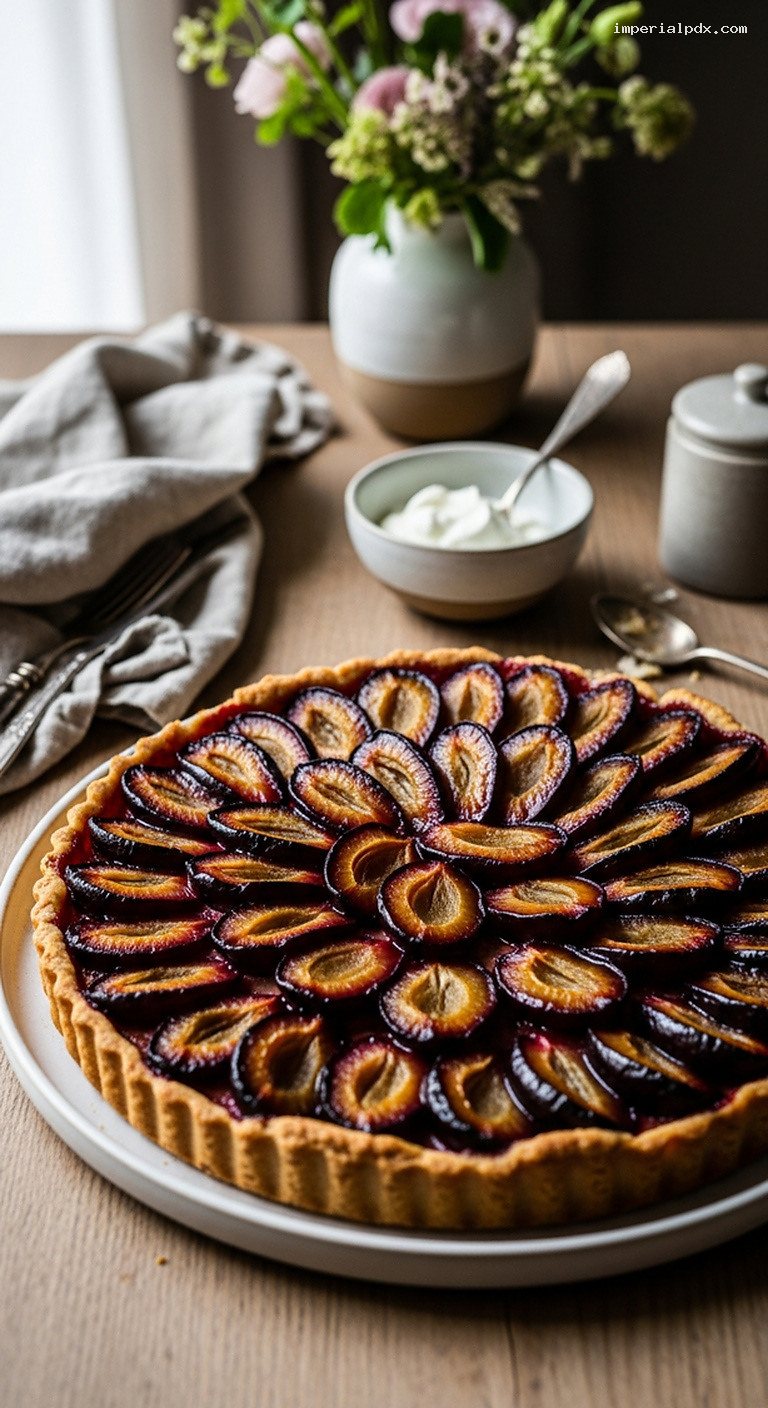
Working from the outside edge toward the center, arrange the plums cut side up in concentric circles inside the prepared tart shell. Pack them quite tightly; they will shrink as they cook. For a very traditional look, you can tilt each plum half slightly so they lean against one another, like closely packed roof tiles.
Once all the plums are arranged, scrape any remaining sugar mixture from the bowl over the top. If you like, dot the plums with the tiny cubes of butter for a silkier, more caramelized finish.
Step 6: Bake until jammy and caramelized
Set the tart pan (still on its small baking sheet) directly onto the preheated baking sheet or pizza stone in the oven. Bake at 375°F (190°C) for 40–45 minutes, turning the tart once halfway through for even coloring.
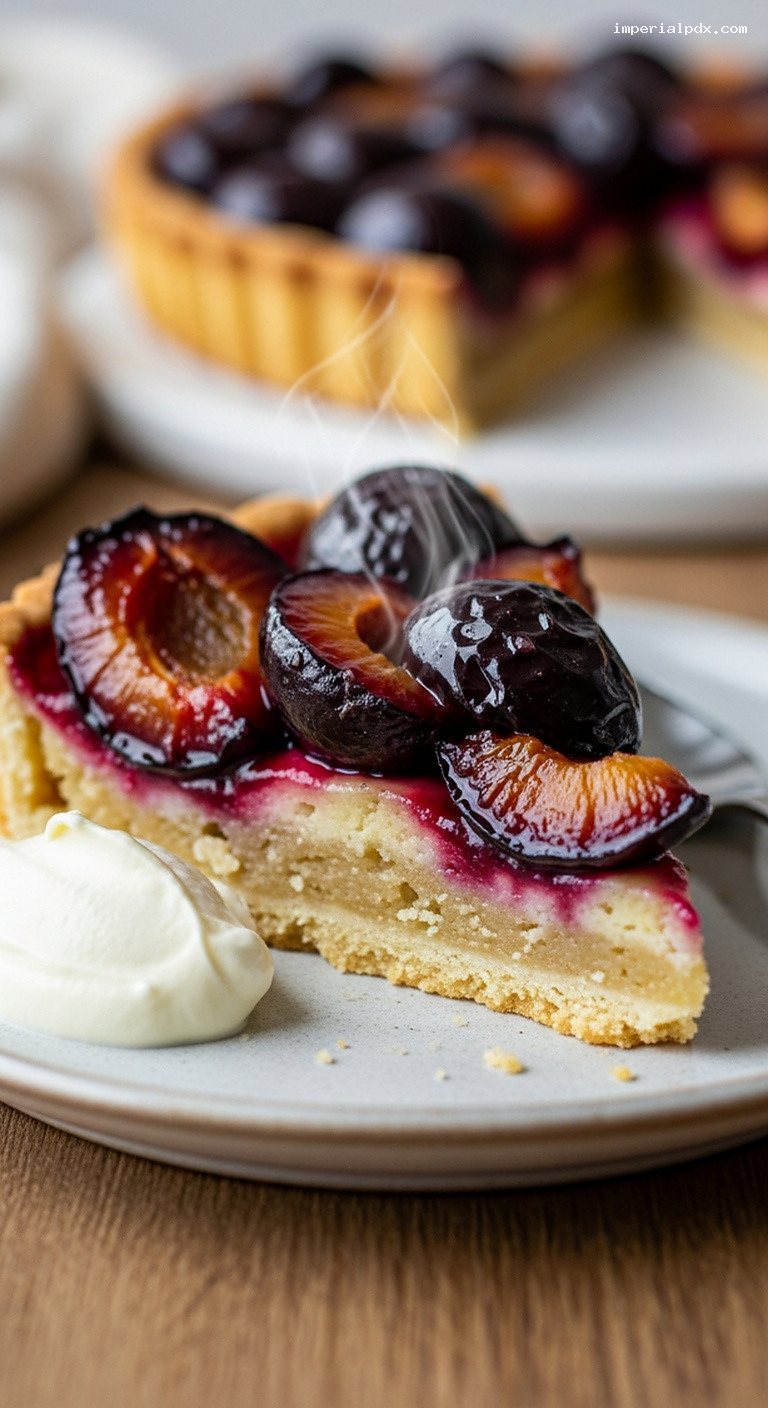
The tart is ready when the crust is deep golden brown, the plums are very soft, and the juices are thick, bubbling, and starting to turn syrupy and slightly caramelized at the edges. The surface should look glossy and almost jam-like in places, with some darker spots where the sugars have caramelized.
Step 7: Cool, unmold, and serve
Remove the tart from the oven and place it on a cooling rack. Let it cool in the pan for at least 30–40 minutes; this rest helps the juices thicken so the slices hold together instead of running.
When cool enough to handle, carefully push up the removable bottom of the tart pan and slide the tart onto a serving plate. Serve slightly warm or at room temperature. It is wonderful on its own, or with a spoonful of crème fraîche or softly whipped cream on the side.
This tart is at its very best the day it is baked, when the crust is crisp and the plums are still a bit warm and jammy.
Pro Tips
- Choose the right plums: Use firm, ripe purple plums (Italian prune plums / quetsches) if you can find them. They are naturally sweet-tart, bake without turning mushy, and their juices thicken into a deep purple jam.
- Keep everything cold for a flaky crust: Cold butter, cold egg yolk, and cold water are key. If your kitchen is warm, pop the flour and even the rolling pin into the fridge for 10–15 minutes before starting.
- Do not skimp on chilling: Chilling the dough before and after rolling prevents shrinkage and helps the crust stay crisp under the juicy fruit.
- Bake on a hot surface: The preheated baking sheet or stone under the tart mimics the effect of a bakery deck oven, giving you a beautifully browned base.
- Let it rest before slicing: It is tempting to cut into it right away, but a short rest lets the syrupy plum juices set into a glossy, sliceable layer.
Variations
- Streusel-topped quetsche tart: Before baking, sprinkle the plums with a simple streusel made from 1/3 cup flour, 1/4 cup sugar, and 3 tbsp soft butter rubbed together. This adds a crunchy, buttery topping.
- Alsatian custard version: About 15 minutes before the end of baking, pour a light custard made from 1 egg, 1/3 cup cream, and 2 tbsp sugar (well whisked) over the partially baked plums, then finish baking until set.
- Frangipane base: Instead of sprinkling plain ground almonds, spread a thin layer of almond cream (frangipane) over the crust (butter, sugar, egg, ground almonds) before topping with plums for a richer, bakery-style tart.
Storage & Make-Ahead
The tart is best enjoyed the day it is baked, when the crust is crisp and the plums are freshly jammy. However, leftovers keep well:
Cool the tart completely, then cover and store at room temperature for up to 1 day, or in the refrigerator for up to 3 days. If refrigerated, let slices come to room temperature, or rewarm gently in a 300°F (150°C) oven for 10–15 minutes to refresh the crust.
You can make the tart dough up to 2 days in advance and keep it wrapped in the refrigerator, or freeze it (well wrapped) for up to 2 months. Thaw overnight in the fridge before rolling. The lined tart shell can also be wrapped and chilled for up to 24 hours before filling and baking.
Nutrition (per serving)
Approximate values for 1 of 8 slices (without cream or crème fraîche): about 300 calories, 13 g fat (8 g saturated), 42 g carbohydrates, 3 g fiber, 22 g sugars, 5 g protein, and 150 mg sodium. These numbers are estimates and will vary with exact ingredients and serving sizes.