Quick Recipe Version (TL;DR)
Quick Ingredients
- 500 g (4 cups) all-purpose flour
- 60 g (1/3 cup) granulated sugar
- 7 g (2 1/4 tsp) instant or active dry yeast
- 1/2 tsp fine salt
- 3 large eggs, room temperature
- 125 ml (1/2 cup) lukewarm whole milk
- 60 g (4 tbsp) very soft unsalted butter
- 1 tsp vanilla extract
- 2 tbsp dark rum or 1 1/2 tbsp orange blossom water
- Finely grated zest of 1 orange or lemon (optional)
- 1–1.5 L neutral frying oil (sunflower, canola, peanut)
- 120 g (1 cup) powdered sugar, plus extra for dusting
Do This
- 1. Warm the milk until just lukewarm (not hot). Stir in 1 tbsp of the sugar and the yeast; let sit 5–10 minutes until foamy.
- 2. In a large bowl, combine flour, remaining sugar, and salt. Add eggs, vanilla, rum or orange blossom water, zest (if using), and the foamy milk. Mix to form a shaggy dough.
- 3. Knead in the soft butter until completely absorbed and the dough is smooth, elastic, and slightly tacky, 8–10 minutes. Shape into a ball, cover, and let rise in a warm place until doubled, about 1 hour.
- 4. Punch down the dough, divide in two, and roll each piece to 3–4 mm thickness. Trim edges, then cut into 4–5 cm squares or diamonds. Cover and rest 15–20 minutes.
- 5. Heat oil to 175°C / 350°F. Fry beignets in batches 1–2 minutes per side until deeply golden and puffed. Do not crowd the pot.
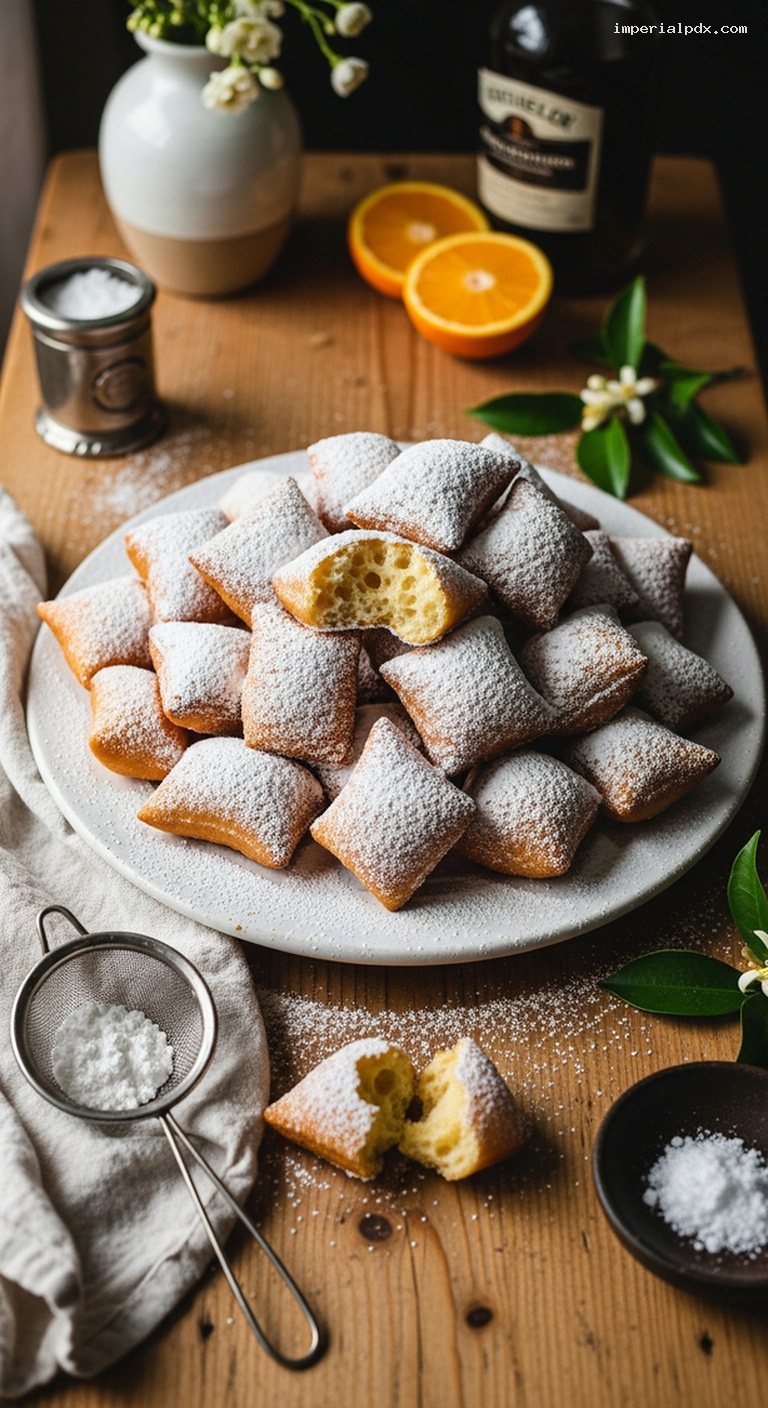
- 6. Drain on paper towels, then immediately shower generously with powdered sugar on all sides. Serve warm while still airy and crisp.
Why You’ll Love This Recipe
- Light, puffy, and delicately crisp beignets that taste like a French carnival stand, fresh from the fryer.
- Beautifully scented with your choice of orange blossom water or dark rum, plus optional citrus zest.
- Make-ahead friendly: the dough can rise in the fridge overnight for fresh beignets in the morning.
- Simple, everyday pantry ingredients but an impressive, festive result perfect for Mardi Gras, Carnival, or weekend brunch.
Grocery List
- Produce: 1 untreated orange or lemon (for zest, optional)
- Dairy: Whole milk, unsalted butter, 3 large eggs
- Pantry: All-purpose flour, granulated sugar, powdered sugar, instant or active dry yeast, fine salt, vanilla extract, dark rum or orange blossom water, neutral frying oil (sunflower, canola, peanut)
Full Ingredients
For the Beignet Dough
- 500 g (4 cups) all-purpose flour, plus extra for dusting
- 60 g (1/3 cup) granulated sugar
- 7 g (2 1/4 tsp) instant or active dry yeast
- 1/2 tsp fine sea salt
- 3 large eggs, at room temperature
- 125 ml (1/2 cup) whole milk, lukewarm (about 38–40°C / 100–105°F)
- 60 g (4 tbsp) unsalted butter, very soft but not melted
- 1 tsp pure vanilla extract
- 2 tbsp dark rum or 1 1/2 tbsp orange blossom water (choose one)
- Finely grated zest of 1 untreated orange or lemon (optional, but highly recommended)
For Frying and Finishing
- 1–1.5 L (about 1–1.5 quarts) neutral oil for deep-frying (sunflower, canola, or peanut)
- 120 g (1 cup) powdered sugar, sifted, plus more as needed for generous dusting
Step-by-Step Instructions
Step 1: Prepare the yeast mixture
Warm the milk gently until it is just lukewarm, about 38–40°C / 100–105°F. It should feel pleasantly warm to the touch, not hot. Pour the milk into a small bowl or measuring jug. Stir in about 1 tablespoon of the granulated sugar (taken from the 60 g total) and sprinkle the yeast over the top. Stir briefly to combine, then let the mixture stand for 5–10 minutes, until it becomes foamy and slightly risen. If the mixture does not foam at all, your yeast may be inactive; start again with fresh yeast to ensure your beignets rise properly.
Step 2: Make the dough
In a large mixing bowl (or the bowl of a stand mixer), combine the flour, remaining granulated sugar, and salt. Make a well in the center. Add the eggs, vanilla extract, rum or orange blossom water, and the citrus zest if you are using it. Pour in the foamy yeast-milk mixture. Using a wooden spoon or the dough hook attachment on low speed, stir until a shaggy, rough dough forms and no visible pockets of dry flour remain. At this stage the dough will look messy and quite sticky, which is normal.
Step 3: Knead in the butter and develop the gluten
Add the very soft butter to the dough in two additions. If kneading by hand, smear the butter into the dough with your fingertips, then knead vigorously on a lightly floured surface for 8–10 minutes, until the dough becomes smooth, elastic, and only slightly tacky but no longer sticky. Resist the urge to add too much extra flour; a slightly soft dough will give you lighter, airier beignets. If using a stand mixer, knead on medium speed for 6–8 minutes, scraping down the bowl as needed, until the dough climbs the hook and pulls away from the sides in a soft, stretchy ball. When you stretch a small piece gently, it should form a thin, almost translucent “window” without tearing easily.
Step 4: First rise
Shape the dough into a smooth ball and place it in a lightly oiled bowl, turning once to coat the surface. Cover the bowl tightly with plastic wrap or a clean damp towel. Let the dough rise in a warm, draft-free spot until doubled in size, about 1 hour at room temperature. Alternatively, for even more flavor and flexibility, you can let the dough rise slowly in the refrigerator for 8–12 hours or overnight; if you do this, bring it back toward room temperature for about 20–30 minutes before rolling it out.
Step 5: Roll and cut the beignets
Punch down the risen dough gently to deflate it and turn it onto a lightly floured work surface. Divide the dough into two equal pieces to make it easier to handle. Working with one piece at a time (keep the other covered), roll the dough out with a rolling pin to a thickness of about 3–4 mm (just under 1/8 inch). Dust with flour as needed to prevent sticking, but keep the surface as light as possible. Trim the edges to form a neat rectangle, then use a sharp knife or pizza wheel to cut the dough into 4–5 cm (1 1/2–2 inch) squares or diamonds. Transfer the pieces to a parchment-lined baking sheet, leaving a little space between them, and cover lightly with a clean towel so they do not dry out. Repeat with the second piece of dough.
Step 6: Second rest
Let the cut beignets rest at room temperature for 15–20 minutes. They will puff slightly during this time, which helps them become extra light and airy when fried. Meanwhile, prepare your frying station: line a tray with paper towels or a clean brown paper bag for draining, and place a wire rack over another tray if you have one. Sift the powdered sugar into a bowl or fine-mesh sieve so it is ready to shower over the hot beignets.
Step 7: Fry and sugar the beignets
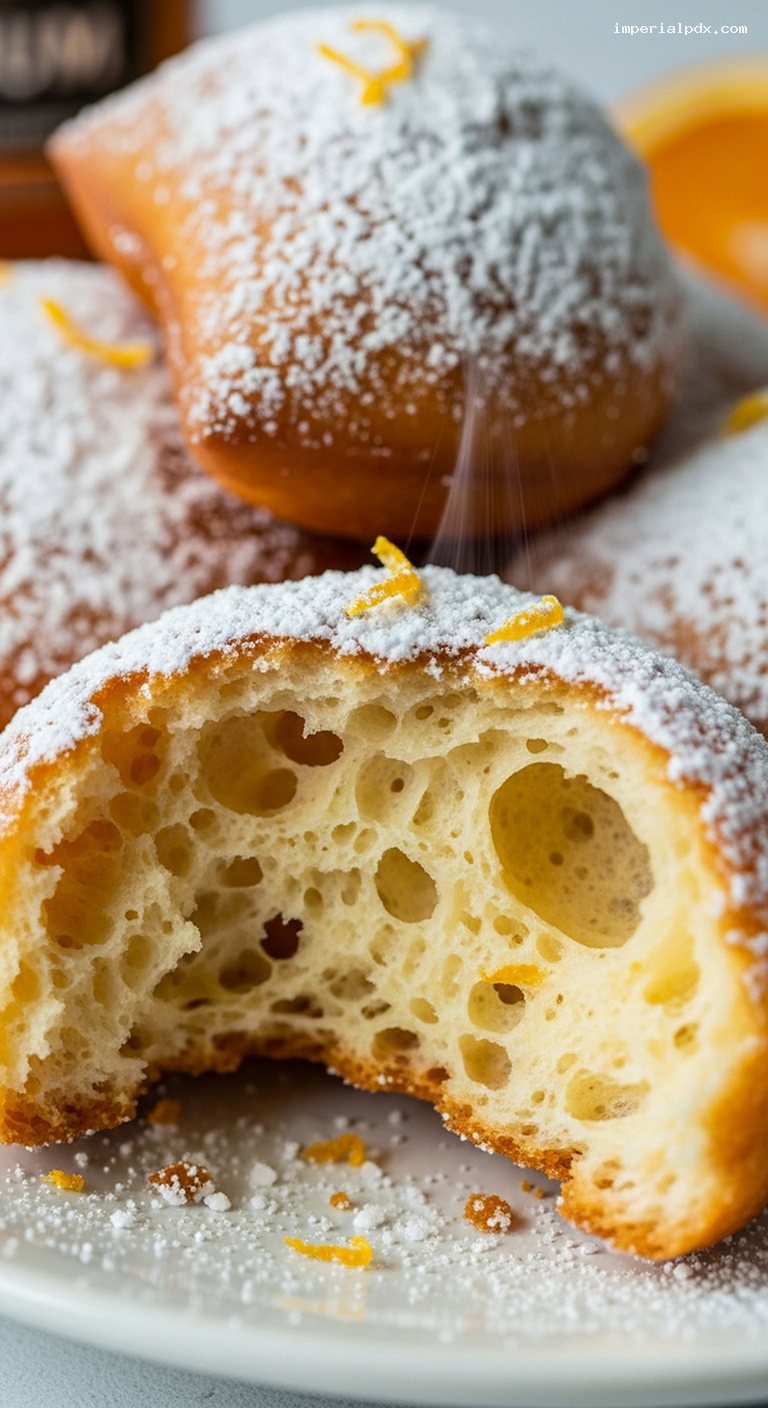
Pour the oil into a deep, heavy pot to a depth of at least 5–7 cm (2–3 inches). Heat over medium heat until the oil reaches 175°C / 350°F; use a thermometer if possible. If you do not have one, drop in a small piece of dough: it should sizzle and rise to the surface within a few seconds, browning to golden in about 1–2 minutes. Fry the beignets in small batches, taking care not to crowd the pot. Gently slide them into the hot oil; they should puff and rise quickly. Fry for 1–2 minutes on the first side, then flip carefully with a slotted spoon or chopsticks and fry another 1–2 minutes, until evenly and deeply golden. Adjust the heat as needed to maintain the temperature. Transfer the fried beignets to the paper-lined tray to drain briefly, then, while they are still very warm, shower them generously with powdered sugar on all sides. Serve immediately, with extra powdered sugar at the table if desired.
Pro Tips
- Use lukewarm, not hot, milk: Too hot will kill the yeast; aim for pleasantly warm to the touch so the dough rises well.
- Soft dough = light beignets: The dough should be slightly tacky but not wet. Adding too much flour will make dense, heavy beignets.
- Control oil temperature: Oil that is too cool will make greasy beignets; too hot will brown them before the centers cook. A thermometer is very helpful.
- Sugar while hot: Dust the powdered sugar on as soon as the beignets are drained; the slight surface moisture helps the sugar cling in a beautiful, snowy layer.
- Test fry one first: Cook a single beignet to check browning time and doneness inside, then adjust your oil temperature and frying time accordingly before doing larger batches.
Variations
- Extra-fragrant orange blossom beignets: Use orange blossom water instead of rum and add both orange zest and a tiny pinch of ground cardamom for a floral, Mediterranean twist.
- Rum and vanilla carnival beignets: Choose dark rum, keep the vanilla, and skip the citrus zest for a warm, cozy aroma that pairs especially well with hot chocolate or coffee.
- Filled beignets: Once fried and cooled slightly, use a piping bag fitted with a narrow tip to fill the centers with jam, pastry cream, or chocolate-hazelnut spread, then dust with powdered sugar.
Storage & Make-Ahead
Beignets de carnaval are at their absolute best within minutes of frying, when they are at their puffiest and the contrast between the crisp exterior and tender interior is greatest. However, you can still plan ahead:
For make-ahead dough, prepare the dough through Step 3, then let it rise slowly in the refrigerator for 8–12 hours or overnight instead of at room temperature. The next day, punch it down, roll, cut, rest briefly, and fry as directed. This schedule is ideal for serving fresh beignets at breakfast or brunch without early-morning kneading.
Leftover fried beignets can be stored in an airtight container at room temperature for up to 1 day. They will lose some of their crispness but remain tasty. To refresh, warm them on a baking sheet in a 160°C / 325°F oven for 5–8 minutes, then dust with a fresh layer of powdered sugar before serving. Beignets do not freeze particularly well after frying, but the cut, un-fried dough squares can be frozen in a single layer, then bagged; fry from frozen, adding an extra minute or so to the cooking time.
Nutrition (per serving)
Approximate values per serving (1/8 of the batch, about 5 beignets): 380 kcal; 6 g protein; 45 g carbohydrates; 18 g fat; 9 g saturated fat; 2 g fiber; 14 g sugars; 260 mg sodium. Actual values will vary depending on the exact size of your beignets and how much oil is absorbed during frying.