Quick Recipe Version (TL;DR)
Quick Ingredients
- 200 g (1 2/3 cups) all-purpose flour
- 30 g (2 1/2 tbsp) sugar + extra for pan
- 1/4 tsp fine salt
- 120 g (8 1/2 tbsp) cold unsalted butter + a little extra to grease pan
- 1 large egg yolk
- 2–3 tbsp (30–45 ml) ice water
- 1 L (4 1/4 cups) whole milk
- 200 ml (3/4 cup + 1 tbsp) heavy cream
- 1 vanilla bean (or 2 1/2 tsp vanilla extract)
- 180 g (3/4 cup + 2 tbsp) sugar
- 80 g (2/3 cup) cornstarch
- 4 large eggs + 2 large egg yolks
- 20 g (1 1/2 tbsp) unsalted butter
- Pinch of fine salt
Do This
- 1. Make dough: Rub flour, sugar, salt, and cold butter together, then add yolk and ice water just until a dough forms. Flatten into a disc, wrap, and chill 1 hour.
- 2. Line pan: Roll dough and line a buttered 23 cm (9 in) deep tart pan or springform. Chill 20 minutes while you preheat oven to 180°C / 350°F.
- 3. Blind-bake: Prick base, line with parchment and weights. Bake 15 minutes, remove weights, bake 5 minutes more until just dry. Cool slightly.
- 4. Infuse milk: Heat milk, cream, and vanilla until steaming. In a bowl, whisk sugar, cornstarch, eggs, yolks, and salt.
- 5. Cook custard: Temper egg mixture with hot milk, return to pot, whisk over medium heat until very thick and bubbling. Off heat, stir in butter (and vanilla extract if using). Strain if lumpy.
- 6. Bake flan: Pour hot custard into crust. Bake 40–50 minutes at 180°C / 350°F until deeply golden-brown on top with a slight wobble. Cool, then chill at least 4 hours before slicing.
Why You’ll Love This Recipe
- Classic French bakery flavor at home: silky vanilla custard in a buttery, flaky crust.
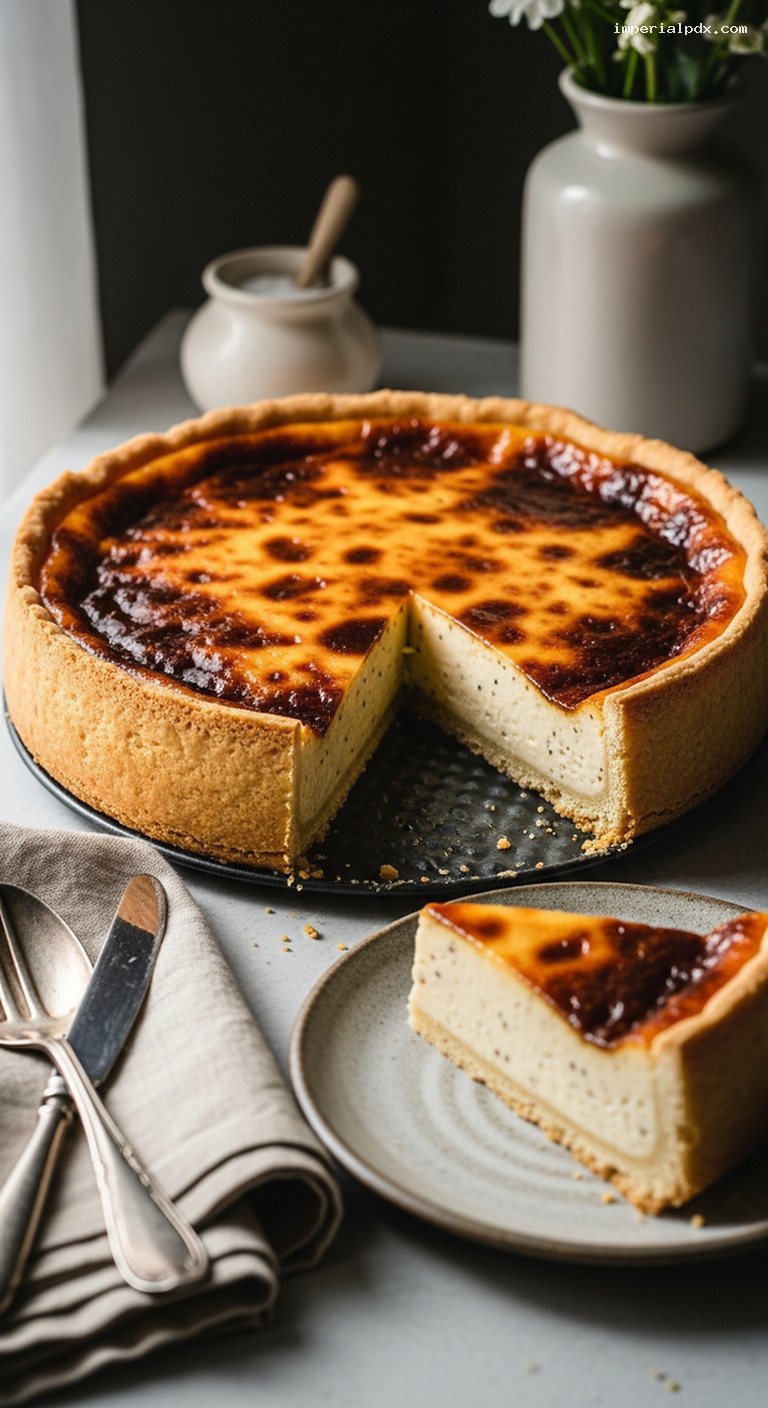
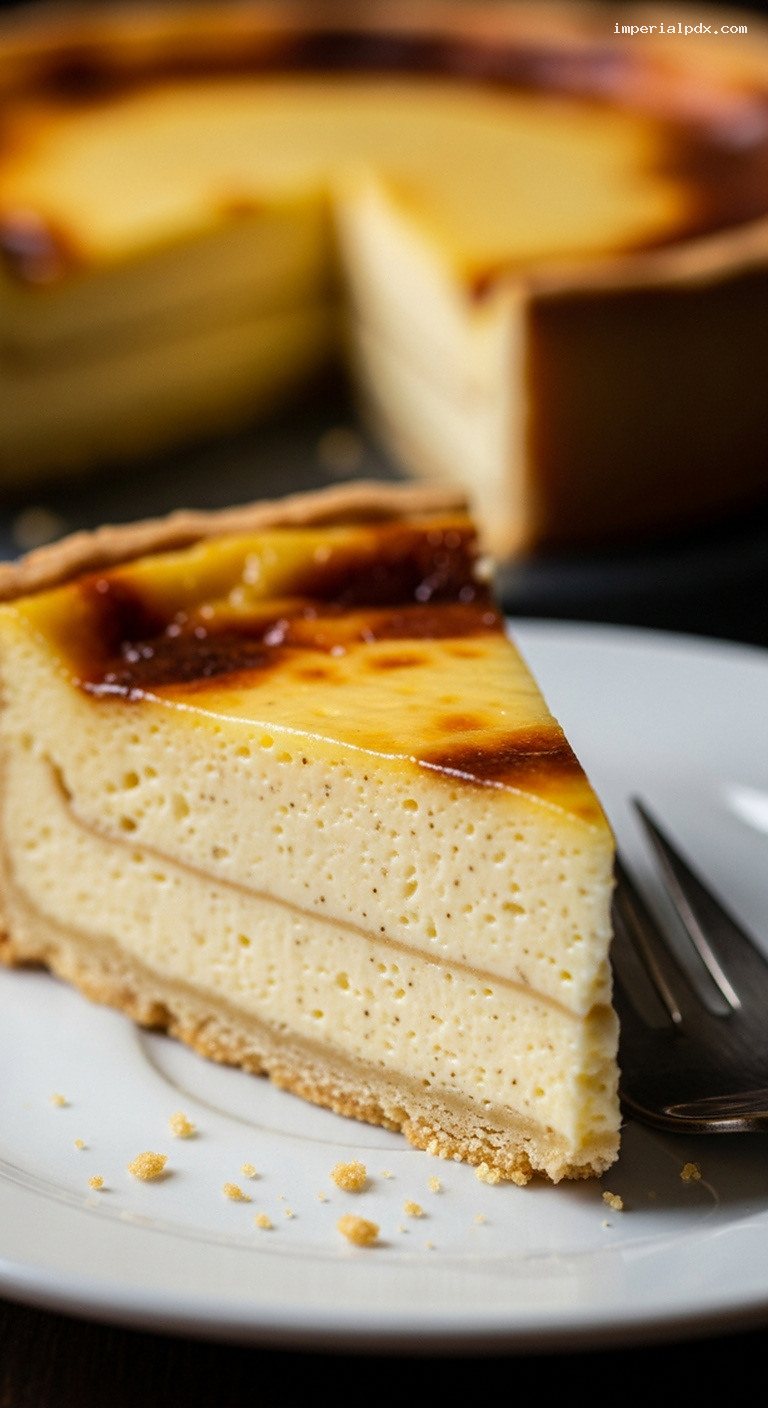
- Beautifully sliceable: sets into clean, generous wedges with a glossy browned top.
- Make-ahead friendly: best when chilled for hours, so it is perfect for entertaining.
- Simple pantry ingredients: mostly milk, eggs, sugar, and flour.
Grocery List
- Produce: None (optional: fresh berries or fruit to serve alongside).
- Dairy: Whole milk, heavy cream, unsalted butter, eggs.
- Pantry: All-purpose flour, granulated sugar, cornstarch, vanilla bean or extract, fine sea salt.
Full Ingredients
For the buttery crust (pâte brisée)
- 200 g (1 2/3 cups) all-purpose flour
- 30 g (2 1/2 tbsp) granulated sugar
- 1/4 tsp fine sea salt
- 120 g (8 1/2 tbsp) cold unsalted butter, cut into small cubes
- 1 large egg yolk, cold
- 2–3 tbsp (30–45 ml) ice-cold water, as needed
For the vanilla custard filling
- 1 L (4 1/4 cups) whole milk
- 200 ml (3/4 cup + 1 tbsp) heavy cream
- 1 plump vanilla bean, split lengthwise and seeds scraped
or 2 1/2 tsp pure vanilla extract (use after cooking) - 180 g (3/4 cup + 2 tbsp) granulated sugar
- 80 g (2/3 cup) cornstarch
- 4 large eggs
- 2 large egg yolks
- 20 g (1 1/2 tbsp) unsalted butter
- Pinch of fine sea salt
To prepare the pan and finish
- Softened butter, for greasing the pan
- 1–2 tbsp granulated sugar, to lightly coat the buttered pan (optional, for a slightly caramelized edge)
- Optional: icing sugar for a light dusting before serving
Step-by-Step Instructions
Step 1: Make the buttery shortcrust pastry
In a medium bowl, combine the flour, sugar, and salt. Add the cold butter cubes and rub them into the flour with your fingertips (or use a pastry cutter) until the mixture looks like coarse sand with a few pea-sized pieces of butter remaining.
Add the egg yolk and 2 tbsp of the ice water. Mix with a fork or your hand until the dough just starts to clump. If it is still very dry and floury, add up to 1 more tablespoon of ice water, a teaspoon at a time, until it comes together. Do not overwork the dough; it should be soft but not sticky.
Turn the dough out onto a lightly floured surface, bring it together into a ball, then flatten into a disc about 2–3 cm (1 in) thick. Wrap tightly in plastic wrap and chill in the refrigerator for at least 1 hour (and up to 24 hours). Chilling helps relax the gluten and keeps the crust tender and flaky.
Step 2: Line and blind-bake the crust
Butter the base and sides of a 23 cm (9 in) deep tart pan with removable bottom or a springform pan (at least 5 cm / 2 in high). For extra insurance against leaks and to support the tall custard, you can line the sides with a strip of parchment paper that rises about 2 cm (3/4 in) above the rim. If you like, sprinkle 1–2 tbsp sugar all over the buttered interior; this gives a delicate caramelized edge.
On a lightly floured surface, roll the chilled dough into a circle about 30 cm (12 in) wide and 3 mm (1/8 in) thick. Dust off excess flour, then gently roll the dough around the rolling pin and unroll it over the prepared pan. Ease the dough into the corners, pressing it firmly against the sides and base without stretching. Trim the top edge, leaving a slight overhang if your pan shrinks, and patch any tears with extra dough.
Prick the base all over with a fork. Chill the lined pan in the fridge for 20 minutes while you preheat the oven to 180°C / 350°F, placing a rack in the lower-middle position.
Line the chilled crust with a sheet of parchment paper or foil, then fill with pie weights, dried beans, or uncooked rice. Bake for 15 minutes. Carefully lift out the parchment and weights, then return the crust to the oven for 5–7 minutes more, until the base looks just dry but still pale. Set aside to cool slightly while you prepare the custard. Keep the oven at 180°C / 350°F.
Step 3: Infuse the milk with vanilla
In a large saucepan, combine the milk and heavy cream. If using a vanilla bean, scrape the seeds into the pan and add the pod as well. Heat over medium heat until the mixture is steaming and small bubbles form around the edges, just below a simmer. Stir occasionally to prevent a skin from forming.
Once hot, remove the pan from the heat, cover, and let the mixture infuse for 10–15 minutes. This deepens the vanilla flavor. If you are using vanilla extract instead of a bean, do not add it yet; you will stir it in after cooking the custard.
Step 4: Whisk together the egg, sugar, and cornstarch base
While the milk is infusing, add the sugar, cornstarch, eggs, egg yolks, and a pinch of salt to a large heatproof bowl. Whisk vigorously for 1–2 minutes until the mixture is smooth, thick, and slightly paler. This helps dissolve the sugar and breaks up any cornstarch lumps.
If the vanilla milk has cooled too much, gently rewarm it until hot again. Remove the vanilla pod (if used) and discard or rinse and dry it to flavor sugar later.
Step 5: Cook the custard until very thick
Slowly pour about one-third of the hot milk mixture into the egg mixture, whisking constantly to temper the eggs and prevent scrambling. Once smooth, pour in the rest of the hot milk while whisking. Transfer the mixture back into the saucepan and set it over medium heat.
Cook, whisking constantly and making sure to reach the corners of the pan, until the custard thickens and starts to bubble. At first it will look thin and foamy, then it will thicken quickly. Let it gently bubble for 30–60 seconds once it is very thick; this fully activates the cornstarch for a firm, sliceable flan.
Remove from the heat and immediately whisk in the 20 g butter until melted and glossy. If you are using vanilla extract instead of a bean, stir it in now. For an ultra-smooth texture, pour the hot custard through a fine-mesh sieve into a clean bowl, pressing it through with a spatula. Cover the surface with plastic wrap (touching the custard) and let it sit for about 10 minutes; it should still be quite hot when you pour it into the crust.
Step 6: Fill the crust and bake until browned and just set
Place the blind-baked crust on a baking sheet to catch any drips and make moving it easier. Give the custard a good whisk to smooth it, then pour it into the crust. It should come close to the top of the pan. Smooth the surface with a spatula and tap the pan firmly on the counter a few times to release any air bubbles.
Bake at 180°C / 350°F for 40–50 minutes, or until the top is a deep golden-yellow with some darker brown spots, the edges are slightly puffed, and the center jiggles only slightly when you gently shake the pan. If the top is browning too fast before the custard is set, tent loosely with foil for the last 10–15 minutes.
The custard will look a bit puffy straight from the oven and will deflate slightly as it cools; this is normal.
Step 7: Cool completely, chill, and slice
Transfer the flan (still in its pan) to a cooling rack. Allow it to cool at room temperature for at least 2 hours. This gradual cooling helps the custard set evenly and prevents cracking.
Once it has cooled to room temperature, place it uncovered in the refrigerator and chill for at least 4 hours, but ideally overnight. Chilling is essential for a clean, bakery-style slice.
To unmold, run a thin knife around the edge of the pan, remove the ring, and gently peel away the parchment collar if you used one. Slide the flan onto a serving plate. For the neatest slices, use a sharp knife dipped in hot water and wiped dry between cuts. Serve chilled or just slightly cooler than room temperature; this is when the vanilla aroma and texture are at their best.
Pro Tips
- Use a deep pan: A tall, 23 cm (9 in) tart or springform pan (at least 5 cm / 2 in high) is key to getting that classic thick slice of flan pâtissier.
- Cook the custard fully: Let it bubble while very thick for at least 30 seconds so the cornstarch sets firmly; undercooked custard can be runny even after chilling.
- Strain for silkiness: Passing the hot custard through a sieve removes any tiny egg or cornstarch lumps and gives you a bakery-smooth texture.
- Chill overnight: The flavor improves and the custard slices much more cleanly after a long, cold rest.
- Mind the oven rack: Baking on a lower-middle rack encourages a beautifully browned top without burning the edges.
Variations
- Citrus-vanilla flan: Add the finely grated zest of 1 untreated lemon or 1/2 orange to the milk while it infuses with the vanilla. Strain before combining with the eggs for a subtly fragrant twist.
- Chocolate flan pâtissier: Replace 25 g (about 3 tbsp) of the cornstarch with 25 g unsweetened cocoa powder. Sift the cocoa with the sugar and cornstarch, then proceed as written. The result is a deep chocolate custard with the same sliceable texture.
- Coconut flan: Replace 250 ml (1 cup) of the milk with full-fat coconut milk and stir 30 g (1/3 cup) finely shredded unsweetened coconut into the cooked custard before baking.
Storage & Make-Ahead
Flan pâtissier is ideal for making ahead. Once completely cooled and chilled, cover the pan or serving plate tightly with plastic wrap. Store in the refrigerator for up to 3 days. For the best texture, slice only what you plan to serve rather than cutting the whole flan at once, as the exposed edges can dry slightly.
You can prepare the pastry dough up to 2 days in advance and keep it wrapped in the refrigerator, or freeze it for up to 1 month (thaw overnight in the fridge before rolling). The baked flan does not freeze particularly well, as the custard can weep and become grainy after thawing, so refrigeration is preferred.
Nutrition (per serving)
Approximate values per serving (1/10 of the tart): about 380 calories; 21 g fat; 38 g carbohydrates; 8 g protein; 0.5 g fiber; 150 mg cholesterol; 220 mg sodium. These numbers are estimates and will vary depending on the exact ingredients and portion sizes you use.