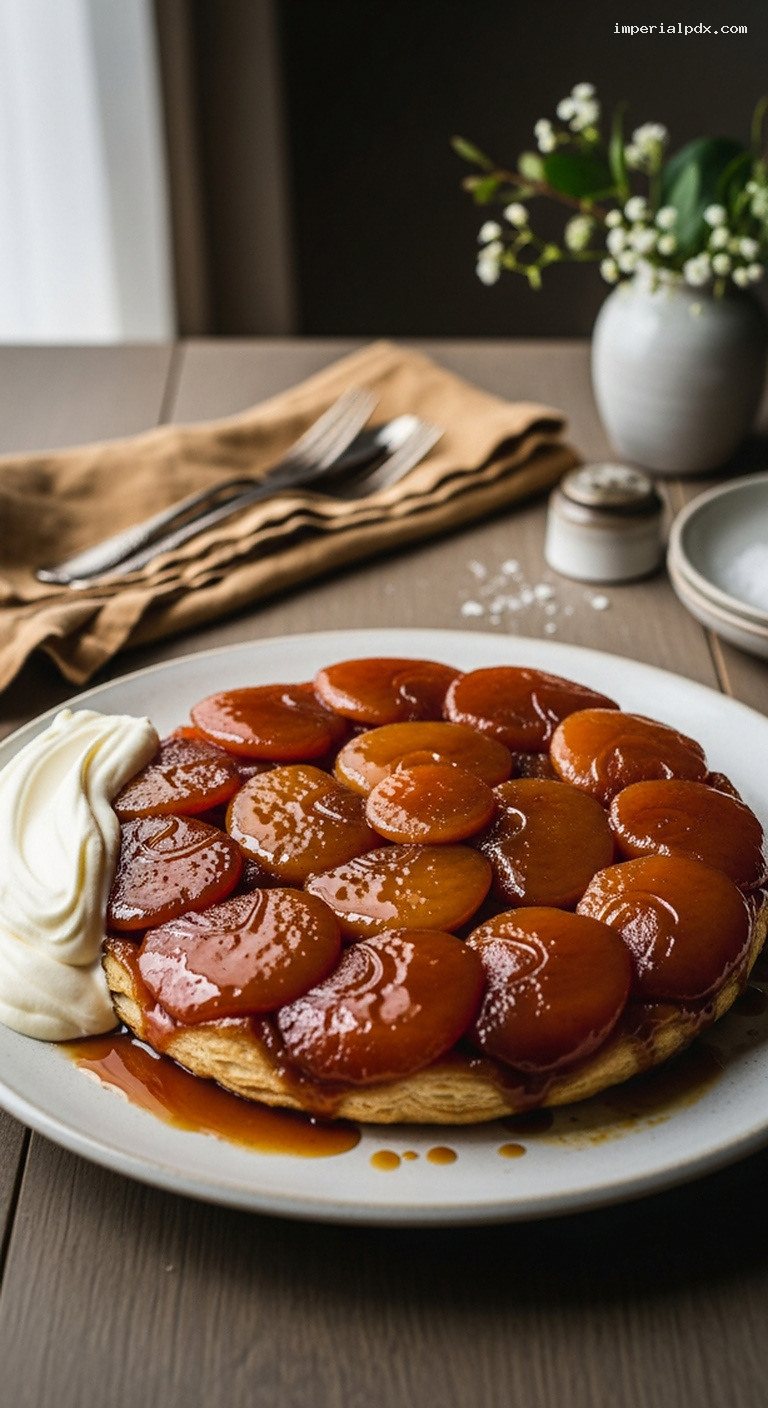
Quick Recipe Version (TL;DR)
Quick Ingredients
- 6–8 firm apples (about 1.3–1.5 kg), peeled, halved, cored
- 180 g (3/4 cup + 2 tbsp) granulated sugar, divided
- 90 g (6 tbsp) unsalted butter
- 1 tsp vanilla extract
- Pinch fine sea salt
- 1 sheet puff pastry (about 250 g), thawed but cold
- 1 tbsp lemon juice (optional)
- 1/2 tsp ground cinnamon (optional)
- Crème fraîche or vanilla ice cream, for serving
Do This
- 1. Preheat oven to 400°F (200°C). On lightly floured surface, roll puff pastry into a circle slightly larger than a 9–10 inch (23–25 cm) ovenproof skillet. Chill pastry.
- 2. Peel, halve, and core apples. Toss with 2 tbsp sugar, lemon juice (if using), and cinnamon (if using); set aside.
- 3. In the skillet, melt butter over medium heat. Sprinkle in remaining sugar and a pinch of salt. Cook, stirring, until mixture turns deep golden caramel.
- 4. Remove from heat. Stir in vanilla, then tightly arrange apple halves rounded-side down in the caramel. Pack them snugly.
- 5. Return skillet to medium heat and cook 15–20 minutes, basting and rotating pan, until apples are just tender and caramel is thick and amber.
- 6. Drape chilled pastry over apples, tuck edges down around fruit, and cut 3–4 small steam slits.
- 7. Bake 25–30 minutes until pastry is puffed and deep golden. Cool 10–15 minutes, then invert onto a plate and serve warm with crème fraîche or ice cream.
Why You’ll Love This Recipe
- Deep, buttery caramel and tender apples contrast beautifully with crisp, flaky pastry.
- Bakes in a single skillet, going straight from stovetop to oven to table.
- Looks impressive but is very doable for home cooks with clear, guided steps.
- Perfect make-ahead dessert: delicious warm from the oven or gently reheated.
Grocery List
- Produce: 6–8 firm baking apples (about 1.3–1.5 kg), 1 lemon (optional)
- Dairy: Unsalted butter, crème fraîche and/or vanilla ice cream
- Pantry: Puff pastry (or ingredients for shortcrust), granulated sugar, vanilla extract, fine sea salt, ground cinnamon (optional), all-purpose flour (for rolling)
Full Ingredients
For the Apples and Caramel
- 6–8 firm apples (about 1.3–1.5 kg total), such as Granny Smith, Braeburn, Honeycrisp, or Golden Delicious
- 90 g (6 tbsp) unsalted butter
- 160 g (3/4 cup + 1 tbsp) granulated sugar
- Pinch fine sea salt
- 1 tsp vanilla extract
- 1 tbsp lemon juice (optional, helps balance sweetness and prevent browning)
- 1/2 tsp ground cinnamon (optional, for gentle warming spice)
For the Pastry
- 1 sheet all-butter puff pastry (about 250 g), thawed but cold
- All-purpose flour, for dusting the work surface
To Serve
- Crème fraîche, lightly stirred until smooth
- Or high-quality vanilla ice cream
Step-by-Step Instructions
Step 1: Preheat the oven and prepare the pastry
Preheat your oven to 400°F (200°C) with a rack in the center. Line a baking sheet with parchment paper and set aside; you will place the skillet on this later to catch any caramel drips.
On a lightly floured surface, unfold the puff pastry. If it is very soft, chill it for 5–10 minutes first so it is cool but pliable. Roll it into a roughly 11–12 inch (28–30 cm) circle, slightly larger than your 9–10 inch (23–25 cm) ovenproof skillet. Do not worry if it is not a perfect circle; you will be trimming and tucking it. Transfer the pastry circle to a plate or tray, cover lightly, and refrigerate while you prepare the apples and caramel. Keeping the pastry cold helps it puff and stay flaky.
Step 2: Prep the apples
Peel the apples, then cut them in half from top to bottom. Use a small knife or melon baller to remove the cores and any tough stem bits. Try to keep the halves neat; they will be visible on top once the tart is inverted.
Place the apple halves in a large bowl. Sprinkle with 2 tablespoons of the granulated sugar (from the total), the lemon juice if using, and the cinnamon if using. Toss gently to coat. The small amount of sugar and lemon helps draw a little juice out of the apples and seasons them lightly before they meet the caramel.
Step 3: Make the caramel base in the skillet
Place your 9–10 inch (23–25 cm) heavy, ovenproof skillet (cast iron is ideal) over medium heat. Add the butter and let it melt completely. Once melted, sprinkle in the remaining granulated sugar and a pinch of fine sea salt in an even layer.
Cook, stirring gently with a heatproof spatula or wooden spoon, until the sugar dissolves into the butter and begins to bubble. Continue cooking, stirring occasionally and swirling the pan, for about 5–8 minutes, until the mixture turns from pale to a deep golden amber. Watch closely: caramel can go from perfect to burnt quickly. If it is browning more in one area, swirl the pan to even it out.
When the caramel is a rich golden-brown and smells nutty (not burnt), remove the skillet from the heat. Carefully stir in the vanilla extract; it will sizzle.
Step 4: Arrange and cook the apples in the caramel
Working carefully (the caramel is extremely hot), arrange the apple halves rounded-side down directly into the caramel. Start from the outer edge and work inwards, packing them as snugly as possible; they will shrink as they cook. If you have extra halves, you can cut them into quarters and wedge them into gaps.
Return the skillet to medium heat. Cook the apples in the caramel, uncovered, for 15–20 minutes. Every few minutes, gently spoon caramel over the tops of the apples and rotate the pan occasionally for even cooking. The apples should gradually release some juices, then the liquid will reduce and thicken again.
You are aiming for apples that are just tender when pierced with the tip of a knife but not falling apart, and caramel that is thick and a shade deeper than when you started, glossy and richly amber. If at any point the caramel darkens too quickly or starts to smoke, lower the heat.
Step 5: Add the pastry lid
Once the apples are tender and the caramel is thick, remove the skillet from the heat and let it sit for 2–3 minutes to stop the most vigorous bubbling. Take the chilled pastry out of the fridge.
Carefully lay the pastry circle over the apples. Use a spatula or the back of a spoon to gently tuck the edges of the pastry down between the apples and the inside edge of the skillet, like tucking in a blanket. This creates a rim that will hold the juices in and form a neat edge once inverted.
With the tip of a sharp knife, cut 3–4 small slits in the center of the pastry to allow steam to escape. This helps keep the pastry crisp instead of soggy.
Step 6: Bake until puffed and golden
Place the skillet on the lined baking sheet (to catch any overflow) and transfer to the preheated oven. Bake for 25–30 minutes, or until the pastry is puffed, deeply golden brown, and firm to the touch in the center.
If the pastry is browning too quickly around the edges but is still pale in the center, you can loosely tent the edges with a strip of foil during the last few minutes. When done, remove the skillet from the oven and set it on a heatproof surface to cool for 10–15 minutes. The brief cooling time allows the caramel to thicken slightly so it is less likely to run everywhere when inverted, while still being fluid enough to release the tart cleanly.
Step 7: Invert the tart and serve
To invert, run a knife carefully around the inside edge of the skillet to loosen any stuck pastry. Place a large, rimmed serving plate or platter over the skillet, slightly larger than the skillet itself.
Using thick oven mitts, hold the plate firmly against the skillet and quickly but carefully flip the whole assembly over in one confident motion. Set it down, then gently lift the skillet off. The apples and caramel should now be on top, with the pastry underneath.
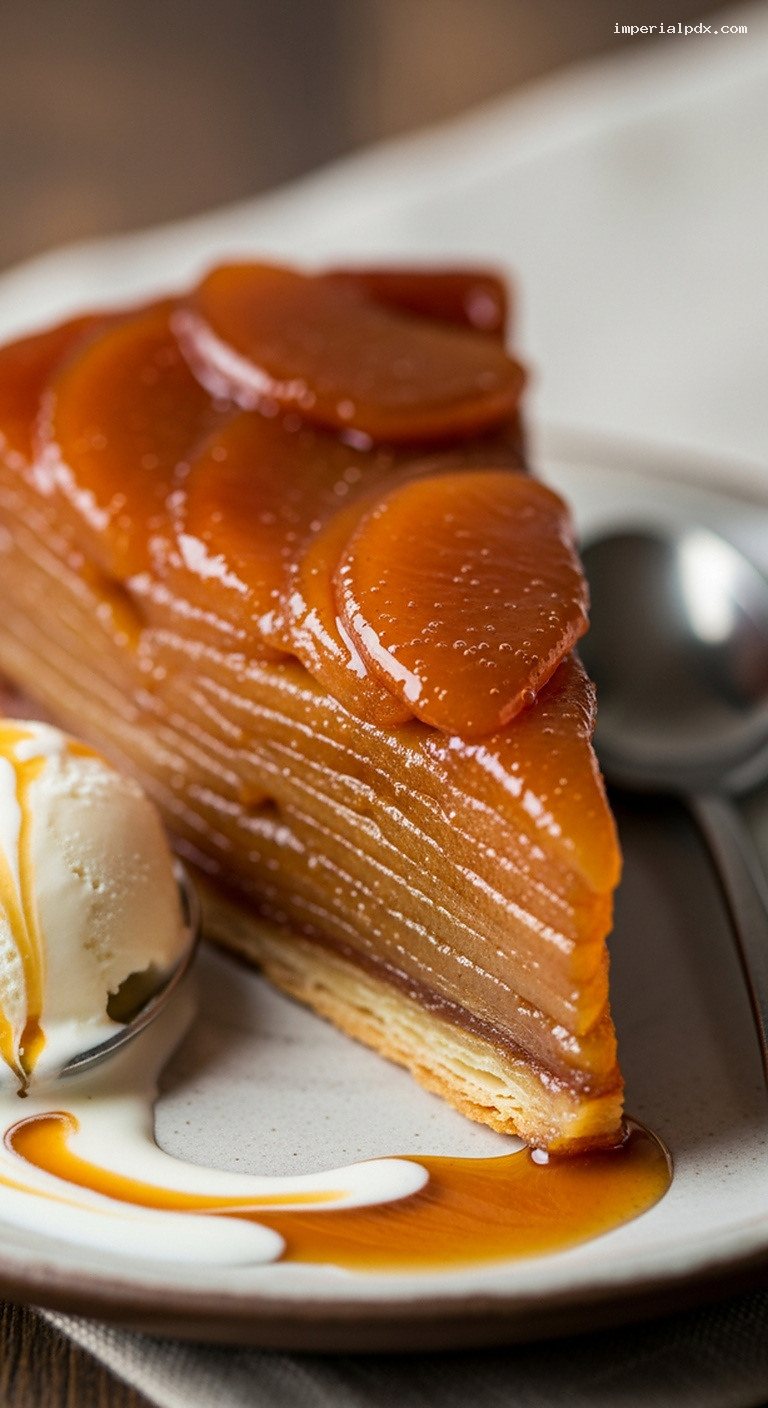
If any apple pieces stay behind in the skillet, simply lift them out and nudge them back into place on the tart. Spoon any remaining caramel from the skillet over the apples. Serve the tarte Tatin warm, in generous wedges, with a dollop of cool crème fraîche or a scoop of vanilla ice cream alongside.
Pro Tips
- Choose the right apples: Firm baking varieties such as Granny Smith, Braeburn, Honeycrisp, or Golden Delicious hold their shape and do not turn mushy. Mixing two kinds adds great flavor.
- Color is flavor in caramel: Aim for a deep golden-amber caramel, not pale and not nearly brown-black. Too pale tastes flat and too dark tastes bitter.
- Pack the apples tightly: It may look crowded, but apples shrink as they cook. Tightly packed fruit creates the classic, luxurious top once inverted.
- Keep the pastry cold: Chilled puff pastry puffs better and resists absorbing too much liquid from the apples and caramel.
- Invert with confidence: Let the tart rest 10–15 minutes, then flip in one smooth motion over a large plate. If a piece shifts, gently reposition it and no one will know.
Variations
- Shortcrust version: Instead of puff pastry, top the apples with a simple shortcrust: 160 g (1 1/4 cups) flour, 115 g (1/2 cup) cold butter, 1 tbsp sugar, 1/4 tsp salt, and 3–4 tbsp ice water. Roll to a circle and use exactly as you would the puff pastry.
- Spiced Tatin: Add 1/2 tsp ground cinnamon and a pinch of nutmeg or cardamom when tossing the apples. Perfect for cooler weather and holiday dinners.
- Pear Tatin: Swap apples for firm pears (such as Bosc). Keep the method the same but check tenderness a bit earlier, as pears can soften more quickly.
Storage & Make-Ahead
Tarte Tatin is at its absolute best within a couple of hours of baking, served warm or at room temperature. However, leftovers keep surprisingly well. Allow the tart to cool completely, then cover and refrigerate for up to 2 days. To reheat, place slices or the whole tart in a 300°F (150°C) oven for 10–15 minutes, until warmed through and the pastry has re-crisped slightly. You can also prepare the apples and caramel up to the point just before adding the pastry (Steps 3–4), cool to room temperature, cover, and refrigerate in the skillet for up to 1 day. When ready to bake, gently warm the skillet on low heat just until the caramel loosens, add the chilled pastry, and proceed with baking.
Nutrition (per serving)
Approximate values per serving (1 of 8, without crème fraîche or ice cream): about 390 calories; 25 g fat; 40 g carbohydrates; 3 g protein; 28 g sugar; 1 g fiber; 260 mg sodium. Values will vary based on the specific puff pastry and apples used and any accompaniments served alongside.