Quick Recipe Version (TL;DR)
Quick Ingredients
- 1 1/2 cups (270 g) fine bulgur (köftelik bulgur)
- 1 1/4 cups (300 ml) boiling water
- 3 Tbsp olive oil, plus more for drizzling
- 2 Tbsp (40 g) tomato paste
- 1 Tbsp (20 g) red pepper paste (or extra tomato paste)
- 2 cloves garlic, finely grated
- 2 tsp ground cumin
- 2 tsp mild chili (Urfa/İsot) or smoked paprika
- 1 tsp red pepper flakes (or to taste)
- 1 1/4 tsp fine sea salt (plus more to taste)
- 1 Tbsp pomegranate molasses (in the mix)
- 4 green onions, finely sliced
- 1 cup (loosely packed, ~25 g) chopped flat-leaf parsley
- 2 Tbsp chopped fresh mint (or 1 tsp dried)
- 1 large head romaine or butter lettuce
- 2 lemons, cut into wedges
- 3–4 Tbsp pomegranate molasses, for serving
Do This
- 1. Put bulgur in a wide bowl, pour over 1 1/4 cups boiling water, cover, and let sit 15 minutes until softened.
- 2. In a pan, gently cook olive oil, tomato paste, pepper paste, garlic, cumin, chili, and salt over low heat for 3–4 minutes to bloom the spices.
- 3. Stir 1 Tbsp pomegranate molasses into the warm paste mixture, then scrape it over the hydrated bulgur.
- 4. Knead with your hands for 8–10 minutes until the bulgur is evenly colored, smooth, and holds together when pressed.
- 5. Add green onions, parsley, and mint; knead or fold until well distributed. Taste and adjust salt and heat.
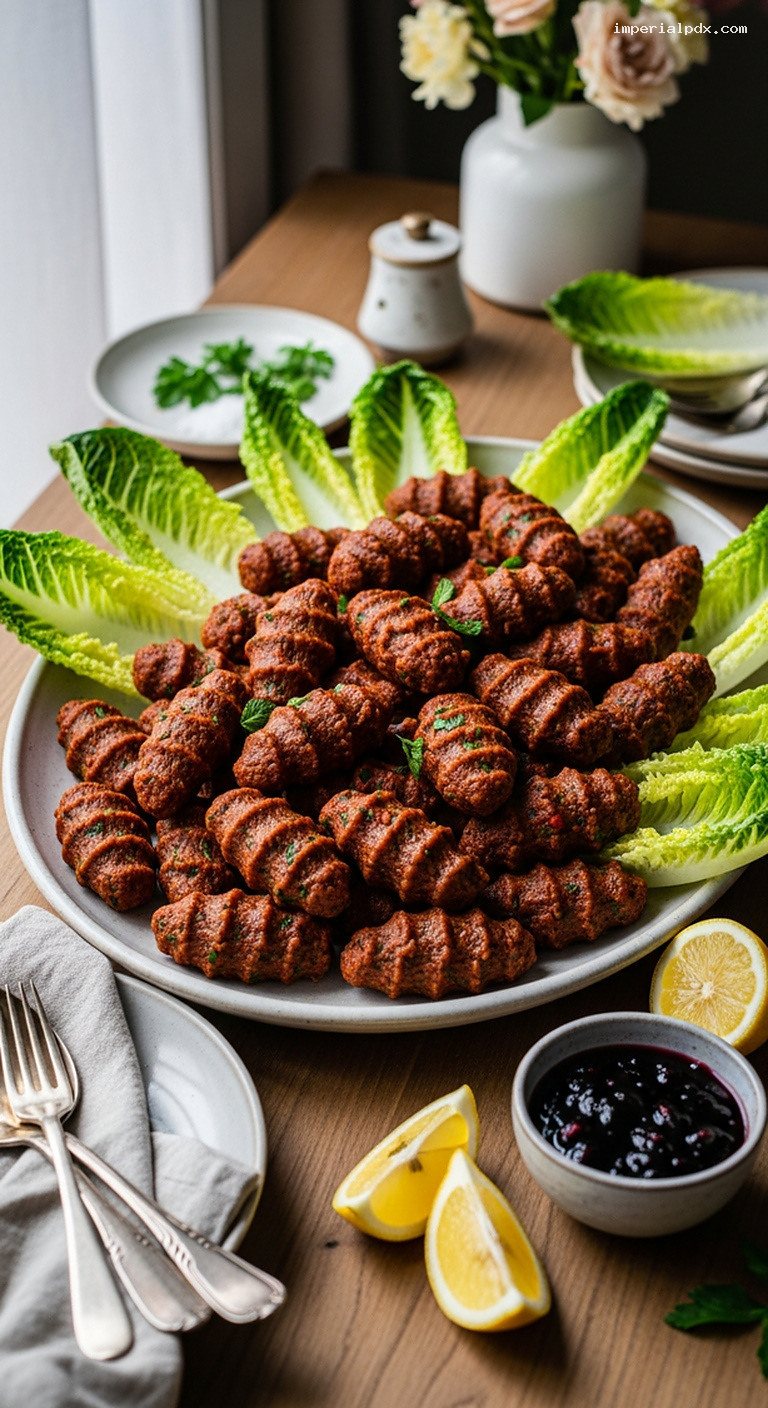
- 6. Pinch off walnut-sized pieces and shape into oblong bites, pressing with your fingers to create ridges.
- 7. Arrange on a platter with lettuce leaves, lemon wedges, and a small bowl of pomegranate molasses. Serve wrapped in lettuce with a squeeze of lemon and drizzle of molasses.
Why You’ll Love This Recipe
- All the classic flavor of Turkish çiğ köfte in a cooked-style, meat-free version that feels approachable for home cooks.
- Deeply savory, gently spicy bulgur bites with fresh herbs, crisp lettuce, and bright lemon and pomegranate for balance.
- No special equipment needed: just a mixing bowl, a pan, and your hands for kneading.
- Perfect for sharing: a colorful platter that works as an appetizer, light dinner, or part of a larger mezze spread.
Grocery List
- Produce: 1 large head romaine or butter lettuce, 2 lemons, 4 green onions, 1 small bunch flat-leaf parsley, small bunch fresh mint (or dried mint), 2 garlic cloves
- Dairy: None required
- Pantry: Fine bulgur (köftelik), tomato paste, red pepper paste (biber salçası) or extra tomato paste, pomegranate molasses, olive oil, ground cumin, mild chili flakes or Urfa/İsot pepper, red pepper flakes, fine sea salt, black pepper (optional)
Full Ingredients
Bulgur Base
- 1 1/2 cups (270 g) fine bulgur (köftelik bulgur; not coarse)**
- 1 1/4 cups (300 ml) boiling water (about 100°C / 212°F)
Cooked Paste & Spice Mixture
- 3 Tbsp (45 ml) olive oil, plus 1–2 Tbsp extra for drizzling at the end (optional)
- 2 Tbsp (40 g) tomato paste
- 1 Tbsp (20 g) red pepper paste (biber salçası), mild or hot
- If unavailable, use 1 more Tbsp tomato paste plus an extra pinch of red pepper flakes.
- 2 cloves garlic, very finely minced or grated
- 2 tsp ground cumin
- 2 tsp mild chili such as Urfa/İsot pepper or smoked paprika
- 1 tsp red pepper flakes (more or less to taste)
- 1/4 tsp freshly ground black pepper (optional)
- 1 1/4 tsp fine sea salt (or to taste)
- 1 Tbsp (15 ml) pomegranate molasses
Fresh Herbs & Aromatics
- 4 green onions, thinly sliced (white and green parts)
- 1 cup loosely packed (about 25 g) flat-leaf parsley, very finely chopped
- 2 Tbsp finely chopped fresh mint leaves
- Or 1 tsp dried mint, lightly crushed between your fingers
For Serving the Platter
- 1 large head romaine or butter lettuce, leaves separated, washed, and well dried
- 2 lemons, cut into wedges
- 3–4 Tbsp (45–60 ml) pomegranate molasses, for drizzling or dipping
- 1–2 Tbsp olive oil, for drizzling over the finished bites (optional)
- Fresh parsley or mint sprigs, for garnish (optional)
- Optional extras: thinly sliced cucumbers, tomato wedges, radishes, pickled peppers, or warm flatbread/lavash
Step-by-Step Instructions
Step 1: Hydrate the bulgur
Place the fine bulgur in a wide, shallow mixing bowl; a wide bowl makes kneading much easier later. Bring the water to a full boil (about 100°C / 212°F), then slowly pour 1 1/4 cups (300 ml) over the bulgur, stirring quickly with a spoon so all the grains are moistened evenly.
Cover the bowl with a plate or clean kitchen towel and let the bulgur sit for 15 minutes. It should absorb the water and soften, turning tender but still slightly chewy, without any excess liquid pooling at the bottom. If after 15 minutes it still tastes too firm, cover and let sit another 5 minutes.
Step 2: Cook the tomato paste and spices
While the bulgur hydrates, make the cooked flavor base. In a small pan, add 3 Tbsp olive oil, the tomato paste, and red pepper paste. Place the pan over low heat. Cook, stirring constantly, for 2–3 minutes until the paste darkens slightly and smells sweet and rich rather than raw.
Add the grated garlic, ground cumin, mild chili (Urfa/İsot or smoked paprika), red pepper flakes, black pepper (if using), and salt. Continue cooking gently over low heat for another 2–3 minutes, stirring frequently. You want the mixture to sizzle softly but not brown or burn; lowering the heat is better than rushing this step. Turn off the heat and stir in 1 Tbsp pomegranate molasses. The mixture should be glossy, thick, and very aromatic.
Step 3: Combine the bulgur with the warm paste
Once the bulgur is fully hydrated and still slightly warm or at room temperature, fluff it lightly with a fork to loosen any clumps. Scrape the warm tomato-paste mixture from the pan directly onto the bulgur, making sure to get every bit of spiced oil.
Use a spoon or spatula to roughly mix the bulgur and paste until most of the grains are coated and it starts to look evenly tinted. It will still be a bit crumbly at this stage—that is normal. The texture will come together as you knead.
Step 4: Knead until smooth and cohesive
Now it is time to develop the traditional çiğ köfte texture. Using clean hands, begin kneading the bulgur mixture in the bowl. Press and fold it firmly, almost like kneading bread dough, using your knuckles and palms. Continue kneading for 8–10 minutes.
As you work, the bulgur will break down slightly, absorb more of the moisture, and become smoother and more paste-like. The mixture is ready when it feels soft and cohesive, holds together easily when pressed into a ball, and no longer feels dry or grainy. If it seems too dry or crumbly, wet your fingers with a teaspoon or two of hot water and keep kneading until it comes together.
Step 5: Fold in the herbs and adjust seasoning
Add the sliced green onions, chopped parsley, and chopped mint to the bowl. Gently knead or fold the mixture just until the herbs are evenly distributed, but try not to crush them completely—you want to keep some freshness and flecks of green throughout the mixture.
Taste a small piece. Add more salt for depth, extra red pepper flakes for heat, or a small drizzle of pomegranate molasses if you want more tangy sweetness. If you adjust, knead again briefly to incorporate. The final mixture should be savory, pleasantly spicy, and balanced with a subtle sweet-sour note from the pomegranate.
Step 6: Shape the ridged çiğ köfte bites
Prepare a serving platter. Lightly oil your hands if the mixture feels sticky. Pinch off a piece of the mixture about the size of a walnut or small egg (around 25–30 g). Roll it between your palms into a short log or oval.
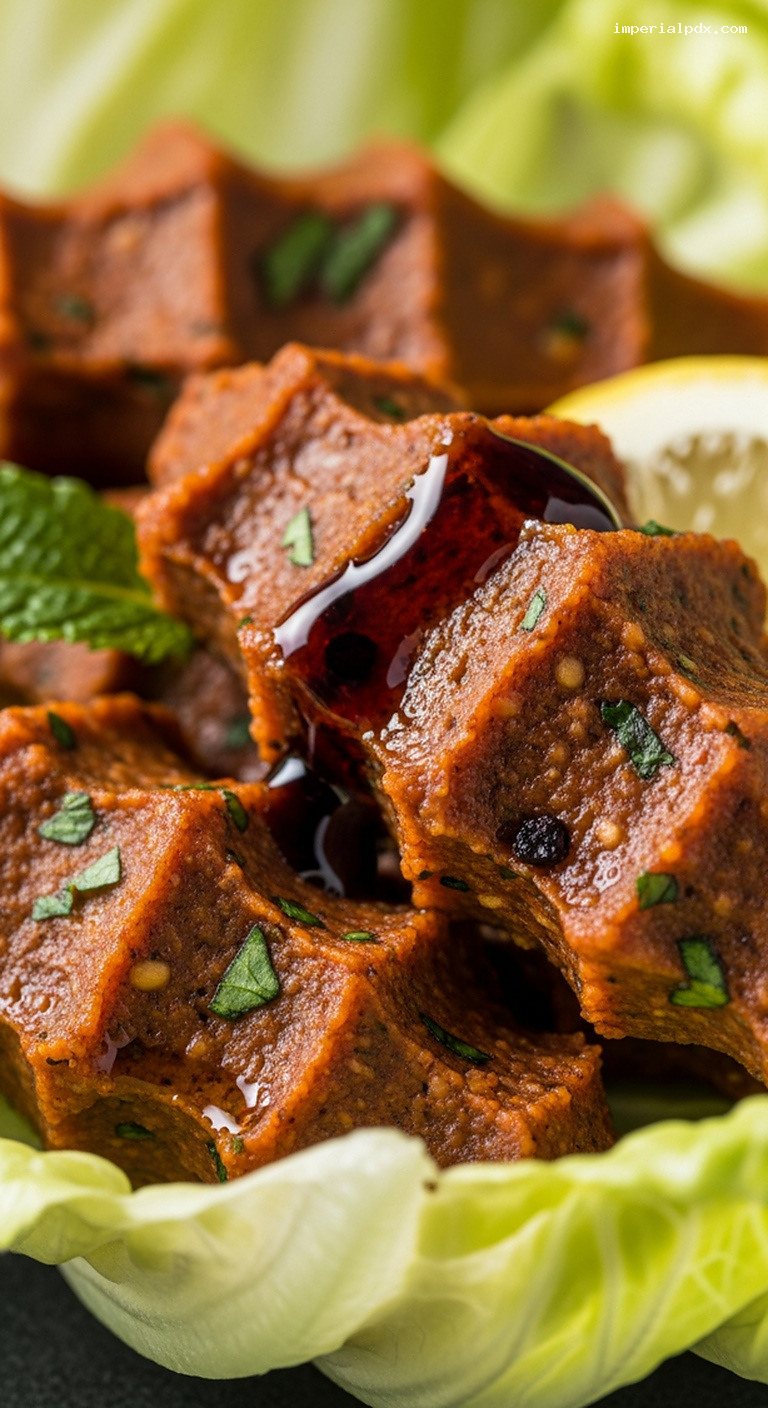
Place the piece in one palm and use the fingers of your other hand to press indentations along its length, creating the traditional ridged pattern. This not only looks beautiful but also increases surface area for maximum flavor and sauce. Set the shaped piece on the platter and repeat with the remaining mixture, arranging the bites in neat rows or a circular pattern. You should get roughly 24–30 pieces.
Step 7: Build the platter and serve
Arrange the lettuce leaves around or alongside the çiğ köfte bites on the platter, creating little cups for wrapping. Tuck lemon wedges among the leaves, and add any optional vegetables (cucumber slices, tomato wedges, radishes, pickled peppers) for color and crunch.
Drizzle a little olive oil and a thin zigzag of pomegranate molasses over the shaped bulgur bites, if you like, and garnish with extra parsley or mint sprigs. Serve with a small bowl of pomegranate molasses on the side for dipping or extra drizzling.
To eat, place one or two çiğ köfte pieces in a lettuce leaf, squeeze over lemon juice, drizzle with a bit of pomegranate molasses, wrap, and enjoy in a couple of bites.
Pro Tips
- Use fine bulgur only: Coarse bulgur will not soften properly with just hot water and will give a gritty texture. Look for “köftelik bulgur” on the package if possible.
- Low heat for the paste: Gently cooking the tomato and pepper pastes in oil is key. If it browns or burns, it will taste bitter; you want a slow sizzle and deeper color, not frying.
- Knead long enough: The kneading step is what transforms loose bulgur into a smooth, cohesive mixture. If your bites crack when shaped, keep kneading a bit more.
- Adjust moisture gradually: If the mixture feels dry, wet your fingertips with hot water or a touch of olive oil, but add only a little at a time so it does not become mushy.
- Serve immediately for best texture: The bites are at their best within a few hours of shaping, when the herbs are fresh and the exterior has not dried out.
Variations
- Extra-nutty version: Add 1/3 cup (35 g) very finely ground walnuts to the bulgur before kneading for a richer, slightly creamy texture and deeper flavor.
- Spicier “Adana” style: Increase red pepper flakes to 2 tsp, use hot red pepper paste, and add a pinch of cayenne for a more fiery bite.
- Smoky grilled platter: Serve the çiğ köfte bites with grilled vegetables (eggplant, peppers, onions) and warm lavash or flatbread for a heartier meal-style presentation.
Storage & Make-Ahead
For best texture, serve the çiğ köfte the day you make it. You can, however, prepare the bulgur mixture (through the kneading step) up to 24 hours ahead. Cover it tightly and refrigerate, then let it sit at room temperature for 20–30 minutes, fold in the fresh herbs, shape, and serve.
If you need to store leftovers, place the shaped bites in a single layer in an airtight container, cover well, and refrigerate for up to 2 days. The surface may dry slightly; to refresh, you can brush very lightly with olive oil or a bit of pomegranate molasses just before serving. Store lettuce, lemon wedges, and garnishes separately and prepare fresh as needed. Freezing is not recommended, as it damages the texture of the bulgur and herbs.
Nutrition (per serving)
Approximate values for 1 of 6 servings (without optional extras like flatbread): about 260–290 kcal; 7–9 g fat; 45–50 g carbohydrates; 7–9 g protein; 7–9 g fiber; 550–650 mg sodium (depending on added salt and pepper pastes). These numbers are estimates and will vary based on specific ingredient brands and how much pomegranate molasses and oil you use for drizzling.