Quick Recipe Version (TL;DR)
Quick Ingredients
- 1 lb (450 g) ground beef, 85–90% lean
- 1 cup very finely chopped Napa cabbage (optional but recommended)
- 4 scallions, finely sliced (divided: some for filling, some for garnish)
- 2 tbsp fresh ginger, finely grated
- 3 garlic cloves, finely minced
- 5 tbsp soy sauce (2 tbsp for filling, 3 tbsp for sauce)
- 3 tbsp rice vinegar
- 1 tbsp oyster sauce (optional)
- 1 tbsp Shaoxing wine or dry sherry (optional)
- 2 tsp toasted sesame oil (1 tsp for filling, 1 tsp for sauce)
- 1 tbsp cornstarch
- 1 tsp sugar (plus 1 tsp for sauce)
- 1/4 tsp ground white pepper
- 30–35 round dumpling/gyoza wrappers
- 2–3 tbsp neutral oil (canola, vegetable, or peanut)
- 1–1 1/4 cups water for steaming
- Chili oil or red pepper flakes; toasted sesame seeds (for dipping sauce)
Do This
- 1. Mix beef, cabbage, scallions, ginger, garlic, soy sauce, oyster sauce, Shaoxing wine, sesame oil, sugar, white pepper, and cornstarch until sticky and well combined.
- 2. Set up a wrapping station with dumpling wrappers, a small bowl of water, and a tray. Add 1 tablespoon filling to each wrapper, moisten the edge, fold into a half-moon, and pleat or press to seal firmly.
- 3. Heat 1 tbsp oil in a nonstick or cast-iron skillet over medium-high. Arrange 10–12 dumplings flat-side down in a single layer.
- 4. Sear 2 minutes until the bottoms are golden. Carefully add 1/3 cup water, cover immediately, and steam over medium heat for 5–6 minutes.
- 5. Uncover and cook 2–3 minutes more until water evaporates and bottoms are crisp again. Repeat with remaining dumplings, adding more oil and water as needed.
- 6. Stir together soy sauce, rice vinegar, sesame oil, sugar, chili oil or flakes, and sliced scallions for dipping.
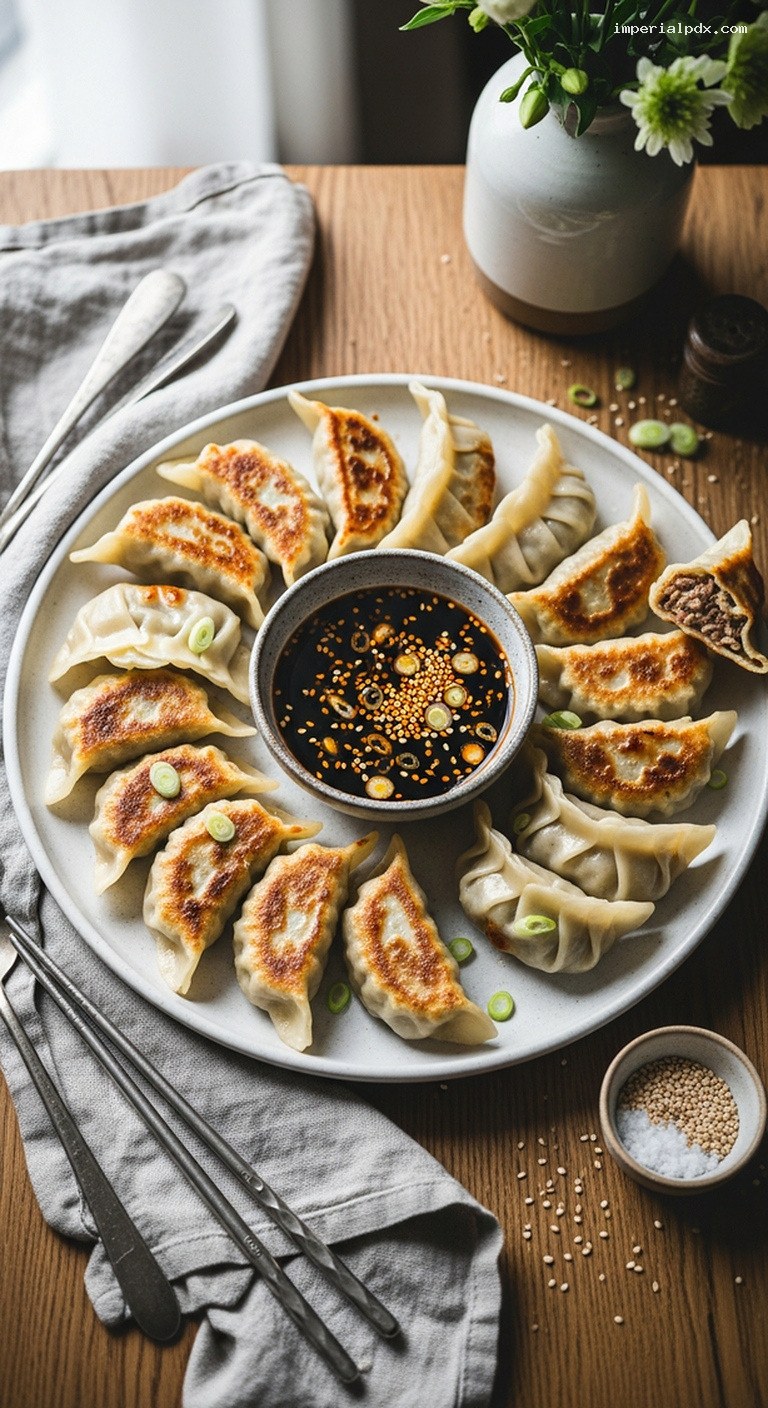
- 7. Serve potstickers hot, crispy-side up, with soy-vinegar dipping sauce and a sprinkle of scallions and sesame seeds.
Why You’ll Love This Recipe
- Classic potsticker technique gives you the best of both worlds: a crispy, golden bottom and a tender, juicy top.
- Bold ginger-garlic beef filling that is deeply savory without being heavy.
- Simple soy-vinegar dipping sauce that comes together in 2 minutes from pantry staples.
- Freezer-friendly, so you can make a big batch once and enjoy fresh potstickers any night.
Grocery List
- Produce: Fresh ginger, garlic, Napa cabbage (optional), scallions
- Dairy: None
- Pantry: Ground beef, round dumpling/gyoza wrappers, soy sauce, rice vinegar, toasted sesame oil, oyster sauce (optional), Shaoxing wine or dry sherry (optional), cornstarch, sugar, neutral oil, chili oil or red pepper flakes, toasted sesame seeds, salt, white pepper
Full Ingredients
Beef Potsticker Filling
- 1 lb (450 g) ground beef, 85–90% lean
- 1 cup very finely chopped Napa cabbage, packed (optional but adds moisture and texture)
- 3 scallions, very finely sliced (white and light green parts)
- 2 tbsp fresh ginger, finely grated
- 3 garlic cloves, finely minced
- 2 tbsp soy sauce
- 1 tbsp oyster sauce (optional, for extra depth)
- 1 tbsp Shaoxing wine or dry sherry (optional but recommended)
- 1 tsp toasted sesame oil
- 1 tsp sugar
- 1/2 tsp fine sea salt (reduce to 1/4 tsp if sensitive to salt)
- 1/4 tsp ground white pepper (or black pepper)
- 1 tbsp cornstarch
Dumplings & Cooking
- 30–35 round dumpling/gyoza wrappers (about 3 1/2 inch / 9 cm diameter)
- Small bowl of water (for sealing edges)
- 2–3 tbsp neutral oil (canola, vegetable, sunflower, or peanut)
- 1–1 1/4 cups water, divided (for steaming in batches)
Soy-Vinegar Dipping Sauce
- 3 tbsp soy sauce
- 3 tbsp rice vinegar
- 1 tsp toasted sesame oil
- 1 tsp sugar
- 1–2 tsp chili oil, to taste (or 1/4 tsp red pepper flakes)
- 1 scallion, thinly sliced (reserve some for garnish if desired)
- 1 tsp toasted sesame seeds (optional, for garnish)
Step-by-Step Instructions
Step 1: Prep the vegetables and aromatics
Finely chop the Napa cabbage if using. Place it in a small bowl with a pinch of salt, toss, and let it sit for 5–10 minutes to draw out excess moisture. Meanwhile, finely slice the scallions, grate the ginger, and mince the garlic. After the cabbage has rested, squeeze it firmly in your hands or in a clean kitchen towel to remove as much liquid as possible. This step keeps the filling juicy but not watery, which helps the potstickers seal well and cook evenly.
Step 2: Mix the beef filling until sticky
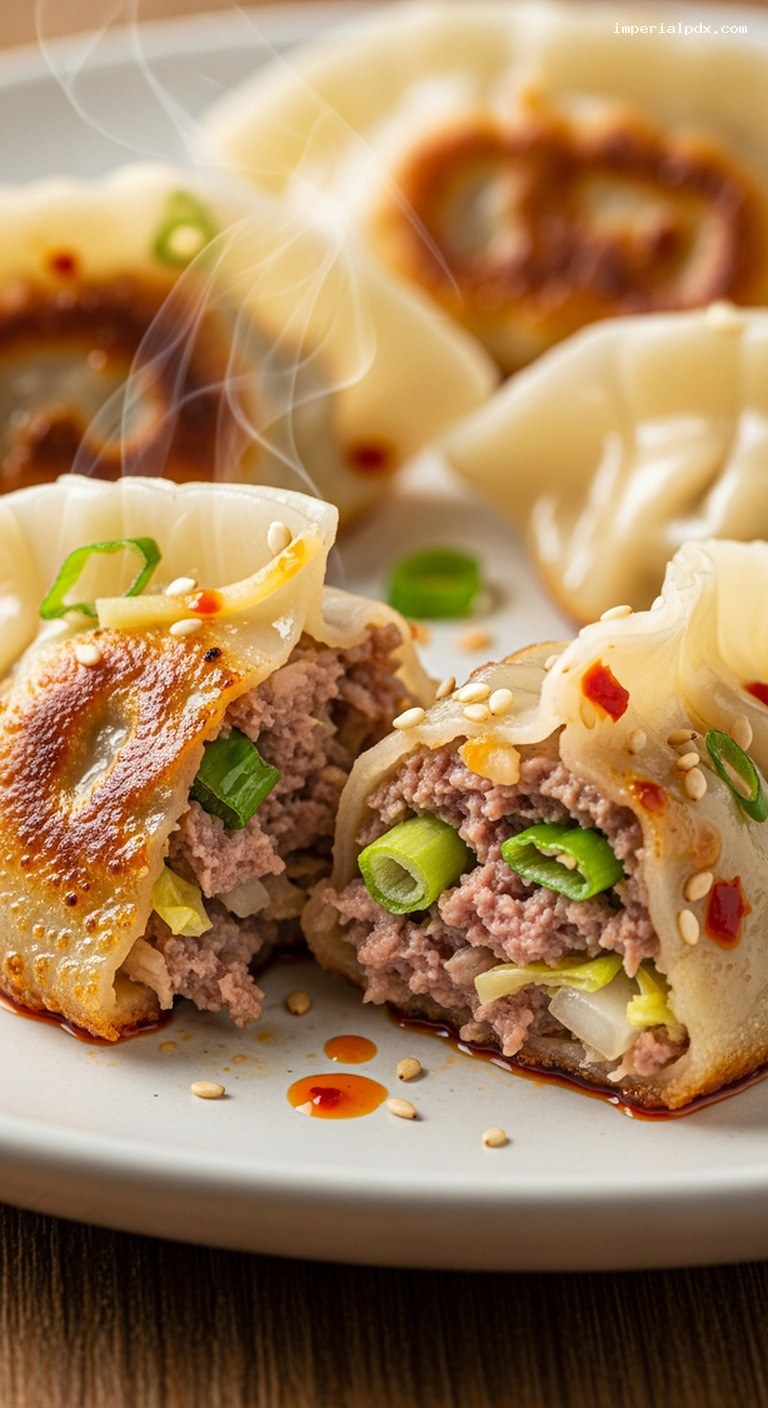
In a large mixing bowl, combine the ground beef, squeezed cabbage, scallions, ginger, garlic, soy sauce, oyster sauce (if using), Shaoxing wine or dry sherry (if using), sesame oil, sugar, salt, white pepper, and cornstarch. Using clean hands or chopsticks, stir the mixture vigorously in one direction until it becomes slightly sticky and uniform, 1–2 minutes. This develops a springy texture and helps the filling hold together inside the wrapper instead of crumbling. Cover and refrigerate while you set up your wrapping station.
Step 3: Set up your potsticker wrapping station
Arrange your workspace: place a stack of dumpling wrappers on a plate, keep them covered with a lightly damp kitchen towel to prevent drying out, and set the bowl of filling nearby with a spoon. Have a small bowl of water for wetting the wrapper edges and a large baking sheet or tray lined with parchment paper or lightly dusted with cornstarch for the finished dumplings. This simple setup makes wrapping faster and keeps the wrappers from sticking or tearing.
Step 4: Fill and fold the potstickers
Working with one wrapper at a time, place it in your palm and add about 1 tablespoon of filling in the center, slightly flattened. Dip a fingertip into the water and lightly moisten the outer edge of the wrapper. Fold the wrapper in half to form a half-moon, pressing the center of the top edge to seal. To pleat, starting from the center, make small folds along the front side of the wrapper only, pressing each pleat firmly into the back side as you go. Aim for 4–6 pleats. Make sure there are no gaps or air pockets around the filling. Gently press the bottom flat so the dumpling stands upright on the tray. Repeat with remaining wrappers and filling.
Step 5: Pan-sear the potstickers
Heat 1 tablespoon of neutral oil in a large nonstick or well-seasoned cast-iron skillet over medium-high heat. When the oil is hot and shimmering (but not smoking), carefully arrange 10–12 dumplings in a single layer, flat-side down, with a little space between each. Sear without moving them for 2–3 minutes until the bottoms are deeply golden and crisp. Adjust the heat if the bottoms are browning too quickly or not enough; you want an even golden crust.
Step 6: Steam, then re-crisp for the signature texture
Once the bottoms are golden, carefully pour in about 1/3 cup water (enough to cover the bottom of the pan by 1/8–1/4 inch). It will sizzle vigorously. Immediately cover with a tight-fitting lid and reduce heat to medium. Let the dumplings steam for 5–6 minutes, or until most of the water has evaporated and the wrappers on top look slightly translucent. Remove the lid and continue cooking 2–3 minutes more, allowing the remaining water to evaporate and the bottoms to re-crisp. Shake the pan gently or use a thin spatula to check that they release easily and are nicely browned. Transfer to a serving plate, crispy-side up. Repeat with remaining dumplings, adding more oil and water as needed.
Step 7: Make the soy-vinegar dipping sauce and serve
While the potstickers cook, whisk together the soy sauce, rice vinegar, sesame oil, and sugar in a small bowl until the sugar dissolves. Stir in chili oil or red pepper flakes, sliced scallion, and toasted sesame seeds. Taste and adjust: add more vinegar for brightness, soy for salt, or chili for heat. Serve the potstickers hot with bowls of dipping sauce on the side. Garnish the platter with extra sliced scallions and sesame seeds if you like, and enjoy immediately while the bottoms are still crisp and the centers are juicy.
Pro Tips
- Do not overfill: A rounded tablespoon of filling per wrapper is usually the maximum. Overfilled dumplings are harder to seal and more likely to burst during cooking.
- Keep wrappers covered: Dumpling wrappers dry out quickly. Always keep the stack and wrapped dumplings under a slightly damp towel while you work.
- Use medium heat for steaming: Too high and the water will evaporate before the filling cooks; too low and the bottoms will not stay crisp. Medium to medium-high is usually the sweet spot.
- Nonstick is your friend: A large nonstick skillet or well-seasoned cast-iron pan makes releasing the potstickers much easier and helps form an even golden crust.
- Test one first: Cook a single “test dumpling” to check seasoning and cooking time. Adjust the filling with a pinch more salt, soy, or ginger if needed before wrapping the whole batch.
Variations
- All-beef, no cabbage: Skip the cabbage and add 2 tablespoons cold water plus an extra teaspoon of cornstarch to the filling to keep it moist and tender.
- Spicy beef potstickers: Add 1–2 tablespoons chili crisp or 1 teaspoon chili flakes to the filling, and bump up the ginger to 3 tablespoons for a bolder, spicier bite.
- Herby version: Replace half the scallions with finely chopped fresh cilantro or Chinese garlic chives for a brighter, more aromatic filling.
Storage & Make-Ahead
To make ahead and freeze, arrange uncooked potstickers in a single layer on a parchment-lined baking sheet, not touching, and freeze until solid, 1–2 hours. Transfer to a freezer bag or airtight container and freeze for up to 2 months. Cook from frozen without thawing: sear as directed, then add an extra 1–2 minutes to the covered steaming time and a splash more water if needed. Leftover cooked potstickers keep in an airtight container in the refrigerator for up to 3 days. Reheat in a nonstick skillet with a teaspoon of oil over medium heat until warmed through and re-crisped, about 4–5 minutes, or in an air fryer at 350°F (175°C) for 4–6 minutes.
Nutrition (per serving)
Approximate values per serving (1/4 of the recipe, about 7–8 potstickers plus dipping sauce): 420 calories; 21 g protein; 32 g carbohydrates; 22 g fat; 6 g saturated fat; 2 g fiber; 1,200 mg sodium (will vary depending on soy sauce and whether you use optional ingredients). These numbers are estimates and should be used as a general guide only.