Quick Recipe Version (TL;DR)
Quick Ingredients
- 4 cups cooked hot white rice (from about 2 cups uncooked)
- 1 lb (450 g) ground beef (80–90% lean)
- 2 tsp neutral oil (canola, vegetable, or avocado)
- 3 cloves garlic, minced
- 1 tsp grated fresh ginger (or 1/2 tsp ground ginger)
- 3 tbsp low-sodium soy sauce
- 1–2 tbsp gochujang (Korean chili paste), to taste
- 1 1/2 tbsp light or dark brown sugar
- 1 tbsp toasted sesame oil
- 1 tbsp rice vinegar (plus 2 tbsp more for cucumbers)
- 2 small Persian cucumbers (or 1/2 English cucumber), thinly sliced
- 1 tsp sugar (for cucumbers)
- 1/4 tsp kosher salt (for cucumbers)
- 3 scallions, thinly sliced
- 2 tsp toasted sesame seeds
- Optional: pinch red pepper flakes or gochugaru (Korean chili flakes)
Do This
- 1. Cook rice according to package directions so you end up with about 4 cups cooked; keep warm, covered.
- 2. Toss sliced cucumbers with 2 tbsp rice vinegar, 1 tsp sugar, and 1/4 tsp salt; let sit while you cook the beef.
- 3. In a bowl, whisk soy sauce, brown sugar, 1–2 tbsp gochujang, 1 tbsp rice vinegar, sesame oil, garlic, and ginger.
- 4. Heat 2 tsp neutral oil in a large skillet over medium-high heat; add ground beef and cook, breaking it up, until browned.
- 5. Drain excess fat if needed, then pour in the sauce; cook 3–5 minutes, stirring often, until glossy, thickened, and slightly caramelized.
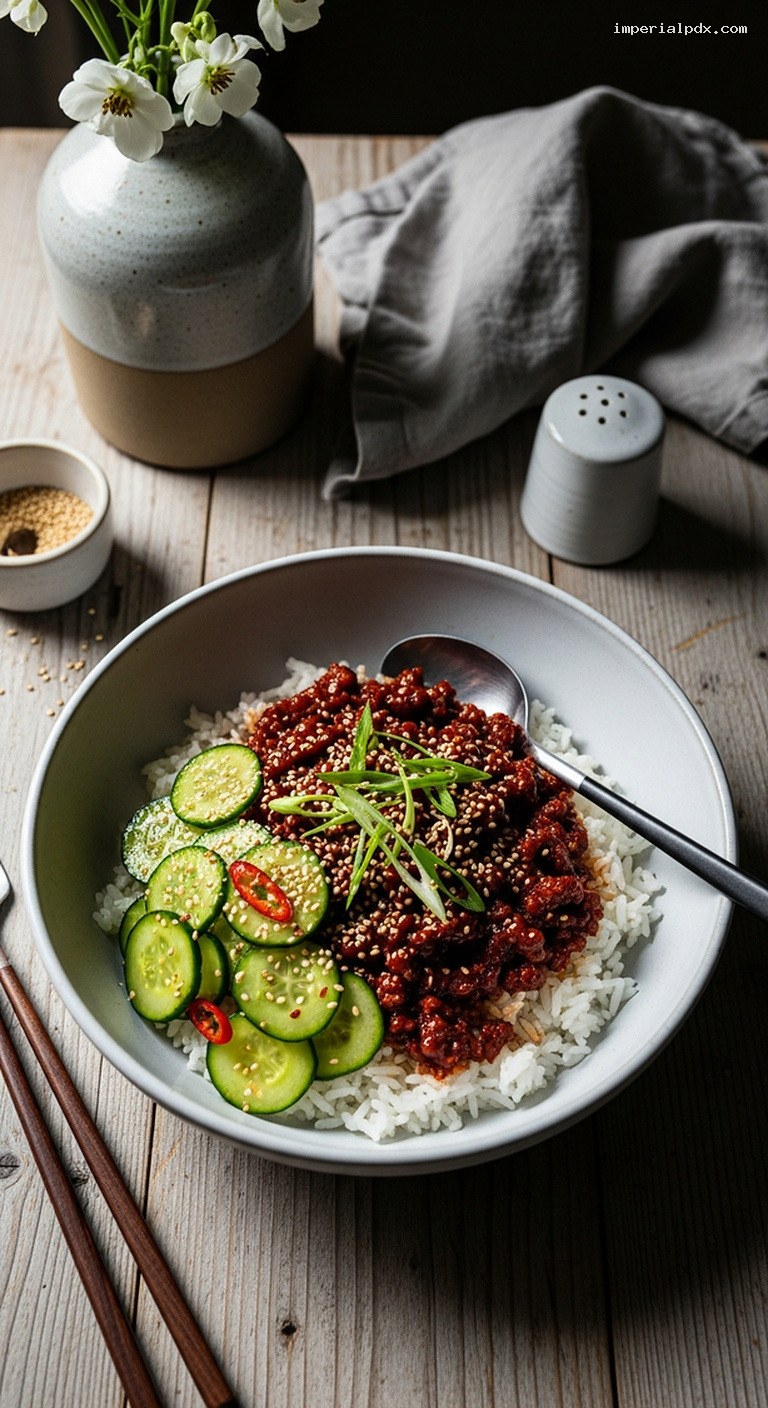
- 6. Divide hot rice into bowls; top with saucy beef, drained cucumbers, scallions, and sesame seeds.
- 7. Taste and add extra gochujang, soy sauce, or a drizzle of sesame oil if you like more heat, saltiness, or richness.
Why You’ll Love This Recipe
- Fast weeknight favorite: ready in about 30 minutes, mostly in one pan.
- Big flavor, simple ingredients: savory-sweet, mildly spicy Korean-inspired beef with pantry staples plus gochujang.
- Balanced bowl: fluffy rice, juicy beef, and crunchy, tangy cucumbers in every bite.
- Flexible and family-friendly: easy to adjust the heat level and add extra veggies or a fried egg on top.
Grocery List
- Produce: 2 small Persian cucumbers (or 1 English cucumber), 3–4 scallions, 3 cloves garlic, small knob fresh ginger (optional but recommended).
- Dairy: None required; optional eggs for serving (fried or soft-boiled) if desired.
- Pantry: White rice, ground beef, low-sodium soy sauce, gochujang, rice vinegar, toasted sesame oil, neutral cooking oil, brown sugar, kosher salt, black pepper, toasted sesame seeds, optional red pepper flakes or gochugaru.
Full Ingredients
For the Rice
- 2 cups uncooked white rice (jasmine or short-grain preferred), rinsed
- Water, as needed per package directions (usually about 2 to 2 1/2 cups)
- Pinch of salt (optional)
For the Quick-Pickled Cucumbers
- 2 small Persian cucumbers, or 1/2 large English cucumber, very thinly sliced
- 2 tbsp rice vinegar (unseasoned)
- 1 tsp sugar
- 1/4 tsp kosher salt
- 1/2 tsp toasted sesame oil (optional, for extra flavor)
- Pinch red pepper flakes or gochugaru (optional, for a bit of heat)
For the Korean-Style Beef
- 1 lb (450 g) ground beef, 80–90% lean
- 2 tsp neutral oil (canola, vegetable, grapeseed, or avocado oil)
- 3 cloves garlic, minced (about 1 tbsp)
- 1 tsp grated fresh ginger, or 1/2 tsp ground ginger
- 3 tbsp low-sodium soy sauce
- 1–2 tbsp gochujang (Korean chili paste), to taste
- 1 1/2 tbsp light or dark brown sugar, packed
- 1 tbsp rice vinegar
- 1 tbsp toasted sesame oil
- 1/4 tsp freshly ground black pepper
- Optional: 1/2–1 tsp gochugaru (Korean chili flakes) for extra heat
For Serving
- 3 scallions, thinly sliced (white and green parts)
- 2 tsp toasted sesame seeds (white, black, or a mix)
- Extra gochujang or gochugaru, to taste
- Optional extras: fried or soft-boiled eggs, shredded carrots, thinly sliced radishes, or steamed greens
Step-by-Step Instructions
Step 1: Cook the Rice
Rinse the rice under cold running water in a fine-mesh strainer until the water runs mostly clear. This removes excess starch and helps the grains cook up fluffy instead of sticky. Drain well.
Add the rinsed rice to a medium saucepan (or rice cooker) with the amount of water recommended on the package, usually about 2 to 2 1/2 cups water for 2 cups rice. Add a pinch of salt if you like. Bring to a boil over medium-high heat, then reduce the heat to low, cover tightly, and simmer for 15–18 minutes, or until the water is absorbed and the rice is tender.
Turn off the heat and let the rice sit, covered, for at least 5 minutes to steam. Fluff with a fork just before serving so it is light and hot when you build the bowls.
Step 2: Make the Quick-Pickled Cucumbers
While the rice cooks, prepare the cucumbers. Thinly slice the cucumbers into coins; the thinner you slice them, the faster they will pickle. Add the slices to a small bowl.
In a separate small bowl or measuring cup, whisk together 2 tbsp rice vinegar, 1 tsp sugar, and 1/4 tsp kosher salt until the sugar dissolves. If using, stir in 1/2 tsp toasted sesame oil and a pinch of red pepper flakes or gochugaru.
Pour the mixture over the cucumbers and toss to coat evenly. Set aside at room temperature while you cook the beef, tossing once or twice. The cucumbers will soften slightly and turn bright and tangy in about 10–15 minutes.
Step 3: Mix the Sauce for the Beef
In a medium bowl, combine the soy sauce, brown sugar, 1–2 tbsp gochujang (start with 1 tbsp if you prefer milder heat), 1 tbsp rice vinegar, 1 tbsp toasted sesame oil, minced garlic, grated ginger, and black pepper. If you like extra spice, add up to 1 tsp gochugaru.
Whisk until the gochujang and sugar are fully dissolved and the mixture looks smooth and slightly thick. This sauce is the heart of the dish: salty, sweet, tangy, and spicy. Set it near the stove so it is ready when your beef is browned.
Step 4: Brown the Ground Beef
Heat a large skillet or sauté pan over medium-high heat. When hot, add 2 tsp neutral oil and swirl to coat the bottom of the pan.
Add the ground beef, breaking it into large chunks with a spatula. Let it cook undisturbed for 1–2 minutes so it can develop some browning, then continue to cook for another 4–5 minutes, breaking it into smaller pieces as it cooks.
Cook until the beef is no longer pink and has some browned, crisp edges. If there is a lot of excess fat in the pan (more than a thin coating), carefully spoon some off or drain briefly, leaving enough to keep the meat juicy and flavorful.
Step 5: Add the Sauce and Caramelize
Reduce the heat to medium. Give the prepared sauce a quick stir, then pour it over the browned beef. Stir well so every bit of beef is coated.
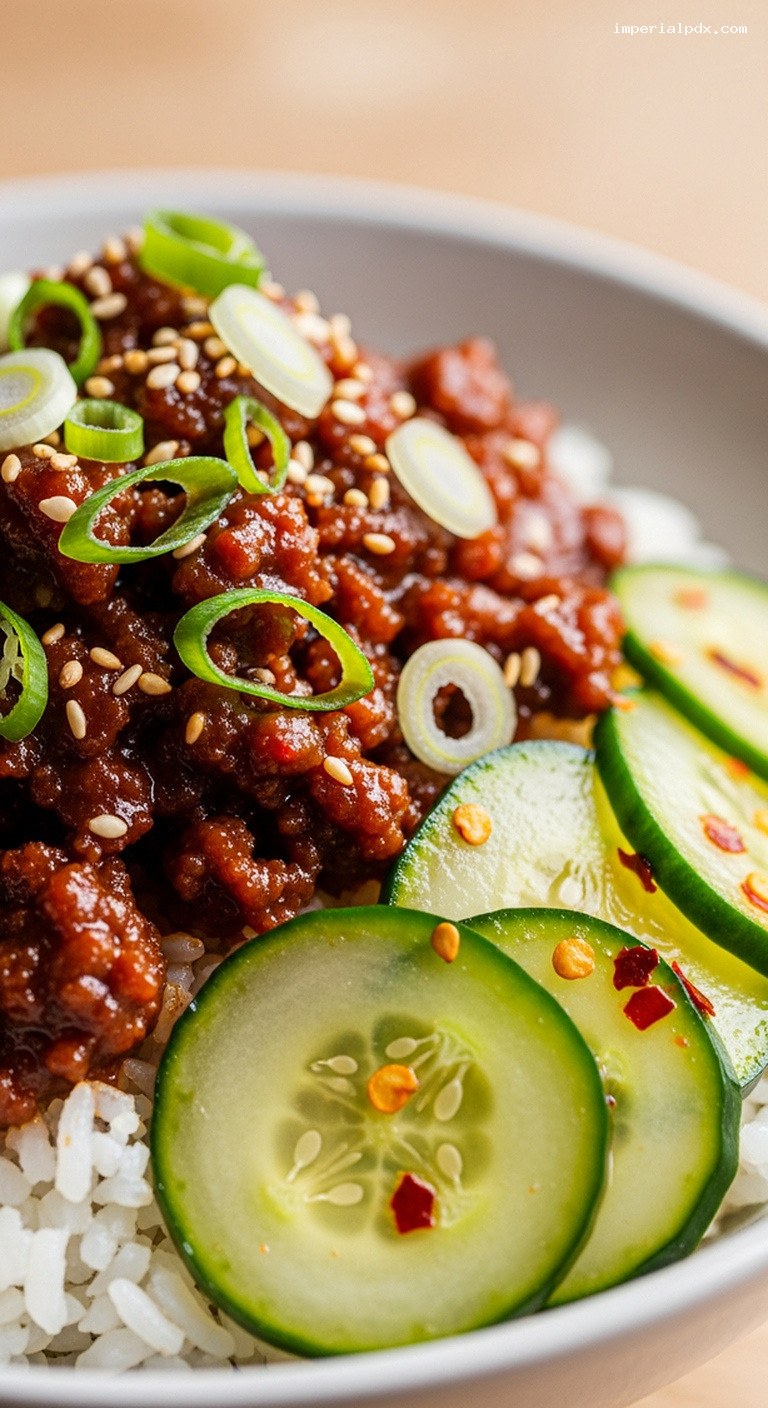
Let the mixture cook for 3–5 minutes, stirring every 30 seconds or so. The sauce will bubble, thicken, and cling to the meat. As the sugar cooks, it will slightly caramelize, giving the beef a glossy, almost sticky coating and deep flavor.
Taste and adjust seasoning: add a splash more soy sauce for saltiness, a little more gochujang for heat and depth, or a tiny pinch of sugar if you prefer a sweeter balance. Turn off the heat and keep warm.
Step 6: Assemble and Garnish the Bowls
Fluff the hot rice with a fork, then divide it evenly among 4 bowls (about 1 cup cooked rice per bowl). Top each mound of rice with a generous scoop of the saucy beef.
Use a fork or tongs to lift the cucumbers out of their pickling liquid (let excess liquid drip off) and arrange them on the side of each bowl.
Scatter sliced scallions and toasted sesame seeds over the beef. If you like, add extra garnishes such as a fried egg, sliced radishes, shredded carrots, or a sprinkle of gochugaru or additional gochujang for more heat.
Serve immediately while the rice and beef are hot and the cucumbers are cool and crunchy. Encourage everyone to mix everything together as they eat for the best flavor in each bite.
Pro Tips
- Control the heat: Start with 1 tbsp gochujang and no extra chili flakes if serving kids or spice-sensitive eaters. You can always add more gochujang or gochugaru at the table.
- Browning equals flavor: Let the beef sit undisturbed for a minute or two at the start of cooking to build a good sear before breaking it up. Those browned bits give the dish a richer taste.
- Slice cucumbers very thin: Paper-thin slices pickle faster and soak up more flavor in a short time. A mandoline (used carefully) is great for this, but a sharp knife works fine.
- Make it saucier: If you prefer extra sauce to soak into the rice, add 2–3 tbsp water or beef broth along with the sauce and simmer until slightly thickened.
- Warm bowls, happy rice: If possible, serve in warm bowls so the rice and beef stay hot while you eat, especially if you add chilled toppings.
Variations
- Extra-veggie bowls: Add quick-sautéed or steamed vegetables like sliced bell peppers, shredded cabbage, spinach, or broccoli to make the bowls more filling and colorful.
- Korean beef and egg bowls: Top each serving with a sunny-side-up or over-easy egg. The runny yolk mixes with the sauce and rice for an extra-luxurious texture.
- Ground turkey or chicken: Swap the beef for ground turkey or chicken. Use a bit less sugar and keep an eye on cooking time, as leaner meats can dry out faster; do not overcook after adding the sauce.
Storage & Make-Ahead
Store leftover beef, rice, and cucumbers separately for the best texture. The cooked beef will keep in an airtight container in the refrigerator for up to 4 days. The rice can be refrigerated for 3–4 days; sprinkle with a little water and reheat covered in the microwave until hot and fluffy. The quick-pickled cucumbers are best within 2 days; keep them in their pickling liquid in a sealed container in the fridge.
For meal prep, portion rice and beef into microwave-safe containers and store the cucumbers and scallions in a separate small container. Reheat the rice and beef together in the microwave until steaming hot, then top with the cool cucumbers and fresh scallions just before eating.
Nutrition (per serving)
Approximate values for 1 bowl (1 cup cooked rice, 1/4 of the beef mixture, cucumbers, and garnishes): about 670 calories; 32 g protein; 27 g fat; 74 g carbohydrates; 2–3 g fiber; 12–15 g sugar; 1,300–1,500 mg sodium (will vary depending on exact soy sauce, gochujang, and salt used). For a lighter bowl, use 90% lean beef, a smaller scoop of rice, and add extra vegetables.