Quick Recipe Version (TL;DR)
Quick Ingredients
- 4 Tbsp (56 g) unsalted butter
- 4 Tbsp (30 g) all-purpose flour
- 3 1/2 cups (830 ml) whole milk, gently warmed
- 1 small bay leaf
- 1/4 tsp freshly grated nutmeg
- 1 tsp kosher salt, plus more to taste
- 1/4 tsp white pepper (or finely ground black pepper)
- (Optional, cauliflower version) 1 medium head cauliflower, 2–3 Tbsp olive oil, 1/2 cup fresh breadcrumbs, 2 Tbsp grated Parmesan, chopped parsley
Do This
- 1. Gently warm the milk with bay leaf and nutmeg until steaming, then keep it warm on low heat.
- 2. In a separate saucepan, melt butter over medium heat, then stir in flour and cook 2–3 minutes, whisking, until it smells toasty but not browned.
- 3. Gradually whisk warm milk into the roux, a ladleful at a time, whisking constantly to avoid lumps.
- 4. Bring to a gentle simmer, whisking, until thick enough to coat the back of a spoon, 5–8 minutes.
- 5. Remove bay leaf; season with salt and pepper and adjust nutmeg to taste.
- 6. For lasagna, keep sauce thick but pourable; for drizzling, whisk in 2–4 Tbsp extra hot milk to loosen.
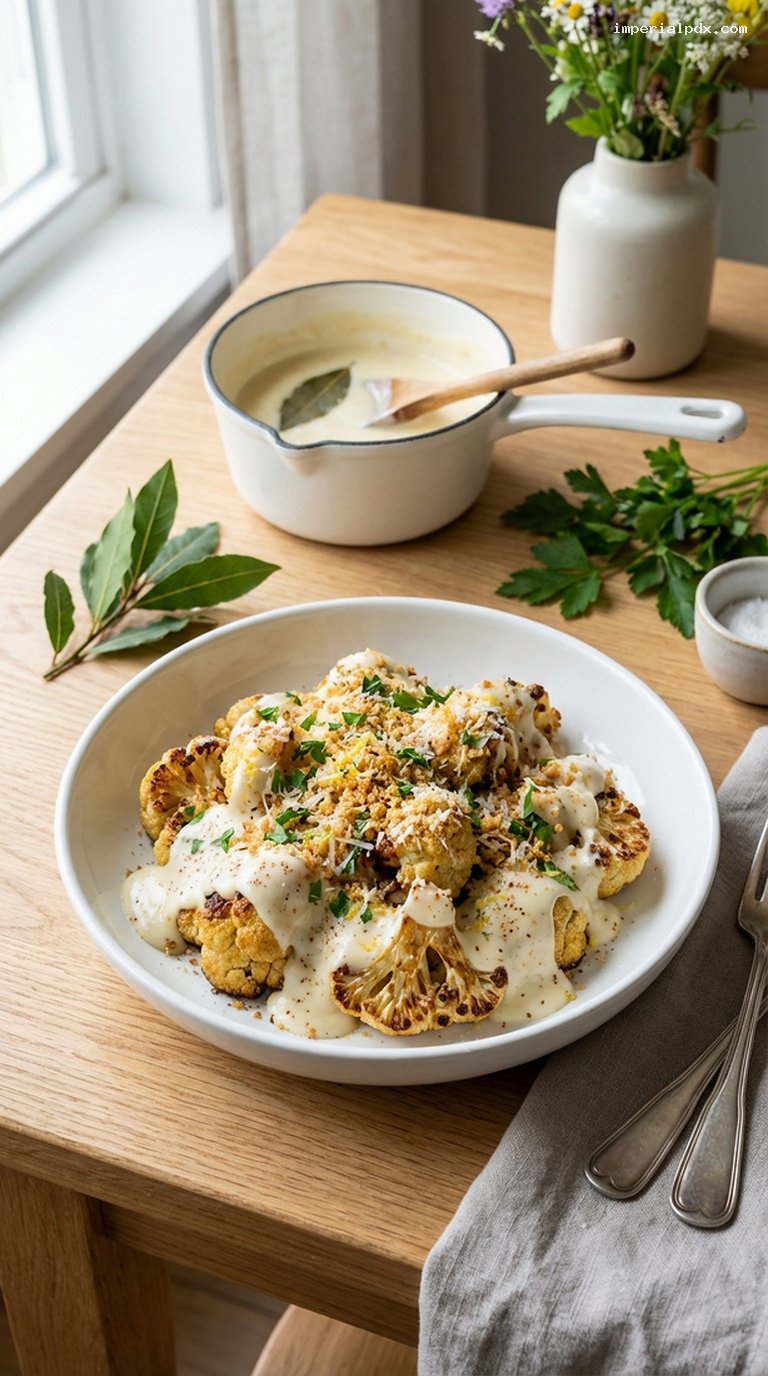
- 7. (Optional) Roast cauliflower at 425°F (220°C) with olive oil, then top with hot béchamel, toasted breadcrumbs, and Parmesan.
Why You’ll Love This Recipe
- Silky-smooth, rich béchamel that feels restaurant-worthy but uses basics you probably already have.
- Gently infused with bay leaf and nutmeg for a subtle, aromatic depth that pairs beautifully with pasta and vegetables.
- Thick enough to cling to lasagna layers, yet easy to thin into a pourable sauce for roasted veggies.
- Includes a simple roasted cauliflower and breadcrumb variation for a complete, cozy side dish.
Grocery List
- Produce: 1 small bay leaf (fresh or dried), 1 medium head cauliflower (optional), fresh flat-leaf parsley (optional), 1 small lemon (optional, for zest)
- Dairy: Unsalted butter, whole milk, Parmesan cheese (optional but recommended for topping)
- Pantry: All-purpose flour, ground or whole nutmeg, kosher salt, white or black pepper, olive oil, fresh or dry breadcrumbs
Full Ingredients
Nutmeg & Bay Leaf Béchamel Sauce
- 4 Tbsp (56 g) unsalted butter
- 4 Tbsp (30 g) all-purpose flour
- 3 1/2 cups (830 ml) whole milk
- 1 small bay leaf (fresh or dried)
- 1/4 tsp freshly grated nutmeg (start here; add a pinch more to taste)
- 1 tsp kosher salt, plus more to taste
- 1/4 tsp white pepper (or finely ground black pepper)
Optional: Roasted Cauliflower with Crispy Breadcrumbs
- 1 medium head cauliflower (about 2 lb / 900 g), cut into florets
- 2–3 Tbsp olive oil
- 1/2 tsp kosher salt, plus more to taste
- 1/4 tsp freshly ground black pepper
- 1/2 cup (30 g) fresh breadcrumbs (or panko)
- 1 Tbsp olive oil or 1 Tbsp melted butter (for toasting breadcrumbs)
- 2 Tbsp finely grated Parmesan cheese
- 1–2 Tbsp finely chopped fresh parsley (optional)
- Finely grated lemon zest, to taste (optional, for brightness)
Optional: For Using in Lasagna
- Prepared lasagna noodles (fresh or dried), meat or vegetable fillings, and cheeses of your choice
- Use béchamel as a layer: plan on about 1/2–3/4 cup sauce per layer, depending on pan size
Step-by-Step Instructions
Step 1: Warm the milk with bay leaf and nutmeg
Pour the 3 1/2 cups (830 ml) whole milk into a medium saucepan. Add the bay leaf and 1/4 teaspoon freshly grated nutmeg. Set over low to medium-low heat and warm gently until the milk is steaming and small bubbles appear around the edges, 3–5 minutes. Do not let it boil.
Once steaming, turn the heat to low just to keep it warm. Warming the milk and infusing it with bay leaf and nutmeg gives the sauce a subtle, rounded flavor and helps prevent lumps later.
Step 2: Make a smooth blond roux
In a separate, heavy-bottomed saucepan (medium size is perfect), melt the 4 tablespoons (56 g) unsalted butter over medium heat. When fully melted and just starting to foam, add the 4 tablespoons (30 g) all-purpose flour all at once.
Immediately whisk or stir with a wooden spoon to combine into a smooth paste. Cook this mixture, whisking constantly, for about 2–3 minutes. It should smell slightly nutty and lose its raw flour aroma but stay pale or light blond in color. If it starts to brown, lower the heat. This cooked flour-butter base is your roux, which will thicken the sauce.
Step 3: Whisk in the warm milk gradually
Remove the bay leaf from the warm milk and discard it. Keeping the roux saucepan over medium heat, slowly ladle in about 1/2 cup of warm milk while whisking constantly. The mixture will thicken and look a bit pasty at first; keep whisking until smooth.
Continue adding the milk in 1/2- to 3/4-cup increments, whisking well after each addition to fully incorporate it before adding more. Scrape along the edges and corners of the pan to catch any thick bits. This step should take about 3–4 minutes. By the time all the milk is added, you should have a smooth, thin sauce with no visible lumps.
Step 4: Simmer until velvety and season
Once all the milk is incorporated, bring the sauce to a gentle simmer over medium heat, whisking frequently. As it heats, it will thicken. Simmer, stirring often, until the sauce is thick enough to coat the back of a spoon and hold a clear line when you run your finger through it, about 5–8 minutes.
Turn the heat to low. Season with 1 teaspoon kosher salt and 1/4 teaspoon white pepper. Taste and adjust: add a pinch more salt if needed, and a little extra nutmeg if you prefer a more pronounced warmth. The finished béchamel should be smooth, glossy, and just thick enough to cling to a spoon without feeling stodgy.
Step 5: Adjust consistency for lasagna or drizzling
For lasagna, you want a sauce that is thick but still pourable, so it will stay between layers without soaking away. The sauce as prepared should be ideal. If it becomes too thick as it sits, whisk in a tablespoon or two of hot milk to loosen it again.
For drizzling over roasted vegetables such as cauliflower, you may prefer a slightly looser, more pourable sauce. Simply whisk in 2–4 tablespoons additional hot milk, a little at a time, until you reach your desired thickness. Keep the sauce warm over very low heat, stirring occasionally, until ready to serve. If a skin forms on top, whisk vigorously to reincorporate or press plastic wrap directly on the surface until serving.
Step 6: Optional roasted cauliflower with crispy breadcrumbs
Preheat your oven to 425°F (220°C). Line a baking sheet with parchment if you like for easier cleanup. Toss the cauliflower florets with 2–3 tablespoons olive oil, 1/2 teaspoon kosher salt, and 1/4 teaspoon black pepper. Spread in a single layer and roast for 25–30 minutes, stirring once halfway through, until the edges are caramelized and golden-brown.
While the cauliflower roasts, heat 1 tablespoon olive oil or melted butter in a small skillet over medium heat. Add the 1/2 cup breadcrumbs and cook, stirring frequently, for 3–5 minutes until evenly golden and crisp. Remove from heat and stir in the 2 tablespoons grated Parmesan and a pinch of salt. Just before serving, toss in chopped parsley and a little lemon zest if using.
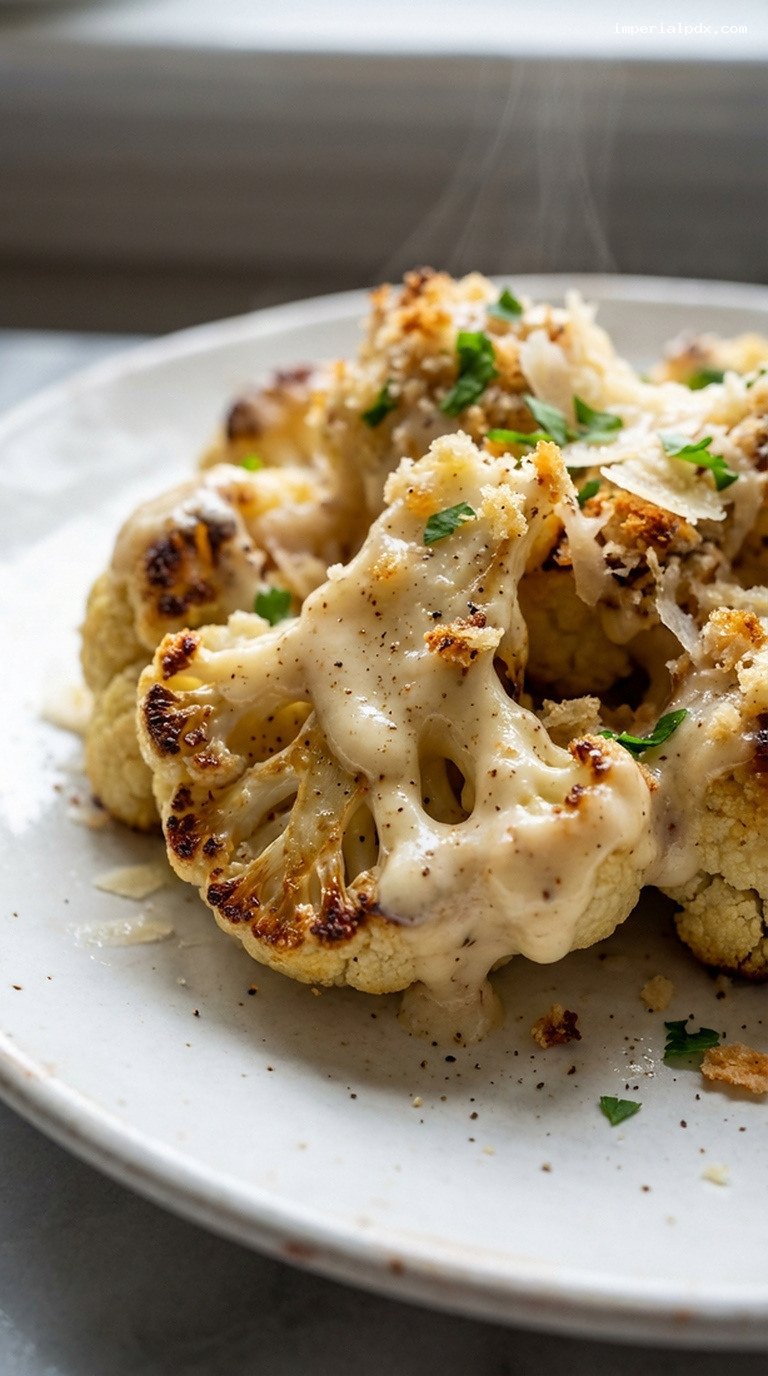
To serve, arrange hot roasted cauliflower on a warm platter. Generously drizzle with hot nutmeg and bay leaf béchamel, then shower with the crispy Parmesan breadcrumbs. Serve immediately while everything is hot and crisp.
Step 7: Using the béchamel in lasagna
When using this béchamel in lasagna, aim for about 1/2–3/4 cup sauce per layer, depending on the size of your baking dish and how saucy you like it. Spread a thin layer of béchamel on the bottom of the dish to prevent sticking, then alternate noodles, fillings (such as meat sauce, sautéed spinach, or roasted vegetables), cheese, and béchamel.
Finish with a layer of noodles, a final blanket of béchamel, and grated cheese on top. Bake according to your lasagna recipe. The nutmeg and bay leaf notes will gently perfume the whole dish without overpowering it, and the sauce will help create tender layers that slice cleanly.
Pro Tips
- Warm milk = fewer lumps. Adding cold milk to hot roux can shock it and cause lumps. Warming the milk first makes a smoother, creamier sauce.
- Control the heat. Keep the heat at medium or lower, especially once the milk is added. High heat can cause scorching on the bottom of the pan.
- Whisk from the start. Constant whisking during the first few additions of milk is crucial for a silky texture. Once the sauce is smooth, you can switch to a wooden spoon.
- Season in layers. Taste the sauce after simmering, not before; the flavor and salt level become clearer once it has thickened.
- Strain for ultra-smooth sauce. For a perfectly velvety béchamel, pour it through a fine-mesh sieve before serving or using in lasagna.
Variations
- Cheese sauce (Mornay-style). After the béchamel has thickened and is off the heat, whisk in 1/2–1 cup grated Gruyère, cheddar, or Parmesan until melted for a rich cheese sauce perfect for mac and cheese or gratins.
- Garlic and herb béchamel. Sauté 1–2 minced garlic cloves in the butter before adding the flour, and finish the sauce with 1–2 tablespoons of chopped fresh herbs such as thyme, chives, or parsley.
- Lighter béchamel. Use 2% (reduced-fat) milk instead of whole milk and reduce the butter to 3 tablespoons. The sauce will be slightly less rich but still creamy and flavorful.
Storage & Make-Ahead
Let the béchamel cool to room temperature, then transfer it to an airtight container. Press a piece of plastic wrap directly onto the surface to minimize skin formation. Refrigerate for up to 3 days.
To reheat, place the sauce in a saucepan over low heat. Add a splash or two of milk and whisk gently until smooth and warmed through. If any small lumps form, whisk vigorously or use an immersion blender, or strain through a fine-mesh sieve.
You can also freeze béchamel for up to 1 month. Thaw overnight in the refrigerator, then reheat gently, whisking and thinning with milk as needed. Note that the texture may be slightly less silky after freezing, but still very usable in baked dishes like lasagna.
Nutrition (per serving)
Approximate values for 1/2 cup (about 70–75 ml) of béchamel, made with whole milk and no additional cheese:
Calories: ~150 kcal; Fat: ~10 g; Saturated fat: ~6 g; Carbohydrates: ~9 g; Protein: ~4 g; Fiber: 0 g; Sodium: ~250 mg. These values are estimates and will vary with exact ingredients, salt level, and any additions such as cheese or extra milk.