Quick Recipe Version (TL;DR)
Quick Ingredients
- 3 lb (1.4 kg) beef chuck roast, cut into 3–4 large pieces
- 2 1/2 tsp kosher salt, divided, plus more to taste
- 1 1/2 tsp freshly ground black pepper, divided
- 2 tbsp olive oil
- 1 large onion, 2 carrots, 2 celery stalks, finely diced
- 5 garlic cloves (4 for ragu, 1 for gremolata), minced
- 4 anchovy fillets in oil (or 2 tsp anchovy paste)
- 2 tbsp tomato paste
- 1 1/2 cups dry red wine
- 1 can (28 oz / 800 g) crushed tomatoes
- 1 cup beef broth
- 2 bay leaves, 2 tsp fresh thyme (or 1 tsp dried), 1 tsp dried oregano, pinch red pepper flakes
- 2 tbsp unsalted butter
- 1 lb (450 g) pappardelle pasta
- 1 cup flat-leaf parsley, zest of 1 lemon, 2 tbsp extra-virgin olive oil (for gremolata)
- Freshly grated Parmigiano-Reggiano, for serving
Do This
- 1. Preheat oven to 325°F (165°C). Pat beef dry, season with 1 1/2 tsp salt and 1 tsp pepper, and sear in hot oil until browned on all sides. Set aside.
- 2. In the same pot, cook onion, carrots, and celery until soft. Add minced anchovy and 4 cloves garlic; cook until fragrant. Stir in tomato paste and cook until darkened.
- 3. Deglaze with red wine, scraping up browned bits. Simmer 3–5 minutes, then add crushed tomatoes, beef broth, herbs, and bay leaves. Return beef to pot.
- 4. Cover and braise in the oven for 2 1/2–3 hours, until the beef is very tender and shreds easily.
- 5. Transfer beef to a board, shred with two forks, and return to pot. Simmer on the stove uncovered 15–20 minutes to thicken. Stir in butter and adjust seasoning.
- 6. Cook pappardelle in salted boiling water until al dente; reserve 1 cup pasta water. Toss pasta with ragu, adding a splash of pasta water if needed to loosen.
- 7. Make gremolata by mixing parsley, lemon zest, 1 minced garlic clove, olive oil, and a pinch of salt. Serve pasta topped with gremolata and grated Parmesan.
Why You’ll Love This Recipe
- Deep, slow-cooked flavor from red wine, tomatoes, anchovy, and melt-in-your-mouth beef.
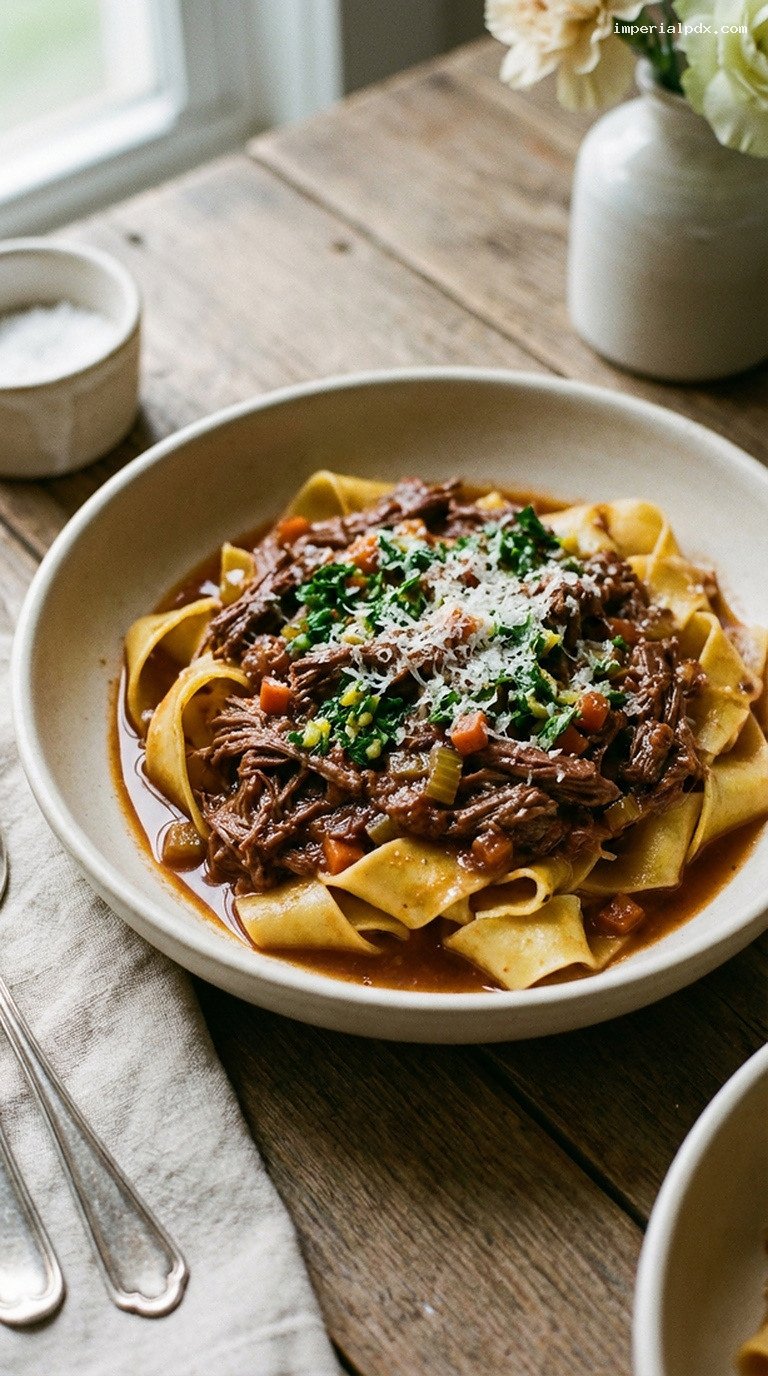
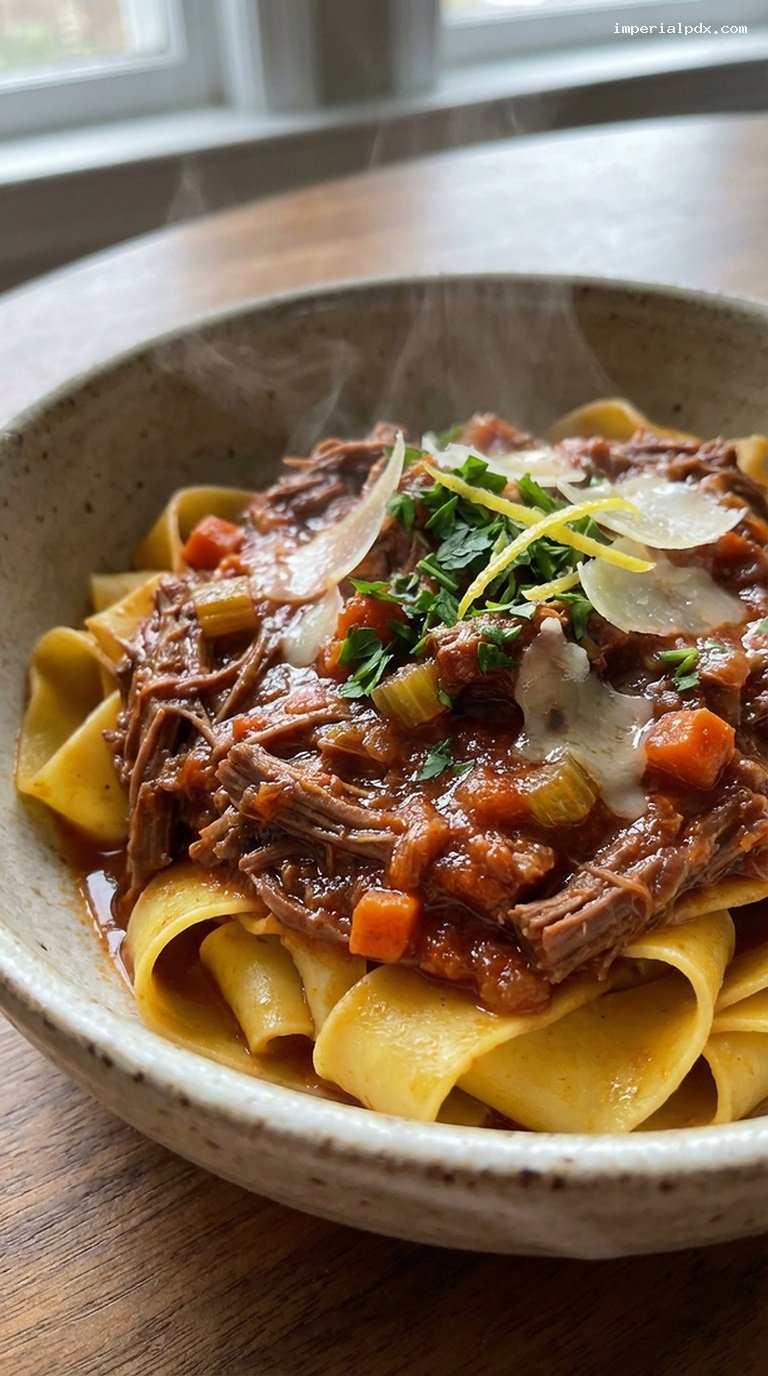
- A true comfort dish: rich ragu clinging to wide pappardelle ribbons with bright, fresh gremolata on top.
- Mostly hands-off: the oven does the work while the beef gently braises.
- Perfect for making ahead, entertaining, or a cozy weekend dinner with leftovers that taste even better the next day.
Grocery List
- Produce: 1 large yellow onion, 2 medium carrots, 2 celery stalks, 5 garlic cloves, 1 bunch flat-leaf parsley, 1 large lemon
- Dairy: Unsalted butter, Parmigiano-Reggiano (for serving)
- Pantry: Beef chuck roast (about 3 lb), olive oil, extra-virgin olive oil, canned crushed tomatoes (28 oz), beef broth, dry red wine, anchovy fillets in oil or anchovy paste, tomato paste, bay leaves, dried oregano, fresh or dried thyme, red pepper flakes, kosher salt, black pepper, pappardelle pasta
Full Ingredients
For the Slow Red-Wine Beef Ragu
- 3 lb (1.4 kg) beef chuck roast, cut into 3–4 large chunks
- 1 1/2 tsp kosher salt, plus more to taste
- 1 tsp freshly ground black pepper, plus more to taste
- 2 tbsp olive oil
- 1 large yellow onion, finely diced
- 2 medium carrots, peeled and finely diced
- 2 celery stalks, finely diced
- 4 garlic cloves, minced
- 4 anchovy fillets in oil, finely minced (or 2 tsp anchovy paste)
- 2 tbsp tomato paste
- 1 1/2 cups (360 ml) dry red wine (such as Chianti, Sangiovese, or Cabernet Sauvignon)
- 1 can (28 oz / 800 g) crushed tomatoes
- 1 cup (240 ml) beef broth, plus up to 1/2 cup more if needed
- 2 bay leaves
- 2 tsp fresh thyme leaves (or 1 tsp dried thyme)
- 1 tsp dried oregano
- 1 small piece Parmesan rind (optional, for extra depth)
- 1/4 tsp red pepper flakes (optional, or to taste)
- 1 tsp sugar (optional, to balance acidity if needed, added at the end)
- 2 tbsp unsalted butter, at room temperature
For the Pappardelle
- 1 lb (450 g) dried pappardelle pasta (or fresh, adjust cooking time)
- 2 tbsp kosher salt (for the pasta water)
- 2–4 tbsp reserved starchy pasta water (as needed to loosen the sauce)
For the Parsley-Lemon Gremolata
- 1 cup firmly packed fresh flat-leaf parsley leaves, very finely chopped (about 1 small bunch)
- Zest of 1 large lemon (about 2 tsp)
- 1 garlic clove, very finely minced or grated
- 2 tbsp extra-virgin olive oil
- Pinch kosher salt, to taste
For Serving (Optional but Recommended)
- Freshly grated Parmigiano-Reggiano cheese
- Extra-virgin olive oil, for drizzling
- Freshly ground black pepper
Step-by-Step Instructions
Step 1: Prep and Sear the Beef
Preheat your oven to 325°F (165°C). Pat the beef chuck pieces very dry with paper towels; this helps them brown instead of steam. Season all over with 1 1/2 teaspoons kosher salt and 1 teaspoon black pepper, pressing the seasoning into the meat. In a large, heavy, oven-safe pot or Dutch oven (at least 5-quart), heat 2 tablespoons olive oil over medium-high heat until shimmering but not smoking. Add the beef in a single layer without crowding (work in batches if needed) and sear for 3–4 minutes per side, until deeply browned on all sides. Transfer the browned beef to a plate and set aside, keeping all the flavorful browned bits in the pot.
Step 2: Build the Vegetable and Anchovy Base
Reduce the heat to medium. In the same pot, add the diced onion, carrots, and celery with a pinch of salt. Cook, stirring occasionally, for 8–10 minutes, until the vegetables are softened and lightly golden around the edges. Add the minced anchovy (or anchovy paste) and 4 minced garlic cloves. Cook, stirring constantly, for about 1–2 minutes, until the garlic is fragrant and the anchovy has melted into the vegetables. Stir in the tomato paste and cook for another 2–3 minutes, stirring frequently, until it darkens slightly in color and sticks a little to the bottom of the pot; this caramelization deepens the flavor.
Step 3: Deglaze with Red Wine and Build the Braising Liquid
Pour in the red wine to deglaze the pot, scraping up any browned bits from the bottom with a wooden spoon. Bring to a simmer and cook for 3–5 minutes, allowing the alcohol to cook off slightly and the mixture to reduce a bit. Add the crushed tomatoes, 1 cup beef broth, bay leaves, thyme, oregano, Parmesan rind (if using), and red pepper flakes. Stir well to combine, then taste the liquid; it should be savory and well seasoned but not overly salty (the flavors will intensify as it cooks). Return the seared beef and any accumulated juices to the pot, nestling the pieces down into the sauce so they are mostly submerged. If needed, add a splash more broth so the beef is nearly covered.
Step 4: Slow-Braise the Beef Until Tender
Bring the pot just up to a gentle simmer on the stove. Once simmering, cover with a tight-fitting lid and transfer to the preheated oven. Braise for 2 1/2–3 hours, checking once or twice to ensure the liquid is gently bubbling and the sauce has not reduced too much. If it seems very dry at any point, add 1/4–1/2 cup hot water or broth. The beef is done when it is very tender and easily shreds with a fork. When ready, remove the pot from the oven and set it on the stove. Use tongs to transfer the beef pieces to a cutting board, discarding any large chunks of fat.
Step 5: Shred the Beef and Reduce the Sauce
Using two forks, shred the beef into rustic bite-size pieces. Remove and discard the bay leaves and Parmesan rind from the sauce. If you prefer a smoother sauce, you can briefly mash some of the vegetables with the back of a spoon. Return the shredded beef to the pot and place it over low to medium-low heat on the stove, uncovered. Simmer gently for 15–20 minutes to thicken and concentrate the flavors, stirring occasionally to prevent sticking. If the sauce seems too thick, add a splash of broth or water; if too thin, let it simmer a bit longer. Taste and adjust seasoning with additional salt, pepper, and, if the sauce tastes overly sharp or acidic, up to 1 teaspoon of sugar. Turn off the heat and stir in 2 tablespoons butter until glossy and silky.
Step 6: Cook the Pappardelle
About 20 minutes before serving, bring a large pot of water to a vigorous boil. Add 2 tablespoons kosher salt (the water should taste pleasantly salty). Add the pappardelle and cook according to package directions until just al dente, usually 7–10 minutes for dried pasta or 2–3 minutes for fresh. Before draining, reserve about 1 cup of the starchy cooking water. Drain the pasta well. Add the drained pappardelle directly into the pot of warm ragu over low heat. Gently toss with tongs or two large spoons, adding 2–4 tablespoons of reserved pasta water as needed to help the sauce coat the noodles and stay silky instead of thick or clumpy.
Step 7: Make the Gremolata and Serve
While the pasta cooks, prepare the gremolata. In a small bowl, combine the finely chopped parsley, lemon zest, and 1 finely minced garlic clove. Stir in 2 tablespoons extra-virgin olive oil and a small pinch of salt, tasting and adjusting if needed; it should be bright, fresh, and a little punchy. To serve, twirl generous nests of pappardelle and beef ragu into warm shallow bowls. Spoon a bit of extra ragu over each serving. Top with a sprinkle of gremolata, a shower of freshly grated Parmigiano-Reggiano, a grind of black pepper, and an optional light drizzle of extra-virgin olive oil. Serve immediately while steaming hot.
Pro Tips
- Choose the right wine: Use a dry, medium-bodied red wine you enjoy drinking (like Chianti or Sangiovese). Avoid sweet or heavily oaked wines, which can throw off the flavor.
- Do not rush the browning: Deeply browning the beef and letting the tomato paste caramelize are key steps for building a rich, restaurant-worthy sauce.
- Make it ahead: The ragu tastes even better the next day. Cool completely, chill, and reheat gently on the stove with a splash of water or broth.
- Skim excess fat: If the sauce seems very oily on top after braising, cool slightly and skim off some fat with a spoon before reducing.
- Control the thickness: Use reserved pasta water like a finishing tool. A little splash at the end keeps the sauce glossy and helps it cling to the pappardelle.
Variations
- Slow cooker version: After searing the beef and building the wine-tomato mixture on the stove, transfer everything to a slow cooker. Cook on low for 8–9 hours or high for 5–6 hours, then shred, reduce the sauce slightly in a saucepan if needed, and proceed as directed.
- Mushroom-enhanced ragu: Add 8 oz (225 g) sliced cremini or portobello mushrooms with the vegetables in Step 2 for extra earthiness and depth.
- Serve over polenta instead of pasta: Swap the pappardelle for a creamy Parmesan polenta or soft cheesy mashed potatoes for a hearty, gluten-free alternative.
Storage & Make-Ahead
The beef ragu (without the pasta) keeps very well. Let it cool completely, then transfer to airtight containers and refrigerate for up to 4 days, or freeze for up to 3 months. Thaw overnight in the refrigerator before reheating. Reheat gently in a saucepan over low to medium heat, adding a splash of water or broth to loosen if needed. Cook the pappardelle fresh just before serving for the best texture; avoid storing the pasta already mixed with sauce for more than a day, as it will continue to absorb liquid and soften. Leftover sauced pasta can be refrigerated up to 2 days and reheated in a skillet with a bit of water or extra sauce.
Nutrition (per serving)
Approximate values per serving (1/6 of the recipe, including pasta and a modest amount of Parmesan): about 780 calories; 45 g protein; 28 g fat; 80 mg cholesterol; 70 g carbohydrates; 5 g dietary fiber; 10 g sugars; 4–5 g saturated fat; 1150 mg sodium (will vary depending on added salt, broth, and cheese). These values are estimates and should be used as a general guide only.