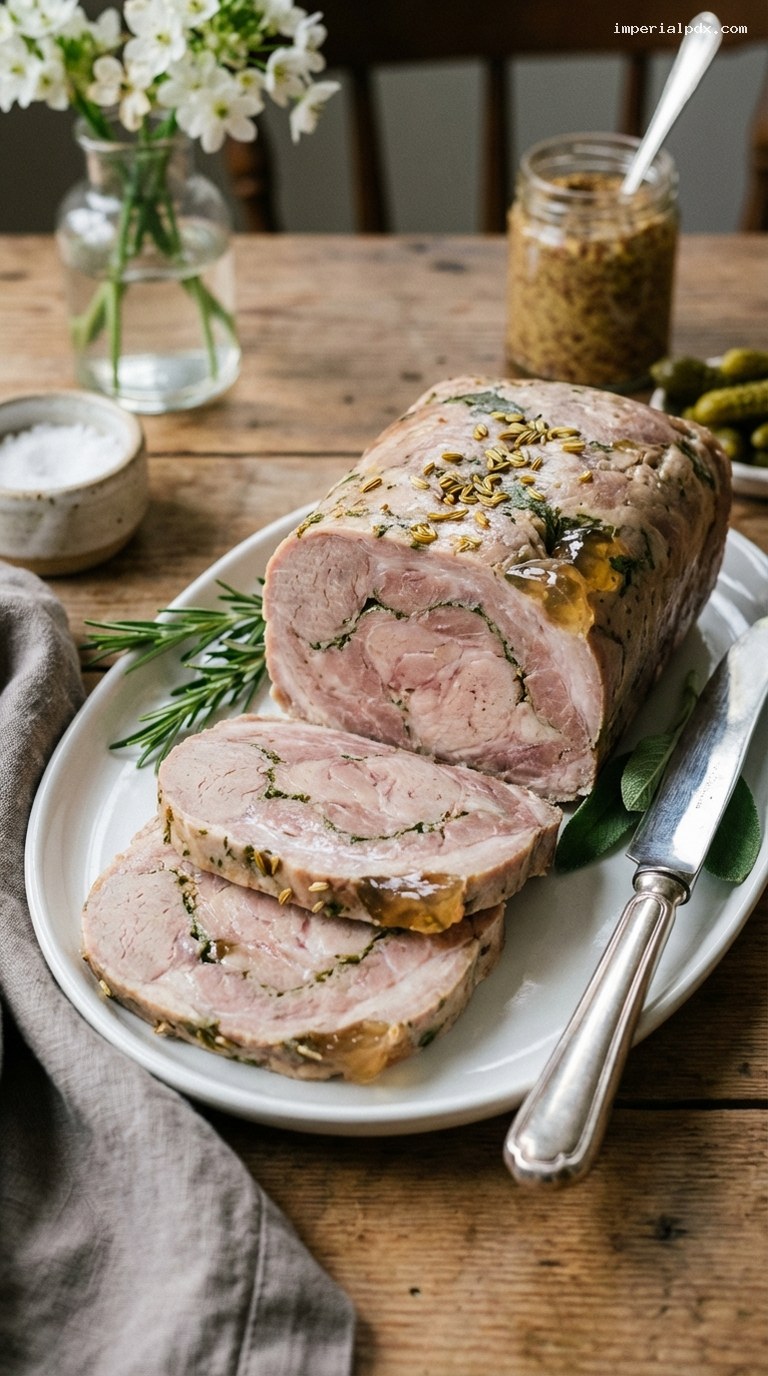
Quick Recipe Version (TL;DR)
Quick Ingredients
- 4 lb (1.8 kg) boneless pork shoulder/butt
- 6 cloves garlic, finely grated
- 2 tbsp chopped fresh rosemary; 2 tbsp chopped fresh sage; 1 tbsp fresh thyme leaves
- 2 tbsp fennel seeds, lightly crushed; 1 tsp red pepper flakes
- 2 tbsp lemon zest; 2 tbsp extra-virgin olive oil
- 2 tbsp kosher salt (Diamond Crystal) + 2 tsp black pepper
- 1 small onion, 1 small carrot, 1 celery stalk, 2 bay leaves
- 1 cup (240 ml) dry white wine or chicken broth + 1 cup (240 ml) water
- Optional: 1 envelope (7 g) powdered gelatin; 2 tbsp chopped parsley
Do This
- 1. Combine garlic, herbs, fennel, red pepper, lemon zest, olive oil, salt, and pepper into a paste. Rub all over pork shoulder, cover, and chill at least 1 hour (up to 24 hours).
- 2. Heat oven to 300°F (150°C). Place onion, carrot, celery, and bay leaves in a snug roasting pan. Set pork on top. Pour wine and water into pan.
- 3. Roast uncovered 3–3½ hours, basting occasionally, until very tender and deeply browned (internal temp around 195°F / 90°C).
- 4. Transfer pork to a tray to cool slightly. Strain pan juices, discard solids, and skim fat. Reduce juices in a saucepan to about ½ cup (120 ml). Stir in bloomed gelatin if using.
- 5. Shred warm pork into bite-size pieces, chopping any crisp bits. Toss with reduced juices and chopped parsley; adjust seasoning.
- 6. Line a 9×5 inch (23×13 cm) loaf pan with plastic wrap. Firmly pack in the meat mixture, pressing out air pockets. Cover with plastic, weigh down, and chill at least 12 hours.
- 7. Unmold, slice with a sharp knife into ¼–½ inch (6–12 mm) slices, and serve chilled or at cool room temperature with bread, mustard, and pickles.
Why You’ll Love This Recipe
- All the flavors of classic Italian porchetta in a neat, sliceable terrine that is perfect for a charcuterie board.
- Slow-roasting and then pressing the meat with its own reduced juices gives you incredibly juicy, intensely flavored slices.
- Almost all the work is hands-off; the terrine can (and should) be made ahead, making entertaining much easier.
- Flexible enough to serve as a starter, part of an antipasto spread, or a luxurious sandwich filling.
Grocery List
- Produce: Garlic, fresh rosemary, fresh sage, fresh thyme, lemons, onion, carrot, celery, fresh parsley (optional)
- Dairy: None required
- Pantry: Boneless pork shoulder/butt, fennel seeds, red pepper flakes, kosher salt, black pepper, extra-virgin olive oil, dry white wine or chicken broth, bay leaves, powdered gelatin (optional)
Full Ingredients
For the Porchetta Rub
- 6 cloves garlic, finely grated or minced
- 2 tbsp finely chopped fresh rosemary leaves
- 2 tbsp finely chopped fresh sage leaves
- 1 tbsp fresh thyme leaves
- 2 tbsp fennel seeds, lightly crushed (using a mortar and pestle or the bottom of a pan)
- 1 tsp red pepper flakes (use ½ tsp for milder heat)
- 2 tbsp finely grated lemon zest (from about 2 lemons)
- 2 tbsp extra-virgin olive oil
- 2 tbsp kosher salt (Diamond Crystal; if using fine sea salt, use 1 tbsp + 1 tsp)
- 2 tsp freshly ground black pepper
For the Pork and Roasting Pan
- 4 lb (1.8 kg) boneless pork shoulder/butt, skin-on or skinless, trimmed of any large, hard chunks of surface fat
- 1 small yellow onion, roughly chopped
- 1 small carrot, roughly chopped
- 1 celery stalk, roughly chopped
- 2 bay leaves
- 1 cup (240 ml) dry white wine or low-sodium chicken broth
- 1 cup (240 ml) water
For the Terrine Assembly & Finishing
- 1 envelope (about 2½ tsp / 7 g) unflavored powdered gelatin, optional but recommended for very clean slices, especially in warm rooms
- 2 tbsp cold water (for blooming the gelatin, if using)
- 1–2 tbsp finely chopped fresh flat-leaf parsley
- Optional: 1 tsp extra lemon zest for a fresher finish
- Extra salt and black pepper, to taste
To Serve (Optional but Recommended)
- Crusty bread, crostini, or baguette slices
- Coarse or Dijon mustard
- Cornichons, pickled onions, or other pickles
- Arugula or other peppery salad greens
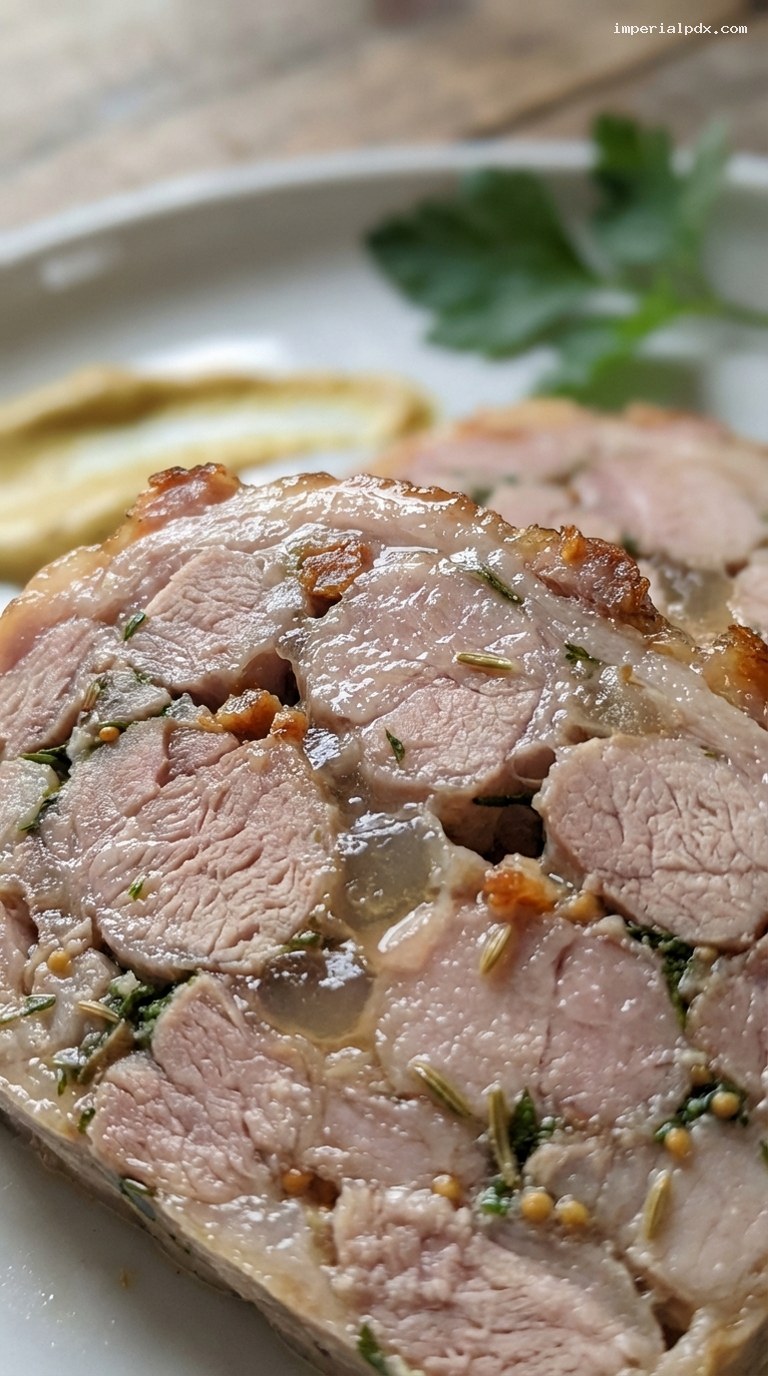
Step-by-Step Instructions
Step 1: Prepare and Season the Pork Shoulder
Pat the pork shoulder dry with paper towels. If there are any very thick, hard pieces of surface fat, trim them off, but leave a good amount of fat attached for flavor and moisture.
In a small bowl, combine the garlic, chopped rosemary, sage, thyme, crushed fennel seeds, red pepper flakes, lemon zest, olive oil, kosher salt, and black pepper. Stir until you have a thick, fragrant paste.
Rub this mixture all over the pork shoulder, making sure to get into any crevices. If the shoulder has been rolled and tied, try to work some of the paste into the folds; if not, just coat it thoroughly on all sides.
Place the seasoned pork in a dish, cover tightly, and refrigerate for at least 1 hour and up to 24 hours. The longer it rests, the deeper the porchetta flavors will penetrate.
Step 2: Set Up the Roasting Pan
When you are ready to cook, remove the pork from the refrigerator and let it sit at room temperature for about 30 minutes while you preheat the oven and assemble the pan.
Preheat the oven to 300°F (150°C).
Scatter the chopped onion, carrot, and celery in the bottom of a snug roasting pan or baking dish (something just a little larger than the pork is ideal). Add the bay leaves. Place the pork shoulder on top of the vegetables, fat-side up.
Pour the white wine (or chicken broth) and water into the pan around the pork. You want some liquid to start creating a flavorful base for the drippings, but the meat should not be submerged.
Step 3: Slow-Roast the Pork Until Tender
Transfer the pan to the oven and roast at 300°F (150°C) for 3 to 3½ hours, basting the pork with the pan juices every 45–60 minutes. The liquid will gradually reduce and turn golden, and the pork will slowly become very tender.
The pork is done when it is deeply browned, pulls apart easily with a fork, and an instant-read thermometer inserted into the thickest part registers roughly 195°F (90°C). If needed, continue roasting in 15-minute increments until it reaches this stage.
If you would like extra browning or slightly crisper edges for flavor, you can increase the oven temperature to 425°F (220°C) for the final 15–20 minutes, keeping a close eye to avoid burning the drippings.
Once done, transfer the pork to a tray or large plate and let it cool until it is just cool enough to handle comfortably, about 20–30 minutes. Leave the oven off; you are done roasting.
Step 4: Strain, Defat, and Reduce the Pan Juices
While the pork rests, carefully pour all the contents of the roasting pan (juices and vegetables) through a fine-mesh strainer into a measuring jug or bowl. Press on the vegetables with the back of a spoon to extract as much flavor as possible, then discard the solids.
Let the juices sit for 5–10 minutes so the fat rises to the top. Skim off most of the fat with a spoon, leaving mostly the rich, meaty jus underneath. A little fat is fine; you just do not want it to be greasy.
Measure how much liquid you have; you will likely have around 1 to 1½ cups. Pour it into a small saucepan. If you are using gelatin, sprinkle the powdered gelatin over 2 tbsp cold water in a small bowl and let it sit for 5 minutes to bloom.
Bring the pan juices to a simmer over medium heat and cook, stirring occasionally, until reduced to about ½ cup (120 ml). The liquid should be glossy and slightly syrupy. Remove from the heat. If using gelatin, stir the bloomed gelatin into the warm juices until fully dissolved.
Step 5: Shred the Pork and Combine with the Reduced Drippings
Using your hands or two forks, shred the warm pork into bite-size chunks. For a terrine, you want small, irregular pieces rather than long, stringy shreds; this gives better texture and slices more cleanly.
If there are any pieces of soft, flavorful fat or nicely browned, chewy exterior, chop them finely and mix them in for extra richness and porchetta character. Remove and discard any large, gristly bits.
Place all the shredded pork into a large bowl. Pour the warm reduced pan juices over the meat. Add the chopped parsley and the extra lemon zest if using. Toss well until every piece of pork is coated and the juices are evenly distributed.
Taste and adjust the seasoning with a little more salt or black pepper if needed. The mixture should taste slightly more seasoned than you would normally prefer, because the flavor will mellow once chilled.
Step 6: Pack and Press the Terrine
Line a standard 9×5 inch (23×13 cm) loaf pan with two long strips of plastic wrap, placing them in a cross so that the overhang comes up and over all sides. Smooth out any major wrinkles.
Spoon the pork mixture into the lined pan in several layers, pressing firmly with a spatula or your hands after each addition to remove air pockets. Pack it as tightly as you can; this helps the terrine slice cleanly.
When all the meat is in, fold the overhanging plastic wrap over the top to cover the surface completely. Place a piece of parchment or foil on top if you like, then set a second, slightly smaller loaf pan or a flat piece of cardboard wrapped in foil directly on the terrine to act as a press.
Weigh it down with a few cans or a small heavy skillet. Transfer the whole setup to the refrigerator and chill for at least 12 hours and up to 3 days. During this time, the gelatin and natural collagen will set, and the terrine will become firm and sliceable.
Step 7: Unmold, Slice, and Serve
When you are ready to serve, remove the weights and top pan from the terrine. Gently pull back the plastic wrap around the edges to loosen, then invert the loaf pan onto a cutting board. Lift off the pan and peel away the plastic wrap.
Use a long, sharp slicing knife to cut the terrine into clean slices about ¼–½ inch (6–12 mm) thick. For the neatest slices, dip the knife briefly in hot water and wipe it dry between cuts.
Serve the porchetta terrine chilled or let it sit at room temperature for 15–20 minutes to take off the chill, which softens the fat and brings out the flavors. Arrange slices on a platter or charcuterie board with crusty bread, mustard, pickles, and a handful of peppery greens if you like.
Once sliced, leftovers can be re-wrapped and chilled. The flavor often improves on the second day as everything melds together.
Pro Tips
- Season ahead for deeper flavor: An overnight rest with the porchetta rub really pays off. If you have time, always go for the full 12–24 hours in the fridge.
- Pack the terrine tightly: Pressing out air pockets is essential for clean slices. Take a moment to tamp down each layer firmly as you fill the loaf pan.
- Do not rush the chilling: The terrine needs at least 12 hours to fully set. Cutting it too soon can cause it to crumble.
- Use the gelatin when serving for a crowd: The shoulder has natural collagen, but a small amount of gelatin makes the terrine sturdier and more reliable, especially if it will sit out on a buffet.
- Save the skimmed fat: The aromatic porchetta fat skimmed from the pan juices is delicious for roasting potatoes or frying eggs.
Variations
- Spicy Calabrian-style: Increase the red pepper flakes to 2 tsp and add 1–2 tbsp chopped Calabrian chile paste to the rub for a more assertive heat.
- Orange and fennel twist: Swap half of the lemon zest for orange zest and add 1 tsp ground fennel in addition to the crushed fennel seeds for a sweeter, aromatic profile.
- Herb-heavy spring version: Add extra fresh herbs such as marjoram and parsley to the rub and stir a handful of chopped herbs into the meat just before packing the terrine for a greener, fresher flavor.
Storage & Make-Ahead
The porchetta terrine is ideal for making ahead. Keep it tightly wrapped in the loaf pan and refrigerate for up to 4–5 days before serving. Once unmolded, wrap leftovers well in plastic wrap or place in an airtight container; they will keep for about 4 days in the refrigerator.
For longer storage, you can freeze the terrine. Wrap the whole loaf (or individual slices) tightly in plastic wrap and then in foil, and freeze for up to 2 months. Thaw overnight in the refrigerator before slicing and serving. Note that the texture may be slightly softer after freezing, but the flavor will still be excellent.
Serve the terrine chilled or slightly cool. Avoid leaving it at room temperature for more than 2 hours for food safety.
Nutrition (per serving)
Approximate values per serving (1 of 10 servings, without bread or accompaniments): about 350 calories; 24 g fat; 9 g saturated fat; 3 g carbohydrates; 0 g fiber; 1 g sugars; 30 g protein; 850 mg sodium. These numbers are estimates and will vary depending on the exact cut of pork, how much fat you skim, and whether you use gelatin.