Quick Recipe Version (TL;DR)
Quick Ingredients
- 1 1/2 lb (680 g) pork tenderloin, trimmed
- 3 cloves garlic, finely minced
- 2 tbsp Dijon mustard
- 2 tbsp extra-virgin olive oil, divided
- 1 1/4 tsp kosher salt, divided
- 1/2 tsp freshly ground black pepper
- 1 tsp fresh rosemary, finely chopped (or 1/2 tsp dried)
- 1 tsp fresh thyme leaves, chopped (or 1/2 tsp dried)
- 1/2 tsp smoked paprika (optional)
- 1 tsp honey or maple syrup (optional, for balance)
- Fresh parsley, lemon wedges, and extra mustard for serving (optional)
Do This
- 1. Pat pork dry, trim silverskin, and preheat oven to 300°F (150°C).
- 2. Stir together garlic, Dijon, 1 tbsp olive oil, 1 tsp salt, pepper, herbs, paprika, and honey to make a paste; rub all over pork.
- 3. Heat remaining 1 tbsp oil in an oven-safe skillet over medium-high; sear pork 2–3 minutes per side until lightly browned.
- 4. Transfer skillet to oven and roast 18–25 minutes, until internal temperature reaches 140–145°F (60–63°C).
- 5. Rest pork 10–15 minutes at room temperature, then wrap tightly and chill at least 2 hours, until completely cold.
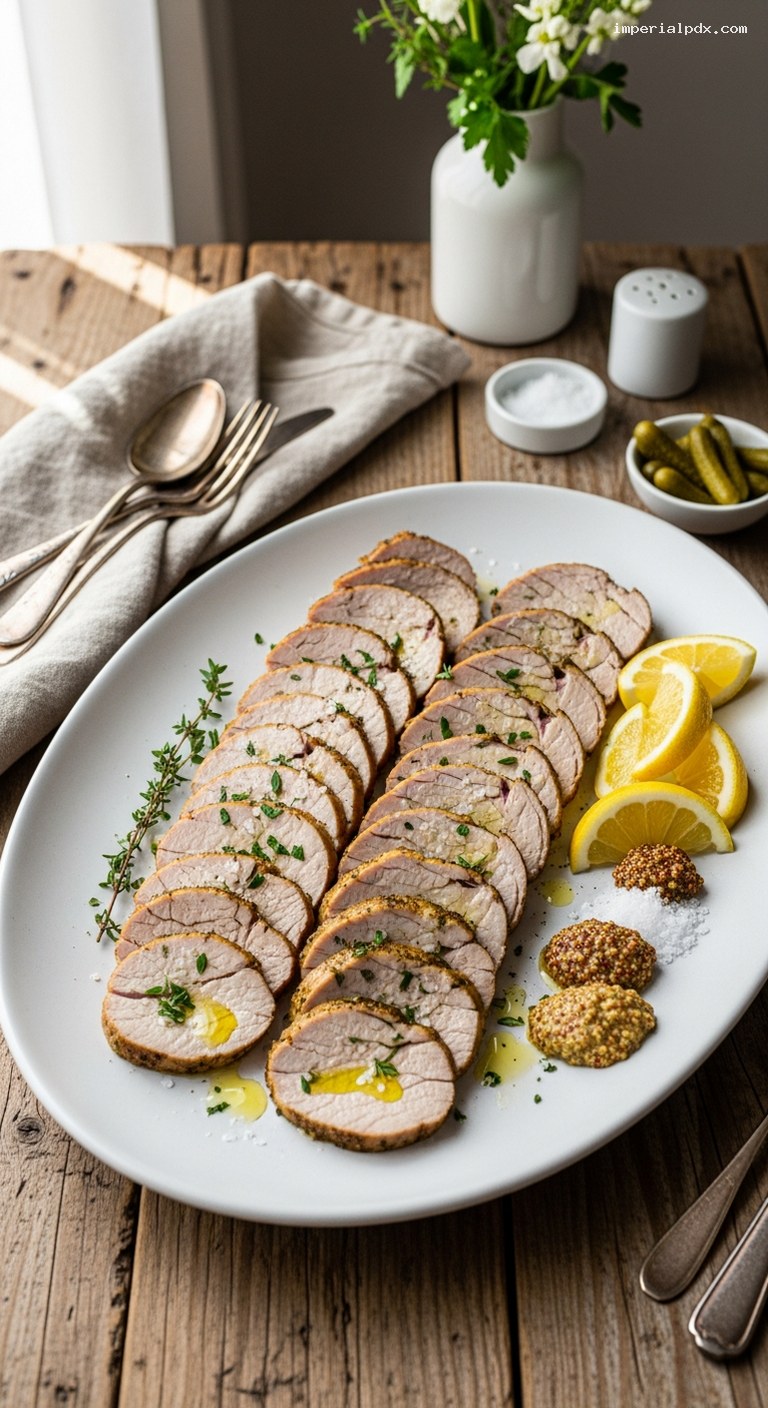
- 6. Slice very thinly across the grain; arrange on a platter, drizzle with a little olive oil, sprinkle flaky salt, parsley, and squeeze of lemon.
- 7. Serve cold or cool with extra Dijon, crusty bread, or a crisp salad.
Why You’ll Love This Recipe
- Perfect make-ahead main: cook once, chill, and slice whenever you are ready to serve.
- Lean but flavorful: pork tenderloin stays moist thanks to gentle roasting and a garlicky mustard-herb crust.
- Elegant yet easy: looks impressive on a platter but uses simple, everyday ingredients.
- Versatile: ideal for sandwiches, salads, charcuterie-style boards, or light dinners.
Grocery List
- Produce: Garlic (3–4 cloves), fresh rosemary, fresh thyme, fresh parsley, 1 lemon (for serving), optional salad greens (such as arugula).
- Dairy: None required.
- Pantry: Pork tenderloin (about 1 1/2 lb / 680 g), Dijon mustard, extra-virgin olive oil, kosher salt, black pepper, smoked paprika (optional), honey or maple syrup (optional), flaky sea salt (for finishing).
Full Ingredients
Pork Tenderloin
- 1 1/2 lb (680 g) pork tenderloin, trimmed of silverskin and excess fat
- 1/4 tsp kosher salt (for seasoning just before searing)
- 1 tbsp extra-virgin olive oil (for searing)
Garlic-Herb Mustard Rub
- 3 cloves garlic, finely minced or pressed
- 2 tbsp Dijon mustard
- 1 tbsp extra-virgin olive oil
- 1 tsp kosher salt
- 1/2 tsp freshly ground black pepper
- 1 tsp fresh rosemary, finely chopped (or 1/2 tsp dried rosemary, crushed)
- 1 tsp fresh thyme leaves, chopped (or 1/2 tsp dried thyme)
- 1/2 tsp smoked paprika (optional, for gentle smokiness and color)
- 1 tsp honey or maple syrup (optional, helps browning and rounds out the mustard)
For Serving (Optional but Recommended)
- 1–2 tbsp extra-virgin olive oil, for drizzling
- Flaky sea salt, to finish
- 2 tbsp chopped fresh parsley
- Lemon wedges, for squeezing over the sliced pork
- Additional Dijon or grainy mustard
- Crusty bread, boiled potatoes, or mixed salad greens (such as arugula) on the side
Step-by-Step Instructions
Step 1: Trim and Dry the Pork
Place the pork tenderloin on a cutting board. Using a sharp knife, carefully trim away the silverskin (the shiny, tough membrane) and any large pieces of surface fat. This helps the rub adhere and prevents chewy bites later.
Pat the pork very dry on all sides with paper towels. Removing surface moisture helps the rub stick and encourages better browning during searing. If you have time, let the pork sit uncovered in the fridge for 30 minutes to air-dry; this step is optional but helpful.
Step 2: Make the Garlic-Herb Mustard Rub
In a small bowl, combine the minced garlic, Dijon mustard, 1 tbsp olive oil, 1 tsp kosher salt, black pepper, chopped rosemary, thyme, smoked paprika (if using), and honey or maple syrup (if using). Stir until you have a thick, fragrant paste.
Place the dried pork tenderloin on a plate or shallow dish. Spoon the garlic-mustard paste over the pork and rub it all over with your hands, coating every side evenly. Try to keep as much of the rub on the meat as possible rather than on the plate. Let the pork rest at room temperature for 15–20 minutes while you preheat the oven, allowing the flavors to start absorbing.
Step 3: Preheat, Season, and Sear
Preheat your oven to 300°F (150°C) with a rack in the center. This gentle temperature is what gives you juicy “cold-roasted” pork that slices beautifully once chilled.
Just before searing, lightly sprinkle the outside of the pork with the remaining 1/4 tsp kosher salt. Heat 1 tbsp olive oil in an oven-safe skillet (such as cast iron or stainless steel) over medium-high heat until the oil shimmers.
Carefully add the pork to the hot pan. Sear for about 2–3 minutes per side, turning with tongs, until the outside is lightly browned and some of the garlic-herb crust is nicely caramelized. You are not trying to cook it through here, just to develop flavor and color.
Step 4: Roast Gently Until Just Done
Once the pork is seared on all sides, keep it in the same oven-safe skillet and transfer the pan to the preheated 300°F (150°C) oven. Roast for 18–25 minutes, depending on the thickness of your tenderloin.
Begin checking the internal temperature at around 18 minutes using an instant-read thermometer inserted into the thickest part of the meat. The target temperature is 140–145°F (60–63°C). At 140°F, the pork will carry over to at least 145°F as it rests, which is the USDA-recommended safe temperature for pork.
When the pork reaches 140–145°F, remove the pan from the oven and transfer the tenderloin to a clean plate or cutting board. Do not slice yet.
Step 5: Rest, Wrap, and Chill
Let the pork rest at room temperature for 10–15 minutes. This rest time allows the juices to redistribute, keeping the meat moist even after chilling. During this period, the internal temperature will rise slightly due to carryover cooking.
Once the pork has rested and is cool enough to handle but still warm, wrap it tightly in plastic wrap or place it in an airtight container. Wrapping helps keep the exterior from drying out in the fridge and encourages a compact shape that is easier to slice thinly.
Refrigerate the wrapped pork for at least 2 hours, or until it is completely cold throughout. For the cleanest slices, chilling for 4 hours or overnight is ideal. This “cold-roasted” stage is what makes the meat hold together beautifully when cut paper-thin.
Step 6: Slice Thinly and Serve Cold
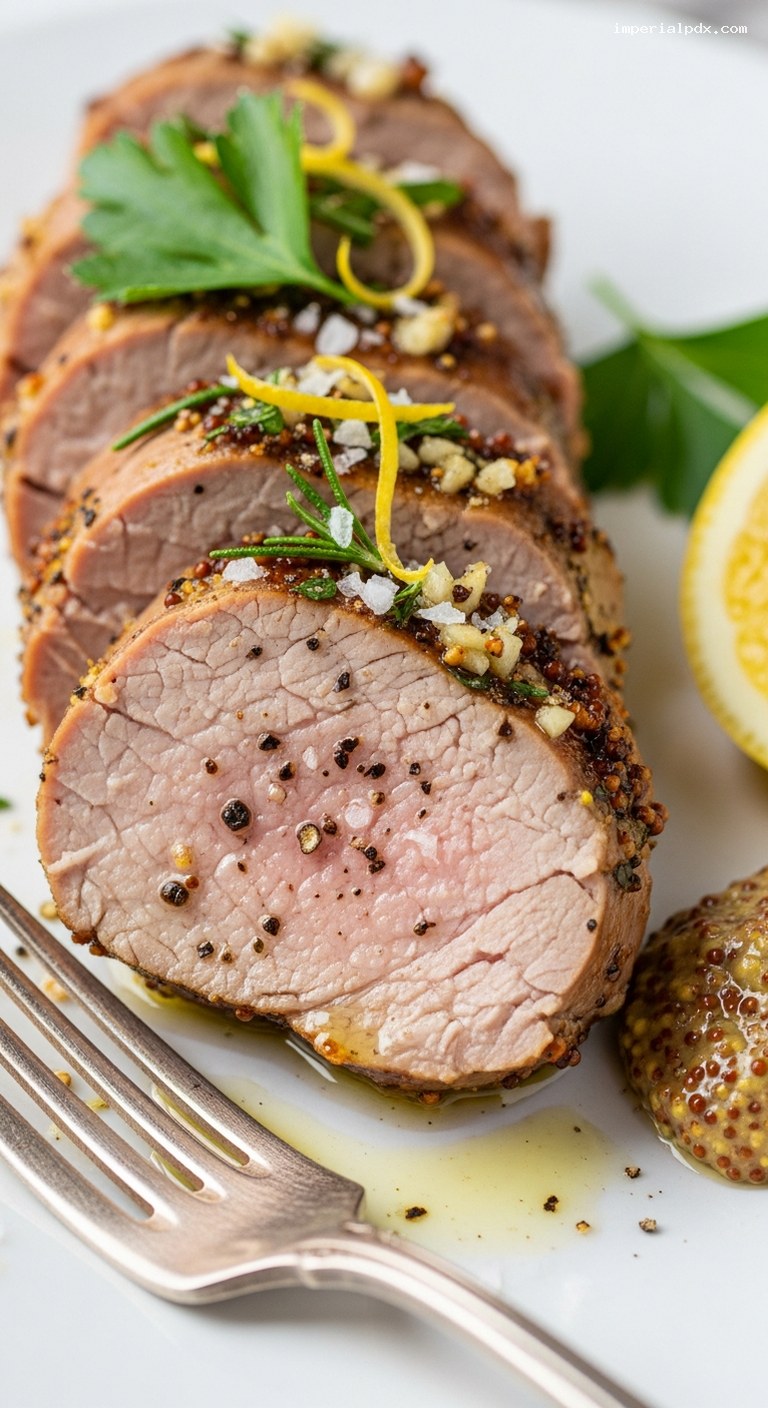
When ready to serve, unwrap the chilled pork and place it on a cutting board. Using a very sharp knife, slice the tenderloin crosswise into thin slices, aiming for about 1/8 inch (3 mm) thick or even thinner. Slicing against the grain will give you the most tender bites.
Arrange the slices in slightly overlapping layers on a serving platter, fanning them out attractively. Drizzle lightly with extra-virgin olive oil and squeeze a little lemon juice over the top, if you like. Sprinkle with flaky sea salt and chopped fresh parsley.
Serve the cold-roasted garlic pork tenderloin chilled or at cool room temperature, with extra Dijon or grainy mustard on the side. It pairs wonderfully with a simple green salad, roasted vegetables served at room temperature, crusty bread, or as part of a charcuterie-style board with pickles and olives.
Pro Tips
- Use a thermometer: Pork tenderloin can go from perfectly juicy to dry fairly quickly. An instant-read thermometer is the best way to hit 140–145°F without guessing.
- Chill thoroughly before slicing: For very thin, neat slices, the meat must be fully cold. If it still feels slightly warm in the center, chill longer.
- Slice just before serving: Wait to slice the pork until you are close to serving time to keep the edges from drying out in the fridge.
- Sharp knife is essential: A long, sharp slicing or chef’s knife will give you cleaner, thinner slices than a dull blade. Gentle, smooth strokes work better than sawing.
- Double the recipe for meal prep: Make two tenderloins at once and you will have ready-to-go protein for salads, sandwiches, and grain bowls all week.
Variations
- Lemon-Herb Version: Add 1 tsp finely grated lemon zest to the garlic-mustard rub and skip the smoked paprika. Finish the platter with extra lemon zest and plenty of parsley for a bright, Mediterranean feel.
- Spicy Mustard Version: Stir 1–2 tsp hot mustard or 1/2–1 tsp crushed red pepper flakes into the rub for a bit of heat. Serve with pickled jalapeños or spicy giardiniera.
- Herb-Crusted (No Sear) Version: For a softer crust, skip the stovetop sear. Instead, roll the rubbed tenderloin in a mixture of finely chopped fresh herbs and breadcrumbs, then roast at 300°F (150°C) until done. You will lose some browning but gain a delicate herbal coating.
Storage & Make-Ahead
This cold-roasted pork tenderloin is excellent for making ahead. Once fully chilled, keep the whole cooked tenderloin tightly wrapped or in an airtight container in the refrigerator for up to 3–4 days. For best texture, slice only what you need and leave the rest whole until you are ready to serve more.
If you have leftover thin slices, store them in a covered container, pressing out as much air as possible to prevent drying. They will keep well for about 2–3 days. Enjoy cold directly from the fridge, or let them sit at room temperature for 10–15 minutes to take the chill off before serving.
For longer storage, you can freeze the whole cooked tenderloin (wrapped well in plastic and then foil, or in a freezer bag) for up to 2 months. Thaw overnight in the refrigerator before slicing and serving cold.
Nutrition (per serving)
Approximate values per serving (1/4 of recipe), not including optional sides:
Calories: 260 kcal; Protein: 40 g; Fat: 10 g; Saturated Fat: 2.5 g; Carbohydrates: 2 g; Fiber: 0 g; Sugars: 1 g; Sodium: about 650 mg (will vary with salt used and how much rub remains in the pan).