Quick Recipe Version (TL;DR)
Quick Ingredients
- 1 beef eye of round roast (2¼–2¾ lb / 1–1.25 kg), trimmed
- 2½ tsp kosher salt
- 1½ tsp freshly ground black pepper
- 4 garlic cloves, finely minced
- 2 tbsp finely chopped fresh rosemary
- 1 tbsp chopped fresh thyme leaves
- 2 tbsp chopped fresh flat-leaf parsley
- 2 tbsp extra-virgin olive oil
- 1 tsp Dijon mustard
- 1 tbsp neutral oil (for searing)
- Flaky salt and extra herbs for serving (optional)
Do This
- 1. Pat roast dry, trim excess surface fat, and season all over with kosher salt (dry-brine overnight if possible).
- 2. Stir together garlic, pepper, rosemary, thyme, parsley, olive oil, and Dijon to make a paste; rub all over roast.
- 3. Let beef sit at room temperature for 30–45 minutes while you preheat oven to 250°F (120°C).
- 4. Sear roast in a hot, oven-safe skillet with neutral oil until browned on all sides, 6–8 minutes total.
- 5. Transfer skillet to oven; roast until internal temperature is 125–130°F (52–54°C) for medium-rare, about 1¼–1¾ hours.
- 6. Rest at room temperature 20–30 minutes, then chill uncovered until completely cold, at least 4 hours or overnight.
- 7. Slice very thinly against the grain; serve cold as charcuterie-style roast beef with mustard, pickles, and crusty bread.
Why You’ll Love This Recipe
- Gives you deli-style roast beef at home: lean, tender, and deeply flavored with garlic and herbs.
- Perfect for meal prep: make once, slice all week for sandwiches, salads, and snack boards.
- Uses an affordable cut (eye of round) and turns it into something special with gentle, low-and-slow cooking.
- Beautiful served cold on a charcuterie board, yet simple enough for a relaxed weekend project.
Grocery List
- Produce: Garlic, fresh rosemary, fresh thyme, fresh flat-leaf parsley, optional fresh chives or oregano, lemon (optional, for serving)
- Dairy: Optional unsalted butter (for searing or finishing)
- Pantry: Beef eye of round roast (2¼–2¾ lb), kosher salt, black pepper, extra-virgin olive oil, neutral oil (such as canola or vegetable), Dijon mustard, flaky sea salt (optional)
Full Ingredients
Garlic-Herb Roast Beef
- 1 beef eye of round roast (2¼–2¾ lb / 1–1.25 kg), well-trimmed of silverskin and thick surface fat
- 2½ tsp kosher salt
- 1½ tsp freshly ground black pepper
- 4 garlic cloves, very finely minced or grated (about 4 tsp)
- 2 tbsp finely chopped fresh rosemary (from about 2 large sprigs)
- 1 tbsp chopped fresh thyme leaves
- 2 tbsp chopped fresh flat-leaf parsley
- 2 tbsp extra-virgin olive oil
- 1 tsp Dijon mustard
- 1 tbsp neutral oil with a high smoke point (canola, vegetable, or grapeseed) for searing
- 1 tbsp unsalted butter (optional, for extra browning and flavor while searing)
Optional For Serving
- Flaky sea salt, for finishing
- Additional chopped fresh herbs (parsley, chives, thyme)
- Assorted mustards (Dijon, whole-grain, or hot mustard)
- Prepared horseradish or horseradish cream
- Pickles or cornichons
- Crusty bread, baguette slices, or crackers
- Olive oil for drizzling (optional)
Step-by-Step Instructions
Step 1: Trim and Season the Roast (Optional Dry Brine)
Place the beef eye of round on a cutting board. If there are any thick patches of fat or silvery, tough membrane (silverskin), carefully trim them away with a sharp knife, leaving a very thin layer of fat if present. Pat the roast completely dry with paper towels.
Sprinkle the kosher salt evenly over the entire surface of the meat, turning to coat all sides. For the best flavor and juiciness, place the salted roast on a rack set over a plate or tray, leave uncovered, and refrigerate for 8–24 hours. This dry brine lets the salt penetrate the meat and helps it stay moist. If you do not have time, you can continue right away; the roast will still be delicious.
Step 2: Make the Garlic-Herb Paste
In a small bowl, combine the minced garlic, black pepper, chopped rosemary, thyme, and parsley. Add the 2 tablespoons olive oil and 1 teaspoon Dijon mustard. Stir with a spoon until everything forms a thick, fragrant paste. If it seems too thick to spread, add another 1 teaspoon of olive oil.
Remove the roast from the refrigerator 30–45 minutes before cooking so it can lose its chill. Pat it dry again if any moisture has beaded up on the surface. Rub the garlic-herb paste all over the roast, pressing it into every side. Try to coat it as evenly as possible; this will become the flavorful crust.
Step 3: Preheat Oven and Sear the Roast
Preheat your oven to 250°F (120°C) with a rack in the center. Choose a heavy, oven-safe skillet or shallow roasting pan that fits the roast with a little space around it. A cast-iron skillet works very well.
Place the skillet over medium-high heat and add the 1 tablespoon neutral oil. When the oil is shimmering and just beginning to smoke, carefully lay the roast in the pan. Sear, turning every 1–2 minutes, until all sides are well browned, about 6–8 minutes total. If using, add the tablespoon of butter during the last minute of searing and spoon the foamy butter over the meat for extra flavor.
Browning at this stage builds a savory crust and adds a roasted note that will stand out even when the beef is served cold and thinly sliced.
Step 4: Slow-Roast to Perfect Doneness
Once the roast is seared, orient it so it sits in the center of the skillet or pan. If you have an oven-safe probe thermometer, insert it into the thickest part of the roast, making sure it does not touch any pan surface.
Transfer the skillet to the preheated 250°F (120°C) oven. Roast until the internal temperature reaches 125–130°F (52–54°C) for medium-rare, about 1¼–1¾ hours, depending on the exact size and shape of your roast and your oven. Begin checking after 1 hour if you do not have a probe thermometer; use an instant-read thermometer inserted into the center.
For charcuterie-style roast beef that stays tender when cold and thinly sliced, medium-rare is ideal. If you prefer medium, cook to 135°F (57°C), but avoid going much higher, as eye of round is very lean and can become dry.
Step 5: Rest, Then Chill Completely
When the roast reaches your target temperature, remove the skillet from the oven and transfer the beef to a clean plate or small rack set over a tray. Do not cover it tightly; trapping steam can soften the crust. Let the roast rest at room temperature for 20–30 minutes. The internal temperature will rise a few degrees and then begin to fall.
After resting, place the roast, still uncovered or only very loosely tented, into the refrigerator. Chill until completely cold, at least 4 hours, but ideally overnight. This firming step is crucial for deli-style, paper-thin slicing and a clean, rosy interior.
Step 6: Slice Thinly for Charcuterie-Style Serving
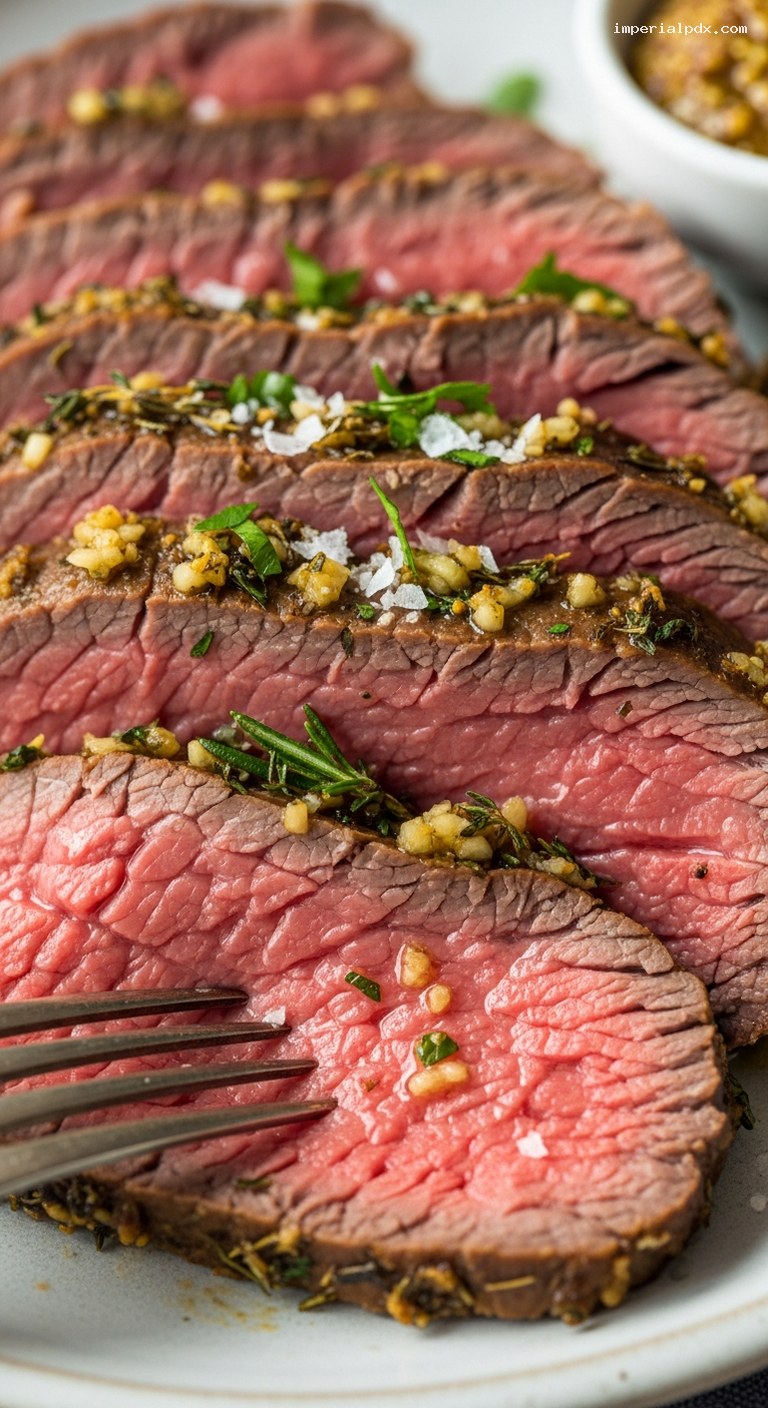
Once the roast is thoroughly chilled and firm, transfer it to a cutting board. Using a very sharp slicing knife or a meat slicer, slice the beef as thinly as you can, cutting against the grain. This means your knife strokes should go across the direction of the muscle fibers, not parallel to them; this is what makes each bite tender.
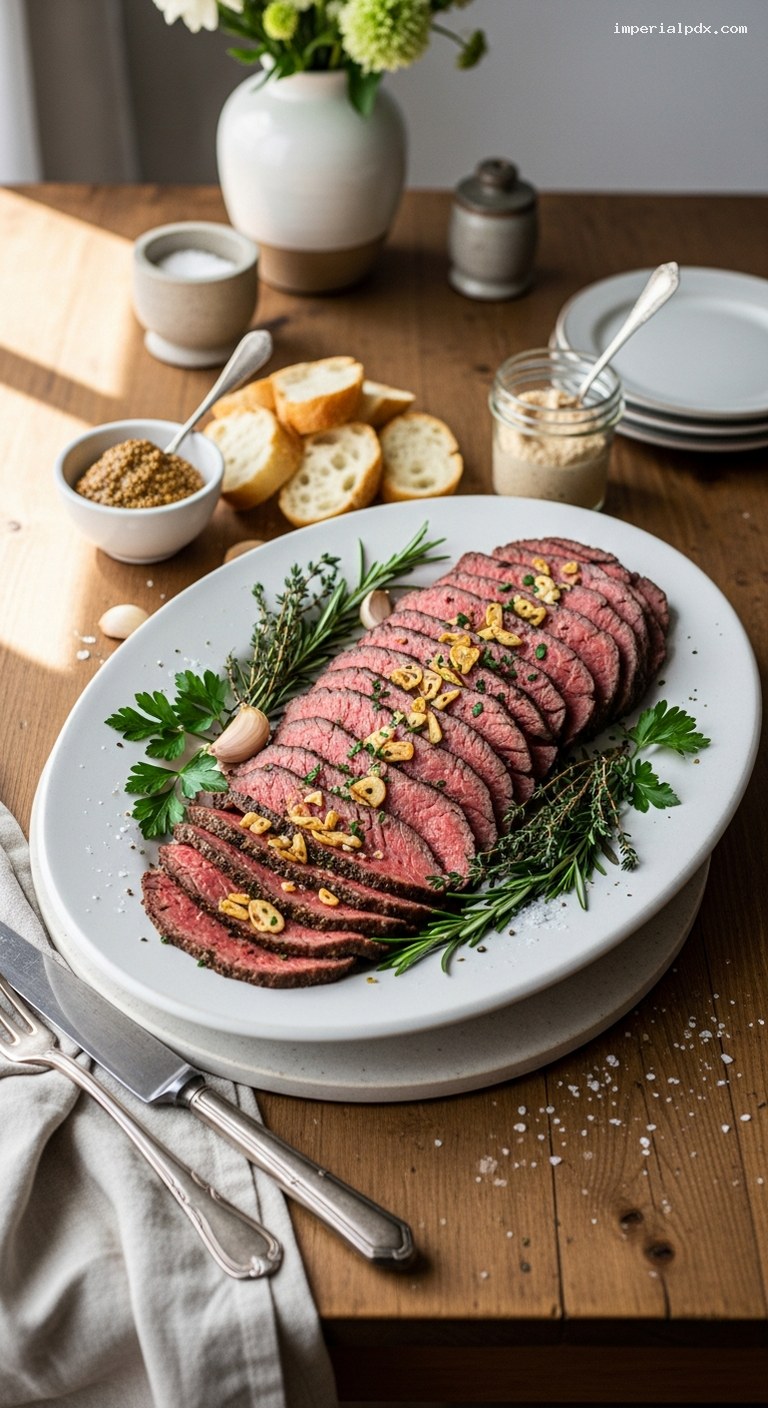
Fan the slices onto a serving platter or wooden board, slightly overlapping them. Sprinkle lightly with flaky sea salt and a pinch of extra chopped herbs, if desired. Drizzle with a few drops of olive oil for shine, or serve plain. Add small bowls of mustard, horseradish, pickles, and bread or crackers alongside for a beautiful charcuterie-style presentation.
Pro Tips
- Dry-brine if you can. Salting the roast 8–24 hours ahead dramatically improves flavor and juiciness, especially for a lean cut like eye of round.
- Use a thermometer, not the clock. Every oven and roast is slightly different; an instant-read or probe thermometer is the surest way to get perfect medium-rare.
- Chill thoroughly before slicing. The colder and firmer the roast, the cleaner and thinner your slices will be. Overnight chilling gives the best texture.
- Slice against the grain. Look for the direction of the muscle fibers and cut perpendicular to them. This makes even a lean cut taste much more tender.
- Save the pan juices. Any flavorful drippings left in the pan can be poured over the sliced beef or whisked into a quick jus with a splash of hot water or broth.
Variations
- Smoky Paprika & Garlic: Add 1 teaspoon smoked paprika and ½ teaspoon onion powder to the garlic-herb paste for a deeper, slightly smoky flavor that works wonderfully in sandwiches.
- Peppercorn-Crusted: Reduce the rosemary to 1 tablespoon and increase black pepper to 2½ teaspoons, plus 1 teaspoon crushed pink or green peppercorns, for a bolder, deli-style pepper crust.
- Lemon-Herb: Add 1 teaspoon finely grated lemon zest to the herb paste and finish the sliced roast with a light squeeze of fresh lemon just before serving for a brighter, fresher profile.
Storage & Make-Ahead
This garlic-herb roast beef is ideal for making ahead. Once fully chilled and sliced, store the meat in an airtight container or wrap tightly in plastic wrap, pressing out excess air. Refrigerate for up to 4–5 days. For best texture, keep slices in neat stacks rather than spread out; this helps prevent them from drying out. If you prefer to slice as needed, you can store the whole cooked roast (unsliced) well-wrapped in the refrigerator for the same amount of time, slicing off portions just before serving.
For longer storage, you can freeze tightly wrapped portions of sliced beef for up to 2 months. Place parchment between layers so you can separate slices easily. Thaw overnight in the refrigerator and pat dry gently if any moisture accumulates. Serve chilled or let sit at room temperature for 10–15 minutes to take off the chill before enjoying on a charcuterie board or in sandwiches.
Nutrition (per serving)
Approximate values for one 3 oz (85 g) serving of roast beef, not including optional serving items:
Calories: ~140 kcal; Protein: ~26 g; Fat: ~4 g; Saturated Fat: ~1.5 g; Carbohydrates: ~0 g; Fiber: 0 g; Sugars: 0 g; Sodium: ~430 mg (will vary with exact salt usage and trimming). Because this is a lean cut, most of the calories come from protein, making it a great high-protein option for sandwiches, salads, and snack boards.