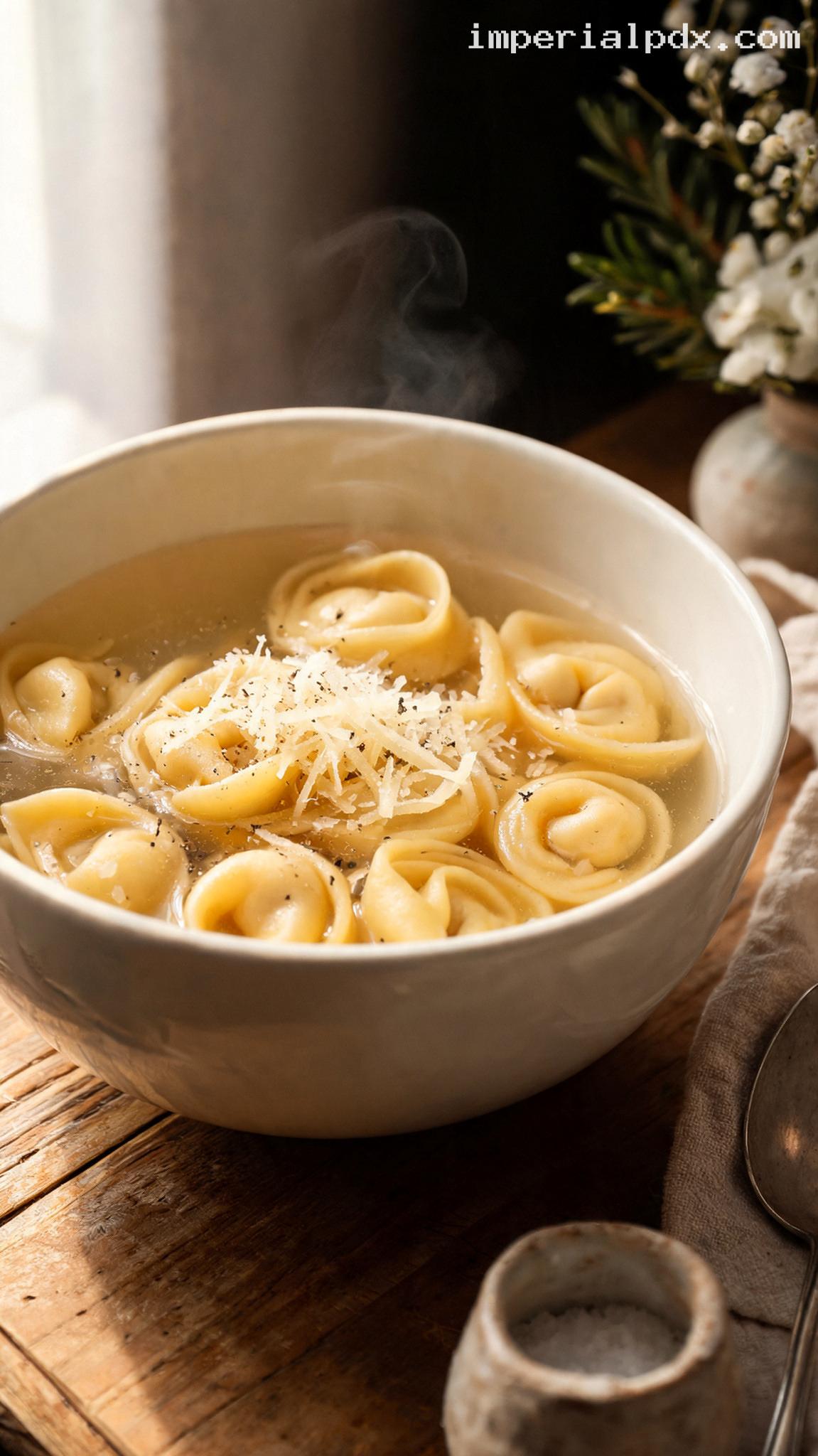
Quick Recipe Version (TL;DR)
Italian Tortellini in Homemade Parmesan Broth is a comforting, Christmas-inspired first course: tender cheese tortellini nestled in a clear, golden broth made with Parmesan rinds, vegetables, and herbs.
Quick Ingredients
- 10 cups (2.4 liters) cold water, plus additional hot water to adjust the finished broth
- 8 ounces (225 g) clean, unwaxed Parmesan rinds
- 1 medium yellow onion (150 g), peeled and quartered
- 1 medium carrot (100 g), cut into 2-inch pieces
- 2 celery ribs (100 g), cut into 2-inch pieces
- 4 flat-leaf parsley sprigs, 3 thyme sprigs, and 1 dried bay leaf
- 1/2 teaspoon whole black peppercorns
- 1/2 teaspoon fine sea salt (3 g), plus more to taste
- 1 pound (450 g) refrigerated cheese tortellini
- 3 quarts (2.8 liters) water and 1 tablespoon fine sea salt (18 g), for cooking the pasta
- 1/2 cup (45 g) freshly grated Parmesan, for serving
- 1/4 teaspoon freshly cracked black pepper, for serving
Do This
- 1. Rinse the Parmesan rinds and prepare the vegetables and herbs.
- 2. Combine the broth water, rinds, vegetables, herbs, and peppercorns in a large pot. Bring to a bare simmer over medium heat, about 10 minutes.
- 3. Simmer uncovered for 75 minutes at 185–200°F (85–93°C), stirring occasionally and skimming the surface.
- 4. Strain without pressing the solids. Measure the broth, adjust to 8 cups (1.9 liters), and season with 1/2 teaspoon salt.
- 5. Cook the tortellini separately in the salted pasta water for 4 minutes, or according to the package directions. Drain gently.
- 6. Divide the tortellini among 6 warm bowls, add the hot broth, and finish with grated Parmesan and cracked black pepper.
Why You’ll Love This Recipe
- Comforting and festive: A warm bowl of delicate pasta and fragrant broth makes a lovely Christmas first course.
- Big flavor from humble ingredients: Saved Parmesan rinds turn water, vegetables, and herbs into a deeply savory broth.
- Elegant without being complicated: Refrigerated cheese tortellini keeps the preparation manageable for home cooks.
- Easy to prepare ahead: Make the broth in advance, then cook the pasta just before serving.
This is a Parmesan-broth variation inspired by Italian Christmas tortellini in brodo. Many traditional versions use meat-filled tortellini and meat broth; this version puts cheese-filled pasta and Parmesan rinds at the center.
Grocery List
- Produce: 1 medium yellow onion, 1 medium carrot, 2 celery ribs, fresh flat-leaf parsley, and fresh thyme.
- Dairy: 8 ounces Parmesan rinds and a small wedge of Parmesan for grating; buy about 2 ounces to allow for grating.
- Pantry: 1 dried bay leaf, whole black peppercorns, fine sea salt, and black pepper for grinding.
- Refrigerated Pasta: 1 pound cheese-filled tortellini.
Full Ingredients
For the Homemade Parmesan Broth
- 10 cups (2.4 liters) cold water
- 8 ounces (225 g) unwaxed Parmesan rinds, preferably Parmigiano-Reggiano, brushed and rinsed clean
- 1 medium yellow onion (150 g), peeled and quartered
- 1 medium carrot (100 g), scrubbed or peeled and cut into 2-inch pieces
- 2 celery ribs (100 g), cut into 2-inch pieces
- 4 fresh flat-leaf parsley sprigs
- 3 fresh thyme sprigs
- 1 dried bay leaf
- 1/2 teaspoon whole black peppercorns
- 1/2 teaspoon fine sea salt (3 g), plus more only if needed after tasting
- Additional hot water, as needed to bring the strained broth to 8 cups (1.9 liters)
For the Tortellini
- 1 pound (450 g) refrigerated cheese tortellini, ideally small tortellini with a 4-minute cooking time
- 3 quarts (2.8 liters) water, for cooking
- 1 tablespoon fine sea salt (18 g), for the cooking water
For Serving
- 1/2 cup (45 g) freshly grated Parmesan
- 1/4 teaspoon freshly cracked black pepper, divided among the bowls
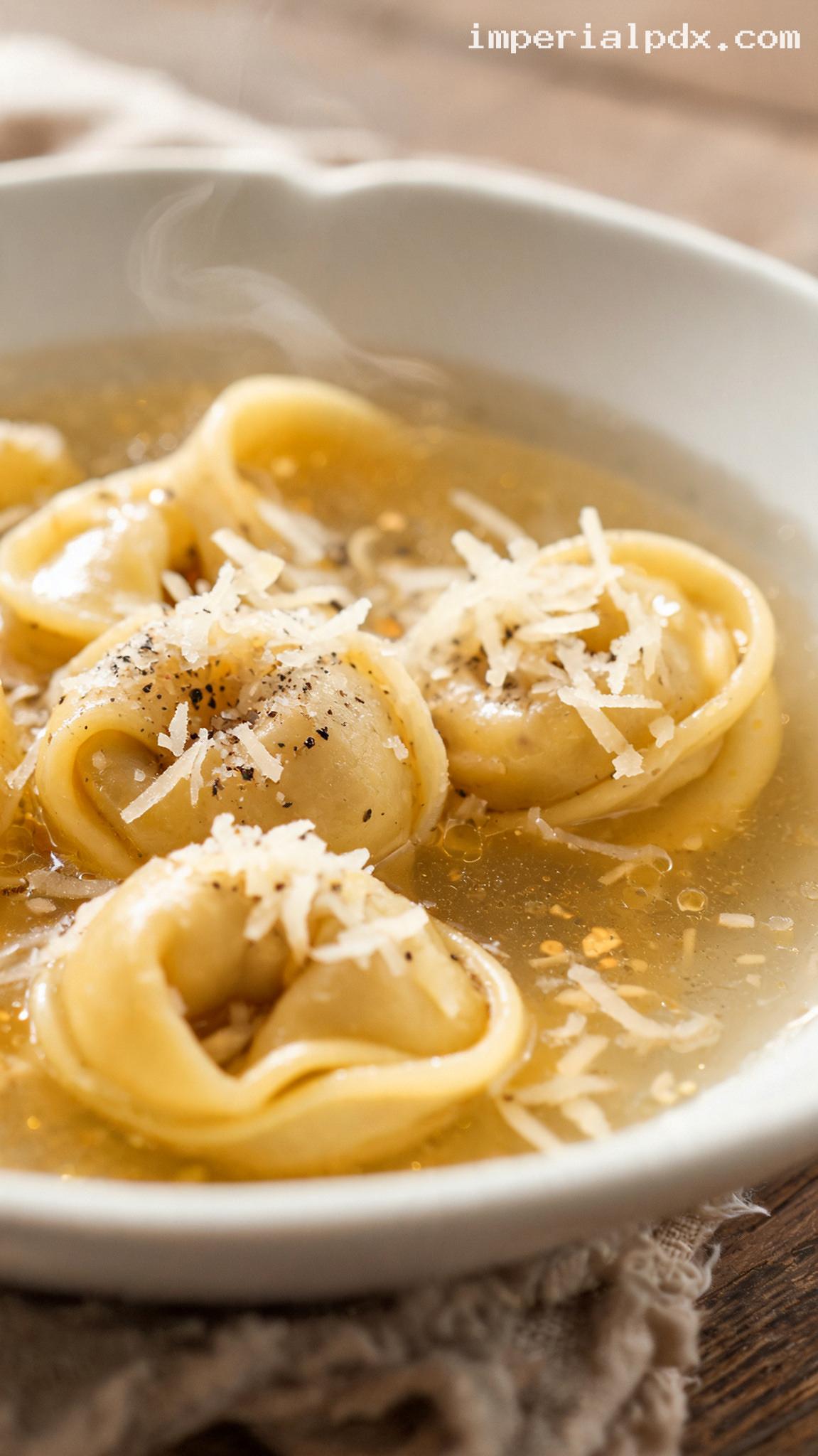
Step-by-Step Instructions
Step 1: Prepare the rinds and vegetables
Brush and rinse the Parmesan rinds under cool running water, removing any paper labels or packaging. Use clean, unwaxed natural rinds; discard any pieces showing mold or spoilage. Large rinds can remain whole.
Peel and quarter the onion. Cut the carrot and celery into 2-inch pieces, then rinse the parsley and thyme. There is no need to chop anything finely: larger pieces are easier to strain and help keep the broth clear.
Step 2: Start the broth gently
Place the Parmesan rinds, onion, carrot, celery, parsley, thyme, bay leaf, and peppercorns in a heavy 5- to 6-quart pot. Pour in 10 cups cold water.
Set the pot over medium heat and bring it to a bare simmer, about 10 minutes. Reduce the heat to low as soon as small bubbles begin to rise. Aim for a broth temperature of 185–200°F (85–93°C), with occasional gentle bubbles rather than a rolling boil.
Step 3: Slowly infuse the broth
Simmer uncovered for 75 minutes. Every 15 minutes, gently sweep a wooden spoon along the bottom of the pot to prevent the softened rinds from sticking. Avoid vigorous stirring.
Skim off any foam or noticeable pools of fat with a shallow spoon. The finished broth should be pale gold, fragrant, and distinctly savory, with a rounded Parmesan flavor. Keep the simmer gentle: hard boiling can disperse fat and small particles into the liquid, making it cloudy.
During the final 15 minutes, bring the separate pot of pasta water to a boil so it is ready when the broth is strained.
Step 4: Strain and season the broth
Set a fine-mesh sieve lined with dampened cheesecloth over a large heatproof bowl or clean pot. Carefully ladle or pour the broth through it. Let it drain naturally; do not press the vegetables or rinds, which can cloud the broth.
Measure the strained broth. If you have less than 8 cups, add enough hot water to reach 8 cups (1.9 liters). If you have more, reserve the excess for another use. Return the measured broth to a clean pot.
Stir in 1/2 teaspoon fine sea salt, then taste. Parmesan rinds vary in saltiness, so add more only if needed, remembering that grated Parmesan will also season each bowl. Keep the broth hot over low heat, around 185°F (85°C), without boiling.
Step 5: Cook the tortellini separately
Add 1 tablespoon fine sea salt to the boiling pasta water. Gently lower in the tortellini and reduce the heat slightly so the water boils gently rather than tossing the pasta around.
Cook for 4 minutes, or follow the package’s stated cooking time if different. Taste one to check that the pasta is tender and the filling is hot; floating alone does not guarantee doneness. Lift the tortellini out with a spider strainer or drain carefully in a colander. Do not rinse.
Cooking the pasta separately keeps excess starch out of the Parmesan broth, preserving its clear appearance.
Step 6: Assemble and serve immediately
Warm 6 shallow soup bowls by filling them with hot tap water for 2 minutes, then empty and dry them. Divide the cooked tortellini evenly among the bowls.
Ladle 1 1/3 cups hot broth into each bowl. Divide the 1/2 cup grated Parmesan and 1/4 teaspoon cracked black pepper evenly over the tortellini. Keep the Parmesan mostly on the pasta rather than stirring it throughout the broth, so the surrounding liquid stays as clear as possible. Serve immediately while the pasta is tender and the broth is steaming.
Pro Tips
- Collect rinds ahead of time: Keep clean Parmesan rinds in a freezer-safe bag for up to 6 months, then use them directly from frozen.
- Choose good cheese: Freshly grated Parmesan melts more pleasantly than shelf-stable pre-grated cheese. A deli or cheese counter may sell rinds inexpensively.
- Skip browning the vegetables: Starting with raw vegetables keeps the broth pale and its flavor gentle enough for delicate cheese pasta.
- Protect the clear broth: Use a quiet simmer, strain without pressing, and cook the tortellini in a separate pot.
- Serve in small batches: Tortellini absorb liquid as they sit. Keep extra pasta and broth separate until you are ready to fill the next bowls.
Variations
- Closer to a classic meat-broth version: Replace the 10 cups water with 10 cups unsalted chicken or capon stock and use meat-filled tortellini. Follow the pasta package directions and season the strained broth to taste.
- Vegetarian version: Choose vegetarian-labeled cheese tortellini and an unwaxed Parmesan-style cheese made with microbial or vegetable rennet. Traditional Parmigiano-Reggiano uses animal rennet and is not vegetarian.
- A subtle nutmeg finish: Add 1/8 teaspoon freshly grated nutmeg to the full pot of strained broth before serving. Its warm aroma complements the cheese filling without overpowering the broth.
Storage & Make-Ahead
Make ahead: Prepare and strain the broth up to 3 days before serving. Cool it promptly in shallow containers and refrigerate within 2 hours. Store covered at 40°F (4°C) or below for up to 4 days total, or freeze for up to 3 months. A little fat may solidify on top when chilled; lift it off before reheating for an especially clear finish.
Store pasta separately: For the best texture, cook the tortellini just before serving. Refrigerate any leftover cooked pasta separately from the broth and use within 2 days. Already assembled soup can also be refrigerated for up to 2 days, although the pasta will soften and absorb broth.
Reheat: Bring the broth to at least 165°F (74°C). Add leftover tortellini and heat gently until the pasta and filling also reach 165°F (74°C), avoiding prolonged boiling. Add a measured splash of water if the broth tastes too concentrated.
Nutrition (per serving)
Calories: 290 kcal | Carbs: 32g | Protein: 15g | Fat: 11g | Saturated Fat: 6g | Fiber: 2g | Sugar: 3g | Sodium: 850mg | Cholesterol: 45mg
Estimated for one-sixth of the recipe, including the Parmesan topping. Values vary with the tortellini brand, rind composition, salt absorption, and how much fat and protein transfer from the rinds into the broth; the strained solids are not eaten.