Quick Recipe Version (TL;DR)
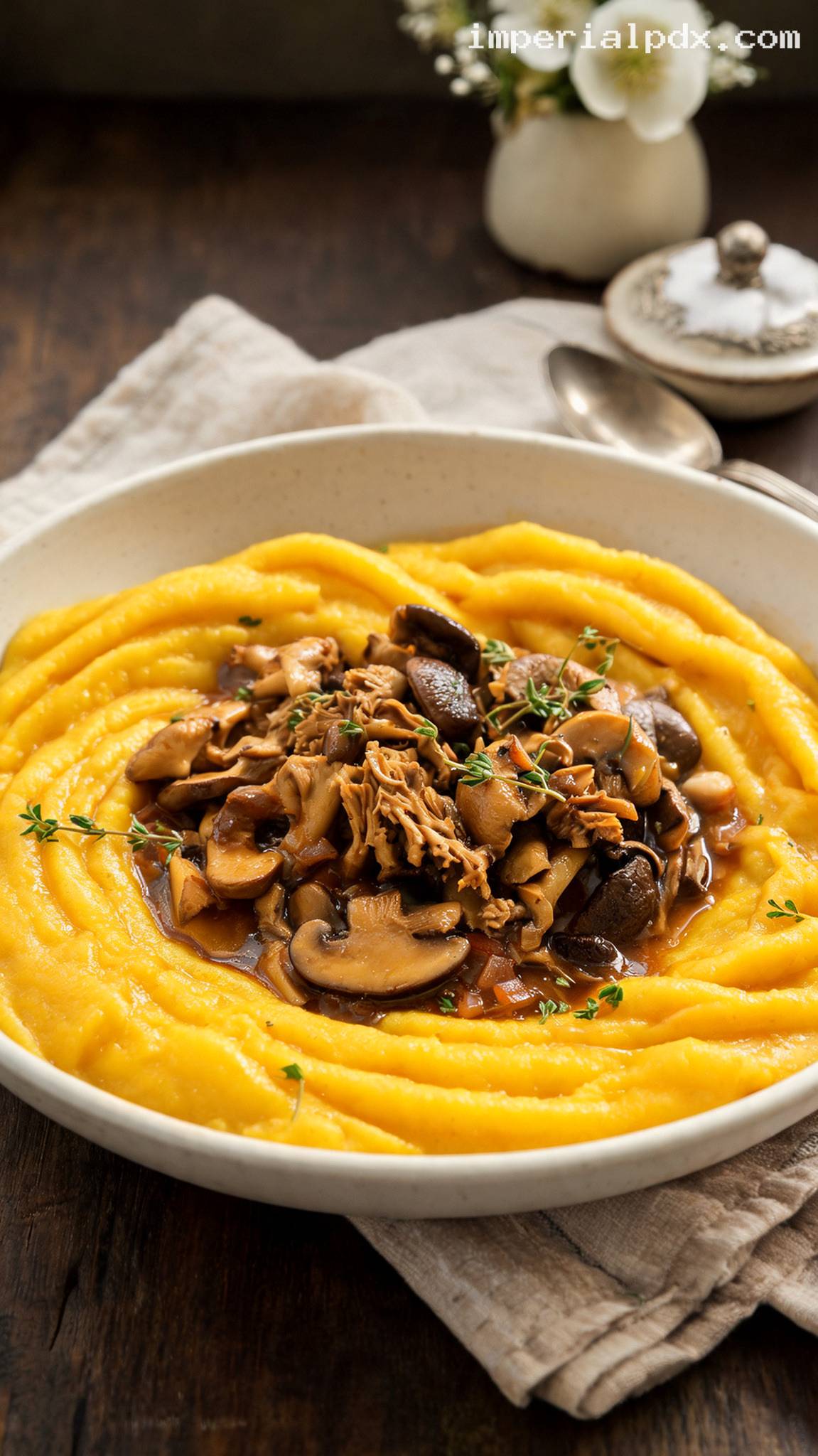
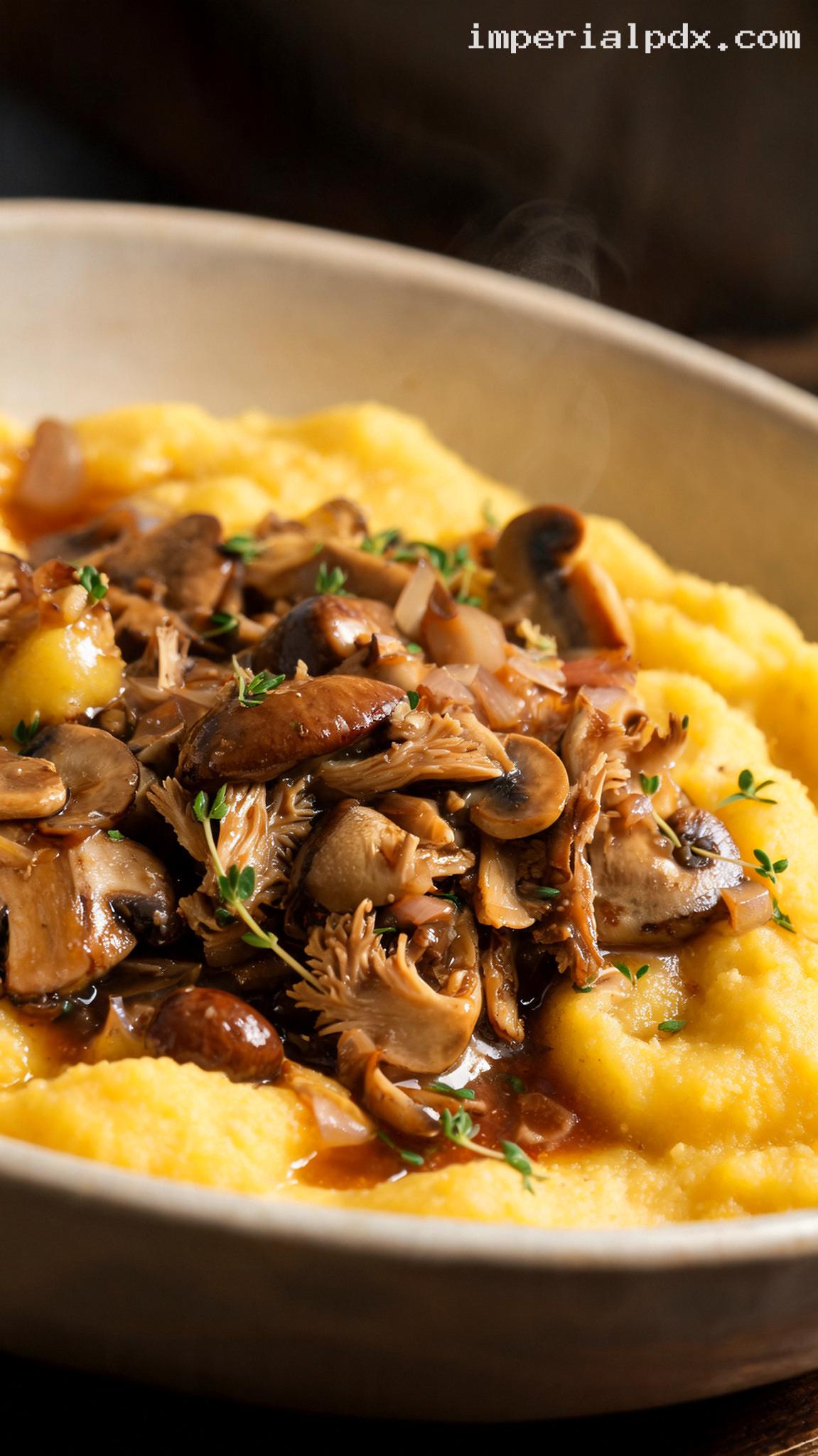
Creamy Polenta with Wild Mushroom and Thyme Ragù pairs silky, buttery Parmesan polenta with golden-brown mushrooms in a rich white wine and thyme sauce. It makes a luxurious vegetarian Christmas side or a cozy main course.
Quick Ingredients
- Polenta: 1 cup (170 g) medium-coarse yellow polenta, 4 cups (960 ml) water, 1 cup (240 ml) low-sodium vegetable stock, 3 tablespoons (42 g) unsalted butter, ½ cup (120 ml) heavy cream, and ¾ cup (75 g) finely grated vegetarian Parmesan-style cheese.
- Mushroom ragù: 1½ pounds (680 g) mixed mushrooms, 2 tablespoons (30 ml) olive oil, 1 tablespoon (14 g) unsalted butter, 2 medium shallots (80 g), 3 garlic cloves, ½ cup (120 ml) dry white wine, and ¾ cup (180 ml) low-sodium vegetable stock.
- Seasoning: 1 tablespoon fresh thyme leaves, divided; 1 teaspoon fine sea salt, divided; and ½ teaspoon freshly ground black pepper, divided.
Do This
- 1. Clean and slice the mushrooms; finely chop the shallots and garlic.
- 2. Bring the water, 1 cup stock, and ¾ teaspoon salt to a boil. Gradually whisk in the polenta, then cook over low heat for 45 minutes, stirring frequently.
- 3. Meanwhile, brown the mushrooms in two batches, using 1 tablespoon olive oil per batch and cooking each batch for 8 minutes. Transfer to a bowl.
- 4. Soften the shallots in the mushroom pan for 4 minutes. Add the garlic and 2 teaspoons thyme; cook for 1 minute. Add the wine and reduce for 3 minutes.
- 5. Return the mushrooms, add ¾ cup stock, ¼ teaspoon salt, and ¼ teaspoon pepper, and simmer for 8 minutes. Stir in 1 tablespoon butter off the heat.
- 6. Finish the polenta with the cream, remaining 3 tablespoons butter, cheese, and remaining ¼ teaspoon pepper. Warm for 2 minutes, then top with the ragù and remaining 1 teaspoon thyme.
Why You’ll Love This Recipe
- Comforting and elegant: Creamy golden polenta and glossy mushrooms look special enough for Christmas dinner without complicated techniques.
- Deeply savory without meat: Thoroughly browned mushrooms, reduced wine, Parmesan-style cheese, and fresh thyme create layers of flavor.
- A practical cooking rhythm: The ragù comes together while the polenta gently simmers.
- Flexible for entertaining: Serve smaller portions alongside your holiday spread or generous bowls as a vegetarian main.
Grocery List
- Produce: 1½ pounds (680 g) mixed mushrooms, 2 medium shallots, 3 garlic cloves, and 1 small bunch fresh thyme.
- Dairy: 4 tablespoons (56 g) unsalted butter, ½ cup (120 ml) heavy cream, and ¾ cup (75 g) finely grated vegetarian Parmesan-style cheese.
- Pantry: 1 cup (170 g) medium-coarse yellow polenta, 1¾ cups (420 ml) low-sodium vegetable stock, ½ cup (120 ml) dry white wine, 2 tablespoons (30 ml) olive oil, fine sea salt, and black pepper.
Full Ingredients
For the Creamy Polenta
- 4 cups (960 ml) water
- 1 cup (240 ml) low-sodium vegetable stock
- ¾ teaspoon (4.5 g) fine sea salt
- 1 cup (170 g) medium-coarse yellow polenta, not instant or quick-cooking
- 3 tablespoons (42 g) unsalted butter, cut into small pieces
- ½ cup (120 ml) heavy cream
- ¾ cup (75 g) finely grated vegetarian Parmesan-style cheese
- ¼ teaspoon freshly ground black pepper
For the Wild Mushroom and Thyme Ragù
- 1½ pounds (680 g) mixed mushrooms, such as oyster, shiitake, maitake, and cremini
- 2 tablespoons (30 ml) olive oil, divided
- 2 medium shallots (80 g total), finely chopped
- 3 garlic cloves, finely chopped
- 2 teaspoons fresh thyme leaves
- ½ cup (120 ml) dry white wine, such as Pinot Grigio or Sauvignon Blanc
- ¾ cup (180 ml) low-sodium vegetable stock
- ¼ teaspoon (1.5 g) fine sea salt
- ¼ teaspoon freshly ground black pepper
- 1 tablespoon (14 g) cold unsalted butter
To Finish
- 1 teaspoon fresh thyme leaves
Vegetarian shopping note: Traditional Parmigiano Reggiano is made with animal rennet. Choose a Parmesan-style hard cheese explicitly labeled vegetarian and made with microbial or plant-based rennet. If you avoid animal-derived wine fining agents, choose a wine labeled vegan.
Step-by-Step Instructions
Step 1: Prepare the mushrooms and aromatics
Brush away any dirt from the mushrooms or wipe them with a damp towel. If they need rinsing, rinse briefly and dry thoroughly. Remove tough shiitake stems and trim any woody mushroom bases. Slice firm mushrooms about ¼ inch (6 mm) thick and tear oyster mushrooms or maitake into bite-size pieces.
Finely chop the shallots and garlic, strip the thyme leaves from their stems, and grate the cheese. Measure the remaining ingredients so everything is ready once cooking begins.
Step 2: Start the polenta
In a heavy-bottomed saucepan with a capacity of at least 3 quarts, combine the water, 1 cup vegetable stock, and ¾ teaspoon salt. Bring to a boil over high heat, allowing approximately 10 minutes.
Reduce the heat to medium-low. Slowly pour in the polenta in a thin stream while whisking constantly. Continue whisking for 1 minute, until evenly combined and beginning to thicken. Turn the heat to low so the mixture bubbles gently rather than splashing vigorously.
Step 3: Slowly cook until silky
Cook the polenta for 45 minutes from the time it is added, keeping the lid slightly ajar. Stir thoroughly with a wooden spoon every 4–5 minutes, scraping the bottom and corners to prevent sticking. Prepare the ragù during this cooking time.
The finished grains should be tender, with no gritty or chalky center. If the polenta becomes stiff before it is tender, stir in hot water 2 tablespoons (30 ml) at a time. Some especially coarse polenta may need an additional 5–10 minutes; tenderness is the best guide.
Step 4: Brown the mushrooms in batches
Heat a large, heavy 12-inch skillet over medium-high heat for 2 minutes. Add 1 tablespoon olive oil and half the mushrooms, spreading them into a single layer. Cook undisturbed for 3 minutes, then toss and cook for another 5 minutes, until their released moisture has evaporated and several edges are deeply golden.
Transfer the browned mushrooms to a bowl. Repeat with the remaining 1 tablespoon olive oil and remaining mushrooms, cooking for 8 minutes. Keep any juices that collect in the bowl. Browning in batches gives you a much richer sauce than crowding everything into the pan.
Step 5: Build the thyme and white wine ragù
Reduce the skillet heat to medium. Add the shallots and cook for 4 minutes, stirring frequently. If the pan looks dry, add 1 tablespoon (15 ml) water to help them soften without burning. Add the garlic and 2 teaspoons thyme leaves and cook for 1 minute.
Pour in the white wine and scrape up the browned bits from the bottom of the skillet. Simmer for 3 minutes, until reduced by roughly half. Return the mushrooms and their collected juices to the pan. Add ¾ cup vegetable stock, ¼ teaspoon salt, and ¼ teaspoon pepper.
Simmer uncovered over medium-low heat for 8 minutes, stirring occasionally, until the liquid is reduced to a glossy, spoonable sauce. If the mushrooms look dry before then, add 1 tablespoon (15 ml) water at a time. Remove from the heat and stir in the cold 1 tablespoon butter until melted. The ragù should be juicy enough to spoon over the polenta, not soupy.
Step 6: Enrich the polenta
Once the polenta is tender, stir in the cream and 3 tablespoons butter. Warm over low heat for 2 minutes, stirring until smooth. Remove from the heat, then add the grated cheese and remaining ¼ teaspoon pepper. Stir until the cheese melts completely.
The polenta should flow slowly from the spoon and settle into soft folds. If necessary, loosen it with hot water, 2 tablespoons (30 ml) at a time. Taste before adding any extra salt, since the cheese and stock already contribute seasoning.
Step 7: Plate and serve warm
Spoon the polenta into warmed shallow bowls or onto a warm serving platter. Make a shallow well in the center and spoon the mushroom ragù over it, including all the glossy pan juices. Scatter with the remaining 1 teaspoon thyme leaves.
Serve immediately while the polenta is loose and silky. For a main course, divide between 4 bowls; for a holiday side, divide into 6 portions.
Pro Tips
- Choose mushrooms for variety: Oyster mushrooms provide delicate edges, shiitakes add deep savoriness, maitake brings frilly texture, and cremini makes an affordable foundation. Buy wild mushrooms only from a reputable supplier.
- Keep the mushroom pan uncrowded: If your skillet is smaller than 12 inches, use three batches and divide the 2 tablespoons oil between them.
- Let the mushrooms develop color: Resist constant stirring during the first 3 minutes of each batch. Contact with the hot pan creates the browned edges that flavor the sauce.
- Adjust the texture just before serving: Polenta thickens as it stands. A small splash of hot water restores its creamy consistency without making it overly rich.
- Use a gentle simmer: High heat can scorch the polenta and cause hot splashes. Frequent bottom-scraping matters more than constant stirring.
Variations
- Wine-free ragù: Replace the ½ cup (120 ml) wine with the same amount of additional vegetable stock. Stir 1 teaspoon (5 ml) fresh lemon juice into the finished ragù for brightness.
- Heartier mushroom and white bean bowls: Add 1 drained and rinsed 15-ounce (425 g) can of cannellini beans, approximately 1½ cups drained, with the ragù stock. Add another ¼ cup (60 ml) stock and simmer until the beans are hot.
- A subtle truffle finish: Stir ½ teaspoon truffle oil into the finished ragù off the heat. Keep the amount small so the mushrooms and thyme remain the main flavors.
Storage & Make-Ahead
Refrigerate: Store the polenta and ragù separately in shallow, airtight containers. Refrigerate within 2 hours of cooking and use within 3 days. Polenta will firm up when cold; this is normal.
Make ahead: Prepare the ragù up to 1 day ahead. For the silkiest presentation, cook the polenta just before serving, although it can also be made 1 day ahead and loosened during reheating. Keep the final garnish of fresh thyme separate until serving.
Reheat the polenta: Place in a saucepan with ¼ cup (60 ml) water or vegetable stock for every 1 cup cooked polenta. Warm over low heat for 8–10 minutes, whisking and adding more liquid as needed, until smooth and heated throughout to 165°F (74°C).
Reheat the ragù: Warm in a covered skillet over medium-low heat for 5–7 minutes, adding 1–2 tablespoons (15–30 ml) stock per cup of ragù if needed. Stir occasionally and heat throughout to 165°F (74°C).
Nutrition (per serving)
Estimated for 1 of 6 side-dish servings, using the listed ingredients without optional variations. A main-course serving is 1½ times this amount; values vary with the cheese and stock used.
Calories: 390 kcal | Carbs: 31g | Protein: 11g | Fat: 24g | Saturated Fat: 12g | Fiber: 4g | Sugar: 4g | Sodium: 650mg | Cholesterol: 54mg


