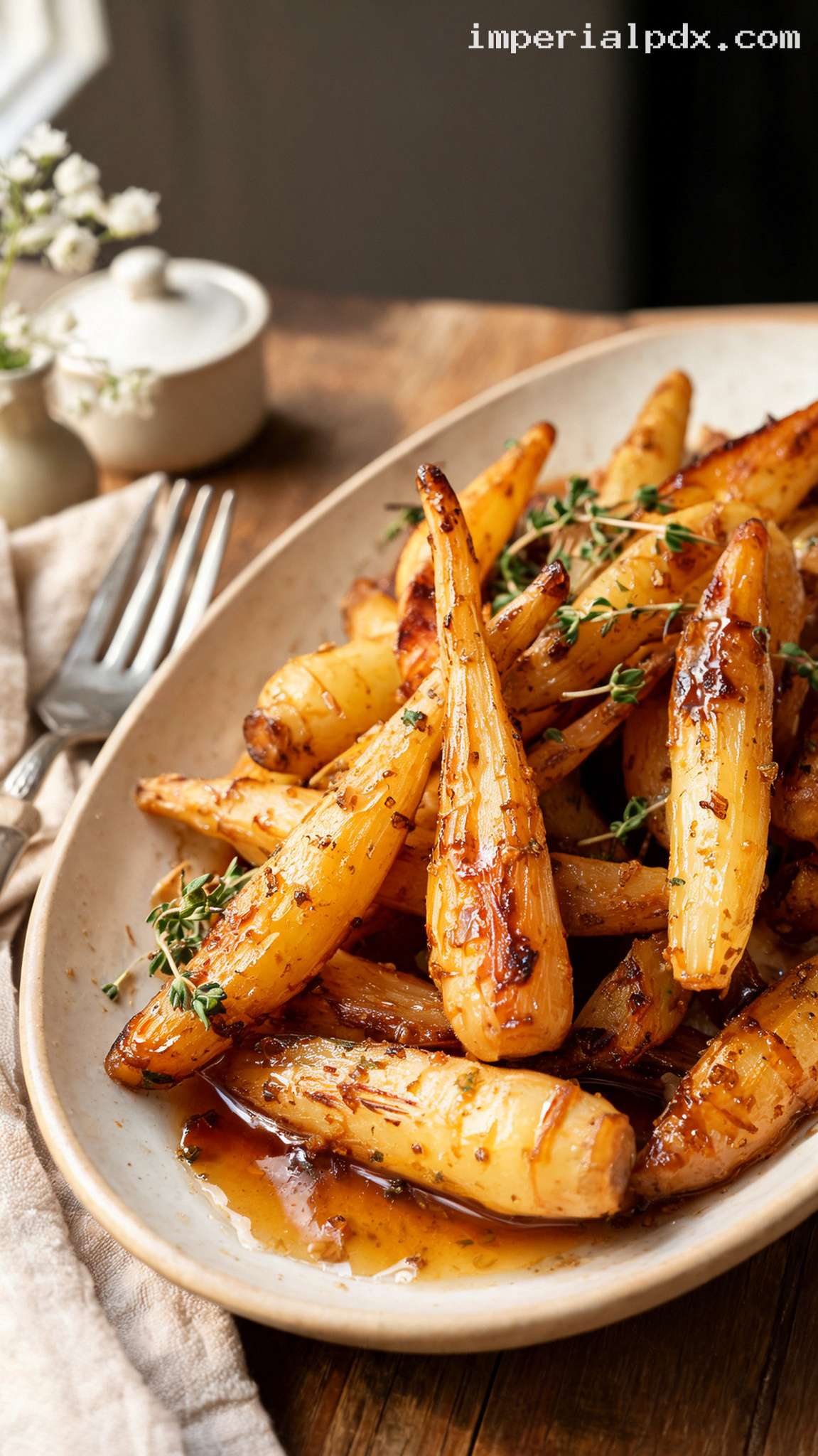
Quick Recipe Version (TL;DR)
Maple and Brown Sugar Roasted Parsnips with nutty brown butter, fresh thyme, and Dijon mustard—a golden, caramelized Christmas side dish with just the right balance of sweet and savory.
Quick Ingredients
- 2 pounds (900 g) parsnips, peeled and trimmed
- 2 tablespoons (30 ml) olive oil
- 3/4 teaspoon (4.5 g) fine sea salt
- 1/4 teaspoon freshly ground black pepper
- 3 tablespoons (42 g) unsalted butter
- 2 tablespoons (30 ml) pure maple syrup
- 1 tablespoon (12 g) packed light brown sugar
- 2 teaspoons Dijon mustard
- 2 teaspoons fresh thyme leaves, divided
Do This
- 1. Heat the oven to 425°F (220°C), or 400°F (200°C) fan. Set out two large rimmed baking sheets.
- 2. Cut the parsnips into pieces approximately 3 inches (7.5 cm) long and 3/4 inch (2 cm) thick. Toss with the oil, salt, and pepper, then spread between the baking sheets.
- 3. Roast for 35 minutes, turning the pieces and swapping the baking sheets between oven racks after 20 minutes.
- 4. During the final 6 minutes of roasting, brown the butter in a small saucepan. Remove from the heat and carefully stir in the maple syrup, brown sugar, Dijon, and 1 teaspoon thyme.
- 5. Toss the roasted parsnips with the glaze, return them to the baking sheets, and roast for 5 minutes more, until glossy and caramelized.
- 6. Transfer to a serving platter, scrape over any remaining glaze, and sprinkle with the remaining 1 teaspoon thyme. Serve hot.
Why You’ll Love This Recipe
- Sweet, but beautifully balanced: Dijon mustard and fresh thyme keep the maple and brown sugar glaze from tasting overly sweet.
- Golden edges and tender centers: Roasting the parsnips before glazing gives them plenty of time to brown without burning the sugars.
- A little extra Christmas magic: Brown butter adds a warm, nutty richness that makes this simple vegetable side feel special.
- Easy to prepare ahead: Peel and cut the parsnips the day before to make holiday cooking more manageable.
Grocery List
- Produce: 2 pounds (900 g) parsnips; 1 small bunch fresh thyme.
- Dairy: Unsalted butter; you will need 3 tablespoons (42 g).
- Pantry: Olive oil, pure maple syrup, light brown sugar, Dijon mustard, fine sea salt, and black pepper.
Full Ingredients
For the Roasted Parsnips
- 2 pounds (900 g) parsnips: Weighed before peeling and trimming; choose firm, small-to-medium parsnips when possible.
- 2 tablespoons (30 ml) olive oil
- 3/4 teaspoon (4.5 g) fine sea salt
- 1/4 teaspoon freshly ground black pepper
For the Maple and Brown Butter Glaze
- 3 tablespoons (42 g) unsalted butter: Cut into 3 pieces for even melting.
- 2 tablespoons (30 ml) pure maple syrup: Dark maple syrup gives a particularly rich flavor.
- 1 tablespoon (12 g) packed light brown sugar
- 2 teaspoons Dijon mustard
- 2 teaspoons fresh thyme leaves: Use 1 teaspoon in the glaze and reserve 1 teaspoon for serving.
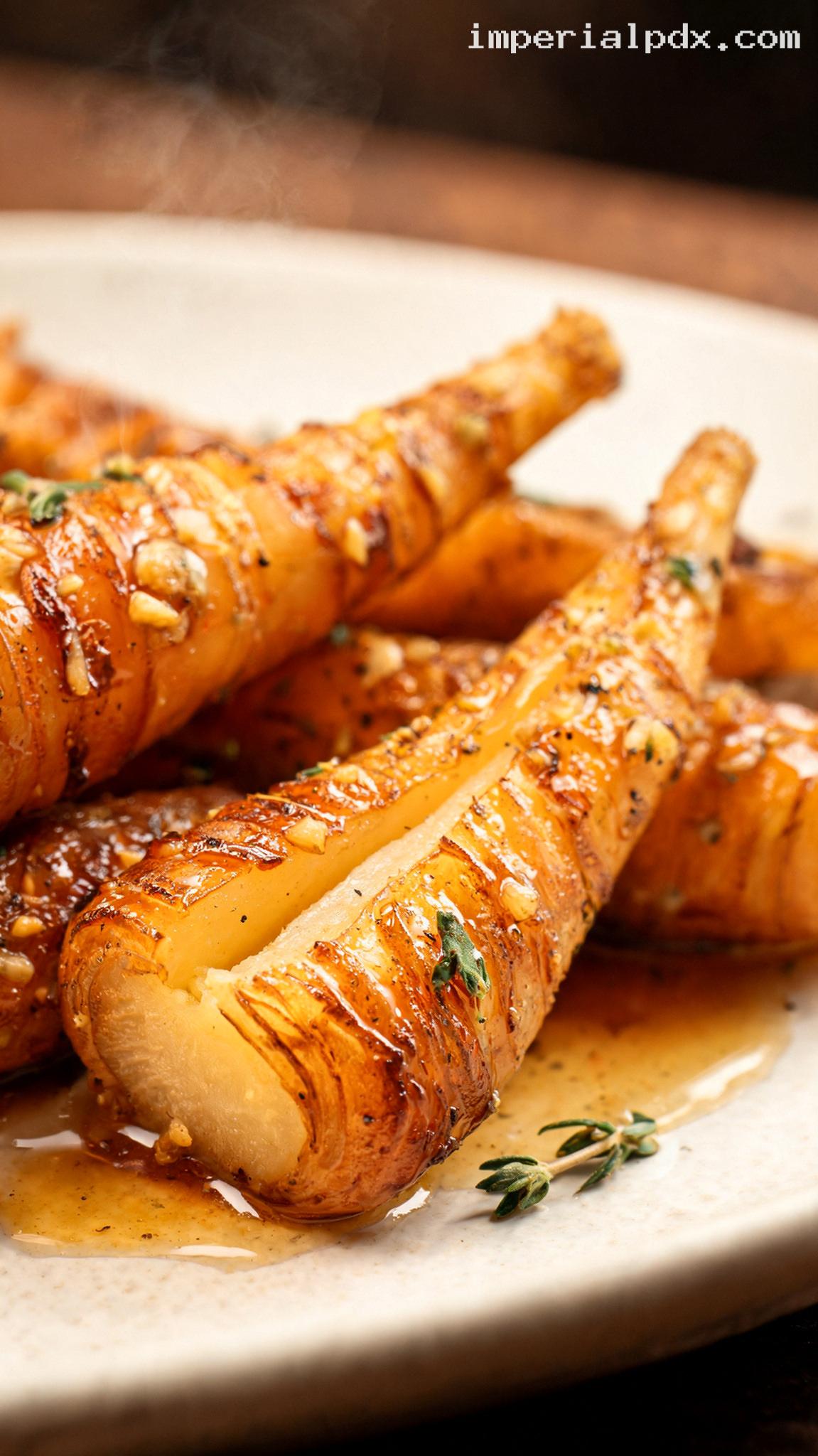
Step-by-Step Instructions
Step 1: Heat the oven and prepare the baking sheets
Heat the oven to 425°F (220°C), or 400°F (200°C) fan. Position racks in the upper and lower thirds of the oven. Set out two large rimmed baking sheets, approximately 13 × 18 inches (33 × 46 cm) each. Using two sheets gives the parsnips enough room to roast rather than steam.
Step 2: Cut the parsnips into thick, even pieces
Peel the parsnips and trim off the tops and any dry, stringy tips. Cut them into pieces approximately 3 inches (7.5 cm) long and 3/4 inch (2 cm) thick. Halve or quarter the thicker ends lengthwise, leaving slender sections whole if they are already the right thickness.
If a large parsnip has a noticeably hard, woody center, cut that section away. Pat the prepared pieces thoroughly dry so the oil coats them well and the surfaces brown nicely.
Step 3: Season and spread out the parsnips
Place the parsnips in a large bowl. Add the olive oil, salt, and black pepper, then toss until every piece is lightly coated. Divide between the baking sheets in a single layer, leaving a little space around the pieces. Arrange broad, cut surfaces against the metal wherever possible.
Step 4: Roast until golden and nearly tender
Roast for 20 minutes. Turn the parsnips with a spatula, rotate each baking sheet front to back, and swap the sheets between the upper and lower racks.
Roast for another 15 minutes, for 35 minutes total before glazing. The parsnips should have golden-brown patches, and a small knife should slide into the thickest pieces with only slight resistance. Begin making the glaze during the final 6 minutes of this roasting time.
Step 5: Brown the butter and make the glaze
Place the butter in a small, light-colored saucepan over medium heat. Cook for 4–6 minutes, stirring frequently and scraping the bottom with a heatproof spatula. The butter will melt, foam, and then develop golden-brown milk solids with a toasted, nutty smell.
As soon as the milk solids turn golden brown, remove the pan from the heat. Let the butter settle for 30 seconds, then carefully stir in the maple syrup; it may briefly bubble. Stir in the brown sugar, Dijon mustard, and 1 teaspoon thyme leaves until combined. If needed, return the pan to low heat for 30 seconds, stirring, to dissolve any remaining sugar. Keep all those flavorful brown butter flecks.
Step 6: Glaze and finish roasting
Carefully transfer the hot parsnips to the large mixing bowl. Pour over the warm glaze and toss gently until coated. Return the parsnips to the baking sheets in a single layer, scraping the glaze from the bowl over them.
Roast for 5 minutes more, until the coating is glossy and lightly bubbling and the parsnips are tender throughout. Check after 3 minutes, as sugary glaze can darken quickly, especially around thin tips. The finished pieces should be golden to deep amber, not blackened.
Step 7: Garnish and serve
Transfer the parsnips to a warm serving platter and spoon over any syrupy glaze and browned butter solids remaining on the baking sheets. Sprinkle with the remaining 1 teaspoon fresh thyme leaves and serve immediately. They pair especially well with roast turkey, glazed ham, beef, or a savory vegetarian Christmas centerpiece.
Pro Tips
- Match the thickness, not the shape: Parsnips naturally taper, so a mixture of wedges and batons is fine. Similar thickness helps everything finish cooking together.
- Leave room on the trays: Crowding traps steam and makes the parsnips softer and paler. Use two sheets even if the vegetables could technically fit on one.
- Add the glaze at the end: Maple syrup and brown sugar can scorch during a full roasting cycle. A short final roast gives you shine and caramelization without bitterness.
- Watch the butter closely: Golden-brown specks are delicious; black specks and an acrid smell mean it has burned. If that happens, start again with fresh butter.
- Use the parsnips as your final guide: If they are still firm after the initial 35 minutes, roast for another 5 minutes before glazing. This will extend the total cooking time slightly.
Variations
- Orange and thyme: Stir 1 teaspoon finely grated orange zest into the finished glaze for a bright, festive note.
- Sweet and gently spicy: Add 1/4 teaspoon crushed red pepper flakes to the glaze alongside the thyme.
- Dairy-free: Replace the butter with 2 tablespoons (30 ml) olive oil. Gently warm it with the maple syrup, brown sugar, Dijon, and thyme for 1–2 minutes, stirring until the sugar dissolves. The glaze will not have brown butter’s nutty flavor, but it will still be delicious. Use vegan-friendly Dijon if required.
Storage & Make-Ahead
Prep ahead: Peel and cut the parsnips up to 24 hours ahead. Refrigerate them submerged in cold water in a covered container, then drain and dry very thoroughly before roasting.
Roast ahead: Complete the initial 35-minute roast up to 1 day ahead, leaving the glaze off. Cool and refrigerate within 2 hours. Reheat on baking sheets at 400°F (200°C), or 375°F (190°C) fan, for 12–15 minutes, until hot. Increase the oven to 425°F (220°C), or 400°F (200°C) fan, toss with freshly made glaze, and roast for 5 minutes.
Leftovers: Refrigerate finished parsnips in an airtight container within 2 hours and use within 4 days. Reheat at 350°F (175°C), or 325°F (165°C) fan, for 12–15 minutes, until hot throughout, loosely covering with foil if the glaze starts to darken. The edges will soften during storage, but the flavor remains lovely.
Nutrition (per serving)
Calories: 230 kcal | Carbs: 34g | Protein: 2g | Fat: 11g | Saturated Fat: 4g | Fiber: 7g | Sugar: 13g | Sodium: 350mg | Cholesterol: 15mg
Estimated values for one-sixth of the recipe, including the glaze. Actual nutrition varies with ingredient brands and the amount of glaze left on the baking sheets.


