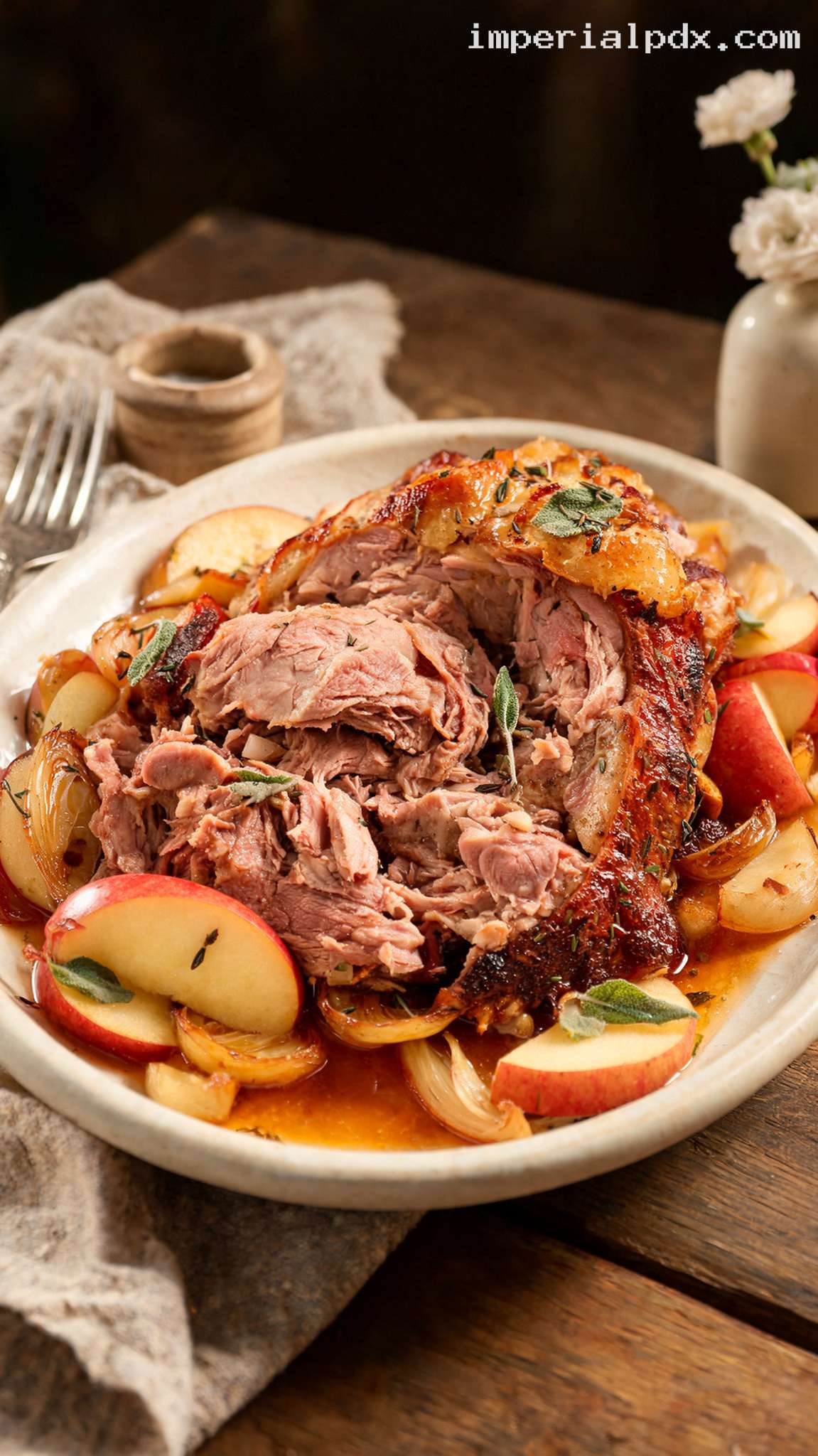
Slow-Roasted Pork Shoulder with Apple and Sage
This is the kind of centerpiece that makes the whole kitchen smell wonderful: succulent pork shoulder, sweet roasted apples, soft onions, and a rich apple-cider sauce scented with garlic, sage, and rosemary. A gentle roast makes the meat beautifully tender, while a final blast of heat creates deeply browned, crispy edges. Serve it family-style with roast potatoes, braised red cabbage, Brussels sprouts, or your favorite Christmas sides.
Quick Recipe Version (TL;DR)
Quick Ingredients
- 1 boneless, skinless pork shoulder, 5 pounds (2.3 kg), with a ¼-inch fat cap
- 2 tablespoons olive oil
- 18 g fine sea salt, approximately 3 teaspoons, and 2 teaspoons freshly ground black pepper
- 8 garlic cloves, minced
- 2 tablespoons chopped fresh sage, plus 6 small leaves for garnish
- 1 tablespoon chopped fresh rosemary
- 1 tablespoon Dijon mustard
- 3 medium yellow onions, approximately 600 g, cut into thick wedges
- 3 large firm apples, approximately 600 g, cored and cut into 6 wedges each
- 2 cups (480 ml) unsweetened apple cider, not apple cider vinegar
- 1 cup (240 ml) low-sodium chicken stock, plus up to ½ cup (120 ml) more if needed
- 1 tablespoon apple cider vinegar
- 1 tablespoon cornstarch mixed with 2 tablespoons cold water
- 1 tablespoon (14 g) unsalted butter
Do This
- 1. Heat a conventional oven to 300°F (150°C). Pat the pork dry and score its fat cap in a shallow crosshatch.
- 2. Rub with olive oil, salt, pepper, garlic, chopped sage, rosemary, and Dijon. Set over the onions in a roasting pan; pour the cider and 1 cup stock around it.
- 3. Cover tightly and roast for approximately 4 hours 30 minutes, until a skewer enters with little resistance. Begin checking at 4 hours.
- 4. Uncover, add the apple wedges around the pork, and roast for 45 minutes more, until the meat is fork-tender, usually at 195–205°F (90–96°C) internally.
- 5. Increase the oven to 450°F (230°C). Roast uncovered for 20 minutes to brown the edges, checking after 10 minutes. Keep some liquid in the pan.
- 6. Rest the pork for 30 minutes. Meanwhile, skim the pan juices, measure 2 cups, and simmer with the cornstarch mixture for 2 minutes. Stir in the vinegar and butter.
- 7. Pull or carve the pork into large pieces. Serve with the apples, onions, cider sauce, and small fresh sage leaves.
Why You’ll Love This Recipe
- Tender meat with a proper browned finish: Slow, covered roasting softens the shoulder before high heat crisps the exposed edges.
- A naturally delicious sauce: Apple cider, onions, herbs, and pork juices do most of the work.
- Perfect for a festive table: The generous roast is easy to serve family-style and pairs beautifully with traditional Christmas vegetables.
- Mostly hands-off cooking: Once the pork is in the oven, you have plenty of time to prepare the rest of the meal.
Grocery List
- Meat: One 5-pound boneless, skinless pork shoulder.
- Produce: 3 medium yellow onions, 3 large firm apples, 1 head garlic with at least 8 cloves, 1 bunch fresh sage, and 1 small bunch fresh rosemary.
- Dairy: Unsalted butter.
- Pantry: Olive oil, fine sea salt, black pepper, Dijon mustard, unsweetened apple cider, low-sodium chicken stock, apple cider vinegar, and cornstarch.
Full Ingredients
For the Pork and Herb Rub
- 1 boneless, skinless pork shoulder, 5 pounds (2.3 kg), preferably a compact Boston butt roast
- 2 tablespoons (30 ml) olive oil
- 18 g fine sea salt, approximately 3 teaspoons; use the weight for the most reliable seasoning
- 2 teaspoons freshly ground black pepper
- 8 garlic cloves, finely minced
- 2 tablespoons finely chopped fresh sage
- 1 tablespoon finely chopped fresh rosemary
- 1 tablespoon (15 g) Dijon mustard
For the Roasting Pan
- 3 medium yellow onions, approximately 600 g, peeled and cut through the root into thick wedges
- 3 large Pink Lady or Braeburn apples, approximately 600 g, left unpeeled, cored, and cut into 6 wedges each
- 2 cups (480 ml) unsweetened apple cider or cloudy apple juice; do not substitute apple cider vinegar
- 1 cup (240 ml) low-sodium chicken stock
- Up to ½ cup (120 ml) additional low-sodium chicken stock, only if needed to keep the pan from drying out
For the Cider Sauce and Serving
- 2 cups (480 ml) skimmed roasting juices, collected after cooking
- 1 tablespoon (8 g) cornstarch
- 2 tablespoons (30 ml) cold water, plus a little extra only if needed to make up the sauce volume
- 1 tablespoon (15 ml) apple cider vinegar
- 1 tablespoon (14 g) cold unsalted butter
- 6 small fresh sage leaves, for garnish
Step-by-Step Instructions
Step 1: Prepare the oven and pork
Heat a conventional oven to 300°F (150°C), with a rack in the lower-middle position. Choose a heavy roasting pan or ovenproof casserole approximately 13 by 9 inches, large enough to hold the pork snugly with room for apples around the sides.
Pat the pork thoroughly dry with paper towels. Trim any thick, hard surface fat, leaving a layer approximately ¼ inch thick. Score that fat in a shallow crosshatch, about 1 inch apart, without cutting deeply into the meat. If the boneless shoulder opens out loosely, secure it into a compact roast with kitchen twine.
Step 2: Add the garlic-herb rub and roasting liquid
Mix the olive oil, salt, pepper, garlic, chopped sage, rosemary, and Dijon mustard in a small bowl. Rub the mixture over the entire pork shoulder, working some into the scored fat and any natural crevices.
Spread the onion wedges across the roasting pan and set the pork on top, fat-side up. Pour the apple cider and 1 cup (240 ml) chicken stock around the meat, rather than over the top, so the herb coating stays in place. Cover tightly with a lid or a double layer of foil.
Step 3: Roast slowly until nearly tender
Roast, covered, for approximately 4 hours 30 minutes. Begin checking at 4 hours: carefully lift the cover away from your face, then insert a skewer or thermometer probe into the thickest part of the meat. It should slide in with little resistance, although the shoulder may not yet pull apart easily.
Keep the pan covered during this stage. If the meat still feels firm at 4 hours 30 minutes, continue roasting in 30-minute increments before moving on. Shoulder shape and connective tissue affect cooking time, so tenderness matters more than the clock.
Step 4: Add the apples and finish tenderizing
Remove the cover and arrange the apple wedges around the pork, tucking them among the onions and into the roasting juices. Roast uncovered at 300°F (150°C) for 45 minutes.
The pork should now be fork-tender, with an internal temperature usually between 195°F and 205°F (90–96°C). Check several spots, avoiding large pockets of fat. If a fork still meets noticeable resistance, continue at 300°F in 15-minute increments until tender. If the apples become very soft before the pork is ready, lift them out with a slotted spoon and reserve them for serving.
Step 5: Brown the edges at high heat
Increase the oven temperature to 450°F (230°C), leaving the pork uncovered. Roast for approximately 20 minutes, checking after 10 minutes, until the exposed edges and fat cap are deeply golden brown.
Keep approximately ¼ inch of liquid in the bottom of the pan; add the reserved extra stock as needed. The cider contains natural sugars, so do not let the pan boil dry. If any garlic, herbs, or apples begin to scorch, shield those areas loosely with foil or remove the apples. Do not baste the top during this stage, as moisture will soften the developing crust.
Step 6: Rest the pork and keep the fruit warm
Transfer the pork to a carving board or warm platter and rest for 30 minutes. Leave it uncovered, or tent it very loosely with foil if the room is cool. A tight foil covering traps steam and softens the browned edges.
Using a slotted spoon, transfer the apples and onions to a warm serving dish. Cover them loosely while you make the sauce. Leave the roasting liquid in the pan.
Step 7: Make the apple-cider sauce
While the pork rests, pour the roasting liquid through a coarse sieve into a heatproof jug or fat separator. Let it settle briefly, then skim off the excess fat. Measure 2 cups (480 ml) of the skimmed juices into a small saucepan. If you have less, add enough water to reach 2 cups; if you have more, reserve the extra for moistening leftovers.
Bring the juices to a gentle simmer. Stir the cornstarch and 2 tablespoons cold water together, then whisk the mixture into the saucepan. Simmer for 2 minutes, stirring, until lightly thickened and glossy. Remove from the heat and stir in the apple cider vinegar and cold butter. Taste before adding any extra seasoning, since the roasting juices are already salted. Allow approximately 10 minutes for the sauce, within the pork’s resting time.
Step 8: Carve and serve family-style
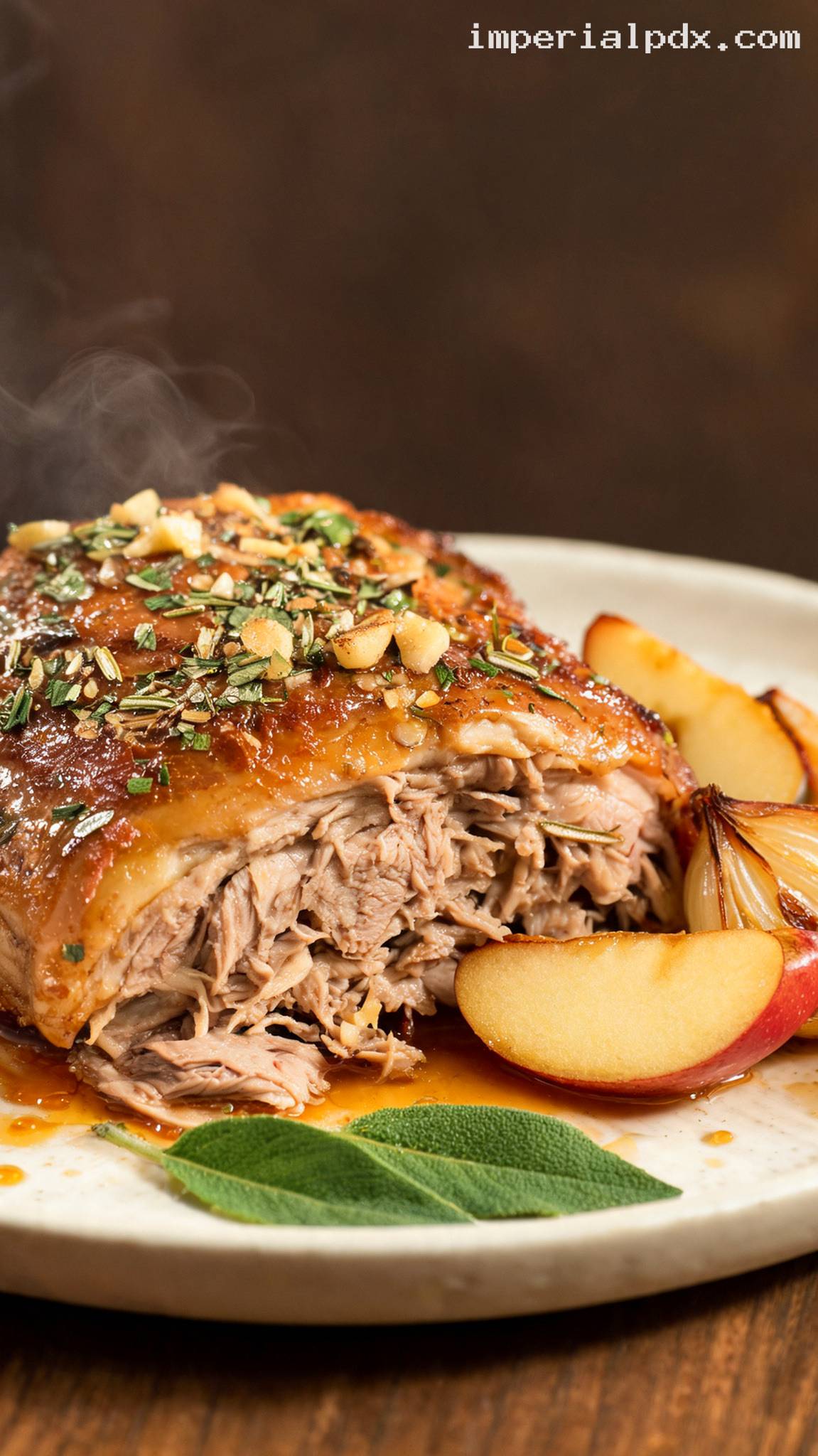
Remove any kitchen twine. Use a carving knife and fork to separate the shoulder into generous, thick pieces, following the natural seams where possible. The meat should be tender enough to pull apart easily, with crisp, browned edges attached.
Arrange the pork on a warm platter with the roasted apples and onions. Spoon a little cider sauce around the meat, keeping most of the browned surface uncovered. Garnish with the small sage leaves and serve the remaining sauce in a warm jug alongside roast potatoes, Brussels sprouts, braised red cabbage, or buttered carrots.
Pro Tips
- Choose shoulder, not loin: Pork shoulder has the fat and connective tissue needed for this long cooking method. A lean pork loin would become dry.
- Use tenderness as your final guide: Pork is safe to eat at a lower temperature, but shoulder needs substantially more cooking to become pull-apart tender. A probe should slide in easily.
- Keep the apples chunky: Thick, unpeeled wedges of firm apples hold their shape better than peeled slices or soft cooking apples.
- Expect crisp edges, not crackling: This recipe uses skinless shoulder. The browned fat cap and exposed meat become crisp, but they will not form pork-skin crackling.
- Leave a little scheduling room: The listed time is a useful estimate for a 5-pound boneless shoulder. Allow an extra 30–60 minutes in your holiday schedule in case the roast needs longer to soften.
Variations
- Pear and sage: Replace the apples with 3 large, firm Bosc pears, cored and cut into 6 wedges each. Add them at the same stage and remove them early if they soften quickly.
- Dry hard-cider version: Replace the 2 cups unsweetened apple cider with 2 cups dry alcoholic apple cider. The sauce will be less sweet; add the finishing vinegar gradually, tasting as you go.
- Dairy-free: Omit the finishing butter. The thickened roasting juices will still make a rich, glossy sauce.
Storage & Make-Ahead
Prepare ahead: Rub the pork with the garlic-herb mixture up to 24 hours in advance. Refrigerate it in a covered dish on the lowest shelf, then assemble the roasting pan when ready to cook. The onions can also be cut a day ahead; cut the apples shortly before adding them to the pan.
Refrigerate: Within 2 hours of cooking, divide leftover pork, apples, onions, and sauce into shallow containers and refrigerate. Store for up to 4 days. Keep a little sauce with the pork to help it stay moist.
Freeze: Freeze the pork and sauce for up to 3 months. The apples and onions can be frozen too, although their texture will be softer after thawing. Thaw overnight in the refrigerator.
Reheat: Place leftover pork in a baking dish with a few spoonfuls of sauce or stock. Cover and heat at 325°F (165°C) for 25–35 minutes, or until the center reaches 165°F (74°C); larger portions may take longer. For crisper edges, uncover and finish at 425°F (220°C) for 5–10 minutes. Reheat the sauce separately until steaming hot.
Nutrition (per serving)
Calories: 650 kcal | Carbs: 29g | Protein: 43g | Fat: 40g | Saturated Fat: 14g | Fiber: 3g | Sugar: 19g | Sodium: 890mg | Cholesterol: 155mg
Estimated for one-tenth of the recipe, including apples, onions, and sauce, with excess rendered fat skimmed off. Actual values depend on the pork’s fat content and how much sauce is served.


