Quick Recipe Version (TL;DR)
Quick Ingredients
- Potato dough: 600 g floury potatoes, such as russets, to yield 400 g cooked, peeled, riced potato; 160 g all-purpose flour; 1 large egg yolk; 25 g unsalted butter, melted and cooled; 1/4 teaspoon fine salt.
- For rolling: 20 g all-purpose flour.
- Plum filling: 200 g thick powidl or plum butter; 1/2 teaspoon ground cinnamon; 1/8 teaspoon ground cloves; 1 teaspoon finely grated lemon zest.
- Buttery breadcrumbs: 80 g unsalted butter; 100 g fine, plain dry breadcrumbs; 25 g granulated sugar.
- For cooking and serving: 3 liters water; 2 teaspoons fine salt; 12 g powdered sugar, optional.
Do This
- 1. Simmer the whole potatoes for 25–30 minutes until tender. Peel, rice, and weigh out 400 g. Spread out and cool for 15 minutes.
- 2. Mix the plum butter with the cinnamon, cloves, and lemon zest.
- 3. Gently combine the cooled potato, 160 g flour, egg yolk, 25 g melted butter, and 1/4 teaspoon salt into a soft dough.
- 4. Roll the dough 4 mm thick. Cut 24 rounds with an 8 cm cutter, rerolling scraps gently. Add about 8 g filling to each, fold into half-moons, and seal.
- 5. Cook in two batches in gently simmering salted water for 6 minutes per batch, starting the timer when the water returns to a simmer.
- 6. Toast the breadcrumbs in 80 g butter over medium-low heat for 4–5 minutes. Remove from the heat, stir in the sugar, and gently coat the drained pockets. Serve warm, with powdered sugar if desired.
Why You’ll Love This Recipe
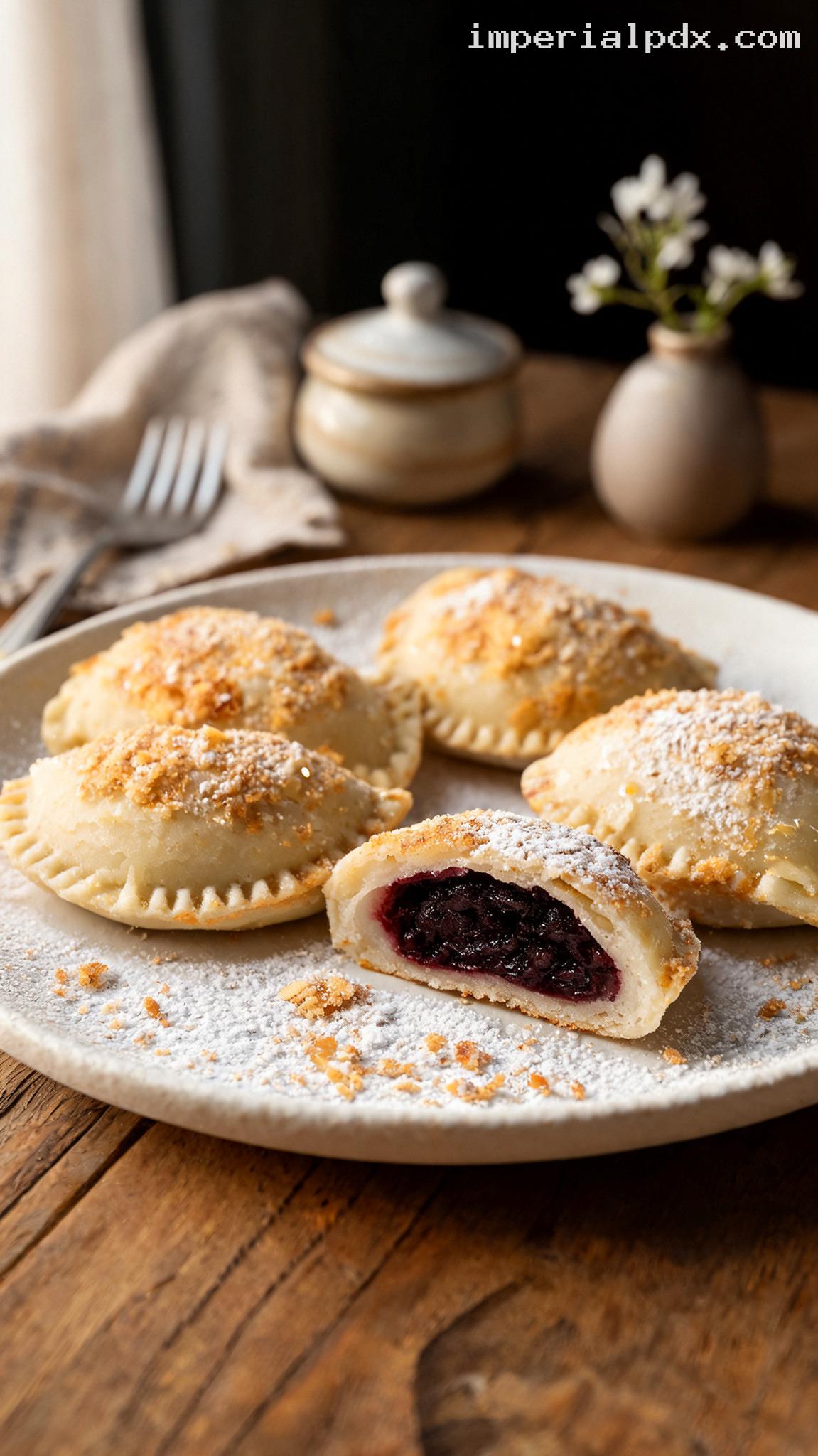
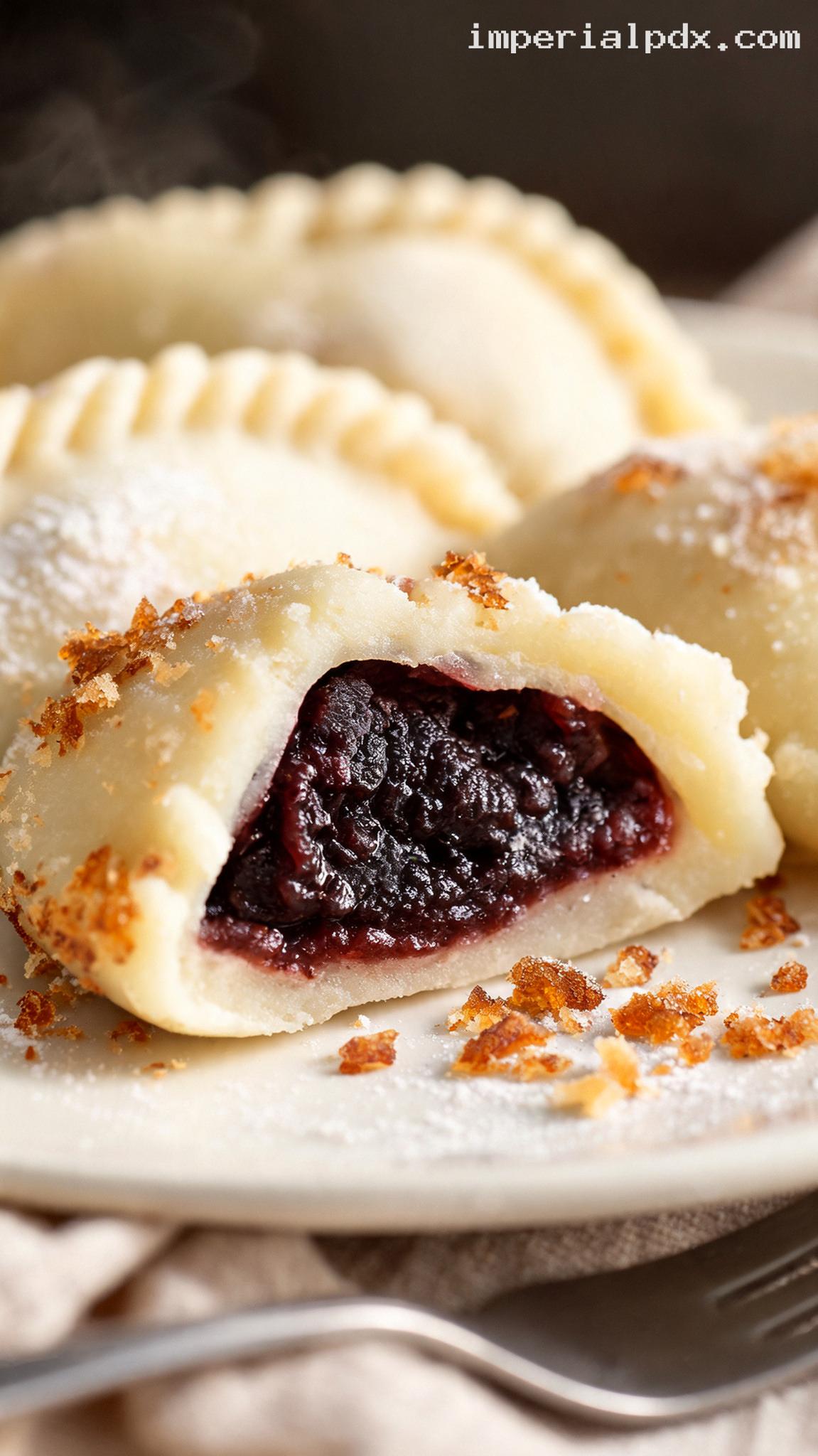
- Tender, comforting, and deeply fruity: Soft potato-dough pockets surround a rich, dark plum filling scented with cinnamon, cloves, and lemon.
- A wonderful contrast of textures: Buttery golden breadcrumbs add a delicate crunch without hiding the tender dough.
- No pastry expertise needed: These Austrian and Bohemian-style treats are folded, sealed, and gently simmered rather than baked.
- Perfect for a cozy dessert: Four little pockets make a satisfying serving, especially with coffee or tea.
Grocery List
- Produce: 600 g floury potatoes, such as russets; 1 lemon.
- Dairy: 105 g unsalted butter.
- Eggs: 1 large egg, for the yolk.
- Pantry: All-purpose flour, thick powidl or plum butter, fine plain dry breadcrumbs, granulated sugar, fine salt, ground cinnamon, ground cloves, and optional powdered sugar.
Full Ingredients
For the Potato Dough
- 600 g floury potatoes, such as russets, scrubbed and left whole with their skins on; use exactly 400 g cooked, peeled, riced potato
- 160 g all-purpose flour
- 1 large egg yolk, approximately 18 g
- 25 g unsalted butter, melted and cooled until lukewarm
- 1/4 teaspoon fine salt
- 20 g all-purpose flour, for dusting the work surface and cutter
For the Spiced Plum Filling
- 200 g thick powidl or plum butter, at room temperature
- 1/2 teaspoon ground cinnamon
- 1/8 teaspoon ground cloves
- 1 teaspoon finely grated lemon zest, from approximately 1/2 lemon
For the Buttery Breadcrumbs
- 80 g unsalted butter
- 100 g fine, plain dry breadcrumbs, not coarse panko
- 25 g granulated sugar
For Cooking and Serving
- 3 liters water
- 2 teaspoons fine salt, for the cooking water
- 12 g powdered sugar, for dusting, optional
Step-by-Step Instructions
Step 1: Cook and cool the potatoes
Place the whole, unpeeled potatoes in a saucepan and cover with cold water by 2.5 cm. Bring to a boil over high heat, then reduce the heat and simmer for 25–30 minutes, until a thin knife slides easily into the center. Choose similarly sized potatoes so they finish cooking together.
Drain well. When the potatoes are just cool enough to handle, peel them and pass them through a potato ricer. Weigh out exactly 400 g of riced potato; reserve any extra for another meal. Spread the measured potato across a plate and leave uncovered for 15 minutes, until no longer steaming and approximately room temperature. Letting the steam escape helps keep the dough light rather than sticky.
Step 2: Mix the spiced plum filling
While the potato cools, stir together the 200 g plum butter, cinnamon, cloves, and lemon zest. The filling should be thick enough to sit in a mound on a spoon without running. Set aside at room temperature.
Powidl is a deeply concentrated plum preserve, traditionally made by slowly cooking plums until dark and thick. Choose one with a spoonable, paste-like consistency rather than a loose plum jam.
Step 3: Bring the potato dough together
Place the cooled 400 g riced potato in a large bowl. Add the 160 g flour, egg yolk, 25 g melted butter, and 1/4 teaspoon salt. Mix with a fork, then use your hands to gently bring everything together.
Turn onto a lightly floured surface and knead only until cohesive, about 30–45 seconds. The dough should feel soft and slightly tacky, not wet. Avoid prolonged kneading, which can make potato dough heavy. Shape it into a thick disk and begin rolling immediately; this dough does not need a resting period.
Step 4: Roll and cut the rounds
Divide the dough in half. Using the measured 20 g dusting flour sparingly, roll one half to an even 4 mm thickness. Cut rounds with an 8 cm round cutter or a similarly sized drinking glass.
Repeat with the second half. Gather the scraps, press them together without kneading, and reroll gently. Aim for 24 rounds in total. Keep the rounds on a lightly floured tray and cover loosely with a clean towel while you work.
Step 5: Fill and seal the pockets
Place approximately 8 g of filling, about 1 rounded teaspoon, in the center of each round. Leave a clean border of at least 1 cm. Fold the dough over the filling to form a half-moon, gently pressing out trapped air before firmly pinching the curved edge closed.
If the dough edges feel dry, lightly dampen them with a fingertip dipped in water. Press the seam with the tines of a lightly floured fork, taking care not to puncture the pocket. Keep the finished pockets in a single layer on the floured tray.
Step 6: Toast the buttery breadcrumbs
Bring the 3 liters water and 2 teaspoons salt toward a boil in a wide pot. Meanwhile, melt the 80 g butter in a large skillet over medium-low heat. Add the breadcrumbs and cook for 4–5 minutes, stirring frequently, until evenly golden and fragrant.
Remove the skillet from the heat and stir in the 25 g granulated sugar. The residual heat is enough to warm the sugar without scorching it. Set the skillet beside the cooking pot.
Step 7: Gently simmer the pockets
Reduce the cooking water to a gentle simmer, approximately 90–95°C (194–203°F). Carefully lower in 12 pockets, keeping them in a single loose layer. Nudge them gently with a slotted spoon so they do not stick to the bottom.
Once the water returns to a gentle simmer, cook for 6 minutes. They will usually rise before they are fully cooked, so do not remove them immediately upon floating. Check one pocket: the dough should be tender throughout, without a raw, floury center. If needed, simmer for 1 additional minute. Avoid a rolling boil, which can split the seams.
Step 8: Coat with crumbs and serve
Lift out the first batch with a slotted spoon, letting each pocket drain over the pot for a few seconds. Transfer to the breadcrumb skillet and gently turn with a broad spoon to coat; the pockets are tender, so avoid vigorous tossing.
Cook the remaining 12 pockets in the same way. If necessary, warm the breadcrumb skillet over low heat for 1–2 minutes while gently turning the pockets. Divide among six warm plates, spoon over any remaining buttery crumbs, and dust with the optional powdered sugar. Serve immediately while the filling is warm and the crumbs are crisp.
Pro Tips
- Weigh the cooked potato: The dough is balanced for 400 g cooked, peeled potato, not 400 g raw potato. A kitchen scale makes a noticeable difference here.
- Keep the potatoes dry: Cooking them in their skins limits water absorption. Rice them while hot, then let the steam escape before mixing the dough.
- Use thick filling: If your plum butter flows rather than mounds, simmer it in a small saucepan over low heat for 8–12 minutes, stirring often, then cool completely before filling. This adds time to the recipe.
- Resist adding lots of flour: A little tackiness is normal. Heavy flouring makes the pockets firmer and less tender.
- Keep the seams clean: Plum butter caught between the dough edges prevents a good seal. Wipe it away before pressing the edges together.
Variations
- Walnut breadcrumbs: Replace 30 g of the breadcrumbs with 30 g finely ground walnuts. Toast gently and watch closely, as the nuts brown quickly.
- Rum-scented filling: Stir 1 teaspoon dark rum into the plum mixture, provided the filling remains thick enough to mound on a spoon.
- Vanilla breadcrumbs: Replace 10 g of the granulated sugar with 10 g vanilla sugar for a softly fragrant finish.
Storage & Make-Ahead
Make ahead: Mix the filling up to 3 days ahead and refrigerate in a covered container. Bring it to room temperature before using. For the best dough texture, cook and rice the potatoes on the day you plan to shape the pockets. Shaped, uncooked pockets can be refrigerated in a single layer on a well-floured tray, covered, for up to 4 hours.
Freeze: Freeze uncooked pockets on a parchment-lined tray until solid, about 2 hours, then transfer to an airtight freezer container for up to 2 months. Cook directly from frozen at a gentle simmer for 8–9 minutes after the water returns to a simmer, checking that the dough is cooked through. Make the breadcrumb coating fresh.
Store and reheat: Refrigerate cooked leftovers within 2 hours and use within 2 days. For each serving, place the pockets in a nonstick skillet with 1 tablespoon water, cover, and warm over low heat for 3–4 minutes. Uncover and heat for another 1–2 minutes to evaporate the water. The crumbs will soften during storage; keeping leftover crumbs separate helps preserve their texture.
Nutrition (per serving)
Calories: 450 kcal | Carbs: 70g | Protein: 7g | Fat: 16g | Saturated Fat: 10g | Fiber: 4g | Sugar: 22g | Sodium: 250mg | Cholesterol: 68mg
Estimated for 4 pockets with one-sixth of the breadcrumb coating and optional powdered sugar. Values vary with the plum butter, breadcrumbs, and amount of salt absorbed during cooking.