Quick Recipe Version (TL;DR)
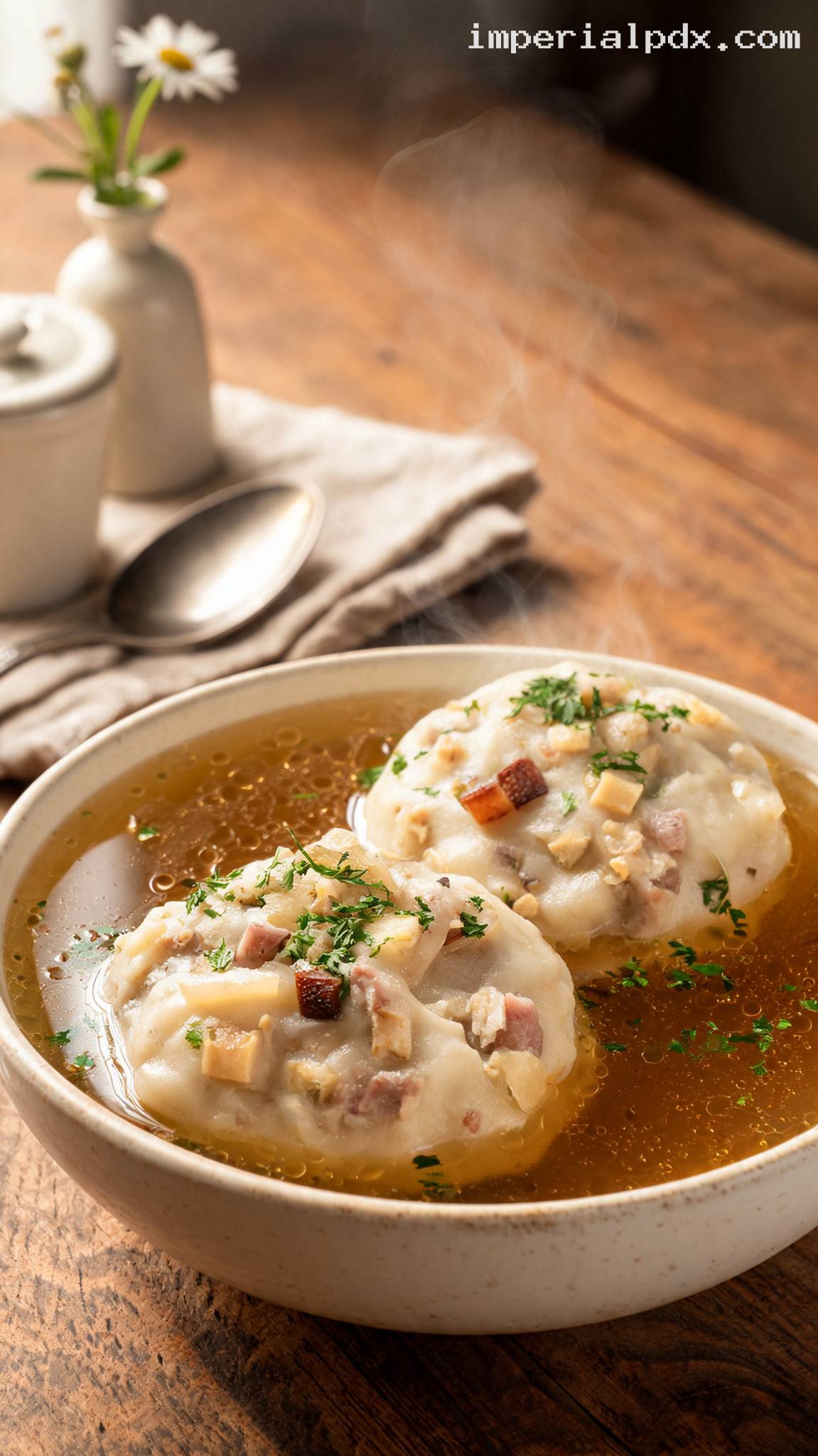
These tender Tyrolean-style bread dumplings are dotted with smoky Speck, sweet onion, and parsley. Serve them in clear broth for a comforting meal, or drain them well and pair with a crisp cabbage salad.
Quick Ingredients
- 300 g day-old white bread or plain bread rolls, cut into 1 cm cubes
- 250 ml whole milk, warmed to 50°C / 122°F
- 150 g Tyrolean Speck or thick-cut smoked bacon, finely diced
- 15 g unsalted butter and 100 g yellow onion, finely chopped
- 2 large eggs, beaten
- 30 g all-purpose flour, plus 8 g more only if needed
- 15 g fresh flat-leaf parsley, finely chopped, plus 5 g for serving
- 1/4 teaspoon fine salt, 1/4 teaspoon black pepper, and 1/8 teaspoon ground nutmeg
- 3 liters water and 1 tablespoon fine salt, for cooking
- 1.5 liters clear, low-sodium beef or vegetable broth, for serving
- Optional salad instead of broth: 400 g white cabbage, 30 ml apple cider vinegar, 15 ml neutral oil, 1 teaspoon sugar, 1/2 teaspoon caraway seeds, 1/2 teaspoon fine salt, and 1/8 teaspoon black pepper
Do This
- 1. Pour the warm milk over the bread, toss gently, and soak for 15 minutes.
- 2. Cook the Speck in butter for 4 minutes, then add the onion and cook for 6 minutes. Let cool slightly.
- 3. Gently mix the bread with the Speck mixture, eggs, flour, parsley, and seasonings. Rest for 5 minutes.
- 4. Test a tablespoon-sized dumpling in gently simmering salted water for 5 minutes. Add the extra 8 g flour to the mixture only if the tester falls apart.
- 5. With damp hands, shape 8 dumplings. Simmer gently at 90–95°C / 194–203°F for 20 minutes, until cooked through.
- 6. Serve 2 dumplings per person in hot clear broth with parsley, or drain and serve alongside the cabbage salad.
Why You’ll Love This Recipe
- A delicious use for yesterday’s bread: Slightly stale rolls become soft, savory dumplings with very little effort.
- Smoky, comforting flavor: Speck, gently cooked onion, parsley, and a little nutmeg make every bite satisfying.
- Two lovely ways to serve: Choose clear broth for a warming bowl or tangy cabbage salad for a hearty plate.
- A simple safety net: Cooking one small tester helps you get the texture right before shaping the whole batch.
Grocery List
- Produce: 1 small yellow onion, 1 small bunch flat-leaf parsley; white cabbage if making the optional salad.
- Dairy and Eggs: Whole milk, unsalted butter, 2 large eggs.
- Meat: 150 g Tyrolean Speck or thick-cut smoked bacon.
- Bakery: 300 g day-old plain white bread or bread rolls.
- Pantry: All-purpose flour, fine salt, black pepper, ground nutmeg, clear low-sodium beef or vegetable broth; apple cider vinegar, neutral oil, sugar, and caraway seeds if making the salad.
Full Ingredients
For the Bread Dumplings
- 300 g day-old plain white bread or bread rolls, including the crusts, cut into 1 cm cubes
- 250 ml whole milk
- 150 g Tyrolean Speck, rind removed and cut into 5 mm dice, or thick-cut smoked bacon
- 15 g unsalted butter, about 1 tablespoon
- 100 g yellow onion, finely chopped
- 2 large eggs, about 100 g without shells, lightly beaten
- 30 g all-purpose flour, about 1/4 cup, spooned and leveled
- 8 g additional all-purpose flour, about 1 tablespoon, only if the test dumpling needs more binding
- 15 g fresh flat-leaf parsley, finely chopped
- 1/4 teaspoon fine salt, about 1.5 g
- 1/4 teaspoon freshly ground black pepper
- 1/8 teaspoon ground nutmeg
For Cooking and Serving in Broth
- 3 liters water, for poaching
- 1 tablespoon fine salt, about 18 g, for the cooking water
- 1.5 liters clear, low-sodium beef or vegetable broth
- 5 g fresh flat-leaf parsley, finely chopped, for finishing
Optional Crisp Cabbage Salad
Make this salad to serve alongside drained dumplings instead of serving them in broth.
- 400 g white cabbage, cored and very thinly sliced
- 30 ml apple cider vinegar, 2 tablespoons
- 15 ml neutral oil, such as sunflower or canola oil, 1 tablespoon
- 1 teaspoon granulated sugar, 4 g
- 1/2 teaspoon caraway seeds, about 1 g
- 1/2 teaspoon fine salt, about 3 g
- 1/8 teaspoon freshly ground black pepper
Step-by-Step Instructions
Step 1: Soften the bread
Place the bread cubes in a large mixing bowl. Warm the milk in a small saucepan over low heat to 50°C / 122°F; it should be warm, not boiling. Pour it evenly over the bread and toss gently with a spoon. Leave to soak for 15 minutes, turning the cubes once halfway through.
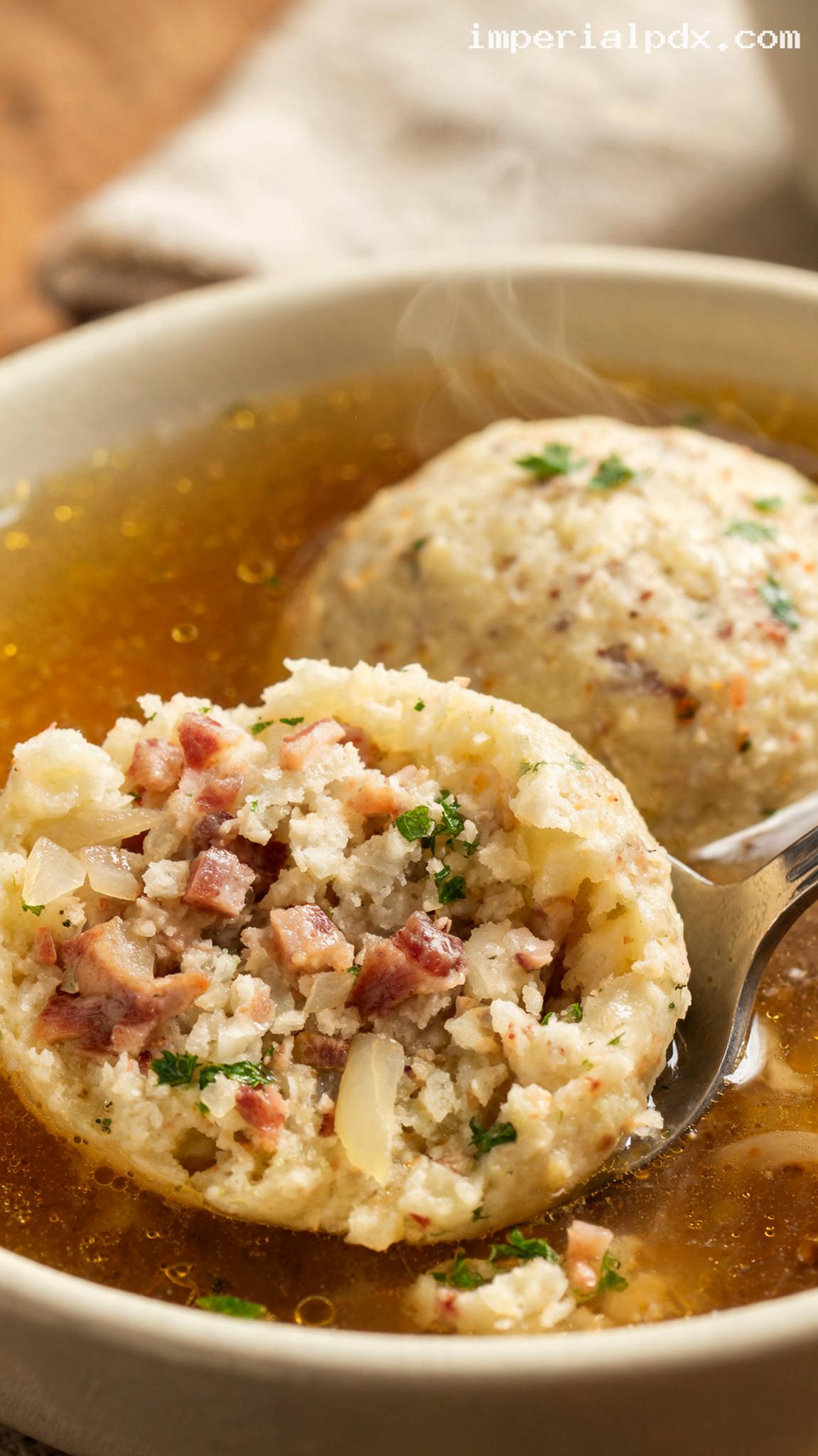
The bread should soften without becoming a smooth paste. If a few pieces still feel firm, press them gently into the moistened bread rather than adding more milk immediately.
Step 2: Cook the Speck and onion
While the bread soaks, melt the butter in a skillet over medium-low heat. Add the diced Speck and cook for 4 minutes, stirring occasionally, until fragrant and lightly golden around the edges. Add the onion and cook for another 6 minutes, stirring regularly, until soft and translucent.
Remove from the heat and let cool for 5 minutes. Keep the flavorful fat in the pan; it helps season and tenderize the dumplings. If using particularly fatty smoked bacon, spoon off excess fat, leaving about 1 tablespoon in the pan with the meat and onion.
Step 3: Gently combine the dumpling mixture
Add the cooled Speck mixture, beaten eggs, 30 g flour, 15 g parsley, salt, pepper, and nutmeg to the soaked bread. Fold together with clean hands or a sturdy spoon until everything is evenly distributed. Lightly squeeze any stubborn bread pieces, but avoid kneading the mixture into a paste.
Let stand for 5 minutes so the flour can absorb moisture. The mixture should feel moist and slightly sticky, but a handful should hold together when gently pressed. Visible pieces of bread are exactly what you want.
Step 4: Cook a small test dumpling
Bring 3 liters of water and 1 tablespoon salt to a boil in a wide pot, then reduce the heat to a very gentle simmer, approximately 90–95°C / 194–203°F. The surface should tremble with only occasional small bubbles.
With damp hands, shape about 1 tablespoon of mixture into a small ball. Lower it into the water and cook for 5 minutes. If it stays together and feels tender when cut, the mixture is ready. A few loose crumbs are normal.
If the tester breaks apart, fold the reserved 8 g flour into the remaining mixture. Avoid adding handfuls of flour, which can make the finished dumplings heavy. Do not taste the uncooked mixture, as it contains raw eggs and flour.
Step 5: Shape eight dumplings
Divide the remaining mixture into 8 equal portions. Dampen your hands with cold water and gently press each portion into a ball approximately 6 cm across. Smooth any large cracks, using just enough pressure to hold the dumplings together.
Set them on a lightly dampened plate while you finish shaping. Keep them rounded but not tightly compressed; a light touch gives the softest centers.
Step 6: Poach gently until cooked through
Lower the dumplings into the gently simmering water with a slotted spoon. Use a pot wide enough for them to sit in one loose layer; if necessary, cook in two batches, allowing an additional 20 minutes for the second batch. Maintain 90–95°C / 194–203°F and cook for 20 minutes, turning carefully once after 10 minutes.
The dumplings should feel set but springy. Floating alone does not prove they are cooked: check that the center of one reaches 74°C / 165°F with an instant-read thermometer. If necessary, continue cooking in 2-minute intervals. Keep the water below a rolling boil so the dumplings do not knock against one another and break.
Step 7: Finish with broth or cabbage salad
For the broth version: While the dumplings cook, heat the clear broth in a separate saucepan to 85–90°C / 185–194°F. Lift the cooked dumplings from their poaching water and let them drain briefly. Place 2 dumplings in each warmed bowl, pour over 375 ml hot broth per serving, and finish with the remaining parsley. Keeping the broth separate from the cooking water gives you a beautifully clear bowl.
For the cabbage salad version: While the dumplings cook, toss the sliced cabbage with the salad salt and massage gently for 1 minute. Whisk together the vinegar, oil, sugar, caraway, and pepper, then toss with the cabbage. Let stand for 10 minutes; it should soften slightly but stay crisp. Serve alongside 2 well-drained dumplings per person, finished with parsley.
Pro Tips
- Choose the right bread: Plain, slightly stale white rolls or a firm white loaf work best. Avoid very soft packaged sandwich bread, heavily seeded bread, and sweetened rolls. The bread should be dry to the touch, not rock-hard.
- Keep the bread texture: Small, distinct bread pieces create a tender, pleasantly rustic dumpling. Vigorous mixing makes the mixture dense.
- Use Speck if you can: Tyrolean Speck is smoked, dry-cured pork with a firm texture. Thick-cut smoked bacon is an accessible substitute, but its higher fat content may need draining.
- Be cautious with salt: Speck and broth vary considerably in saltiness. The modest amount in the dumpling mixture leaves room for both.
- Protect the gentle simmer: If the water begins boiling vigorously, lower the heat immediately. A calm pot matters more than whether every dumpling floats.
Variations
- Chive finish: Replace the 5 g parsley garnish with 5 g finely snipped fresh chives for a mild onion flavor.
- Mushroom version: Replace the Speck with 200 g finely diced cremini mushrooms. Cook them in the butter over medium heat for 10–12 minutes, until their released moisture has evaporated, then cook the onion as directed. Use vegetable broth.
- Golden leftover slices: Cut chilled, cooked dumplings into 1.5 cm slices. Pan-fry in 15 g butter over medium heat for 3–4 minutes per side, until golden and heated through, and serve with the cabbage salad.
Storage & Make-Ahead
To prepare ahead: Dice the bread and Speck and chop the onion up to 1 day ahead. Once the dumpling mixture is combined, shape and cook it promptly for the most predictable texture. For a fully make-ahead meal, cook the dumplings, cool them promptly, and refrigerate separately from the broth in covered containers for up to 3 days. Refrigerate within 2 hours of cooking.
To reheat: Steam refrigerated dumplings over gently simmering water for 12–15 minutes, or until the centers reach 74°C / 165°F. Heat the broth separately and assemble just before serving.
To freeze: Freeze cooked, cooled dumplings on a tray until firm, then transfer to a freezer container for up to 2 months. Thaw overnight in the refrigerator before reheating. The cabbage salad is best freshly made, although leftovers keep refrigerated for up to 2 days.
Nutrition (per serving)
Estimated for 2 dumplings with 375 ml low-sodium broth, excluding the optional cabbage salad and extra binding flour. Values, particularly sodium, vary with the bread, Speck, broth, and salt absorbed during poaching.
Calories: 470 kcal | Carbs: 50g | Protein: 25g | Fat: 18g | Saturated Fat: 7g | Fiber: 3g | Sugar: 8g | Sodium: 1320mg | Cholesterol: 135mg