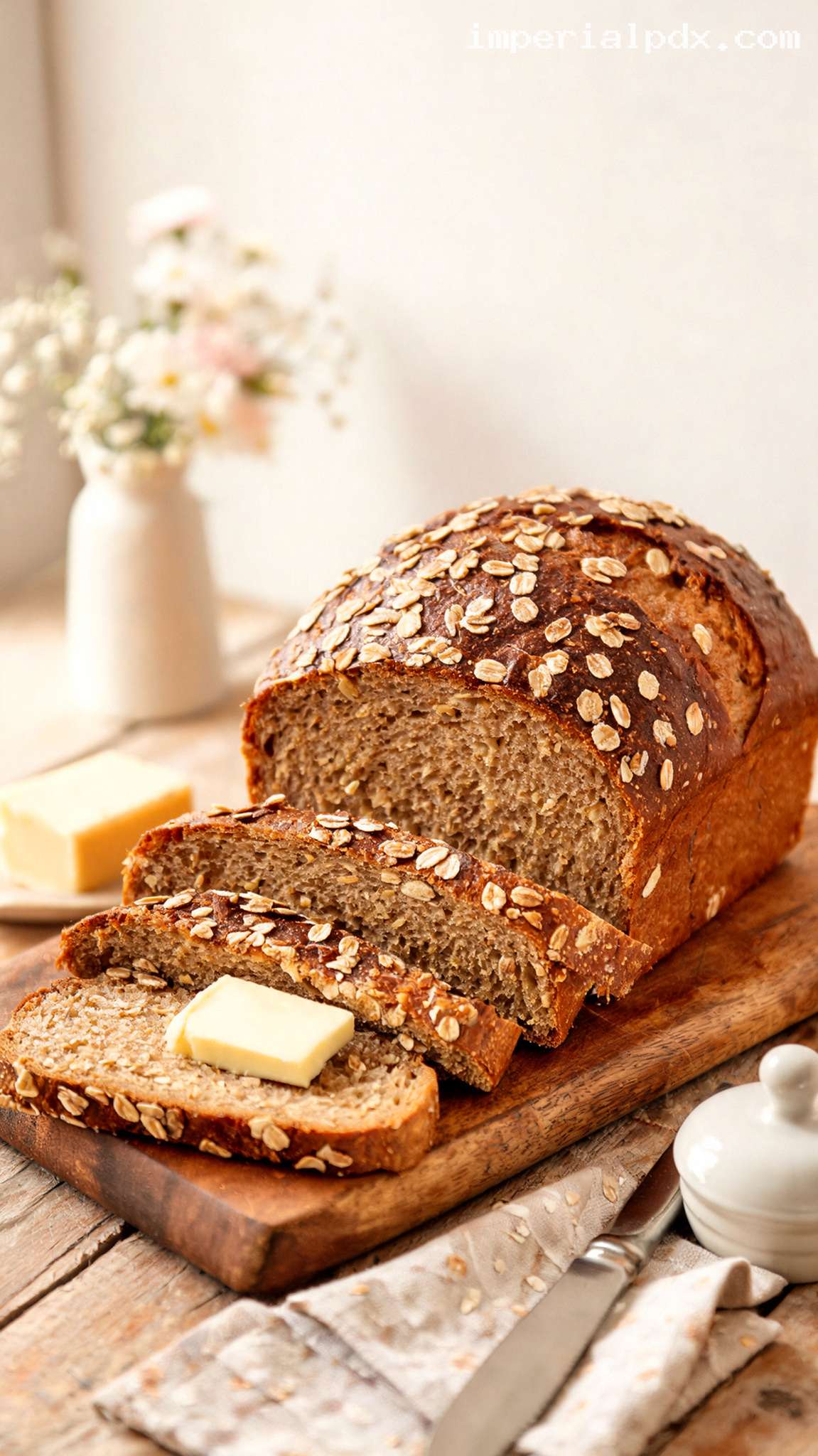
Pennsylvania Dutch Oatmeal Molasses Bread
This hearty farmhouse loaf brings together tender rolled oats, dark molasses, and butter for a moist, softly textured bread with a deep, caramel-like flavor. Slice it thick for salted butter and homemade preserves, serve it alongside sharp cheddar, or tuck a piece beside a steaming bowl of soup.
Quick Recipe Version (TL;DR)
Quick Ingredients
- 1 cup (80 g) old-fashioned rolled oats, plus 1 tablespoon (5 g) for topping
- 1 cup (240 ml) boiling water
- 1/4 cup (85 g) dark unsulfured molasses, not blackstrap
- 3 tablespoons (42 g) unsalted butter, plus 1 teaspoon (5 g) for the pan
- 1 1/2 teaspoons (9 g) fine salt
- 1/4 cup (60 ml) whole milk, warmed to 105–110°F (41–43°C), plus 1 teaspoon (5 ml) for brushing
- 2 1/4 teaspoons (7 g) active dry yeast
- 3 1/4 cups (390 g) bread flour, plus up to 1/4 cup (30 g) only if needed
Do This
- 1. Combine 1 cup oats, boiling water, molasses, 3 tablespoons butter, and salt. Let stand about 20 minutes, until cooled to 105–110°F (41–43°C).
- 2. During the last 5–10 minutes of cooling, stir the yeast into the warm milk and let it become foamy.
- 3. Mix the yeast mixture and 3 1/4 cups flour into the oats. Knead for 8–10 minutes, adding extra flour sparingly, until soft, elastic, and slightly tacky.
- 4. Cover and let rise about 75 minutes, until doubled. Shape into a loaf and place in a buttered 9-by-5-inch loaf pan.
- 5. Cover and let rise about 45 minutes, until the center crowns about 1 inch above the rim. Meanwhile, preheat the oven to 350°F (175°C).
- 6. Brush with 1 teaspoon milk, sprinkle with the remaining oats, and bake for 40–45 minutes, until the center reaches 195–200°F (91–93°C).
- 7. Cool in the pan for 10 minutes, then on a rack for at least 50 minutes before slicing.
Why You’ll Love This Recipe
- A wonderfully soft crumb: Soaking the oats first keeps the finished bread tender and moist.
- Rich, balanced flavor: Dark molasses adds gentle sweetness and caramel-like depth without turning this into a dessert bread.
- Everyday ingredients: A few pantry staples and a little patience produce a generous farmhouse loaf.
- Delicious fresh or toasted: Enjoy it with salted butter, sharp cheese, preserves, or a comforting bowl of soup.
Grocery List
- Produce: None needed.
- Dairy: Whole milk and unsalted butter; salted butter or sharp cheddar for serving, if desired.
- Pantry: Old-fashioned rolled oats, dark unsulfured molasses, bread flour, active dry yeast, and fine salt. Homemade preserves are lovely for serving.
Full Ingredients
For the Oat Mixture
- 1 cup (80 g) old-fashioned rolled oats
- 1 cup (240 ml) boiling water
- 1/4 cup (85 g) dark unsulfured molasses
- 3 tablespoons (42 g) unsalted butter, cut into small pieces
- 1 1/2 teaspoons (9 g) fine salt
For the Dough
- 1/4 cup (60 ml) whole milk, warmed to 105–110°F (41–43°C)
- 2 1/4 teaspoons (7 g) active dry yeast, equivalent to 1 standard packet
- 3 1/4 cups (390 g) bread flour
- Up to 1/4 cup (30 g) additional bread flour, for kneading only if needed
For the Pan and Topping
- 1 teaspoon (5 g) unsalted butter, softened, for greasing the pan
- 1 teaspoon (5 ml) whole milk, for brushing
- 1 tablespoon (5 g) old-fashioned rolled oats, for sprinkling
Equipment: A 9-by-5-inch loaf pan, a large mixing bowl, a small bowl, a sturdy spoon, a clean kitchen towel or reusable cover, a wire cooling rack, and preferably an instant-read thermometer.
Ingredient note: Choose regular dark unsulfured molasses rather than blackstrap, which can make the loaf noticeably bitter. Old-fashioned rolled oats give the most dependable texture; steel-cut oats are not a direct substitute.
Step-by-Step Instructions
Step 1: Soften the oats and cool the mixture
Place the 1 cup of rolled oats in a large heatproof mixing bowl. Pour in the boiling water, then stir in the molasses, butter, and salt. Stir until the butter melts and everything is evenly combined.
Let the mixture stand for about 20 minutes, stirring once or twice, until the oats have softened and the mixture cools to 105–110°F (41–43°C). Check the temperature before adding yeast; a mixture that is too hot can damage it.
Step 2: Activate the yeast
During the last 5–10 minutes of the oat mixture’s cooling time, pour the warm milk into a small bowl and stir in the active dry yeast. Let stand for 5–10 minutes, until the yeast looks creamy and develops a light layer of bubbles or foam.
If there is no sign of activity after 10 minutes, start again with fresh yeast and correctly warmed milk.
Step 3: Mix and knead a soft dough
Stir the yeast mixture into the cooled oat mixture. Add the 3 1/4 cups (390 g) bread flour and mix with a sturdy spoon until a shaggy dough forms and no dry pockets remain.
Turn the dough onto a lightly floured work surface and knead for 8–10 minutes. Alternatively, use a stand mixer fitted with a dough hook on low speed for 6–8 minutes, following your mixer’s instructions for bread dough. The finished dough should be cohesive, elastic, and slightly tacky, with softened oat flakes throughout.
If the dough smears heavily across the counter and will not hold together, add the extra flour 1 tablespoon at a time, using no more than 1/4 cup (30 g). Avoid adding flour simply to eliminate every bit of stickiness; a soft dough makes a softer loaf.
Step 4: Let the dough rise until doubled
Wash and dry the mixing bowl. Place the dough inside and cover with a reusable cover or a slightly damp kitchen towel. Let rise in a draft-free spot at about 75–80°F (24–27°C) for approximately 75 minutes, or until doubled in size.
This first rise may take 60–90 minutes depending on your kitchen. Judge the dough by its expansion rather than the clock alone.
Step 5: Shape the loaf and let it rise again
Grease a 9-by-5-inch loaf pan with the softened butter. Gently press the risen dough to release large air bubbles, then turn it onto a lightly floured surface. Pat it into an 8-by-10-inch rectangle, with an 8-inch edge closest to you.
Starting at that shorter edge, roll the dough into a snug log. Pinch the seam closed, tuck the ends underneath, and place it seam-side down in the prepared pan.
Cover loosely and let rise for about 45 minutes, usually 35–55 minutes, until the center crowns approximately 1 inch above the pan’s rim. During the final 20 minutes of rising, preheat the oven to 350°F (175°C) with a rack in the lower-middle position.
Step 6: Bake until deeply browned
Gently brush the top of the risen loaf with 1 teaspoon milk and sprinkle with 1 tablespoon rolled oats. Bake for 40–45 minutes, until the crust is a deep chestnut brown and an instant-read thermometer inserted into the center registers 195–200°F (91–93°C).
Check the loaf after 25 minutes. Because molasses encourages browning, loosely tent the top with foil if it is already dark enough. Continue baking until the center reaches the target temperature; crust color alone is not a reliable guide.
Step 7: Cool, slice, and serve
Let the loaf rest in its pan for 10 minutes. Carefully turn it out onto a wire rack and cool for at least another 50 minutes, preferably until completely cool. Allow 60–90 minutes total cooling time, depending on your kitchen.
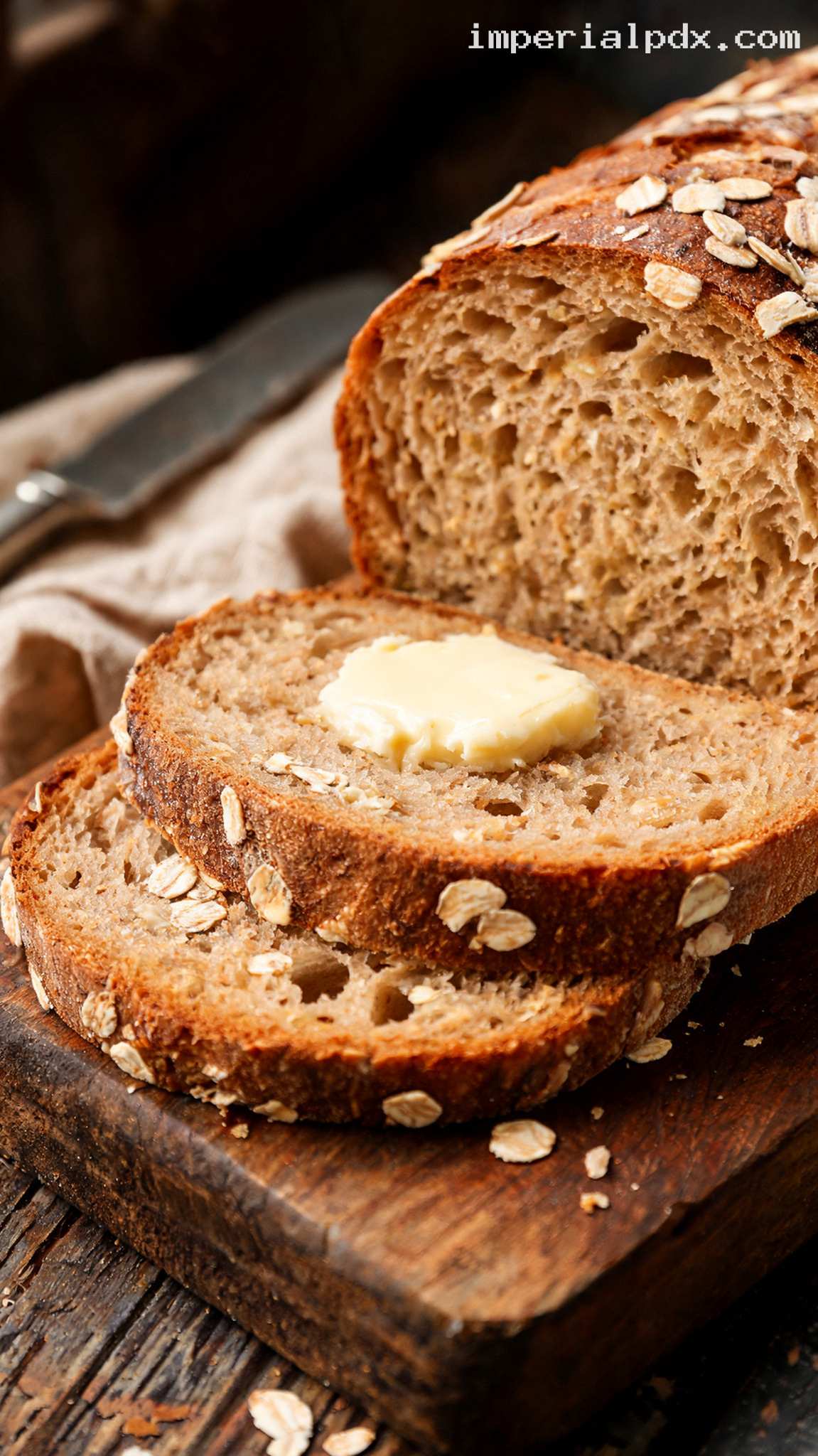
Slice with a serrated bread knife. Serve with salted butter, sharp cheddar, or homemade preserves, or alongside potato soup, chicken corn soup, or a hearty bean soup. For the cleanest slices and a fully set crumb, resist cutting the loaf while it is still hot.
Pro Tips
- Weigh the flour if possible: Start with 390 g. If using cups, fluff the flour, spoon it into the cup, and level it without packing.
- Keep the dough soft: Oats continue absorbing moisture as the dough rests. Too much extra flour can turn a tender loaf dry and heavy.
- Use temperature checks: Confirm that the oat mixture has cooled before adding yeast, and check the center of the baked loaf for doneness.
- Watch the second rise: Bake when the dough has crowned above the pan and a gentle fingertip indentation springs back slowly. Overproofed dough may collapse.
- Give the crumb time to settle: Cutting too early can compress the moist interior and make it seem gummy, even when properly baked.
Variations
- Water instead of milk: Replace the 1/4 cup milk in the dough with 1/4 cup (60 ml) warm water. Brush the loaf with 1 teaspoon water before adding the oat topping. The loaf will be slightly less rich.
- Part-whole-wheat loaf: Replace 3/4 cup (90 g) of the bread flour with 3/4 cup (90 g) whole-wheat flour. If the dough feels stiff after mixing, knead in 1–2 teaspoons (5–10 ml) additional water. Expect a slightly denser crumb.
- Raisin breakfast bread: Knead in 1/2 cup (75 g) raisins during the final 2 minutes of kneading. Add 1 teaspoon ground cinnamon with the flour for a warmly spiced version.
Storage & Make-Ahead
Room temperature: Cool the loaf completely, then store in a bread bag or airtight container for up to 3 days. Keep it out of direct sunlight. Refrigeration tends to make bread stale faster, so freeze it for longer storage.
Freezer: Slice the cooled loaf, wrap tightly, and freeze in a freezer-safe bag for up to 3 months. Toast individual slices straight from frozen, or thaw the wrapped loaf at room temperature.
Overnight preparation: After kneading, cover the dough in a container large enough for expansion and refrigerate for 8–12 hours instead of completing the room-temperature first rise. The next day, let it stand at room temperature for 45–60 minutes. If it has not nearly doubled, give it more time before shaping. Shape as directed, then allow 60–90 minutes for the final rise, or until the loaf reaches the visual cues described above. Bake as directed.
Nutrition (per serving)
Calories: 150 kcal | Carbs: 26g | Protein: 4g | Fat: 3.3g | Saturated Fat: 1.6g | Fiber: 1.3g | Sugar: 4.3g | Sodium: 228mg | Cholesterol: 7mg
Estimated per slice, based on 16 slices and the ingredients listed, including the topping and pan butter but excluding optional extra flour and serving accompaniments.