Quick Recipe Version (TL;DR)
Quick Ingredients
- 3 pounds boneless pork shoulder, trimmed and cut into 3 roughly equal pieces
- 2 tablespoons neutral oil
- 1 teaspoon fine sea salt, divided, plus 1/2 teaspoon freshly ground black pepper
- 1 large yellow onion, thinly sliced
- 2 pounds sauerkraut, weighed after draining
- 2 medium firm apples, cored and cut into 1/2-inch-thick wedges, divided
- 1 cup low-sodium chicken broth
- 1/2 cup unsweetened apple cider, not apple cider vinegar
- 1 tablespoon packed light brown sugar
- 1 teaspoon caraway seeds, optional, and 1 bay leaf
- 1 1/2 pounds Yukon Gold potatoes, cut into 1 1/2-inch chunks
- 2 tablespoons chopped fresh parsley, optional, for serving
Do This
- 1. Heat the oven to 325°F (163°C). Pat the pork dry and season with 1/2 teaspoon salt and the pepper.
- 2. Heat the oil in a large Dutch oven. Brown the pork for 10–12 minutes total, then transfer to a plate.
- 3. Cook the onion for 6 minutes. Add broth, cider, brown sugar, optional caraway, bay leaf, sauerkraut, and half the apples.
- 4. Nestle the pork into the mixture, cover tightly, and braise in the oven for 2 hours.
- 5. Shortly before those 2 hours are up, simmer the potatoes in 2 quarts water with the remaining 1/2 teaspoon salt for 12 minutes; drain.
- 6. Add the potatoes and remaining apples to the Dutch oven. Cover and braise for 1 hour more, until the pork is fork-tender, generally around 195–205°F (91–96°C).
- 7. Rest off the heat for 15 minutes. Remove the bay leaf, pull the pork into large pieces, and serve with the vegetables, cooking juices, and optional parsley.
Why You’ll Love This Recipe
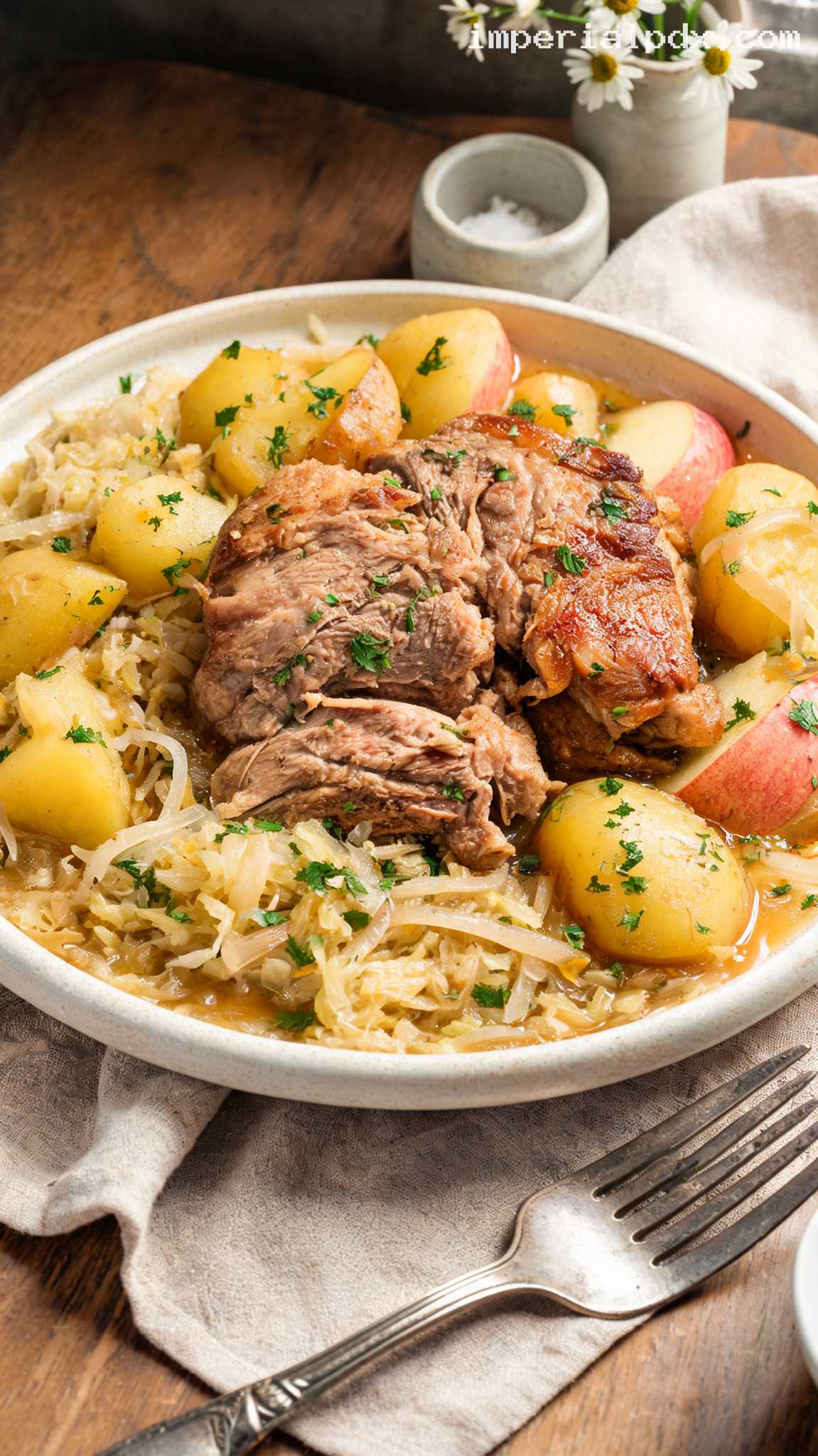
Pennsylvania Dutch Pork and Sauerkraut with Apples and Potatoes is farmhouse comfort food at its best: tender pork, tangy cabbage, soft potatoes, and apples that bring just enough sweetness. It is especially welcome on New Year’s Day, when pork and sauerkraut are traditionally served for good luck.
- Balanced, cozy flavor: Apples and a little brown sugar soften the sauerkraut’s tang without making the dish sugary.
- Mostly hands-off cooking: After a little browning and chopping, the covered pot does most of the work.
- A complete meal: Pork, potatoes, apples, and sauerkraut cook together in one hearty main dish.
- Excellent leftovers: The savory, gently sweet flavors become even more rounded overnight.
Grocery List
- Meat: 3 pounds boneless pork shoulder.
- Produce: 1 large yellow onion, 2 medium firm apples such as Braeburn or Pink Lady, 1 1/2 pounds Yukon Gold potatoes, and fresh parsley if desired.
- Dairy: None required.
- Refrigerated or Jarred Goods: Enough sauerkraut to yield 2 pounds after draining; check the package’s drained weight or buy extra.
- Pantry: Neutral oil, low-sodium chicken broth, unsweetened apple cider, light brown sugar, fine sea salt, black pepper, 1 bay leaf, and optional caraway seeds.
Full Ingredients
For the Pork
- 3 pounds boneless pork shoulder, also called pork butt or Boston butt
- 2 tablespoons neutral oil, such as canola or avocado oil
- 1/2 teaspoon fine sea salt
- 1/2 teaspoon freshly ground black pepper
For the Sauerkraut and Braising Liquid
- 1 large yellow onion, about 10 ounces, peeled and thinly sliced
- 2 pounds sauerkraut, weighed after draining but not squeezing dry
- 2 medium firm apples, about 12 ounces total, cored and cut into 1/2-inch-thick wedges, divided; leave the skins on
- 1 cup low-sodium chicken broth
- 1/2 cup unsweetened apple cider, not vinegar
- 1 tablespoon packed light brown sugar
- 1 teaspoon caraway seeds, optional
- 1 bay leaf
For the Potatoes and Serving
- 1 1/2 pounds Yukon Gold potatoes, scrubbed and cut into 1 1/2-inch chunks; peeling is optional
- 2 quarts water, for parboiling
- 1/2 teaspoon fine sea salt, for the potato water
- 2 tablespoons chopped fresh parsley, optional
Step-by-Step Instructions
Step 1: Prepare the pork and vegetables
Position a rack in the lower-middle part of the oven and heat to 325°F (163°C). Use a heavy, oven-safe Dutch oven with a tight-fitting lid, preferably 6–7 quarts.
Trim thick, hard surface fat from the pork, leaving the fine marbling that helps it stay succulent. Cut the meat into 3 roughly equal pieces, about 1 pound each. Pat thoroughly dry with paper towels, then season all over with 1/2 teaspoon fine sea salt and 1/2 teaspoon black pepper.
Slice the onion, prepare the apples, and drain the sauerkraut. Taste a small forkful of sauerkraut: if it is exceptionally salty or sharp, rinse it briefly under cool water and drain again. Otherwise, leave it unrinsed for fuller flavor.
Step 2: Brown the pork
Heat the oil in the Dutch oven over medium-high heat. Add the pork without crowding, working in batches if necessary. Brown the two broad sides for 5–6 minutes per side, or 10–12 minutes total. The goal is a deep golden-brown surface, not fully cooked meat.
Transfer the pork to a plate. If the pot contains more than about 2 tablespoons of fat, carefully spoon off the excess, leaving the browned bits behind.
Step 3: Build the sauerkraut mixture
Reduce the heat to medium. Add the onion and cook for 6 minutes, stirring frequently, until softened and lightly golden at the edges.
Pour in the chicken broth and apple cider. Scrape the bottom of the pot with a wooden spoon for 2 minutes to loosen the flavorful browned bits. Stir in the brown sugar, optional caraway seeds, bay leaf, sauerkraut, and half the apple wedges.
Bring the mixture to a gentle simmer, about 2 minutes. The liquid should moisten the sauerkraut generously without turning it into soup.
Step 4: Begin the slow braise
Nestle the browned pork and any juices from its plate into the sauerkraut mixture. Spoon a little sauerkraut around and over the meat. The pork should be partly surrounded by liquid, not completely submerged.
Cover tightly and transfer to the oven. Braise for 2 hours at 325°F (163°C). Keep the lid closed during most of this time so the trapped steam can gently tenderize the shoulder.
Step 5: Parboil the potatoes
About 20 minutes before the initial braising time ends, place the potato chunks in a saucepan with 2 quarts water and the remaining 1/2 teaspoon salt. Bring to a boil, then reduce the heat and simmer for 12 minutes.
The potatoes should be almost tender, with slight resistance in the centers when pierced with a knife. Drain well. This short separate cooking step matters because the acidity in sauerkraut can prevent raw potatoes from softening properly.
Step 6: Add the potatoes and finish braising
Carefully remove the Dutch oven from the oven and lift the lid away from your face. Tuck the drained potatoes and remaining apple wedges around the pork, gently pressing them into the moist sauerkraut.
Check that a shallow pool of liquid remains at the bottom. If the mixture looks dry, add 1/4 cup hot water. Cover again and return to the oven for 1 hour.
The shoulder is ready when a fork slides in easily and the meat separates with little pressure; its internal temperature will generally be 195–205°F (91–96°C). The potatoes should be completely tender. If the pork still feels firm, continue cooking, covered, in 15-minute intervals, checking the moisture each time. Timing varies with the thickness of the pieces and the cut of shoulder.
Step 7: Rest and serve
Remove the pot from the oven and let it rest off the heat, covered, for 15 minutes. Remove and discard the bay leaf. Skim off any obvious pools of surface fat, then taste the sauerkraut and juices before adding any extra salt.
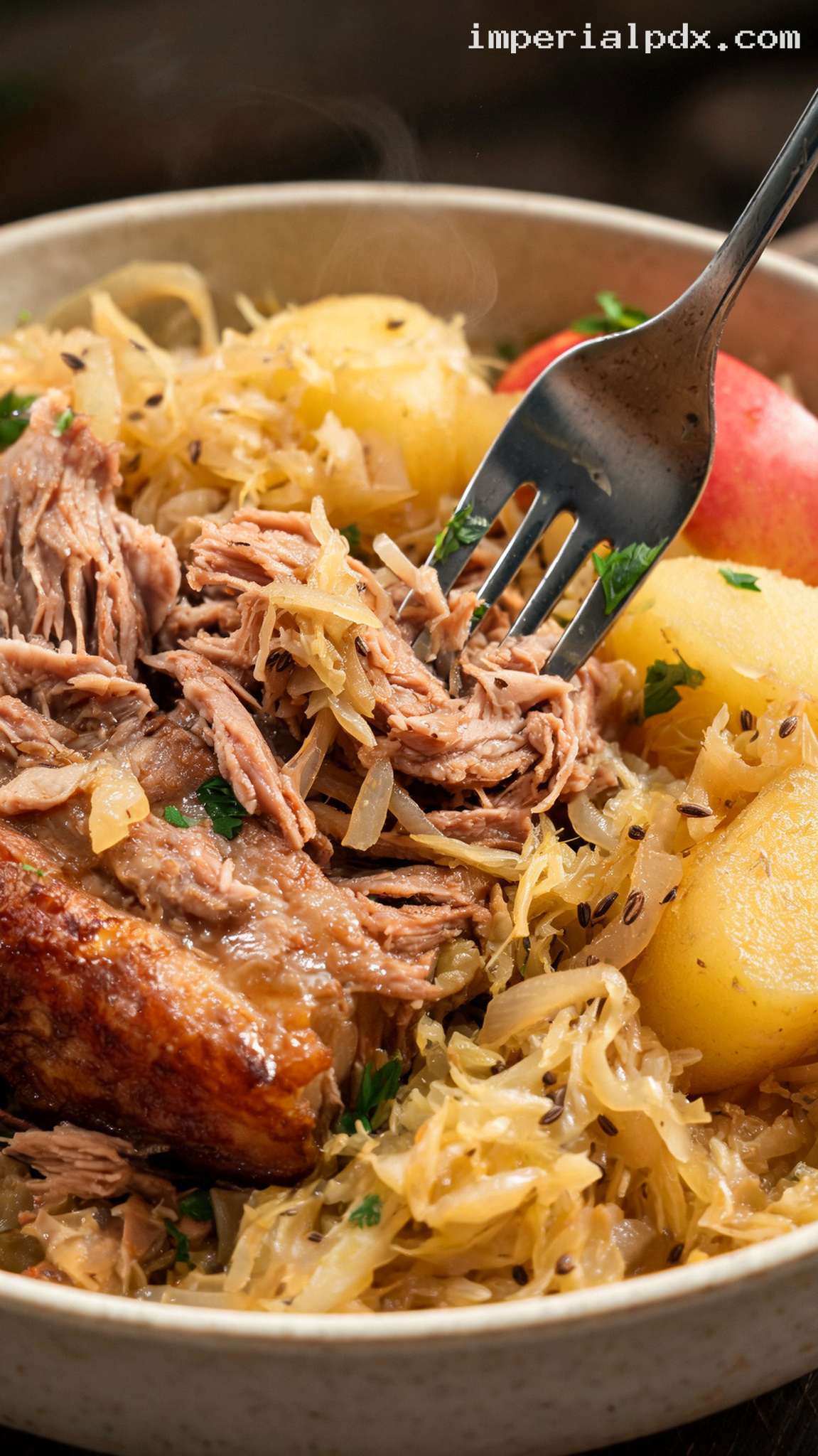
Pull the pork into generous, rustic pieces rather than finely shredding it. Spoon the sauerkraut, onions, apples, and potatoes into warm shallow bowls or onto a serving platter. Arrange the pork on top, drizzle with the cooking juices, and finish with the optional chopped parsley.
Pro Tips
- Choose shoulder for the most forgiving result: Its connective tissue softens during a long braise, producing juicy meat that pulls apart easily.
- Use two additions of apples: The first batch melts into the sauerkraut; the second leaves soft, recognizable wedges for serving.
- Keep the potato parboil: Adding raw potatoes directly to acidic sauerkraut can leave them stubbornly firm, even after a long cooking time.
- Go easy on salt: Sauerkraut varies widely in saltiness. Low-sodium broth and a final taste check help keep the finished dish balanced.
- Let texture guide you: Pork shoulder can be safely cooked before it becomes tender enough for this dish. Fork tenderness, not simply reaching a minimum safe temperature, is the goal.
Variations
- Use pork loin for a leaner version: Substitute one 3-pound boneless pork loin roast, not pork tenderloin. Brown it as directed, but skip the shoulder’s 2-hour initial braise. Prepare the sauerkraut base, then add the loin, both apples, and the parboiled potatoes together. Cover and roast at 325°F (163°C) for approximately 60–90 minutes, beginning temperature checks at 45 minutes. Remove the loin when its center reaches 145°F (63°C) and rest for 15 minutes before slicing. If needed, keep cooking the vegetables while the meat rests. Do not cook loin to the shoulder’s higher finishing temperature.
- Make it more savory: Omit the brown sugar and replace the 1/2 cup apple cider with an additional 1/2 cup low-sodium chicken broth. Keep the apples for a gentle natural sweetness.
- Lean into the caraway flavor: Increase the optional caraway seeds from 1 teaspoon to 1 1/2 teaspoons for a more pronounced earthy, aromatic note.
Storage & Make-Ahead
Refrigerate: Transfer leftovers to shallow containers and refrigerate within 2 hours of cooking. Store at 40°F (4°C) or below for 3–4 days, keeping the pork in its cooking juices.
Freeze: Freeze in airtight containers for up to 3 months for best quality. Thaw overnight in the refrigerator. The potatoes and apples will soften further after freezing, but the flavor remains excellent.
Reheat: Place leftovers in a covered oven-safe dish with 2–4 tablespoons water or broth. Warm at 325°F (163°C) for approximately 25–40 minutes, depending on the portion size, until the center reaches 165°F (74°C).
Make ahead: Cook the entire dish up to 1 day ahead, cool promptly, and refrigerate. Once chilled, any solidified surface fat is easy to remove before reheating. For lighter prep, slice the onion and drain the sauerkraut up to 24 hours ahead; prepare the apples just before cooking.
Nutrition (per serving)
Estimated for one-sixth of the pork shoulder recipe. Values vary with the amount of fat trimmed from the pork and the sauerkraut brand.
Calories: 690 kcal | Carbs: 44g | Protein: 48g | Fat: 36g | Saturated Fat: 12g | Fiber: 8g | Sugar: 17g | Sodium: 1180mg | Cholesterol: 155mg