Quick Recipe Version (TL;DR)
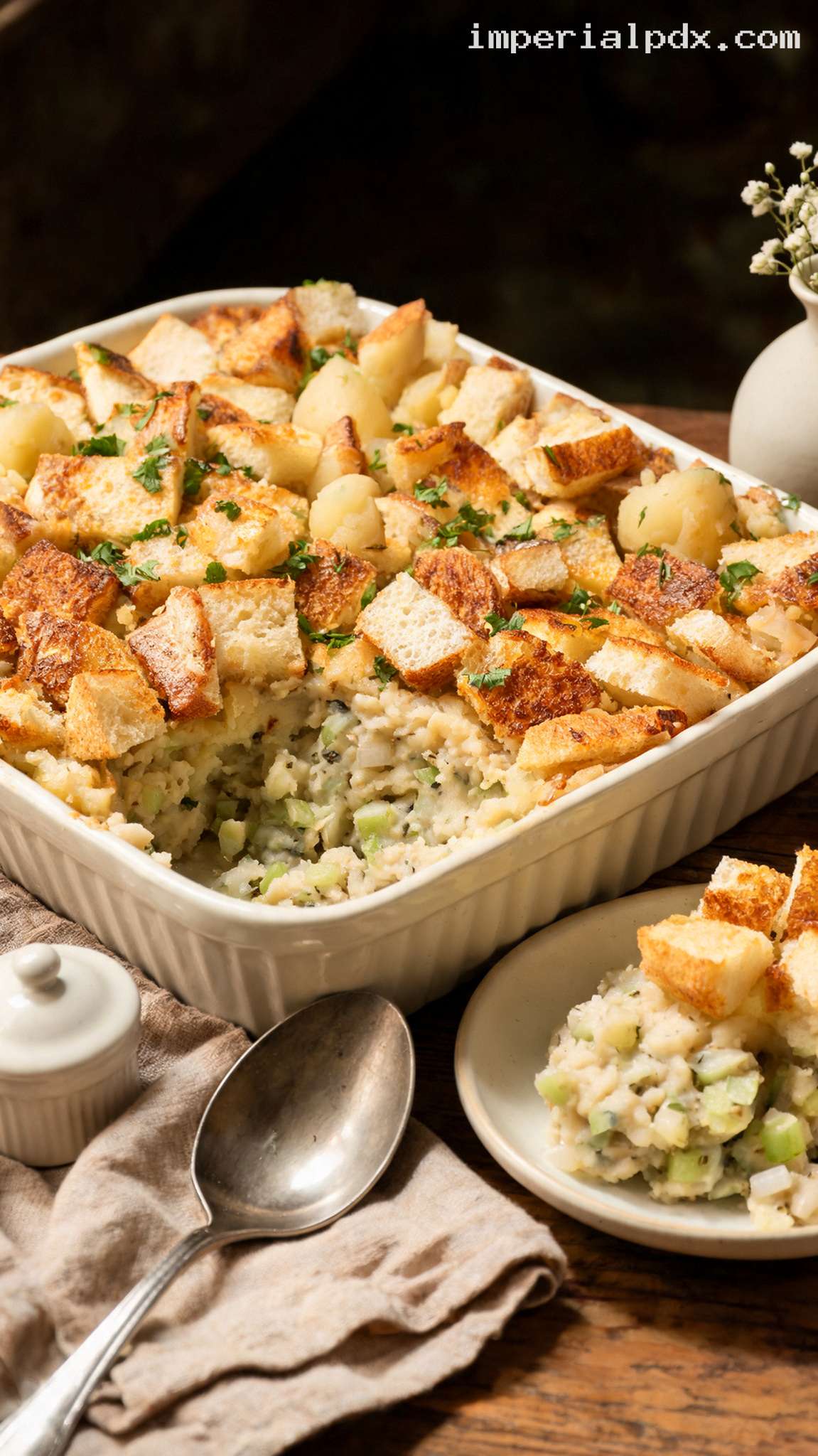
Amish Potato Filling with Celery, Onion, and Buttery Bread combines fluffy mashed potatoes, butter-toasted bread cubes, tender vegetables, and sage in one comforting Pennsylvania Dutch-style casserole. The top bakes golden while the middle stays soft and rich.
Quick Ingredients
- 3 pounds (1.36 kg) russet potatoes, weighed after peeling, cut into 1-inch pieces
- 5 cups (8 ounces/225 g) day-old white or country bread, cut into 1/2-inch cubes
- 3/4 cup (12 tablespoons/170 g) unsalted butter, divided
- 1 1/2 cups (150 g) finely chopped celery
- 1 1/2 cups (200 g) finely chopped yellow onion
- 1 cup (240 ml) whole milk, warmed
- 2 teaspoons dried rubbed sage
- 1 teaspoon fine salt, divided, plus 2 teaspoons for the potato cooking water
- 1/2 teaspoon freshly ground black pepper
- 1 tablespoon chopped fresh parsley, optional, for serving
Do This
- 1. Heat the oven to 375°F (190°C). Grease a 9-by-13-inch baking dish with 1 teaspoon of the butter, reserving 2 teaspoons for the topping.
- 2. Cover the potatoes with cold water by 1 inch, add 2 teaspoons salt, and bring to a boil. Simmer for 20 minutes, until tender; drain thoroughly.
- 3. Meanwhile, toss the bread with 2 tablespoons melted butter. Toast on a rimmed baking sheet for 12 minutes, stirring after 6 minutes.
- 4. Sauté the celery and onion in 5 tablespoons butter for 10 minutes. Stir in the sage, pepper, and 1/2 teaspoon salt; cook for 1 minute.
- 5. Mash the drained potatoes with 4 tablespoons butter, the warm milk, and the remaining 1/2 teaspoon salt. Fold in the vegetables and toasted bread.
- 6. Transfer to the baking dish, drizzle with the reserved 2 teaspoons melted butter, and bake uncovered for 40 minutes, until golden.
- 7. Rest for 10 minutes. Sprinkle with parsley, if using, and serve warm.
Why You’ll Love This Recipe
- Two favorite sides in one: It brings together the creamy comfort of mashed potatoes and the savory flavor of bread stuffing.
- A lovely contrast of textures: Butter-toasted bread and a golden crust give way to a soft, tender middle.
- Simple, familiar ingredients: Potatoes, bread, celery, onion, butter, and sage do all the delicious work.
- Perfect for sharing: One generous baking dish serves 10 and pairs beautifully with roast chicken, turkey, pork, or ham.
Grocery List
- Produce: Enough russet potatoes to yield 3 pounds after peeling, 1 celery bunch, 1 large yellow onion, and fresh parsley if desired.
- Dairy: 3/4 cup unsalted butter and 1 cup whole milk.
- Pantry: 8 ounces day-old white or country bread, dried rubbed sage, fine salt, and black pepper.
Full Ingredients
For the Mashed Potatoes
- 3 pounds (1.36 kg) russet potatoes, weighed after peeling, cut into 1-inch pieces
- 2 teaspoons fine salt, for the cooking water
- 4 tablespoons (57 g) unsalted butter
- 1 cup (240 ml) whole milk
- 1/2 teaspoon fine salt
For the Buttery Bread
- 5 cups (8 ounces/225 g) day-old white or country bread, cut into 1/2-inch cubes, with crusts left on
- 2 tablespoons (28 g) unsalted butter, melted
For the Celery and Onion
- 5 tablespoons (71 g) unsalted butter
- 1 1/2 cups (150 g) finely chopped celery
- 1 1/2 cups (200 g) finely chopped yellow onion
- 2 teaspoons dried rubbed sage
- 1/2 teaspoon fine salt
- 1/2 teaspoon freshly ground black pepper
For the Baking Dish and Finishing
- 1 tablespoon (14 g) unsalted butter, divided: 1 teaspoon for greasing and 2 teaspoons for drizzling
- 1 tablespoon chopped fresh parsley, optional, for serving
Equipment: A 9-by-13-inch baking dish, large pot, colander, rimmed baking sheet, large skillet, small saucepan, potato masher, and sturdy spoon.
Step-by-Step Instructions
Step 1: Prepare the oven and baking dish
Heat the oven to 375°F (190°C) with a rack in the center. Grease a 9-by-13-inch baking dish with 1 teaspoon of the finishing butter. Set the remaining 2 teaspoons aside for the topping.
Peel the potatoes, weigh out 3 pounds, and cut them into evenly sized 1-inch pieces. Chop the celery and onion finely so they soften completely and blend nicely into the filling.
Step 2: Cook the potatoes until tender
Put the potatoes in a large pot and add enough cold water to cover them by 1 inch. Stir in 2 teaspoons fine salt. Bring to a boil over high heat, then reduce the heat to maintain a gentle simmer.
Simmer for 20 minutes, or until a fork slides easily through the largest pieces. While the potatoes cook, toast the bread and sauté the vegetables as described below. Drain the potatoes thoroughly, return them to the warm pot, and let them stand uncovered for 2 minutes so excess moisture can evaporate.
Step 3: Toast the bread in butter
Toss the bread cubes with 2 tablespoons melted butter on a rimmed baking sheet. Spread them into a single layer and bake at 375°F (190°C) for 12 minutes, stirring after 6 minutes.
The cubes should feel dry on the outside and show light golden edges, but they do not need to become deeply browned or hard like croutons. Remove the baking sheet and leave the oven on for the casserole.
Step 4: Soften the celery and onion
Melt 5 tablespoons butter in a large skillet over medium heat. Add the celery and onion and cook for 10 minutes, stirring frequently, until the onion is translucent and the celery is tender. Reduce the heat if the vegetables begin to brown.
Stir in the dried rubbed sage, 1/2 teaspoon fine salt, and the black pepper. Cook for 1 minute, then remove the skillet from the heat. Keep all the seasoned butter in the pan; it will flavor the filling.
Step 5: Make soft, fluffy mashed potatoes
Warm the milk in a small saucepan over low heat for approximately 3 minutes, until steaming but not boiling. Add 4 tablespoons butter to the drained potatoes and mash by hand until mostly smooth.
Gradually mash in the warm milk and the remaining 1/2 teaspoon fine salt. Aim for soft, spoonable potatoes rather than a stiff mash. A few small potato lumps are welcome, but avoid beating or blending the potatoes, which can make them gluey.
Step 6: Fold together the filling
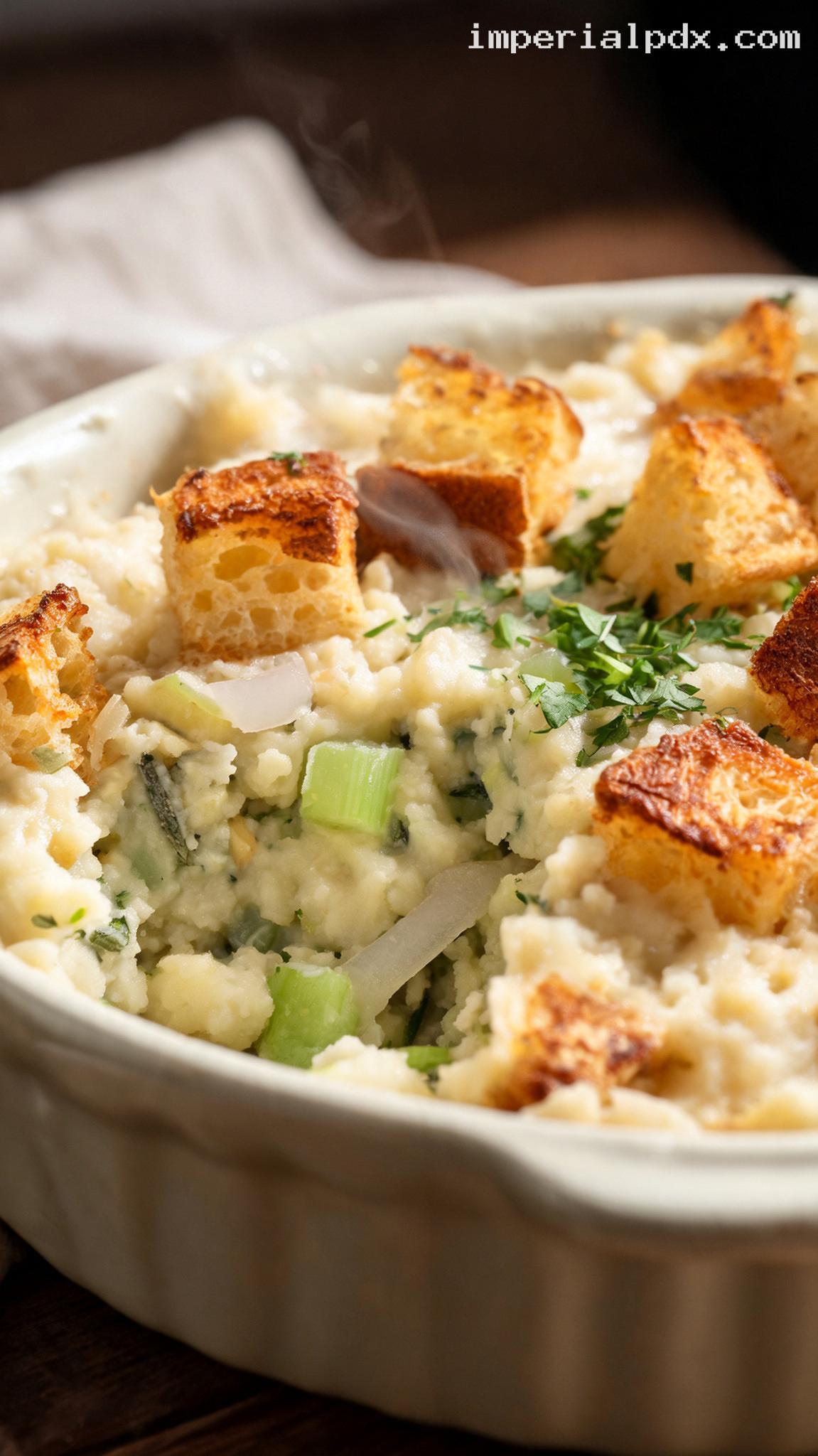
Add the sautéed vegetables, including every bit of butter from the skillet, to the mashed potatoes. Fold gently until evenly distributed. Add the toasted bread cubes and fold again just until combined, keeping some cubes intact.
Spoon the mixture into the prepared baking dish. Spread it evenly without pressing it down firmly, leaving a few shallow ridges and peaks on the surface. Melt the reserved 2 teaspoons butter and drizzle it over the top.
Step 7: Bake until the top is golden
Bake uncovered on the center rack at 375°F (190°C) for 40 minutes. The edges should be lightly browned, the exposed bread cubes golden, and the center hot throughout. The interior should remain soft rather than dry or firmly set.
If the top reaches the color you like before the baking time is finished, loosely cover the dish with foil for the remaining time.
Step 8: Rest and serve warm
Let the filling rest for 10 minutes before serving. This helps it hold together on the spoon without losing its soft texture. Sprinkle with the optional chopped parsley, then serve generous scoops, making sure each portion gets some of the golden top.
Pro Tips
- Weigh the bread if possible: Five cups of loosely packed cubes can vary considerably by loaf. Using 8 ounces keeps the balance of bread and potatoes consistent.
- Drain the potatoes well: The brief steaming-off period removes excess water and helps prevent a soggy filling.
- Use rubbed sage, not the same amount of ground sage: If using finely ground sage, substitute 1 teaspoon because its flavor is more concentrated.
- Keep the texture rustic: Gentle folding preserves tender bread pieces and keeps the mashed potatoes fluffy.
- Leave the top slightly uneven: Small peaks and exposed bread edges catch the butter and develop the best golden crust.
Variations
- Yukon Gold version: Replace the russets with 3 pounds peeled Yukon Gold potatoes for a slightly denser, naturally buttery filling.
- Fresh-herb version: Replace the dried sage with 2 tablespoons finely chopped fresh sage. Add it to the skillet at the same point in the recipe.
- Richer holiday filling: Replace 1/2 cup of the whole milk with 1/2 cup half-and-half, keeping the total liquid at 1 cup.
Storage & Make-Ahead
Refrigerate: Transfer leftovers to shallow, covered containers and refrigerate within 2 hours of cooking. Keep for up to 4 days.
Make ahead: Assemble the filling through Step 6, but reserve the topping butter until baking. Cover and refrigerate for up to 24 hours. Use a metal baking pan, or follow your baking dish manufacturer’s guidance for moving a chilled dish into a hot oven. Drizzle with the reserved melted butter, cover with foil, and bake at 375°F (190°C) for 35 minutes. Uncover and bake for 20 minutes more, until golden and the center reaches 165°F (74°C); add time if needed. Rest for 10 minutes.
Reheat: For 2 cups of leftover filling, gently fold in 1 tablespoon milk and place in a small covered baking dish. Heat at 350°F (175°C) for 25 minutes, or until the center reaches 165°F (74°C). Uncover for the final 5 minutes to refresh the top.
Freeze: Freeze cooled portions in airtight containers for up to 2 months. Thaw overnight in the refrigerator before reheating. The bread will soften slightly after freezing.
Nutrition (per serving)
Estimated for 1 of 10 servings, without the optional parsley. Values vary with the bread used and the amount of salt absorbed during boiling.
Calories: 315 kcal | Carbs: 39g | Protein: 6g | Fat: 16g | Saturated Fat: 9g | Fiber: 3g | Sugar: 3g | Sodium: 380mg | Cholesterol: 39mg