Quick Recipe Version (TL;DR)
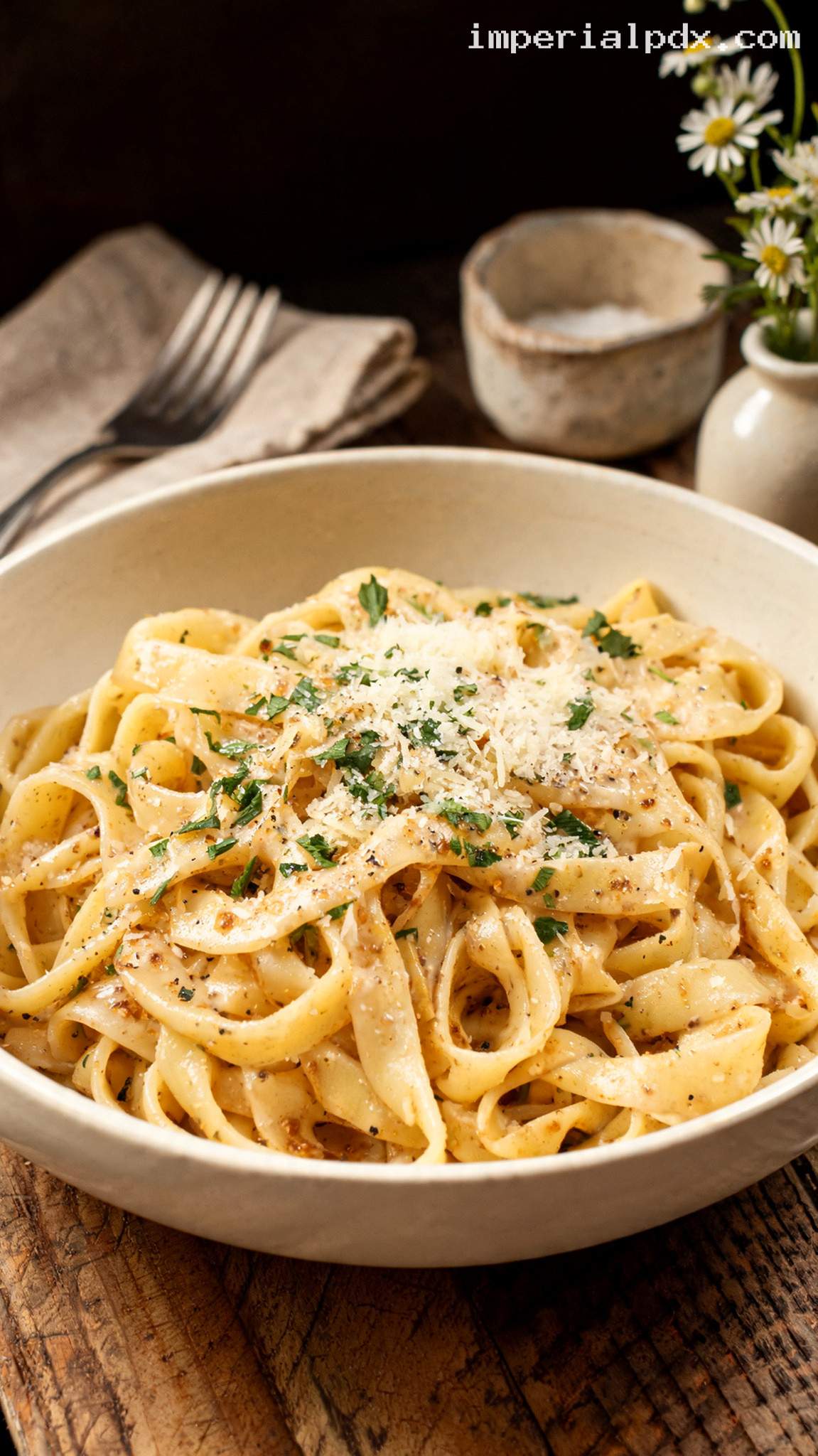
Traditional Amish Buttered Egg Noodles with Brown Butter brings thick, tender homemade noodles together with nutty browned butter, a splash of cream, fresh parsley, cracked black pepper, and a generous Parmesan finish. This comforting Amish-style side is especially good beside roasted chicken, meatloaf, or pot roast.
Quick Ingredients
- 2 cups all-purpose flour (250 g), plus 2 tablespoons (16 g) for dusting
- 2 large eggs plus 2 large egg yolks
- 2 tablespoons water (30 ml), plus up to 3 teaspoons more if needed
- 1/2 teaspoon fine sea salt (3 g), for the dough
- 4 quarts water (3.8 liters) and 1 tablespoon fine sea salt (18 g), for boiling
- 6 tablespoons unsalted butter (85 g)
- 1/4 cup heavy cream (60 ml), at room temperature
- 1/2 cup finely grated Parmesan (45 g), divided
- 2 tablespoons chopped fresh flat-leaf parsley (8 g), divided
- 1/2 teaspoon freshly cracked black pepper, divided
- 1/2 cup reserved noodle cooking water (120 ml), using only as needed
Do This
- 1. Mix the flour, eggs, yolks, 2 tablespoons water, and dough salt into a shaggy dough.
- 2. Knead for 8 minutes, then cover and rest at room temperature for 30 minutes.
- 3. Roll the dough 1/8 inch thick; cut into noodles 1/2 inch wide and 3 inches long. Let stand for 10 minutes.
- 4. Brown the butter over medium heat for about 7 minutes. Remove from the heat, wait 1 minute, and slowly stir in the cream.
- 5. Boil the noodles in the salted water for 8 minutes, checking for tenderness at 6 minutes. Reserve 1/2 cup cooking water before draining.
- 6. Toss the noodles with the brown-butter cream, 1/4 cup cooking water, and half the Parmesan, parsley, and pepper. Warm gently for 2 minutes.
- 7. Finish with the remaining Parmesan, parsley, and pepper. Serve immediately.
Why You’ll Love This Recipe
- Homemade comfort: Thick-cut egg noodles have a tender, pleasantly hearty bite that store-bought pasta rarely matches.
- Big flavor from simple ingredients: Browning the butter adds a toasted, nutty richness without extra fuss.
- A light, glossy coating: Just a little cream and noodle water bring everything together without creating a heavy sauce.
- A versatile side: The homemade noodles honor Amish-style comfort cooking, while Parmesan and parsley add a delicious finishing touch.
Grocery List
- Produce: Fresh flat-leaf parsley.
- Dairy: Unsalted butter, heavy cream, and a wedge of Parmesan.
- Eggs: 4 large eggs; use 2 whole eggs and the yolks from the other 2, saving the extra whites for another recipe.
- Pantry: All-purpose flour, fine sea salt, and black peppercorns or coarsely ground black pepper.
Full Ingredients
For the Homemade Egg Noodles
- 2 cups all-purpose flour (250 g)
- 2 tablespoons all-purpose flour (16 g), for dusting the work surface and cut noodles
- 2 large eggs
- 2 large egg yolks
- 2 tablespoons water (30 ml), at room temperature
- Up to 3 additional teaspoons water (15 ml), only if the dough will not come together
- 1/2 teaspoon fine sea salt (3 g)
For Boiling
- 4 quarts water (3.8 liters)
- 1 tablespoon fine sea salt (18 g)
For the Brown Butter and Finish
- 6 tablespoons unsalted butter (85 g), cut into 6 pieces
- 1/4 cup heavy cream (60 ml), brought to room temperature
- 1/2 cup finely grated Parmesan (45 g), divided into two 1/4-cup portions
- 2 tablespoons chopped fresh flat-leaf parsley (8 g), divided
- 1/2 teaspoon freshly cracked black pepper, divided
- 1/2 cup reserved noodle cooking water (120 ml); start with 1/4 cup and add more only as needed
Step-by-Step Instructions
Step 1: Mix the noodle dough
Place the 2 cups flour and 1/2 teaspoon salt in a large bowl. Make a well in the center and add the whole eggs, egg yolks, and 2 tablespoons water. Beat the wet ingredients with a fork, gradually drawing in the flour until a shaggy dough forms. This should take about 5 minutes.
Squeeze the dough together with your hands. It should feel firm and slightly tacky, not wet. If loose flour remains and the dough will not hold together, add extra water 1 teaspoon at a time, using no more than 3 additional teaspoons.
Step 2: Knead and rest
Turn the dough onto a clean work surface and knead for 8 minutes, pushing it away with the heel of your hand, folding it back, and turning it between strokes. Use a little of the measured dusting flour only if it sticks. The finished dough should be smooth and firm.
Wrap tightly or cover with an overturned bowl and rest at room temperature for 30 minutes. This relaxes the dough so it rolls out more easily. During the final 10 minutes of resting, start heating the 4 quarts water in a large covered pot.
Step 3: Roll and cut thick noodles
Divide the rested dough into 2 equal pieces. Keep one piece covered while you roll the other on a lightly floured surface into a sheet approximately 1/8 inch (3 mm) thick. Turn the dough occasionally and dust sparingly to prevent sticking.
Using a sharp knife or pizza cutter, cut the dough into strips 1/2 inch (1.3 cm) wide, then cut those strips into 3-inch (7.5 cm) lengths. Repeat with the second piece of dough. Allow about 20 minutes for rolling and cutting. The noodles should look rustic, but keeping their thickness consistent helps them cook evenly.
Step 4: Let the noodles stand and prepare the water
Spread the noodles in a loose single layer on a lightly floured baking sheet. Separate any pieces that are touching and let them stand uncovered for 10 minutes while you make the brown butter. This brief rest firms the surface slightly; the noodles should still be flexible rather than fully dried.
Bring the pot of water to a rolling boil, approximately 212°F (100°C) at sea level, and add the 1 tablespoon salt. Keep it ready for the noodles.
Step 5: Brown the butter and add the cream
Place the butter in a wide, light-colored skillet over medium heat. Cook for about 7 minutes, swirling frequently and gently stirring the bottom as the butter foams. Watch closely once the bubbling quiets: the milk solids should turn golden brown and smell toasted and nutty. The solids should not become black.
Immediately remove the skillet from the heat and wait 1 minute. Slowly stir in the room-temperature cream, taking care because it may bubble. Return the skillet to low heat for 30 seconds, stirring until combined, then remove it from the heat until the noodles are ready. Keep the golden-brown butter solids in the skillet; they provide much of the flavor.
Step 6: Cook the noodles until tender
Add the noodles to the boiling water, shaking off excess flour as you go. Stir gently right away to keep them from sticking together. Return to a steady boil and cook for 8 minutes, beginning to check at 6 minutes.
A finished noodle should be tender throughout with a gentle bite and no dry, floury center. If needed, continue cooking in 1-minute increments. Before draining, scoop out 1/2 cup cooking water. Drain the noodles without rinsing.
Step 7: Toss, garnish, and serve
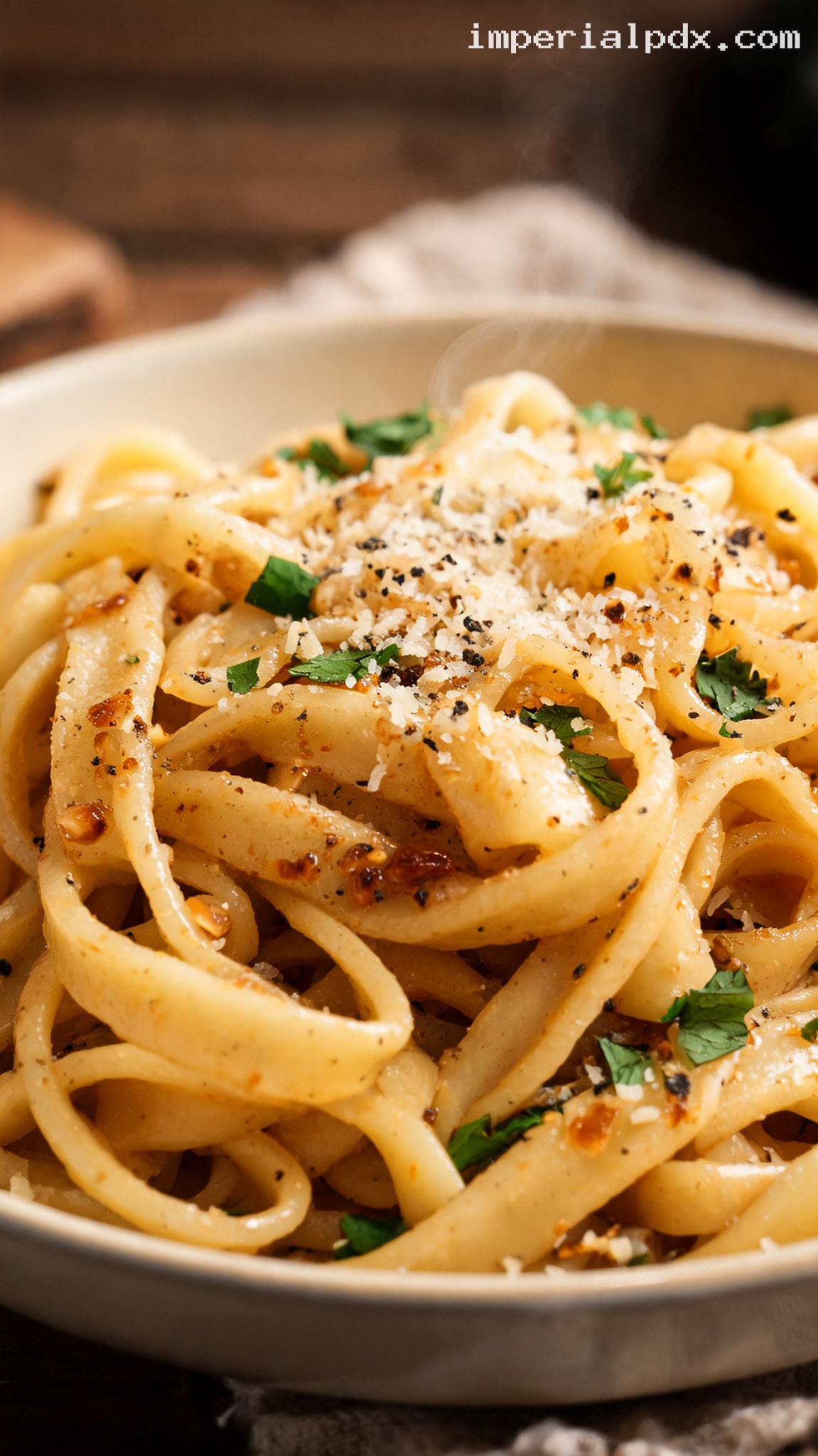
Add the hot noodles to the skillet with the brown-butter cream. Pour in 1/4 cup reserved cooking water, then add 1/4 cup Parmesan, 1 tablespoon parsley, and 1/4 teaspoon cracked black pepper. Toss gently over low heat for 2 minutes, until the noodles are evenly coated and glossy.
If the coating looks tight or dry, add the remaining cooking water 1 tablespoon at a time, using only what you need. Transfer to a warm serving bowl and sprinkle generously with the remaining 1/4 cup Parmesan, 1 tablespoon parsley, and 1/4 teaspoon pepper. Serve immediately alongside roasted chicken, meatloaf, or pot roast.
Pro Tips
- Weigh the flour if possible: Too much flour makes stiff dough and tough noodles. If using cups, spoon the flour into the cup and level it rather than scooping directly from the bag.
- Do not skip the dough rest: If the dough springs back while rolling, cover it and give it another 5 minutes to relax.
- Use a light-colored skillet: It makes the butter solids easier to see, so you can catch that golden-brown stage before they burn.
- Grate the Parmesan finely: Freshly grated cheese blends into the warm coating more smoothly than coarse shreds. Keep the heat low after adding it.
- Save the noodle water: Its starch helps the butter and cream cling to the noodles. Add it gradually so the finished dish stays glossy rather than soupy.
Variations
- More traditional buttered noodles: Omit the cream and Parmesan. Toss with the brown butter and 1/4 cup reserved cooking water, then finish with the parsley and pepper.
- Mushroom noodles: Sauté 8 ounces sliced cremini mushrooms (225 g) in 1 tablespoon butter in a separate skillet over medium-high heat for 8 minutes. Fold into the finished noodles.
- Store-bought shortcut: Replace the homemade dough with 12 ounces dried wide egg noodles (340 g). Cook according to the package directions and prepare the brown-butter finish as written. The yield and nutrition will differ.
Storage & Make-Ahead
Leftovers: Refrigerate in a shallow, airtight container within 2 hours and use within 3 days. Keep the refrigerator at 40°F (4°C) or below. Reheat gently in a covered skillet with 1 tablespoon water per serving, adding more as needed, until the noodles reach 165°F (74°C). Add a little fresh parsley after reheating.
Make the dough ahead: Wrap the kneaded dough tightly and refrigerate for up to 24 hours. Let it stand at room temperature for 20 minutes before rolling. Cut, uncooked noodles can also be lightly floured, arranged on a parchment-lined tray, covered, and refrigerated for up to 24 hours.
Freeze uncooked noodles: Freeze the cut noodles in a single layer for 1 hour, then transfer to a freezer bag and freeze for up to 2 months. Cook directly from frozen, beginning to check at 8 minutes; they generally need about 2 minutes longer than fresh noodles.
Nutrition (per serving)
Calories: 373 kcal | Carbs: 35g | Protein: 11g | Fat: 21g | Saturated Fat: 12g | Fiber: 1g | Sugar: 1g | Sodium: 520mg | Cholesterol: 172mg
Nutrition is an estimate for one-sixth of the recipe, including the dusting flour and an estimated portion of salt absorbed during boiling. Actual values vary with ingredient brands and salt absorption.