Quick Recipe Version (TL;DR)
Quick Ingredients
- 8 large eggs, preferably pasteurized
- 8 canned or jarred whole artichoke bottoms, about 16 ounces drained
- 20 ounces fresh baby spinach
- 14 tablespoons unsalted butter, divided
- 1 tablespoon olive oil
- 2 tablespoons all-purpose flour
- 1 garlic clove, minced
- 3 large pasteurized egg yolks
- 1 tablespoon fresh lemon juice
- 1 tablespoon warm water
- 1 tablespoon distilled white vinegar
- 1 teaspoon fine sea salt, divided
- 1/4 teaspoon freshly ground black pepper, divided
- 1/8 teaspoon ground nutmeg
- 1/8 teaspoon cayenne pepper
- 1/2 teaspoon sweet paprika
Do This
- 1. Heat the oven to 200°F and thoroughly dry the artichoke bottoms.
- 2. Whisk the egg yolks, lemon juice, water, salt, and cayenne over barely simmering water; gradually whisk in 12 tablespoons melted butter to make the hollandaise.
- 3. Dust the artichoke bottoms with seasoned flour and cook in olive oil and butter for 3 to 4 minutes per side; keep warm.
- 4. Sauté the garlic and spinach in butter for 4 to 5 minutes; season with salt, pepper, and nutmeg.
- 5. Poach the eggs in 180 to 190°F vinegar water for 3 1/2 to 4 minutes.
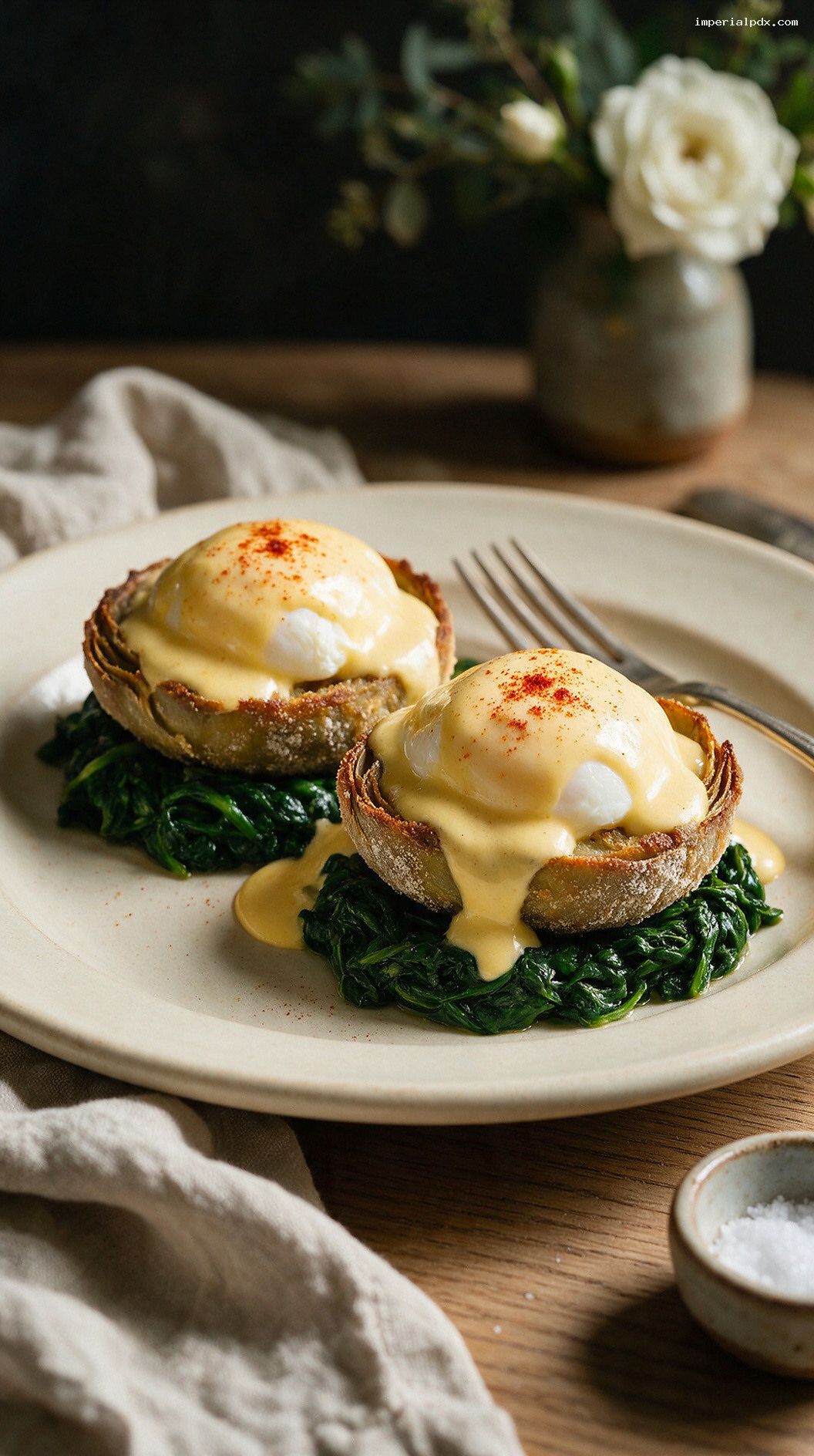
- 6. Arrange spinach and two artichoke bottoms on each plate, top with two poached eggs, spoon over hollandaise, and finish with paprika.
Why You’ll Love This Recipe
- It combines crisp, creamy, tender, and silky textures in every forkful.
- The rich hollandaise is balanced by lemon, garlicky spinach, and tangy artichokes.
- Each component uses approachable techniques that home cooks can master.
- It makes an elegant centerpiece for a holiday breakfast or leisurely Southern brunch.
Grocery List
- Produce: 20 ounces baby spinach, 1 garlic clove, and 1 lemon
- Dairy: 14 tablespoons unsalted butter
- Eggs: 11 large eggs total, preferably pasteurized; 8 are used whole and 3 are separated for the hollandaise
- Pantry: 8 whole artichoke bottoms, all-purpose flour, olive oil, distilled white vinegar, fine sea salt, black pepper, ground nutmeg, cayenne pepper, and sweet paprika
Full Ingredients
For the Crisp Artichoke Bottoms
- 8 canned or jarred whole artichoke bottoms, about 16 ounces drained, rinsed, and thoroughly dried
- 2 tablespoons all-purpose flour
- 1/4 teaspoon fine sea salt
- 1/8 teaspoon freshly ground black pepper
- 1 tablespoon olive oil
- 1 tablespoon unsalted butter
For the Sautéed Spinach
- 1 tablespoon unsalted butter
- 1 garlic clove, finely minced
- 20 ounces fresh baby spinach
- 1/4 teaspoon fine sea salt
- 1/8 teaspoon freshly ground black pepper
- 1/8 teaspoon ground nutmeg
For the Hollandaise Sauce
- 12 tablespoons unsalted butter, melted and kept at 125 to 135°F
- 3 large pasteurized egg yolks
- 1 tablespoon fresh lemon juice
- 1 tablespoon warm water
- 1/2 teaspoon fine sea salt
- 1/8 teaspoon cayenne pepper
- 1 to 2 teaspoons additional warm water, only if needed to thin the sauce
For the Poached Eggs and Assembly
- 3 quarts water
- 1 tablespoon distilled white vinegar
- 8 large eggs, preferably pasteurized
- 1/2 teaspoon sweet paprika
Step-by-Step Instructions
Step 1: Prepare the equipment and ingredients
Heat the oven to 200°F. Place a wire rack over a rimmed baking sheet and set it aside for the cooked artichoke bottoms. Rinse the artichoke bottoms to remove excess brine, then pat them very dry with paper towels. Removing as much surface moisture as possible is essential for browning rather than steaming.
Fill a medium saucepan with about 1 inch of water for the hollandaise and bring it to a very gentle simmer. Choose a heatproof bowl that can sit over the saucepan without its base touching the water. Melt the 12 tablespoons of butter for the hollandaise and keep it between 125 and 135°F.
Step 2: Make the silky hollandaise
In the heatproof bowl, whisk together the 3 pasteurized egg yolks, lemon juice, 1 tablespoon warm water, 1/2 teaspoon salt, and cayenne. Set the bowl over the barely simmering water. Whisk constantly for 3 to 4 minutes, until the mixture is pale, slightly increased in volume, thick enough to leave trails from the whisk, and registers about 145°F. Keep the heat gentle so the yolks do not scramble.
Remove the bowl from the heat. Add the warm melted butter a few drops at a time while whisking constantly. Once the sauce begins to thicken and emulsify, pour the remaining butter in a very thin, steady stream while continuing to whisk. If the finished hollandaise is thicker than softly whipped cream, whisk in 1 to 2 teaspoons warm water, one teaspoon at a time.
Set the bowl over a larger bowl of warm water maintained at 120 to 130°F. Keep the hollandaise warm for no longer than 1 hour, whisking occasionally. Do not place it over direct heat or let it exceed 140°F, or the sauce may separate.
Step 3: Crisp the artichoke bottoms
Combine the flour, 1/4 teaspoon salt, and 1/8 teaspoon black pepper on a shallow plate. Lightly coat both sides of each dry artichoke bottom, tapping away any excess flour. The coating should be thin rather than heavy or pasty.
Heat the olive oil and 1 tablespoon butter in a large skillet over medium-high heat. When the butter foams, add the artichoke bottoms in a single layer. Cook for 3 to 4 minutes per side, turning carefully, until the flat surfaces and edges are crisp and golden brown. Transfer them to the prepared wire rack and keep them warm in the 200°F oven while preparing the remaining components.
Step 4: Sauté the spinach
Carefully wipe out the skillet and return it to medium heat. Melt 1 tablespoon butter, add the minced garlic, and cook for 30 seconds, stirring constantly, just until fragrant. Do not let the garlic brown.
Add the spinach in three batches, tossing each batch until it begins to wilt before adding the next. Cook for 4 to 5 minutes in total, until all the spinach is tender and most of the released liquid has evaporated. Season with 1/4 teaspoon salt, 1/8 teaspoon black pepper, and the nutmeg. Keep the spinach warm over very low heat. If liquid collects in the pan, drain it before plating so the finished dish does not become watery.
Step 5: Poach the eggs
Fill a wide saucepan or deep skillet with 3 quarts water. Add the vinegar and heat the water to 180 to 190°F. The water should show gentle movement and a few small bubbles but should never reach a rolling boil.
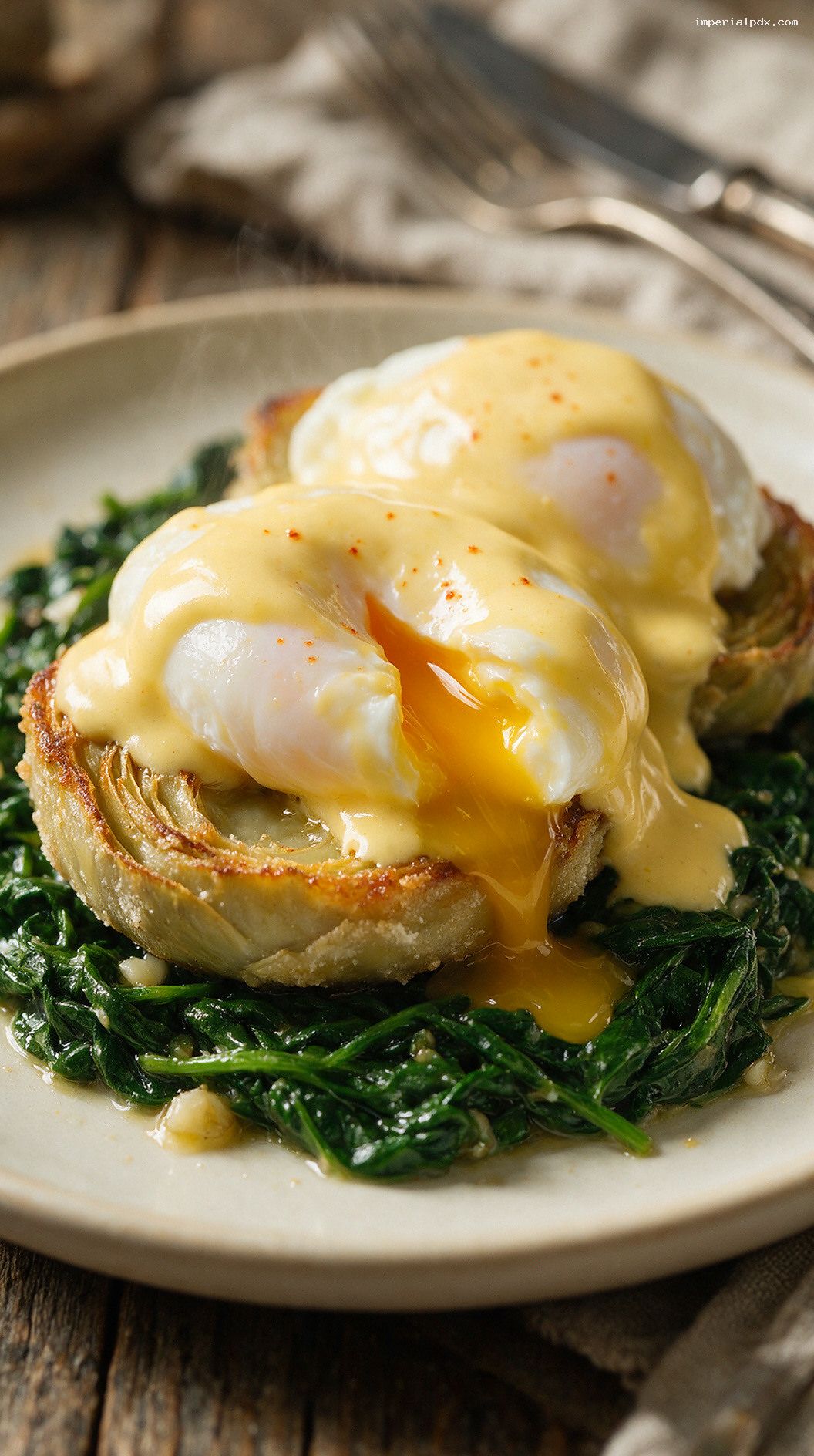
Crack each egg into a separate small bowl or ramekin. Working in two batches of four, slide the eggs gently into the water, leaving space between them. Poach for 3 1/2 to 4 minutes, until the whites are fully set but the yolks still feel soft when gently touched. For firmer yolks, cook for 5 minutes.
Lift each egg from the water with a slotted spoon. Let it drain for several seconds, then gently touch the bottom of the spoon to a clean kitchen towel to remove excess water. Use kitchen scissors to trim any especially ragged strands of egg white if you would like a neater presentation.
Step 6: Assemble and serve
Divide the warm sautéed spinach among four plates, creating two small mounds on each plate. Place one crisp artichoke bottom on each mound of spinach, then settle a poached egg into each artichoke bottom. Spoon about 1/4 cup warm hollandaise generously over the two eggs on each plate, allowing some sauce to flow over the artichokes and spinach.
Finish each serving with about 1/8 teaspoon sweet paprika. Serve immediately while the artichokes are crisp, the eggs are warm, and the hollandaise is silky.
Pro Tips
- Dry the artichokes thoroughly: Even a small amount of brine or water can prevent crisp browning and cause the hot fat to splatter.
- Use pasteurized eggs when possible: Hollandaise and softly poached eggs are gently cooked, so pasteurized eggs are the best choice for children, older adults, pregnant people, or anyone with a compromised immune system.
- Watch the water temperature: Boiling water makes poached eggs tough and ragged. Maintain a gentle 180 to 190°F for tender, tidy whites.
- Keep hollandaise warm, not hot: A warm-water bath between 120 and 130°F preserves the emulsion without cooking the yolks further.
- Drain the spinach well: Excess spinach liquid can soften the artichoke crust and dilute the hollandaise.
Variations
- Creamed Spinach Sardou: After the spinach wilts, stir in 1/4 cup heavy cream and simmer for 2 to 3 minutes, until thickened, for an even richer New Orleans-style base.
- Crab Eggs Sardou: Fold 4 ounces of drained lump crabmeat into the warm spinach just before plating.
- Gluten-Free Version: Replace the all-purpose flour with an equal amount of fine rice flour or a cup-for-cup gluten-free flour blend.
Storage & Make-Ahead
Eggs Sardou is best assembled immediately before serving. The spinach can be cooked up to 2 days ahead and refrigerated in an airtight container; reheat it in a skillet over low heat. The artichoke bottoms can be rinsed and dried 1 day ahead, but coat and crisp them shortly before serving. Poached eggs can be prepared up to 1 day ahead, transferred directly to ice water, covered, and refrigerated; reheat them in 150°F water for 45 to 60 seconds and drain well. Hollandaise is best made fresh and may be held in a 120 to 130°F water bath for up to 1 hour. Refrigerated hollandaise often separates when reheated, so making a fresh batch is recommended. Store assembled leftovers for no more than 1 day, understanding that the artichokes will lose their crispness.
Nutrition (per serving)
Calories: 670 kcal | Carbs: 19g | Protein: 21g | Fat: 58g | Saturated Fat: 30g | Fiber: 8g | Sugar: 3g | Sodium: 980mg | Cholesterol: 620mg