Quick Recipe Version (TL;DR)
Quick Ingredients
- 6 large eggs
- 2 tablespoons water
- 1/2 teaspoon kosher salt
- 1/8 teaspoon ground white pepper
- 1/2 teaspoon toasted sesame oil
- 1/4 cup finely minced carrot
- 3 tablespoons finely chopped scallions
- 2 tablespoons finely minced yellow onion
- 2 tablespoons finely minced red bell pepper
- 2 teaspoons neutral cooking oil, divided
- 1 teaspoon toasted sesame seeds
Do This
- 1. Finely mince the carrot, scallions, onion, and red bell pepper so the pieces are no larger than 1/8 inch.
- 2. Gently whisk the eggs, water, salt, white pepper, and sesame oil, then stir in the vegetables.
- 3. Heat a 10-inch nonstick skillet over medium-low heat to approximately 300°F.
- 4. Oil the pan and add one-quarter of the egg mixture. Cook for 45 to 60 seconds, then roll the nearly set egg into a compact log.
- 5. Push the roll to the far side, oil the pan, and add another quarter of the egg mixture, lifting the roll so egg flows underneath. Roll again and repeat until all the egg is used.
- 6. Cook until the center reaches 160°F, rest for 5 minutes, then cut into 12 colorful slices and sprinkle with sesame seeds.
Why You’ll Love This Recipe
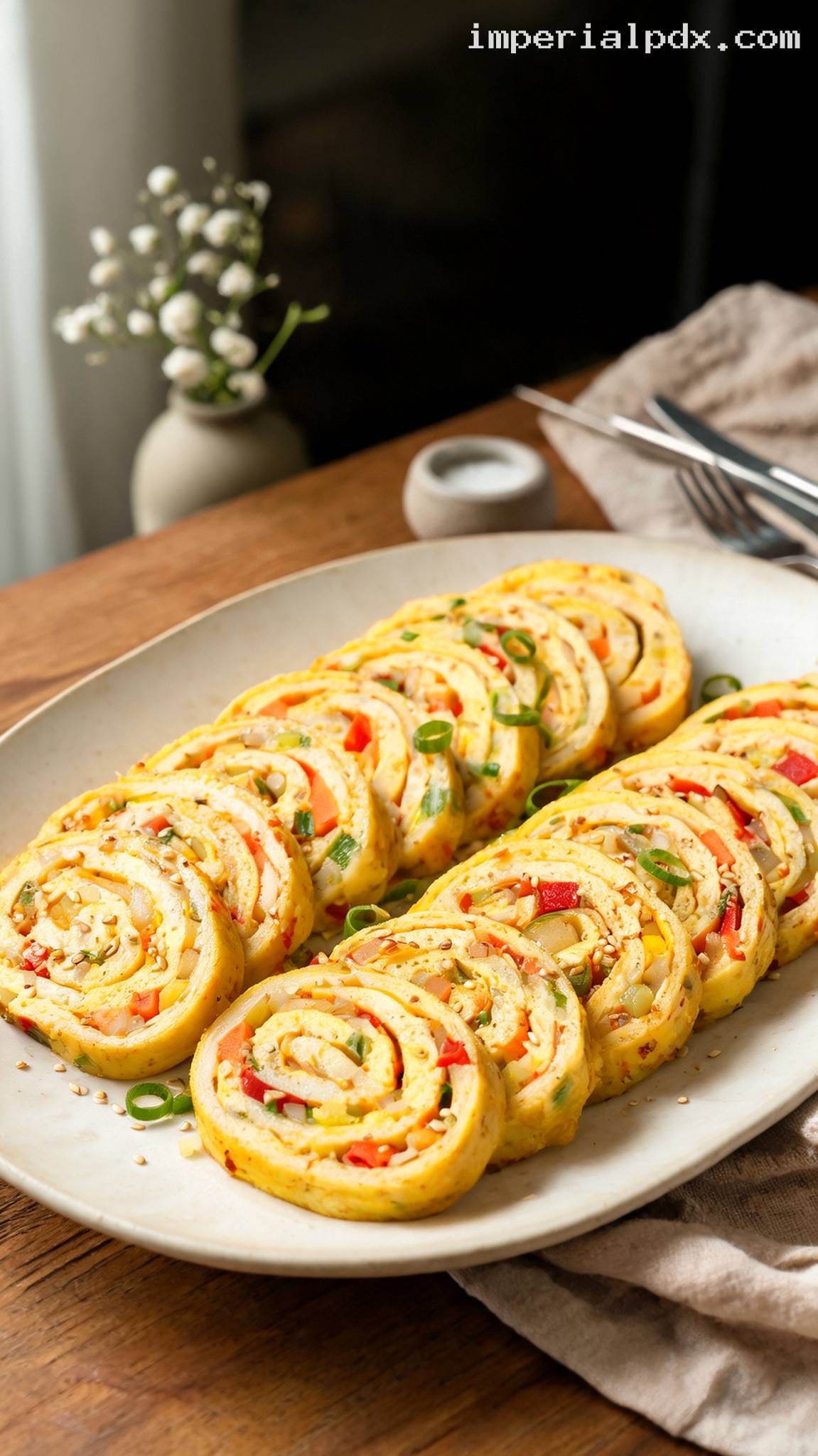
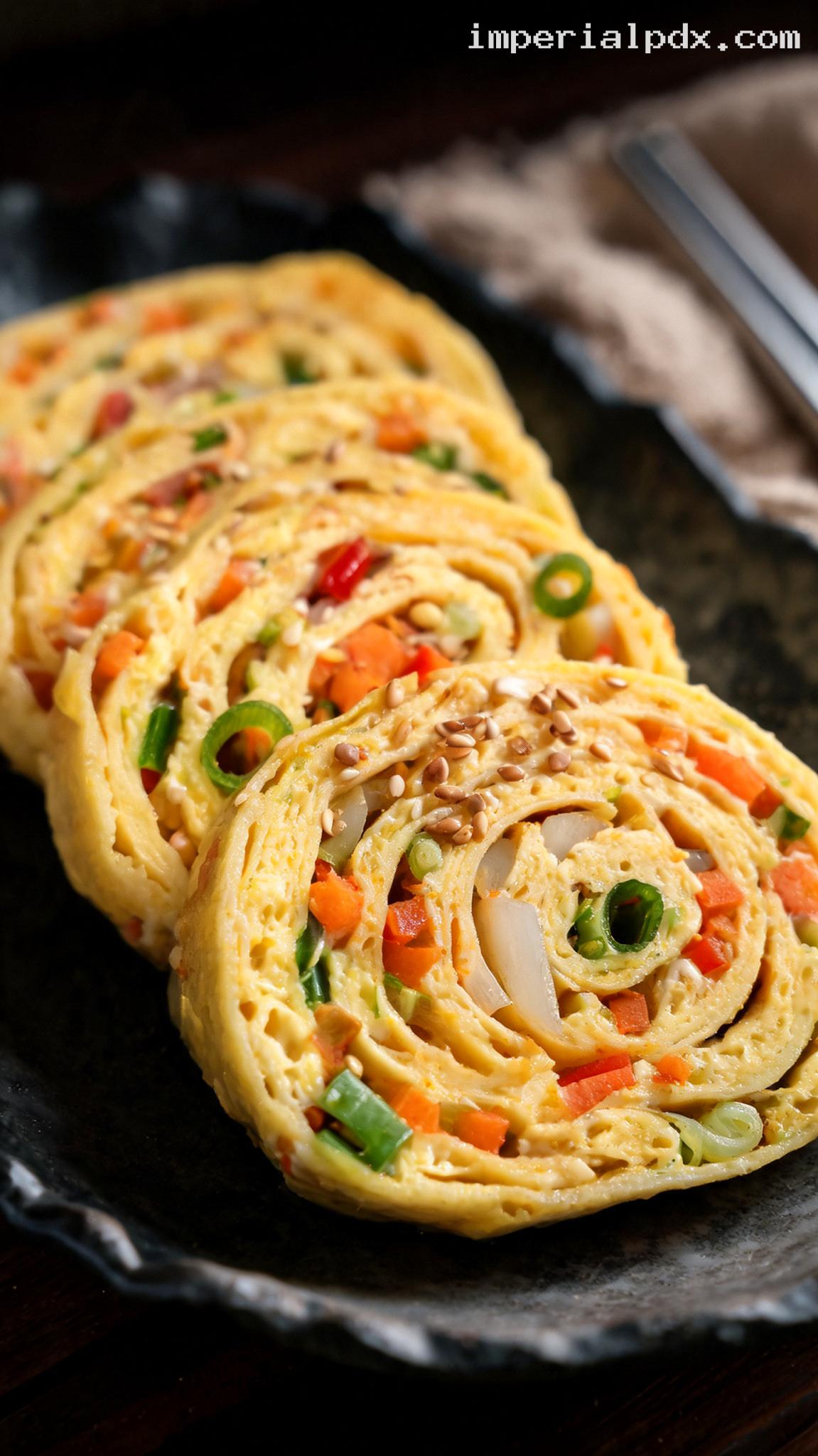
- Thin, tender egg layers surround colorful bits of carrot, scallion, onion, and red bell pepper.
- It is delicious warm or at room temperature, making it ideal for lunchboxes and make-ahead meals.
- The gently seasoned eggs pair easily with rice, soup, grilled meat, or other Korean side dishes.
- The rolling method looks impressive but becomes straightforward once the vegetables are finely chopped.
Grocery List
- Produce: 1 small carrot, 2 scallions, 1 small yellow onion, and 1 small red bell pepper
- Dairy: 6 large eggs
- Pantry: Kosher salt, ground white pepper, toasted sesame oil, neutral cooking oil, and toasted sesame seeds
Full Ingredients
Seasoned Egg Mixture
- 6 large eggs
- 2 tablespoons water
- 1/2 teaspoon kosher salt
- 1/8 teaspoon ground white pepper
- 1/2 teaspoon toasted sesame oil
Vegetables
- 1/4 cup finely minced carrot, about 35 grams
- 3 tablespoons finely chopped scallions, about 18 grams
- 2 tablespoons finely minced yellow onion, about 20 grams
- 2 tablespoons finely minced red bell pepper, about 20 grams
For Cooking and Finishing
- 2 teaspoons neutral cooking oil, such as avocado, canola, or grapeseed oil, divided into four 1/2-teaspoon portions
- 1 teaspoon toasted sesame seeds
Step-by-Step Instructions
Step 1: Prepare the vegetables
Peel the carrot and trim the scallions. Finely mince the carrot, scallions, yellow onion, and red bell pepper into pieces no larger than 1/8 inch. Small, evenly sized pieces cook quickly and prevent the delicate egg layers from tearing as they are rolled. If the vegetables seem wet, especially the onion or bell pepper, blot them gently with a clean kitchen towel or paper towel.
Step 2: Make the seasoned egg mixture
Crack the eggs into a medium bowl. Add the water, kosher salt, white pepper, and toasted sesame oil. Whisk gently for about 45 seconds, just until the whites and yolks are fully combined. Avoid whipping in excessive air, which can create bubbles and holes in the cooked layers. Stir in the carrot, scallions, onion, and red bell pepper until evenly distributed.
Step 3: Heat and oil the pan
Place a 10-inch nonstick skillet or rectangular Korean egg-roll pan over medium-low heat for 3 minutes. The cooking surface should reach approximately 300°F. Add 1/2 teaspoon of the neutral oil and spread it into a very thin coating with a folded paper towel held with tongs. The pan should be hot enough to set the eggs gently without sizzling aggressively or browning them.
Step 4: Cook and roll the first layer
Stir the egg mixture once to redistribute the vegetables, then pour approximately one-quarter of it, a scant 1/2 cup, into the skillet. Immediately tilt the pan so the egg forms a thin, even layer. Use chopsticks or a silicone spatula to move any concentrated vegetable pieces into bare areas.
Cook for 45 to 60 seconds, until the bottom is set but the surface remains slightly moist. Starting at the far edge of the pan, fold the egg toward the handle in sections about 1 1/2 inches wide. Continue folding until you have a compact log. A slightly moist surface helps the layers adhere to one another.
Step 5: Build the remaining layers
Use the spatula to push the rolled egg back to the far side of the skillet. Add another 1/2 teaspoon oil and spread it over the exposed pan. Pour in another quarter of the egg mixture, tilting the skillet to create a thin layer. Gently lift the existing roll so some of the uncooked egg flows beneath it.
Cook for 45 to 60 seconds, until the new layer is mostly set but still glossy on top. Roll the existing egg log toward the handle so the fresh layer wraps around it. Push the enlarged roll back to the far side. Repeat this process twice more with the remaining egg mixture and oil, stirring the mixture before each addition so the vegetables stay evenly distributed.
Step 6: Finish cooking and shape the roll
After the final layer is rolled, reduce the heat to low and cook the roll seam-side down for 1 minute. Rotate it carefully and cook each remaining side for about 30 seconds, using two spatulas to maintain a compact rectangular shape. The center should register 160°F on an instant-read thermometer. The exterior should remain pale golden-yellow rather than deeply browned.
Transfer the roll to a cutting board. For especially neat sides, wrap it snugly in parchment paper or place it inside a bamboo sushi mat and press gently into an even rectangular log. Do not squeeze hard enough to force out moisture.
Step 7: Rest, slice, and serve
Let the wrapped roll rest for exactly 5 minutes so the layers settle and the egg becomes easier to cut. Unwrap it and use a sharp knife to trim uneven ends if desired. Cut the roll crosswise into 12 slices, each approximately 1/2 to 3/4 inch thick. Arrange the slices cut-side up and sprinkle with the toasted sesame seeds. Serve warm or at room temperature as a side dish with rice, soup, or other Korean dishes.
Pro Tips
- Chop everything very finely: Vegetable pieces larger than 1/8 inch can make the egg layers split or create gaps in the finished roll.
- Keep the heat gentle: Maintain a pan temperature near 300°F. If the egg bubbles rapidly or browns in less than 45 seconds, lower the heat before adding the next layer.
- Roll while the surface is slightly moist: If each layer becomes completely dry, it will not bond as neatly to the next layer.
- Use a thin coating of oil: Excess oil makes the layers slippery. Spread each 1/2-teaspoon portion across the pan rather than leaving visible pools.
- Rest before slicing: Five minutes of resting helps the roll hold its shape and produces cleaner, more colorful cross-sections.
Variations
- Seaweed Gyeran Mari: Lay one 8-by-4-inch strip of roasted, unseasoned gim over the second egg layer just before rolling. Continue with the remaining layers as directed.
- Ham and Cheese: Replace the red bell pepper with 2 tablespoons finely diced cooked ham. Add 1/4 cup shredded low-moisture mozzarella or mild cheddar over the third layer before rolling.
- Spicy Vegetable: Add 1 teaspoon finely minced seeded jalapeño and 1 teaspoon gochugaru to the egg mixture. Reduce the carrot to 3 tablespoons so the filling remains easy to roll.
Storage & Make-Ahead
Cool leftover gyeran mari completely, then refrigerate it in an airtight container at 40°F or below for up to 3 days. Store the roll whole for the best moisture retention, or separate slices with parchment paper. Reheat slices in a covered skillet over low heat for 2 to 3 minutes, in a 275°F oven for 8 minutes, or in the microwave at 50 percent power for 30 to 45 seconds. For a lunchbox, pack the chilled slices with an ice pack and do not leave them at room temperature for more than 2 hours. The vegetables can be minced up to 24 hours ahead and refrigerated separately. Freezing is not recommended because thawed egg layers may become watery and rubbery.
Nutrition (per serving)
Calories: 150 kcal | Carbs: 3g | Protein: 10g | Fat: 11g | Saturated Fat: 3g | Fiber: 1g | Sugar: 1g | Sodium: 410mg | Cholesterol: 280mg