Quick Recipe Version (TL;DR)
Quick Ingredients
- Roasted figs: 1 pound fresh figs, 2 tablespoons honey, 1 tablespoon light brown sugar, 1 tablespoon lemon juice, 1/8 teaspoon fine sea salt
- Brown butter custard: 4 tablespoons unsalted butter, 2 cups heavy cream, 1 cup whole milk, 3/4 cup granulated sugar, 1/2 teaspoon fine sea salt, 5 large egg yolks, 1 teaspoon vanilla extract
- Honey swirl: 1/4 cup mild honey, 1 teaspoon lemon juice, 1/16 teaspoon fine sea salt
Do This
- 1. Freeze your ice cream maker bowl for at least 24 hours, then preheat the oven to 400°F.
- 2. Toss quartered figs with honey, brown sugar, lemon juice, and salt; roast for 18 to 22 minutes until jammy, then chill.
- 3. Brown the butter in a saucepan for 5 to 7 minutes until nutty and amber; transfer to a heatproof cup.
- 4. Make a custard with cream, milk, sugar, salt, and egg yolks; cook to 170°F to 175°F.
- 5. Strain the custard, whisk in the browned butter and vanilla, then chill for at least 4 hours.
- 6. Churn for 20 to 25 minutes, adding the chilled roasted figs near the end.
- 7. Layer the churned ice cream with the honey swirl, lightly ripple it, and freeze for at least 4 hours.
Why You’ll Love This Recipe
- Elegant but approachable: Brown butter adds a warm, nutty richness that makes classic vanilla-style ice cream feel instantly special.
- Roasted figs become naturally jammy: Roasting concentrates their sweetness and prevents watery, icy fruit chunks.
- The honey swirl stays soft: A small ribbon of honey gives each scoop a glossy, floral sweetness without overpowering the custard.
- Perfect for dinner parties: It feels restaurant-worthy, but every step is manageable with basic home kitchen tools.
Grocery List
- Produce: 1 pound fresh ripe figs, 2 lemons
- Dairy: Unsalted butter, heavy cream, whole milk, large eggs
- Pantry: Granulated sugar, light brown sugar, mild honey, fine sea salt, pure vanilla extract
Full Ingredients
For the Roasted Figs
- 1 pound fresh ripe figs, about 12 to 16 small or medium figs, stemmed and quartered
- 2 tablespoons mild honey
- 1 tablespoon packed light brown sugar
- 1 tablespoon fresh lemon juice
- 1/8 teaspoon fine sea salt
For the Brown Butter Custard Base
- 4 tablespoons unsalted butter, cut into 4 pieces
- 2 cups heavy cream
- 1 cup whole milk
- 3/4 cup granulated sugar, divided
- 1/2 teaspoon fine sea salt
- 5 large egg yolks
- 1 teaspoon pure vanilla extract
For the Honey Swirl
- 1/4 cup mild honey, such as clover, wildflower, or orange blossom honey
- 1 teaspoon fresh lemon juice
- 1/16 teaspoon fine sea salt, or a very small pinch
Optional for Serving
- Fresh fig slices or a few reserved roasted fig pieces
- 1 to 2 teaspoons additional honey for drizzling
Step-by-Step Instructions
Step 1: Freeze the equipment and prepare the oven
If using a canister-style ice cream maker, freeze the canister for at least 24 hours before churning. Place a 1 1/2-quart freezer-safe container or metal loaf pan in the freezer so it is cold when the ice cream is ready. Preheat the oven to 400°F (200°C) and line a rimmed baking sheet with parchment paper.
Step 2: Roast the figs until thick and jammy
Place the quartered figs on the prepared baking sheet. Drizzle with 2 tablespoons honey and 1 tablespoon lemon juice, then sprinkle with the light brown sugar and 1/8 teaspoon salt. Toss gently with a spoon or clean hands until the figs are coated.
Roast for 18 to 22 minutes, stirring once halfway through, until the figs have softened, collapsed slightly, and released a glossy purple-red syrup. The edges should look concentrated and lightly caramelized, not dry or burned. Let the figs cool on the pan for 15 minutes, then scrape the fruit and syrup into a bowl. Lightly mash with a fork, leaving small pieces about 1/4 to 1/2 inch wide. Refrigerate until completely cold, at least 30 minutes.
Step 3: Brown the butter for a nutty base
Place the butter in a medium heavy-bottomed saucepan over medium heat. Cook for 5 to 7 minutes, swirling the pan often. The butter will melt, foam, quiet down, and then the milk solids at the bottom will turn golden brown. As soon as it smells nutty and looks amber with toasted brown specks, remove the pan from the heat.
Immediately pour the browned butter, including the toasted bits, into a heatproof cup or small bowl. Do not leave it in the hot pan, as it can continue cooking and burn. Set aside while you begin the custard.
Step 4: Make the custard base
In the same saucepan, combine the heavy cream, whole milk, 1/2 cup of the granulated sugar, and 1/2 teaspoon fine sea salt. Warm over medium heat for 5 to 7 minutes, stirring occasionally, until the mixture is steaming and reaches about 165°F. It should be hot but not boiling.
Meanwhile, in a medium bowl, whisk the egg yolks with the remaining 1/4 cup granulated sugar for about 1 minute, until slightly thickened and lighter in color. Slowly ladle about 1 cup of the hot cream mixture into the yolks while whisking constantly. This gently warms the eggs so they do not scramble.
Pour the tempered egg mixture back into the saucepan. Cook over medium-low heat, stirring constantly with a heatproof spatula and scraping the bottom and corners of the pan, until the custard reaches 170°F to 175°F, about 6 to 8 minutes. The custard should coat the back of a spoon, and a line drawn through it with your finger should hold. Do not let it boil.
Step 5: Strain, emulsify, and chill the custard
Pour the hot custard through a fine-mesh strainer into a clean heatproof bowl. Slowly whisk in the browned butter and all of the toasted brown bits, followed by the vanilla extract. For the smoothest texture, blend the mixture with an immersion blender for 20 to 30 seconds, keeping the blade fully submerged to avoid splashing.
Set the bowl in an ice bath and stir occasionally until the custard cools below 70°F, about 15 to 20 minutes. Cover and refrigerate until thoroughly chilled, at least 4 hours or up to overnight. The base should be 40°F or colder before churning for the best volume and texture.
Step 6: Prepare the honey swirl
In a small bowl, stir together 1/4 cup honey, 1 teaspoon lemon juice, and 1/16 teaspoon fine sea salt until smooth. If your honey is very thick, warm it for 5 to 10 seconds in the microwave just to loosen it, then let it return to room temperature before using. The swirl should be fluid but not warm, or it can melt the freshly churned ice cream.
Step 7: Churn the ice cream and add the figs
Stir the chilled custard well. Pour it into your ice cream maker and churn according to the manufacturer’s instructions until it reaches a thick soft-serve consistency, usually 20 to 25 minutes. During the final 1 to 2 minutes of churning, add the chilled roasted figs and their syrup. If your machine is very full, transfer the churned ice cream to a cold bowl and fold the figs in by hand instead.
Step 8: Layer the honey swirl and freeze until scoopable
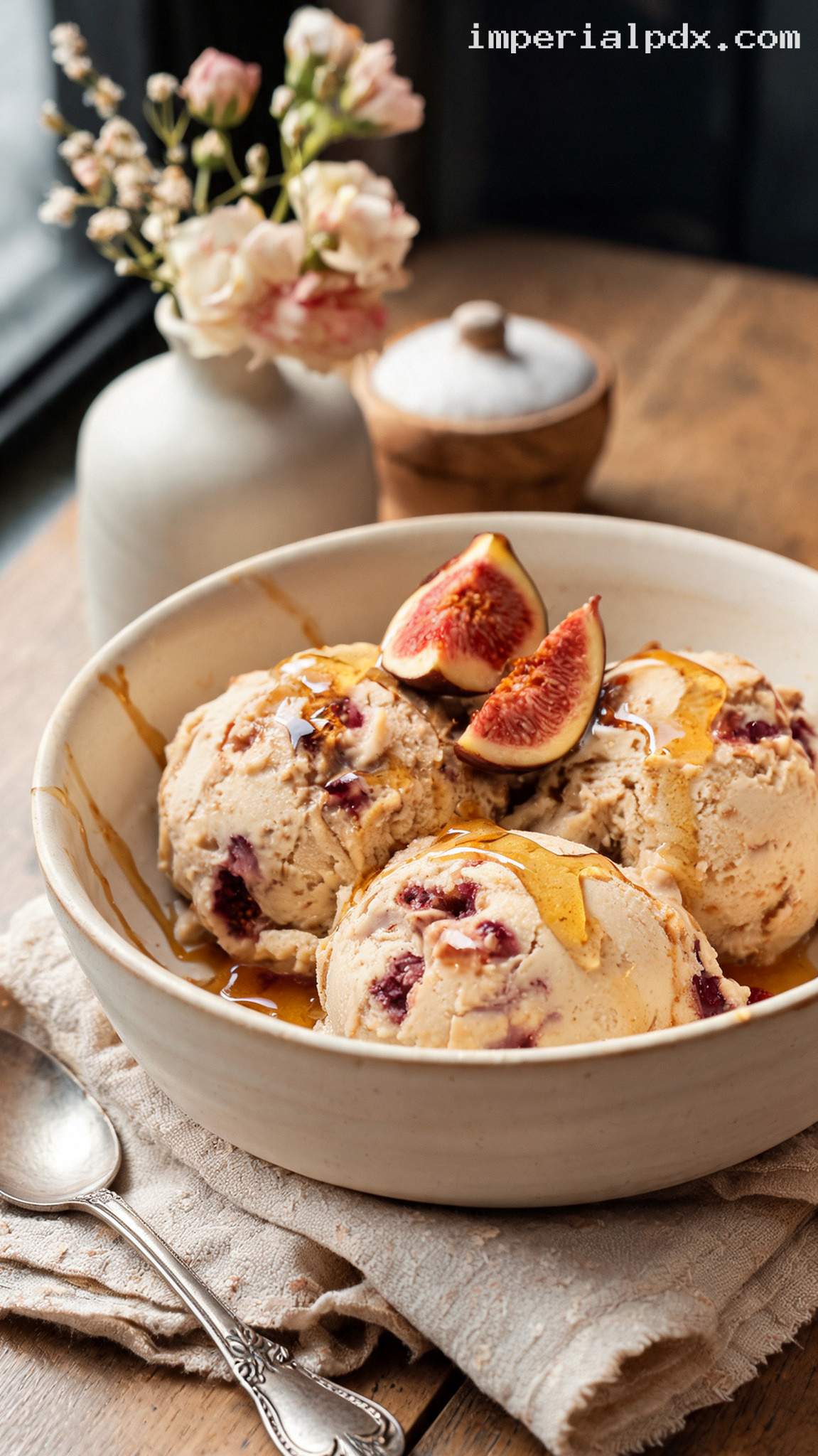
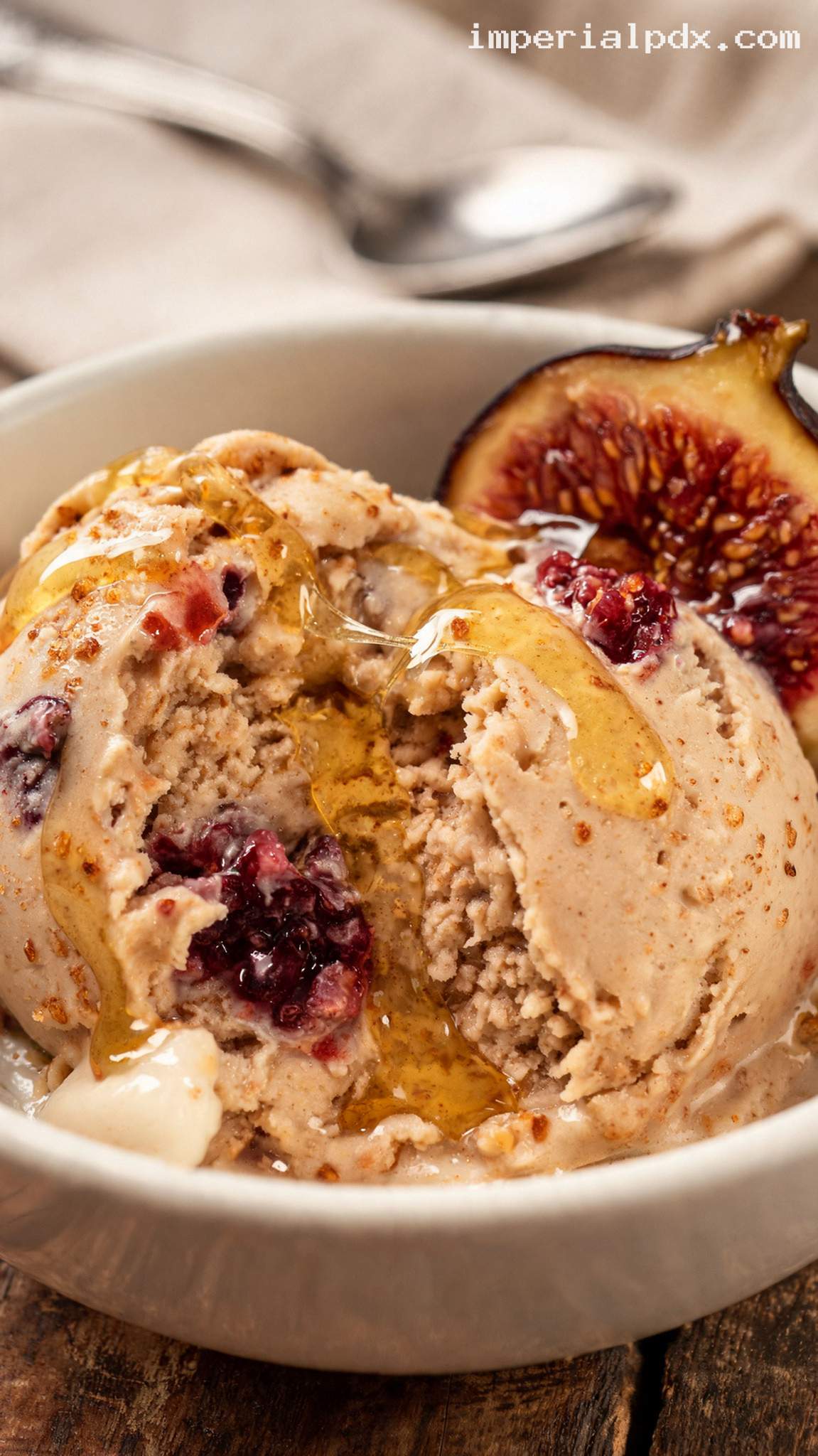
Spoon one third of the churned ice cream into the chilled storage container. Drizzle with about 1 tablespoon of the honey swirl. Repeat with two more layers of ice cream and honey. Use a butter knife or skewer to make 2 or 3 gentle figure-eight motions through the mixture. Stop early; over-swirling will blend the honey into the base instead of leaving delicate ribbons.
Press a piece of parchment paper or plastic wrap directly onto the surface of the ice cream, then cover with a lid or wrap tightly. Freeze at 0°F for at least 4 hours, or until firm enough to scoop.
Step 9: Serve with a short rest
For the creamiest texture, let the ice cream sit at room temperature for 5 to 10 minutes before scooping. Serve in chilled bowls with a few fresh fig slices, a tiny drizzle of honey, or a small spoonful of reserved roasted figs if you like.
Pro Tips
- Use a thermometer for the custard: Pull it from the heat at 170°F to 175°F. Below that, it may taste thin; above 180°F, the eggs can curdle.
- Roast the figs thoroughly: Watery fruit can turn icy in frozen desserts. The figs should look thick, sticky, and syrupy before chilling.
- Do not rush the chill: A very cold base churns faster and traps more air, giving the ice cream a smoother, lighter texture.
- Watch the butter closely: Brown butter can go from deeply nutty to burnt in seconds. Remove it from the pan as soon as the specks are amber-brown.
- Keep the honey swirl cool: Warm honey melts the ice cream and makes the layers muddy. Room temperature or slightly cool honey is ideal.
Variations
- Brown Butter Fig Walnut Ice Cream: Fold in 1/2 cup toasted chopped walnuts during the final minute of churning for a crunchy, baklava-like finish.
- Fig Balsamic Honey Swirl: Replace the lemon juice in the honey swirl with 1 teaspoon aged balsamic vinegar for a tangy, sophisticated ribbon.
- Rosemary Fig Ice Cream: Add 1/2 teaspoon very finely chopped fresh rosemary to the figs before roasting. Use a light hand so the herb stays delicate.
Storage & Make-Ahead
Store the ice cream in an airtight freezer-safe container with parchment paper or plastic wrap pressed directly against the surface. It is best within 1 week and still very good for up to 2 weeks. For make-ahead prep, roast the figs up to 3 days in advance and keep them refrigerated, make the custard base up to 24 hours in advance, and stir together the honey swirl up to 1 week ahead. If the ice cream becomes very firm, let it soften at room temperature for 5 to 10 minutes before scooping. Do not refreeze fully melted ice cream.
Nutrition (per serving)
Calories: 480 kcal | Carbs: 48g | Protein: 4g | Fat: 32g | Saturated Fat: 19g | Fiber: 2g | Sugar: 46g | Sodium: 200mg | Cholesterol: 215mg