Quick Recipe Version (TL;DR)
Quick Ingredients
- 3 large eggs, about 150 g without shells
- 1/8 teaspoon fine sea salt
- 1/16 teaspoon ground white pepper, optional
- 1 tablespoon finely chopped fine herbs, divided: chives, parsley, chervil, and tarragon
- 1 tablespoon unsalted butter, divided
Do This
- 1. Chop the herbs very finely; set aside 1 teaspoon for finishing and keep 2 teaspoons for the eggs.
- 2. Beat the eggs with salt and white pepper for 20 to 30 seconds, just until no streaks remain, then stir in 2 teaspoons herbs.
- 3. Heat an 8-inch nonstick skillet over medium-low heat until the pan surface is about 275°F to 300°F.
- 4. Melt 2 teaspoons butter in the pan until foamy but not browned, about 20 to 30 seconds.
- 5. Add the eggs and stir constantly with a rubber spatula while gently shaking the pan for 30 to 45 seconds, forming tiny soft curds.
- 6. Smooth the eggs into an even layer, let the bottom set for 15 to 30 seconds, then roll the omelet into thirds.
- 7. Slide onto a warm plate seam-side down, brush with the remaining 1 teaspoon butter, sprinkle with the reserved herbs, and serve immediately.
Why You’ll Love This Recipe
- Elegant but simple: Just eggs, butter, herbs, and a few minutes of gentle cooking.
- Custardy center: The quick stirring and low heat create a tender, soft interior without browning.
- Fresh herb flavor: Classic fine herbs make the omelet taste bright, delicate, and unmistakably French.
- Perfect for one: This is a lovely breakfast, brunch, or light supper that feels special without being fussy.
Grocery List
- Produce: Fresh chives, fresh flat-leaf parsley, fresh chervil or extra parsley, fresh tarragon
- Dairy: Large eggs, unsalted butter
- Pantry: Fine sea salt, ground white pepper
Full Ingredients
For the Omelet
- 3 large eggs, about 150 g without shells
- 1/8 teaspoon fine sea salt
- 1/16 teaspoon ground white pepper, optional but traditional for a pale, smooth omelet
- 2 teaspoons finely chopped fine herbs, from the herb blend below
- 2 teaspoons unsalted butter, for cooking
Fine Herb Blend
- 1 1/2 teaspoons finely chopped fresh chives
- 3/4 teaspoon finely chopped fresh flat-leaf parsley
- 1/2 teaspoon finely chopped fresh chervil, or substitute more parsley if unavailable
- 1/4 teaspoon finely chopped fresh tarragon
For Finishing
- 1 teaspoon unsalted butter, softened or cut into a small piece
- 1 teaspoon reserved finely chopped fine herbs
- 1 small pinch fine sea salt, optional, for the top
Recommended Equipment
- 8-inch nonstick skillet, ideally with gently sloped sides
- Rubber or silicone spatula
- Small bowl and fork or whisk
- Warm serving plate
Step-by-Step Instructions
Step 1: Prepare the herbs and warm the plate
Finely chop the chives, parsley, chervil, and tarragon. The pieces should be tiny so they blend smoothly into the eggs instead of creating rough patches in the omelet. Measure out 1 tablespoon total chopped herbs. Set aside 1 teaspoon for finishing, and keep the remaining 2 teaspoons for the eggs.
Place your serving plate in a 200°F oven for 3 to 5 minutes, or rinse it with hot water and dry it well. A warm plate helps the delicate omelet stay soft and cozy while you finish it with butter and herbs.
Step 2: Beat the eggs gently
Crack 3 large eggs into a small bowl. Add 1/8 teaspoon fine sea salt and 1/16 teaspoon white pepper, if using. Beat with a fork or small whisk for 20 to 30 seconds, until the yolks and whites are fully combined and no clear streaks remain.
Avoid beating until foamy. For a French omelet, you want the eggs evenly mixed but not airy. Stir in 2 teaspoons of the chopped herbs just before cooking.
Step 3: Heat the pan without rushing
Set an 8-inch nonstick skillet over medium-low heat for about 1 1/2 to 2 minutes. If using an infrared thermometer, aim for a pan surface temperature of 275°F to 300°F. The pan should be warm enough to melt butter promptly but not so hot that the butter browns or the eggs sizzle aggressively.
Add 2 teaspoons unsalted butter. Let it melt and foam, swirling the pan so the bottom and lower sides are evenly coated. This should take 20 to 30 seconds. If the butter begins to brown, wipe out the pan, lower the heat slightly, and start again with fresh butter.
Step 4: Cook while stirring for tiny tender curds
Pour the egg mixture into the pan. Immediately begin stirring with a rubber spatula in small, quick circles while gently shaking the pan back and forth. Continue for 30 to 45 seconds. The eggs should thicken into very small, creamy curds, similar to loose soft scrambled eggs.
Keep the heat gentle. If the eggs are setting too fast or sticking, lift the pan off the heat for 5 to 10 seconds while continuing to stir. The goal is a smooth, pale exterior and a center that stays glossy and custardy.
Step 5: Smooth the surface and set the bottom
When the eggs are mostly thickened but still wet and glossy on top, stop stirring. Use the spatula to spread the eggs into an even layer across the pan, filling any gaps. Let the omelet sit over medium-low heat for 15 to 30 seconds, just until the bottom is set enough to move as one piece.
The top should still look slightly moist. A French omelet should not be browned; if you see golden color forming, the pan is a little too hot. Remove it from the heat briefly and continue with the rolling step.
Step 6: Roll the omelet into a soft oval
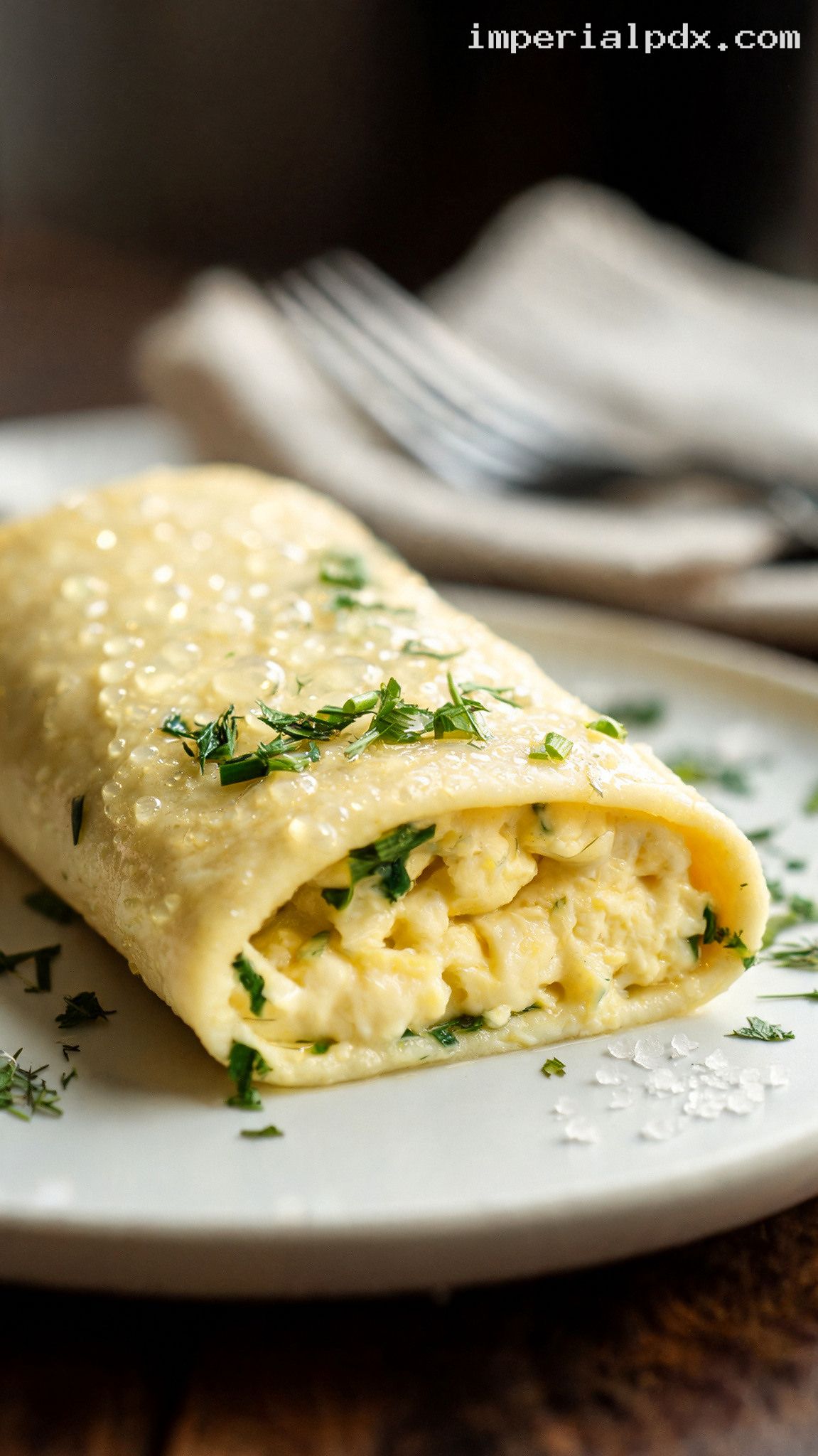
Tilt the skillet slightly away from you. Using the spatula, loosen the edge closest to you and fold it about one-third of the way over the center. Then gently nudge and roll the omelet toward the far side of the pan, folding it into a neat log or oval.
If you prefer the classic French presentation, tap the handle lightly with your free hand as you roll, helping the omelet settle into a smooth shape. Do not worry if it is not perfect; even a slightly rustic French omelet is delicious when it is soft, pale, and tender.
Step 7: Plate seam-side down
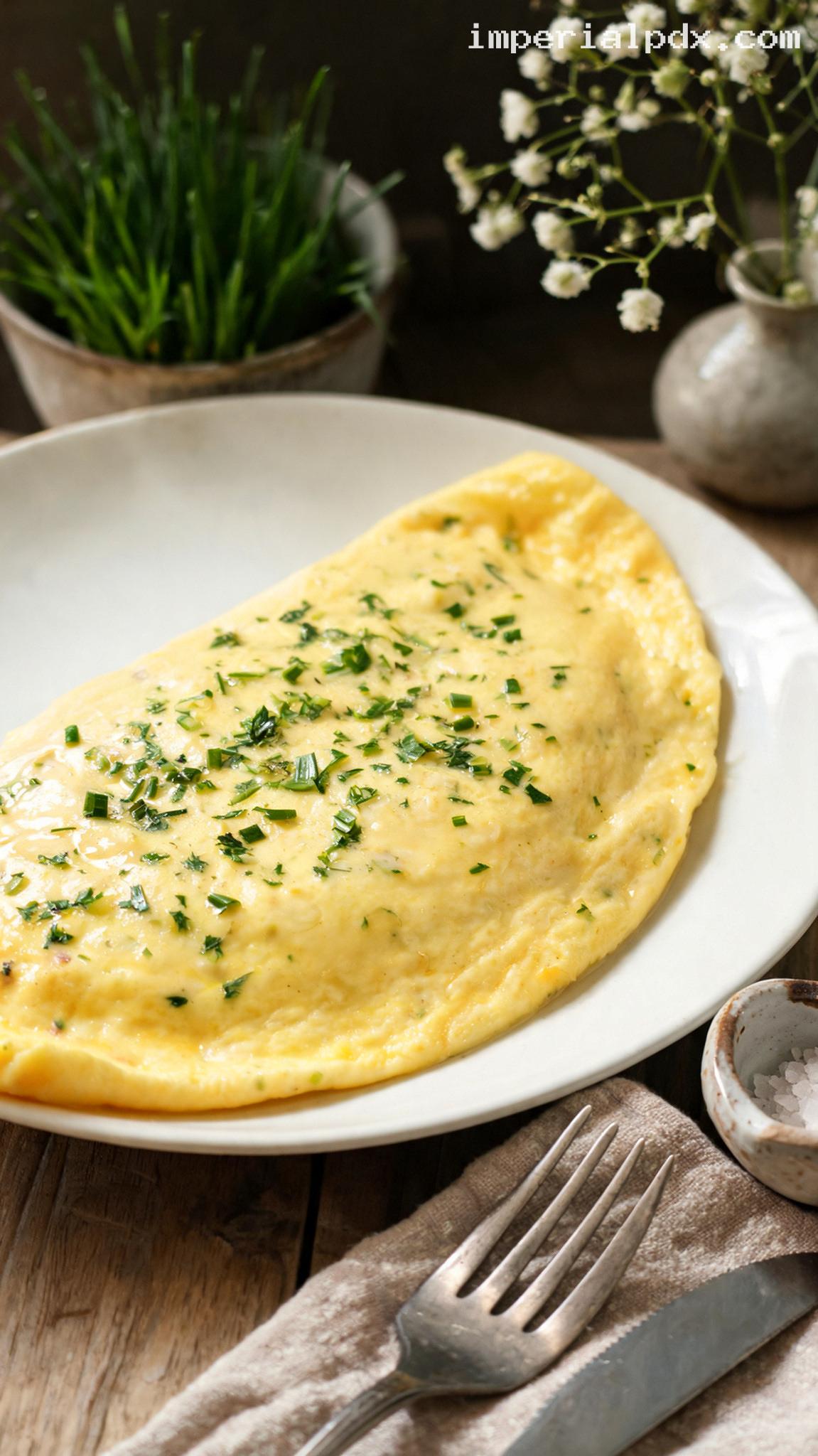
Hold the warm plate close to the skillet. Tilt the pan and slide the omelet onto the plate seam-side down. If needed, use the spatula to gently tuck the ends underneath, creating a smooth, elegant oval shape.
The outside should look satiny and pale yellow, with no browning. The center should be soft and custardy, not runny. For food safety, if you are cooking for someone who is pregnant, elderly, immunocompromised, or very young, cook the eggs until fully set and they reach 160°F in the center.
Step 8: Finish with butter and fresh herbs
While the omelet is still hot, rub or brush the remaining 1 teaspoon unsalted butter over the top. It will melt into a glossy finish and give the omelet its classic shine. Sprinkle with the reserved 1 teaspoon fine herbs and, if desired, a tiny pinch of fine sea salt.
Serve immediately. French omelets are at their best within the first minute or two after cooking, while the exterior is tender and the center is still creamy.
Pro Tips
- Use low, steady heat: A French omelet should cook gently. Browning means the pan is too hot.
- Choose the right pan: An 8-inch nonstick skillet is ideal for 3 eggs. A larger pan will make the omelet too thin and harder to roll.
- Chop herbs very finely: Fine herbs should perfume the eggs without interrupting the smooth texture.
- Do not add milk or cream: The custardy texture comes from gentle heat, stirring, and butter, not extra liquid.
- Serve right away: This omelet is meant to be eaten immediately, before the residual heat firms the center too much.
Variations
- Soft cheese center: Add 1 tablespoon room-temperature goat cheese, Boursin, or crème fraîche in a thin line before rolling. Keep it light so the omelet still rolls cleanly.
- Chive-only omelet: Use 1 tablespoon finely chopped fresh chives in place of the mixed fine herbs for a simpler, very classic flavor.
- Light mushroom version: Spoon 2 tablespoons finely chopped sautéed mushrooms into the center before rolling. Make sure the mushrooms are cooked dry so they do not make the omelet watery.
Storage & Make-Ahead
A French omelet is best cooked and served immediately; its delicate, custardy texture does not improve with storage. For prep-ahead convenience, chop the herbs up to 1 day in advance, wrap them in a barely damp paper towel, place them in an airtight container, and refrigerate. You can also measure the butter and set out your pan and plate before cooking.
If you have leftovers from a fully cooked omelet, refrigerate them in an airtight container within 2 hours and use within 1 day. Reheat gently in a covered skillet over low heat for 2 to 3 minutes or in a 250°F oven for 5 to 7 minutes. The texture will be firmer after reheating, so this recipe is truly at its best fresh from the pan.
Nutrition (per serving)
Approximate nutrition for 1 omelet made with 3 large eggs and 1 tablespoon unsalted butter: 315 calories, 19 g protein, 1 g carbohydrates, 25 g fat, 11 g saturated fat, 0 g fiber, 1 g sugar, 510 mg sodium, and 560 mg cholesterol.