Quick Recipe Version (TL;DR)
Quick Ingredients
- 1 beef brisket point, 4–5 lb
- 2 tbsp yellow mustard (binder)
- 3 tbsp kosher salt, 1 tbsp coarse black pepper, 2 tsp smoked paprika, 2 tsp garlic powder, 2 tsp onion powder, 2 tsp chili powder, 1 tsp mustard powder, 1/4 tsp cayenne
- 1/2 cup apple juice + 1/2 cup apple cider vinegar (spritz)
- 6 tbsp unsalted butter, sliced
- 1/3 cup packed dark brown sugar
- 1 1/2 cups thick Kansas City–style BBQ sauce
- 2 tbsp molasses (for extra molasses-forward flavor)
Do This
- 1. Heat smoker to 250°F; add oak or hickory.
- 2. Trim point; coat with mustard; apply rub; smoke until bark is set and internal temp is 165–170°F (about 4–6 hours), spritzing every 45–60 minutes.
- 3. Wrap in butcher paper or foil; cook until probe-tender at 195–203°F (about 1 1/2–2 1/2 hours more).
- 4. Rest 30 minutes; cube into 1 1/2-inch pieces; toss with a light dusting of rub.
- 5. Pan with butter + brown sugar + BBQ sauce + molasses; return to smoker at 275°F, covered 30 minutes, then uncovered 45–75 minutes, tossing once or twice.
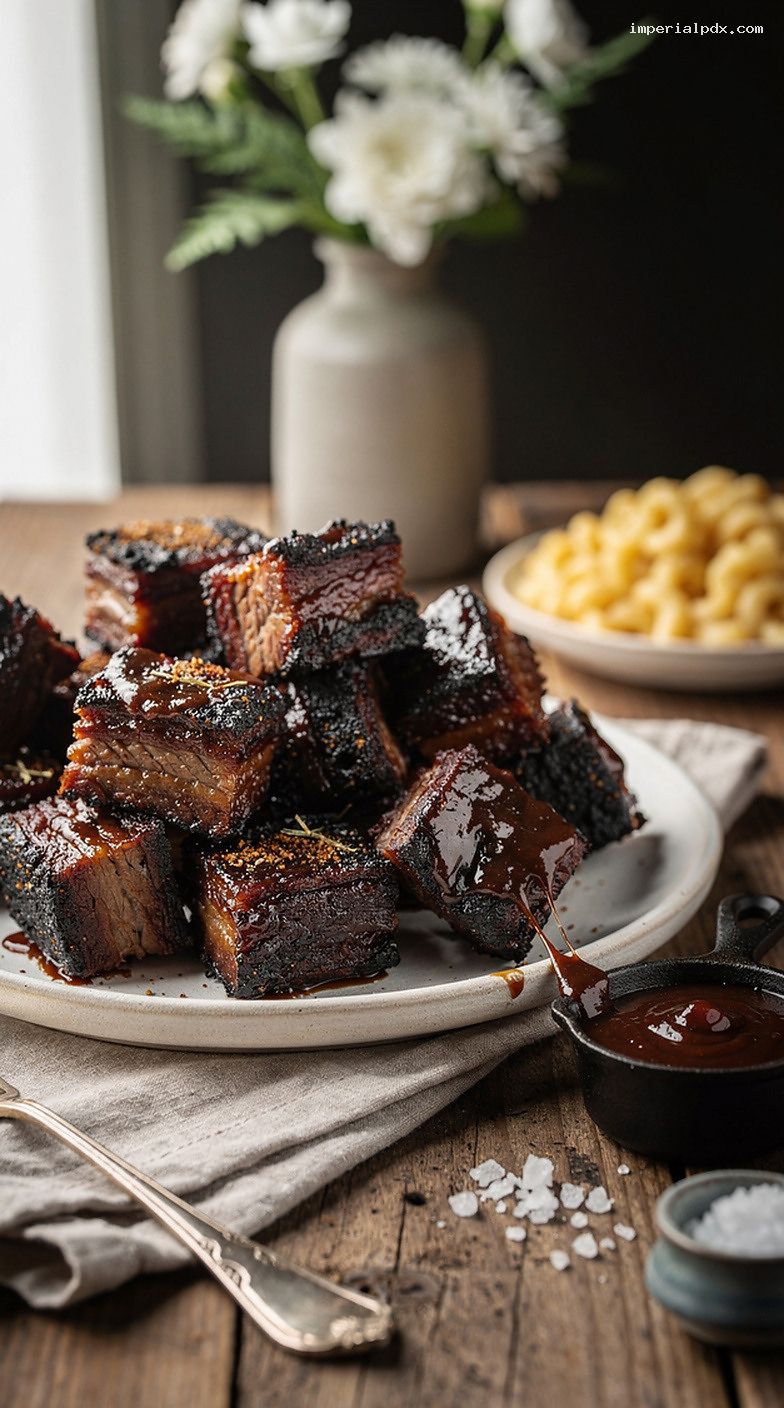
- 6. Serve when cubes are barky, sticky, and melt-in-your-mouth; perfect for toothpicks or over mac and cheese.
Why You’ll Love This Recipe
- True Kansas City style: smoky brisket + a thick, sweet, molasses-forward glaze that turns lacquered and sticky in the pit.
- Two-stage cook = perfect texture: first you build bark, then you braise-glaze in a pan until buttery tender.
- Party-friendly: easy finger food with toothpicks, and also incredible piled onto mac and cheese or baked potatoes.
- Home-cook approachable: clear temps and cues so you can nail it on a pellet grill, offset, or kettle setup.
Grocery List
- Produce: none required (optional garnish: 2 tbsp sliced green onions or chopped parsley)
- Dairy: 6 tbsp unsalted butter
- Meat: 1 beef brisket point (4–5 lb)
- Pantry: yellow mustard, kosher salt, coarse black pepper, smoked paprika, garlic powder, onion powder, chili powder, mustard powder, cayenne pepper, dark brown sugar, Kansas City–style BBQ sauce (thick), molasses, apple juice, apple cider vinegar
Full Ingredients
Brisket
- Beef brisket point: 1 (4–5 lb)
- Yellow mustard (binder): 2 tbsp
Burnt Ends Rub
- Kosher salt: 3 tbsp
- Coarse black pepper: 1 tbsp
- Smoked paprika: 2 tsp
- Garlic powder: 2 tsp
- Onion powder: 2 tsp
- Chili powder: 2 tsp
- Mustard powder: 1 tsp
- Cayenne pepper: 1/4 tsp
Spritz (Optional but Helpful)
- Apple juice: 1/2 cup
- Apple cider vinegar: 1/2 cup
Sticky Pan Glaze
- Unsalted butter: 6 tbsp, sliced into pats
- Dark brown sugar: 1/3 cup, packed
- Thick Kansas City–style BBQ sauce: 1 1/2 cups
- Molasses: 2 tbsp
Optional for Serving
- Cooked mac and cheese: 6–8 cups (to serve burnt ends on top)
- Green onions or parsley: 2 tbsp, sliced/chopped (garnish)
- Extra BBQ sauce: 1/4 cup (for drizzling)
Step-by-Step Instructions
Step 1: Trim the brisket point for even cooking
Pat the brisket point dry with paper towels. Trim any hard, waxy fat and silver skin that won’t render. Leave a smooth fat cap of about 1/4 inch where it makes sense; too much exterior fat will block bark and keep your glaze from clinging later.
If you have time, season the trimmed brisket point with 1 tbsp of the rub (pulled from the rub mix below), set it on a tray, and refrigerate uncovered for 8–24 hours. This optional dry-brine boosts flavor and bark.
Step 2: Preheat the smoker and mix your spritz
Preheat your smoker to 250°F. Add wood (oak and hickory are classic for Kansas City flavor). Plan for steady heat and clean smoke.
In a spray bottle, combine 1/2 cup apple juice and 1/2 cup apple cider vinegar. Set aside.
Step 3: Season the brisket point
Rub the brisket point all over with 2 tbsp yellow mustard as a thin binder (it won’t taste like mustard after smoking; it just helps the rub stick).
Mix the rub ingredients together, then season the brisket generously on all sides. Use all of the rub for maximum bark, or reserve 1–2 tsp for the cubes later if you prefer a lighter salt level.
Step 4: Smoke to set the bark (the “first smoke”)
Place the brisket point on the smoker grates. Smoke at 250°F until the bark looks deep mahogany and doesn’t wipe off when you touch it lightly, and the internal temperature in the thickest part reads 165–170°F. This typically takes 4–6 hours, depending on your cooker and the shape of the point.
After the first 90 minutes, spritz lightly every 45–60 minutes to help the surface stay tacky and build bark. Don’t over-spray; a light mist is plenty.
Step 5: Wrap and cook until probe-tender
Wrap the brisket point tightly in butcher paper (best for bark) or heavy-duty foil (faster and a bit softer bark). Return it to the smoker at 250°F.
Continue cooking until a thermometer probe slides in with very little resistance and the internal temperature is typically 195–203°F, about 1 1/2–2 1/2 hours more. Temperature is a guide; tenderness is the real finish line.
Step 6: Rest, then cube into burnt-end bites
Rest the wrapped brisket point on the counter for 30 minutes (still wrapped). This helps the juices settle so the cubes stay moist.
Unwrap and cut into 1 1/2-inch cubes. Transfer cubes to a large bowl. Sprinkle with 1–2 tsp of rub (or more to taste), then toss gently to coat.
Step 7: Pan-glaze with butter, brown sugar, and molasses-forward BBQ sauce
Raise the smoker temperature to 275°F.
In a disposable aluminum pan (9×13-inch works well), add 6 tbsp butter (in pats) and 1/3 cup packed dark brown sugar. Add the cubed brisket. In a bowl, stir together 1 1/2 cups BBQ sauce and 2 tbsp molasses, then pour it over the cubes.
Toss gently to coat. Cover the pan tightly with foil and return it to the smoker for 30 minutes to get everything bubbling and tender.
Step 8: Uncover and set the glaze until sticky and barky
Remove the foil and keep cooking at 275°F for 45–75 minutes, stirring and re-coating the cubes once or twice. You’re looking for:
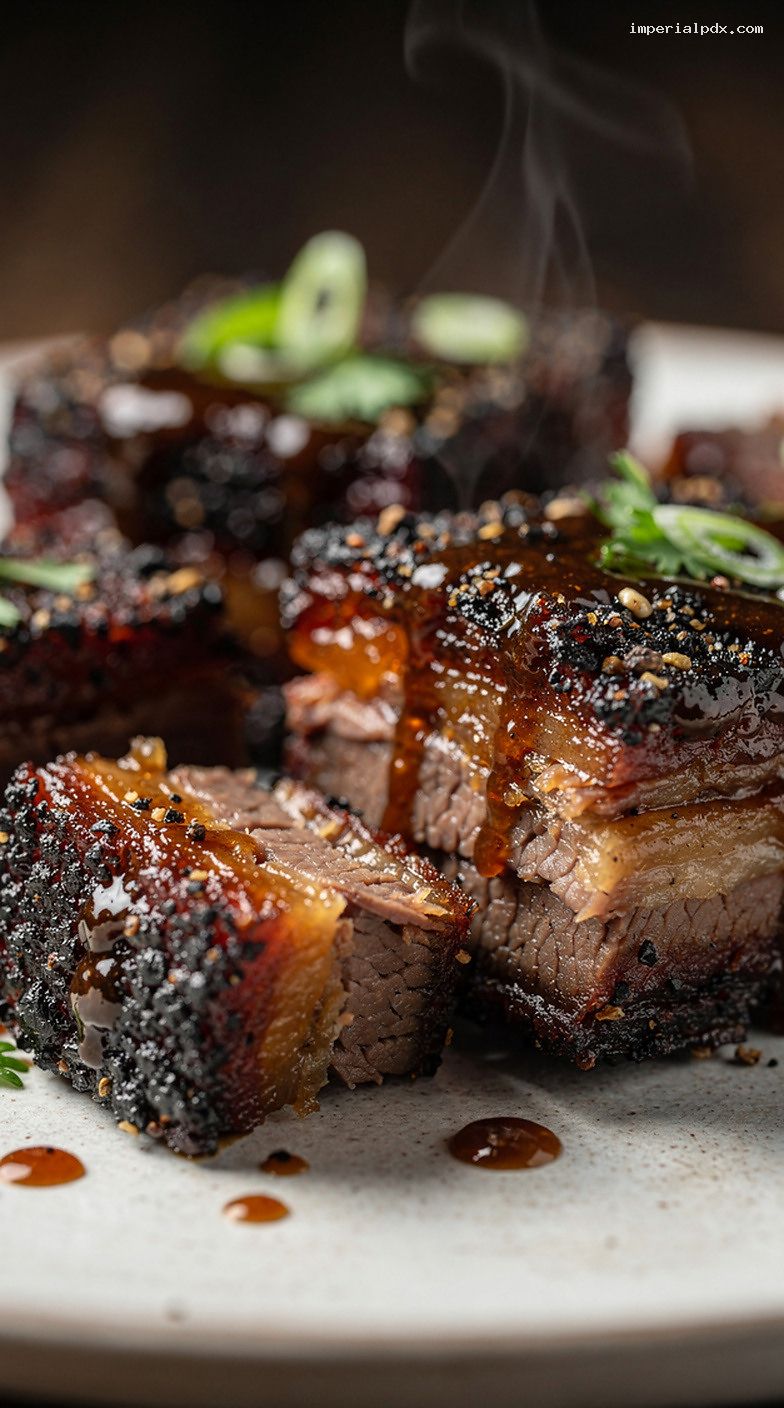
- Sticky, lacquered sauce that clings thickly to each cube (not thin and soupy).
- Dark edges where the sauce caramelizes onto the bark.
- Melt-in-your-mouth tenderness when you bite through (often the cubes will be around 200–210°F internally, but go by feel).
If the pan looks dry at any point, add 2–4 tbsp more BBQ sauce and toss. If it looks too wet near the end, keep it uncovered and let it reduce for another 10–15 minutes.
Pro Tips
- Choose the point, not the flat: the brisket point has more fat and connective tissue, which is what makes burnt ends luscious instead of dry.
- Don’t rush the bark stage: if you cube too early (before bark sets), the sauce can wash everything off and the bites taste pot-roasty instead of smoky and crusty.
- Foil = faster, paper = barkier: butcher paper helps preserve bark. Foil speeds cooking but softens bark; it’s still delicious for burnt ends because you’ll re-bark in the final stage.
- Keep cubes uniform: aim for 1 1/2-inch pieces so everything finishes at the same time.
- Finish uncovered: the uncovered stage is where the glaze becomes sticky and the edges caramelize.
Variations
- Spicy Kansas City burnt ends: add 1–2 tsp hot sauce to the pan glaze and increase cayenne to 1/2 tsp.
- Honey-molasses glaze: replace 2 tbsp of the BBQ sauce with 2 tbsp honey for a shinier, slightly floral sweetness.
- “Over mac” party tray: spread 6–8 cups hot mac and cheese in a baking dish, top with burnt ends, then drizzle with 2–4 tbsp warm BBQ sauce.
Storage & Make-Ahead
Cool leftovers to room temperature for no more than 2 hours, then refrigerate in an airtight container. Store for up to 4 days.
To reheat, place burnt ends in a small baking dish with 2–3 tbsp extra BBQ sauce (or a splash of water), cover with foil, and warm at 300°F for 20–30 minutes, stirring once halfway through. For a stickier finish, uncover for the last 5 minutes.
Make-ahead option: smoke the brisket point through the tender stage (to 195–203°F), cool, refrigerate (wrapped) up to 24 hours, then cube and do the pan-glaze stage the next day at 275°F until hot and sticky (plan 75–120 minutes since the meat starts cold).
Nutrition (per serving)
Approximate, assuming 10 servings: 470 calories, 33 g protein, 28 g fat, 22 g carbohydrates, 18 g sugar, 980 mg sodium. Values vary by brisket fat content and BBQ sauce brand.