Quick Recipe Version (TL;DR)
Quick Ingredients
- Ramen noodles: 6 portions fresh ramen noodles (about 24 oz / 680 g total) or 18 oz (510 g) dried ramen noodles
- Choose 1 broth: (A) Tonkotsu-style pressure cooker broth (water, pork neck bones, aromatics) or (B) Fast miso broth (chicken stock + miso)
- Quick miso broth option: 10 cups (2.4 L) low-sodium chicken stock, 1 piece kombu (4 x 4 in / 10 x 10 cm), 6 oz (170 g) miso paste, 2 tbsp soy sauce, 1 tbsp sesame oil, 3 garlic cloves, 1 tbsp grated ginger
- Soy eggs (ajitama): 6 large eggs, 1/2 cup (120 ml) soy sauce, 1/2 cup (120 ml) water, 2 tbsp mirin, 1 tbsp sugar
- Toppings: 12 oz (340 g) sliced chashu (store-bought or homemade), 1 1/2 cups (250 g) corn kernels, 1 cup (170 g) bamboo shoots (menma), 8 oz (225 g) mushrooms (shiitake or cremini), 1 cup (25 g) sliced scallions, 6 nori sheets (cut into strips), chili oil to taste
- Cooking mushrooms: 1 tbsp neutral oil, 1 tbsp soy sauce
Do This
- 1. Make soy eggs: simmer 7 minutes, ice-bath 5 minutes, peel, marinate at least 4 hours (or overnight).
- 2. Prep toppings: slice scallions, cut nori, warm corn and bamboo shoots; sauté mushrooms 6–8 minutes.
- 3. Make broth: simmer miso broth 20 minutes (or pressure-cook tonkotsu-style broth 90 minutes, then strain and season).
- 4. Warm chashu slices gently in hot broth 1–2 minutes (don’t boil hard).
- 5. Cook noodles: fresh 2–3 minutes or dried 4–5 minutes; drain well.
- 6. Build the ramen bar: set out hot broth (kept at 165°F / 74°C), noodles, and toppings; everyone builds their own bowl.
Why You’ll Love This Recipe
- It feels like a restaurant ramen night, but it’s completely doable at home.
- Two broth paths (rich tonkotsu-style or quick miso) let you match your time and budget.
- A topping spread means everyone can customize their perfect bowl.
- Great for hosting: most components can be made ahead and kept warm.
Grocery List
- Produce: scallions, garlic, fresh ginger, mushrooms (shiitake or cremini)
- Meat: sliced chashu (store-bought) or pork belly (if making homemade chashu), pork neck bones (if making tonkotsu-style broth)
- Dairy: none required
- Pantry: ramen noodles (fresh or dried), low-sodium chicken stock (for miso broth), soy sauce, miso paste, mirin, sugar, sesame oil, neutral oil, bamboo shoots (menma), corn kernels (canned or frozen), nori sheets, chili oil
- Optional Japanese pantry boosts: kombu, toasted sesame seeds, rice vinegar
Full Ingredients
Option A: Rich Tonkotsu-Style Broth (Pressure Cooker; yields about 12 cups / 2.8 L)
- 3 lb (1.36 kg) pork neck bones (or pork back bones), cut into smaller pieces if needed to fit
- 12 cups (2.8 L) cold water, plus more as needed
- 1 medium yellow onion (about 8 oz / 225 g), halved
- 6 cloves garlic, smashed
- 1 (3-inch / 7.5 cm) piece fresh ginger, sliced into coins
- 2 scallions, cut into 2-inch pieces
- 1 piece kombu (4 x 4 in / 10 x 10 cm) (optional but recommended)
- Seasoning (add after straining): 3 tbsp soy sauce, 1 tbsp mirin, 1 tsp fine salt (plus more to taste)
Option B: Fast Miso Broth (yields about 12 cups / 2.8 L)
- 10 cups (2.4 L) low-sodium chicken stock
- 2 cups (480 ml) water
- 1 piece kombu (4 x 4 in / 10 x 10 cm) (optional)
- 3 cloves garlic, finely grated or pressed
- 1 tbsp finely grated fresh ginger
- 6 oz (170 g) miso paste (white or awase)
- 2 tbsp soy sauce
- 1 tbsp sesame oil
Soy-Marinated Eggs (Ajitama; makes 6)
- 6 large eggs
- 1/2 cup (120 ml) soy sauce
- 1/2 cup (120 ml) water
- 2 tbsp mirin
- 1 tbsp granulated sugar
Noodles
- 6 portions fresh ramen noodles (about 24 oz / 680 g total), or 18 oz (510 g) dried ramen noodles
Toppings for the Ramen Bar
- 12 oz (340 g) sliced chashu (store-bought) or homemade chashu (see optional section below)
- 1 1/2 cups (250 g) corn kernels (frozen, canned, or cooked fresh)
- 1 cup (170 g) bamboo shoots (menma), drained
- 8 oz (225 g) mushrooms (shiitake for deeper flavor, or cremini), sliced
- 1 cup (25 g) thinly sliced scallions
- 6 nori sheets, cut into strips or halves
- Chili oil, 1–2 tsp per bowl (or to taste)
Quick Sautéed Mushrooms
- 1 tbsp neutral oil (canola, avocado, grapeseed)
- 8 oz (225 g) sliced mushrooms
- 1 tbsp soy sauce
- 2 tbsp water
Optional: Simple Homemade Chashu-Style Pork Belly (Make Ahead; yields 12–16 slices)
- 1 1/2 lb (680 g) pork belly, rolled and tied with kitchen twine (or keep flat and slice after braising)
- 1 cup (240 ml) water
- 1/2 cup (120 ml) soy sauce
- 1/4 cup (60 ml) mirin
- 2 tbsp granulated sugar
- 4 cloves garlic, smashed
- 1 (2-inch / 5 cm) piece fresh ginger, sliced
- 2 scallions, cut into 2-inch pieces
Step-by-Step Instructions
Step 1: Make the soy egg marinade
In a small bowl or measuring cup, whisk together 1/2 cup (120 ml) soy sauce, 1/2 cup (120 ml) water, 2 tbsp mirin, and 1 tbsp sugar until the sugar dissolves. Pour into a small container that will snugly fit 6 peeled eggs (this helps them marinate evenly).
Step 2: Cook, chill, and peel the eggs
Bring a medium saucepan of water to a full boil over high heat. Carefully lower in 6 large eggs. Immediately reduce to maintain a gentle boil and set a timer for 7 minutes for jammy yolks.
While the eggs cook, prepare an ice bath (a bowl of ice and cold water). When the timer ends, transfer eggs to the ice bath for 5 minutes. Gently tap and peel under a thin stream of cool water if needed.
Place peeled eggs into the marinade, cover, and refrigerate for at least 4 hours (best: 8–12 hours), turning once halfway through if the eggs aren’t fully submerged.
Step 3: Prep the toppings for a build-your-own bar
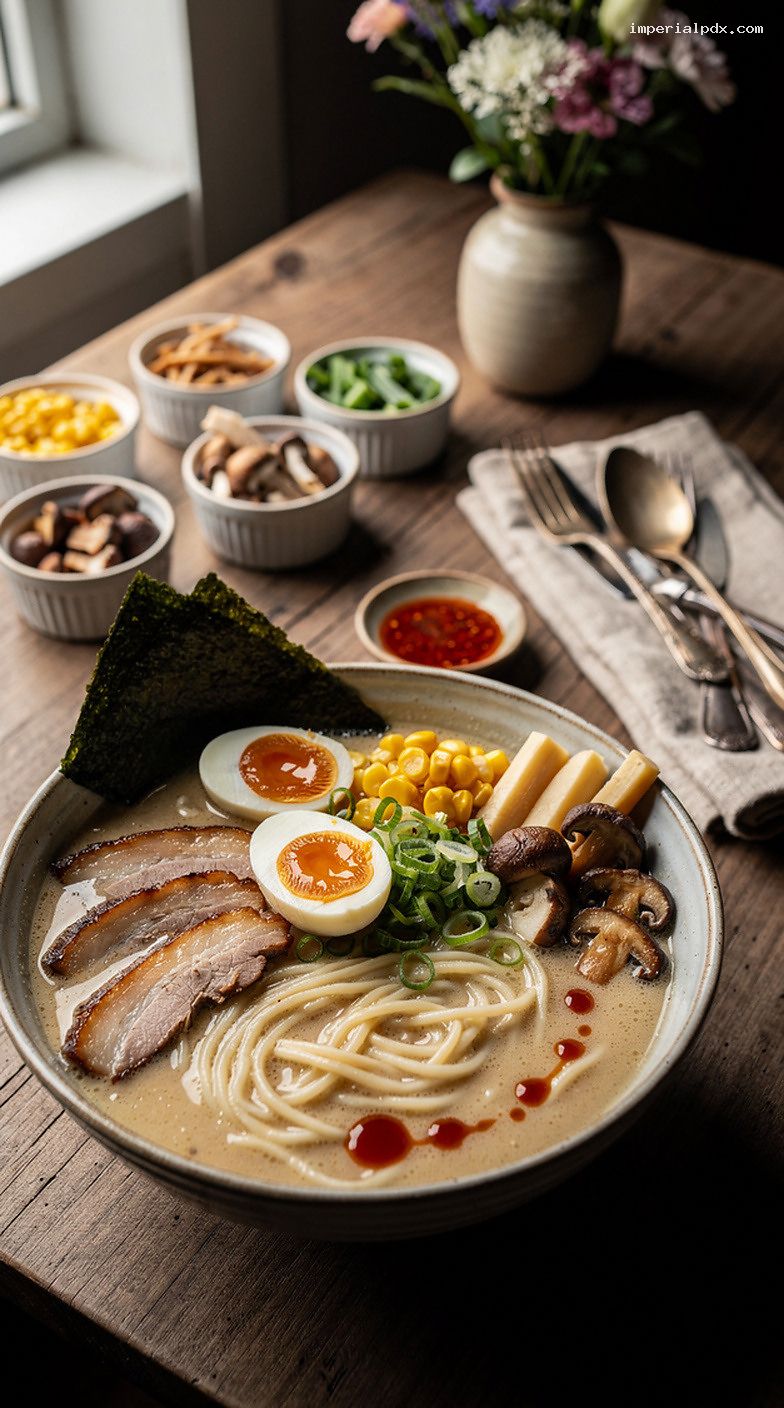
Set out a “topping station” using small bowls. Prep the following:
Scallions: Thinly slice to make about 1 cup (25 g).
Nori: Cut 6 sheets into strips or halves.
Corn: Warm 1 1/2 cups (250 g) corn in a small saucepan with 2 tbsp water over medium heat for 3–4 minutes (or microwave in a covered bowl for 60–90 seconds), then drain.
Bamboo shoots: Drain 1 cup (170 g) menma; warm briefly in a small saucepan over medium heat for 2–3 minutes if you like them hot.
Chili oil: Pour into a small dish with a spoon so guests can add a little at a time (it’s potent).
Step 4: Sauté the mushrooms
Heat 1 tbsp neutral oil in a skillet over medium-high heat until shimmering. Add 8 oz (225 g) sliced mushrooms and cook, stirring occasionally, until they release their liquid and begin to brown, 6–8 minutes.
Add 1 tbsp soy sauce and 2 tbsp water, stir, and cook 30 seconds more. Transfer to a bowl for the topping spread.
Step 5: Make your broth (choose tonkotsu-style or miso)
Choose one option below. Aim to keep finished broth hot but not aggressively boiling, ideally 165–185°F (74–85°C) for serving.
Option A (Tonkotsu-style, pressure cooker; about 2 hours 15 minutes total):
Bring a large pot of water to a boil. Add 3 lb (1.36 kg) pork neck bones and boil hard for 10 minutes to remove impurities. Drain and rinse the bones well under hot water, scrubbing off any gray foam. Rinse the pot too.
Place cleaned bones into an electric pressure cooker. Add 12 cups (2.8 L) cold water, 1 halved onion, 6 smashed garlic cloves, 1 sliced ginger piece, 2 chopped scallions, and optional kombu. Pressure cook on High for 90 minutes. Let pressure release naturally for 20 minutes, then quick-release any remaining pressure carefully.
Strain through a fine-mesh strainer into a clean pot. Discard solids. Simmer the strained broth uncovered for 15 minutes to concentrate slightly. Stir in 3 tbsp soy sauce, 1 tbsp mirin, and 1 tsp fine salt. Taste and add more salt in 1/4 tsp increments until it tastes richly seasoned.
Option B (Fast miso broth; about 30–35 minutes total):
In a large pot, combine 10 cups (2.4 L) chicken stock, 2 cups (480 ml) water, optional kombu, grated garlic, and grated ginger. Bring to a gentle simmer over medium heat. Simmer for 20 minutes (do not hard-boil).
Turn heat to low. Remove kombu if using. In a bowl, whisk 6 oz (170 g) miso paste with 1 cup (240 ml) of the hot broth until smooth, then stir this back into the pot (this prevents lumps). Stir in 2 tbsp soy sauce and 1 tbsp sesame oil. Keep warm at 165–185°F (74–85°C) and do not boil (boiling can dull miso flavor).
Step 6: Warm the chashu without drying it out
If using store-bought sliced chashu, the easiest method is to warm it gently right before serving: slip slices into the hot broth for 60–90 seconds, just until warmed through.
If you made the optional homemade chashu (below), slice it and warm the same way. Avoid a hard boil, which can make the pork tough.
Step 7: Cook the noodles right before eating
Bring a large pot of water to a rolling boil. Cook noodles according to package directions:
Fresh ramen noodles: typically 2–3 minutes.
Dried ramen noodles: typically 4–5 minutes.
Drain thoroughly. For the best texture, portion noodles into bowls immediately so they don’t clump. (If you need to hold them briefly, toss with 1 tsp neutral oil and keep loosely covered for up to 10 minutes.)
Step 8: Set up the ramen bar and serve
Set the pot of broth on the stove over low heat or in a slow cooker on Warm, keeping it at 165°F (74°C) or hotter for food safety. Place noodles in bowls or let guests portion them.
For each bowl, add:
- Noodles: 1 portion
- Hot broth: about 2 cups (480 ml)
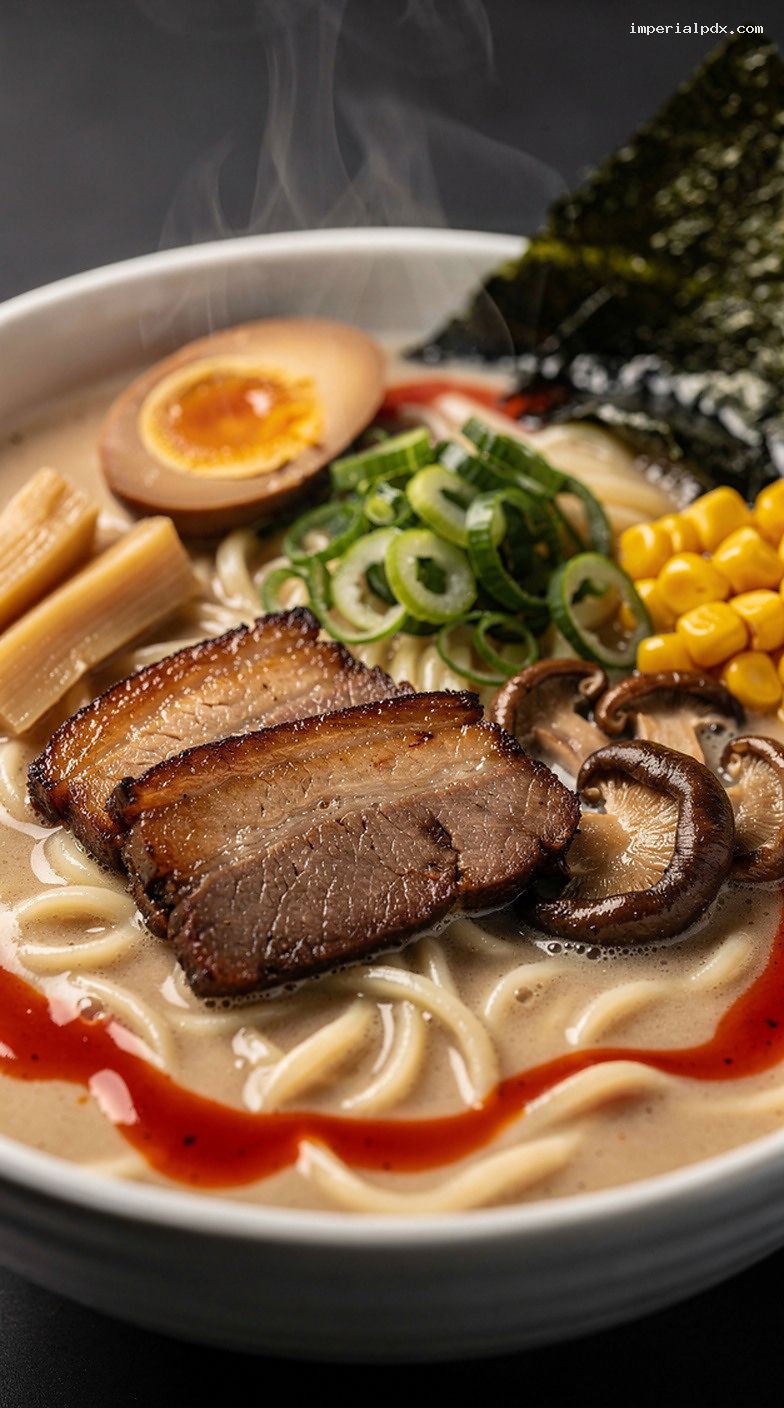
- Toppings: chashu slices, 1 soy egg (halved), corn, bamboo shoots, mushrooms, scallions, nori, and chili oil to taste
Encourage guests to start with 1/2 tsp chili oil, taste, then add more.
Pro Tips
- Keep noodles and broth separate until serving: noodles over-soften fast in hot broth. Cook noodles in batches for the best chew.
- Control salt at the end: especially with tonkotsu-style broth—bones reduce differently. Season after straining and a short simmer.
- Jammy eggs every time: 7 minutes boil + 5 minutes ice bath gives a set white with a soft, custardy yolk.
- Hosting hack: put toppings in small bowls on a tray, and label “spicy” items (chili oil) so guests can adjust easily.
- Don’t boil miso: keep miso broth at a gentle heat (165–185°F / 74–85°C) for the best aroma and flavor.
Variations
- Vegetarian miso ramen bar: swap chicken stock for 10 cups (2.4 L) vegetable stock and add 1 oz (28 g) dried shiitake while simmering (remove mushrooms, slice, and use as a topping).
- Extra-rich “butter corn” style: offer 1 tbsp butter per bowl as an optional topping (especially good with miso broth).
- Spicy miso: whisk 1–2 tbsp gochujang or 1 tbsp chili paste into the miso broth after dissolving the miso.
Storage & Make-Ahead
Soy eggs: Marinate up to 24 hours for best texture. Store peeled eggs in marinade in the refrigerator and use within 3 days.
Broth: Cool quickly and refrigerate in airtight containers for up to 4 days, or freeze for up to 2 months. Reheat to at least 165°F (74°C).
Toppings: Cooked mushrooms keep for 4 days refrigerated. Corn and bamboo shoots keep for 4 days refrigerated once opened (store tightly covered).
Noodles: Cook noodles right before serving. If you must make ahead, rinse cooked noodles under cold water, drain well, toss with 2 tsp neutral oil, refrigerate up to 24 hours, and reheat briefly in boiling water for 30–45 seconds.
Nutrition (per serving)
Approximate, will vary by broth choice and portion size. Per bowl (with noodles, 2 cups broth, 2 oz chashu, 1 soy egg, toppings): 780 calories, 34 g protein, 34 g fat, 78 g carbs, 6 g fiber, 1600 mg sodium.