Quick Recipe Version (TL;DR)
Quick Ingredients
- 4 slices dense rye bread (about 200 g total)
- 4 tbsp (56 g) salted butter, softened
- 2 large eggs
- 1/2 medium red onion (about 75 g), very thinly sliced
- 1/4 cup (10 g) fresh dill fronds
- 1 lemon, cut into wedges
- Fish (choose one): 200 g drained pickled herring fillets or 300 g cod/haddock fillets + 1/4 cup (30 g) flour + 2 tbsp (28 g) butter + 1 tbsp (15 ml) neutral oil
- Optional quick-pickle for onion: 2 tbsp (30 ml) distilled white vinegar + 2 tbsp (30 ml) water + 1 tsp (4 g) sugar + 1/4 tsp fine salt
Do This
- 1. Boil eggs 10 minutes, ice-bath 5 minutes, then peel and slice.
- 2. Thinly slice red onion; quick-pickle 10 minutes (optional) and drain.
- 3. If using fried fish: flour and pan-fry 3–4 minutes per side to 145°F/63°C.
- 4. (Optional) Toast rye at 375°F/190°C for 5 minutes; cool 2 minutes.
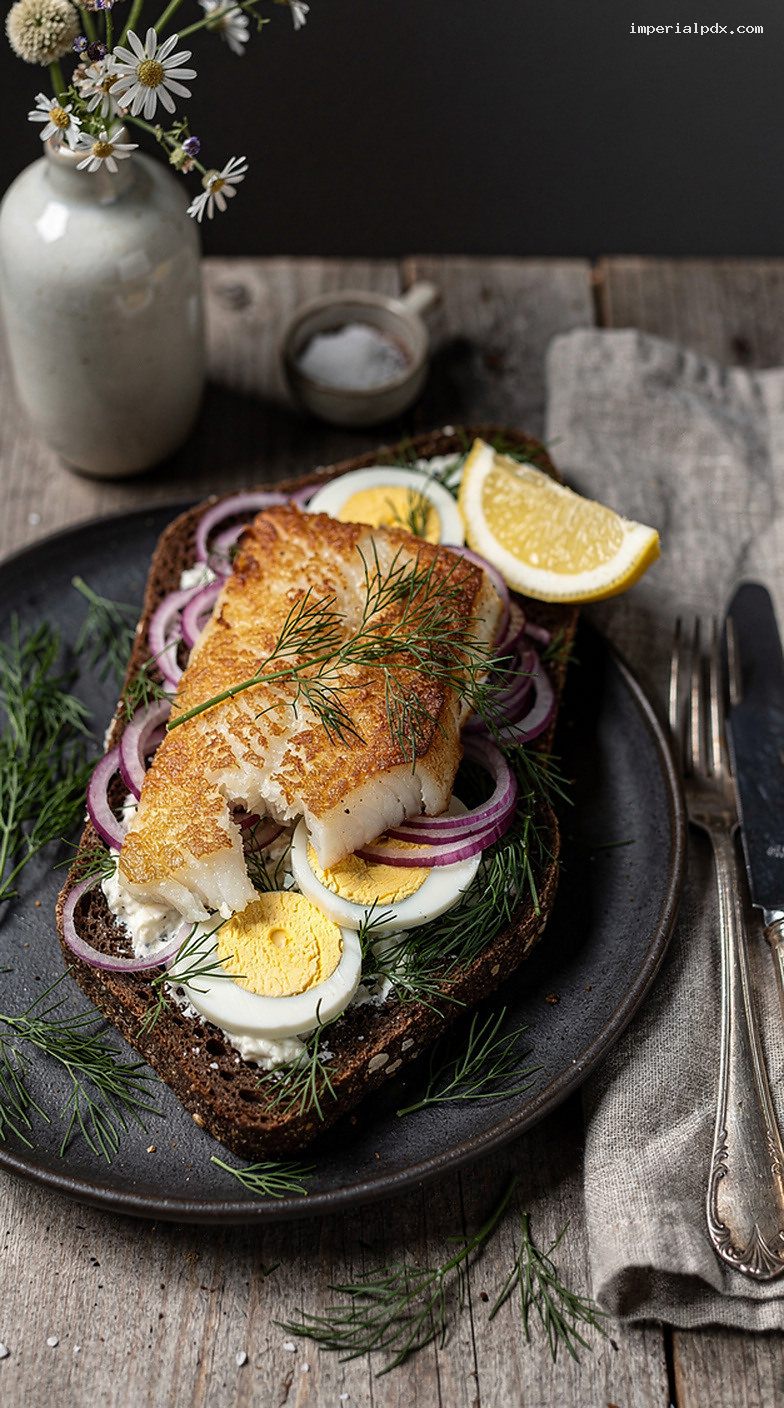
- 5. Butter each slice edge-to-edge; layer fish, onion, and egg neatly.
- 6. Finish with dill and lemon; serve immediately with a knife and fork.
Why You’ll Love This Recipe
- It’s a showy, satisfying open sandwich that’s still easy enough for a weekday lunch.
- You can choose your fish: bright and briny pickled herring or crisp-edged pan-fried fillets.
- Every bite has contrast: dense rye, rich butter, tender fish, sharp onion, creamy egg, fresh dill, and lemon.
- No complicated equipment—just a pot for eggs and (optionally) a skillet for fish.
Grocery List
- Produce: 1/2 medium red onion, fresh dill, 1 lemon
- Dairy: salted butter, 2 large eggs
- Pantry: dense rye bread, all-purpose flour (if frying fish), neutral oil (if frying fish), distilled white vinegar + sugar (if quick-pickling), salt, black pepper
- Seafood: pickled herring fillets (jarred) or cod/haddock fillets
Full Ingredients
For the Smørrebrød Base
- 4 slices dense rye bread (about 1.5–2 cm thick; about 50 g each)
- 4 tbsp (56 g) salted butter, softened to room temperature
For the Toppings
- 2 large eggs
- 1/2 medium red onion (about 75 g), sliced as thinly as possible
- 1/4 cup (10 g) fresh dill fronds, plus extra for finishing (optional)
- 1 lemon, cut into 4–6 wedges
- 1/8 tsp freshly ground black pepper (or to taste)
Optional: Quick-Pickled Red Onion (Recommended)
- 2 tbsp (30 ml) distilled white vinegar
- 2 tbsp (30 ml) water
- 1 tsp (4 g) granulated sugar
- 1/4 tsp fine salt
Fish Option A: Pickled Herring (No Cooking)
- 200 g pickled herring fillets, drained well (often 6–10 fillets depending on size)
- Optional but nice: 1 tsp lemon juice (from the lemon above), to brighten the herring
Fish Option B: Pan-Fried Cod or Haddock (Golden and Crisp-Edged)
- 300 g skinless cod or haddock fillets, cut into 4 portions (about 75 g each)
- 1/4 tsp fine salt
- 1/8 tsp freshly ground black pepper
- 1/4 cup (30 g) all-purpose flour (for light dredging)
- 2 tbsp (28 g) salted butter
- 1 tbsp (15 ml) neutral oil (such as canola or grapeseed)
- Target internal temperature: 145°F / 63°C
Step-by-Step Instructions
Step 1: Boil the eggs (firm but not chalky)
Fill a small saucepan with enough water to cover 2 eggs by at least 2.5 cm (1 inch). Bring the water to a full boil (212°F / 100°C at sea level) over high heat.
Gently lower in the eggs. Reduce heat to maintain a steady simmer and cook for 10 minutes.
Transfer eggs to an ice bath (or very cold water) for 5 minutes. Peel, then slice into rounds about 5 mm thick. Set aside.
Step 2: Make quick-pickled onions (optional, but adds classic tang)
In a small bowl, stir together 2 tbsp (30 ml) vinegar, 2 tbsp (30 ml) water, 1 tsp (4 g) sugar, and 1/4 tsp salt until dissolved.
Add the thinly sliced red onion and toss. Let stand at room temperature for 10 minutes, tossing once halfway through. Drain well before using so the bread doesn’t get soggy.
Step 3: Prepare the fish (choose pickled or pan-fried)
If using pickled herring: Drain the herring very well and gently pat with paper towels. (If it’s very strongly pickled, you can blot thoroughly and add 1 tsp lemon juice right before assembling.) Keep chilled while you prep the bread and toppings.
If pan-frying cod/haddock: Pat fish dry. Season both sides with 1/4 tsp salt and 1/8 tsp black pepper. Place the 1/4 cup (30 g) flour on a plate and lightly dredge each portion, shaking off excess.
Step 4: Pan-fry the fish (if using fresh fillets)
Heat a large nonstick or well-seasoned skillet over medium-high heat for 2 minutes. Add 2 tbsp (28 g) butter and 1 tbsp (15 ml) neutral oil. When the butter is melted and foaming, add the fish.
Cook for 3–4 minutes on the first side (don’t move it too much—this helps it brown). Flip carefully and cook for 2–4 minutes more, until the fish is opaque and reaches 145°F / 63°C in the thickest part.
Transfer to a plate and let rest for 2 minutes so it stays juicy while you assemble.
Step 5: Toast (optional) and butter the rye bread
For extra crunch, toast the rye bread on a sheet pan at 375°F / 190°C for 5 minutes, then cool for 2 minutes. (You can also keep it untoasted for a more traditional dense, chewy bite.)
Spread each slice with 1 tbsp (14 g) softened butter, edge-to-edge. A full butter layer helps “seal” the bread and keeps it from getting soggy under the toppings.
Step 6: Layer the smørrebrød neatly
Build each sandwich in tidy layers for the classic look:
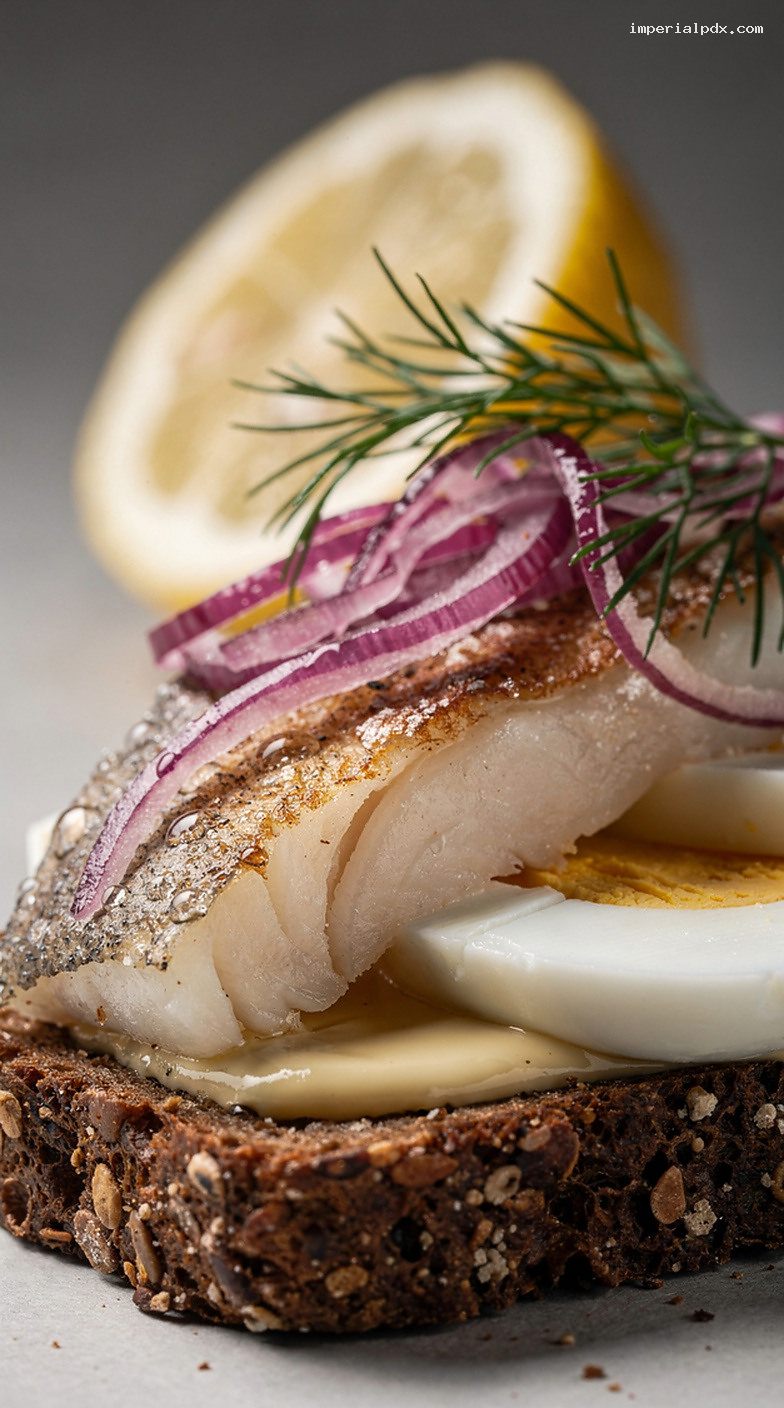
Suggested order: buttered rye bread → fish (either herring fillets arranged in a slight overlap, or a warm pan-fried fillet) → a small nest of drained onion → a few slices of boiled egg. Lightly season the egg with a pinch of black pepper if you like.
Step 7: Finish with dill and lemon, then serve
Scatter fresh dill generously over the top and add a lemon wedge beside each sandwich (or a small squeeze right before serving).
Serve immediately while the bread is sturdy and the fish is at its best. Smørrebrød is traditionally eaten with a knife and fork.
Pro Tips
- Slice the onion ultra-thin: A sharp knife or mandoline makes a big difference for a delicate bite.
- Keep the bread dry: Drain pickled toppings well, and don’t skip the full butter layer—it’s functional, not just tasty.
- For the prettiest layers: Place egg slices slightly overlapping and tuck dill fronds under the egg edges so it looks abundant.
- For pan-fried fish: Dry fish + light flour dredge = better browning and less sticking. Aim for 145°F / 63°C so it stays flaky, not dry.
- Balance the salt: Pickled herring can be salty; taste before adding extra salt anywhere else.
Variations
- Smoked fish version: Swap in 200 g smoked salmon or smoked mackerel; skip frying and add extra lemon and dill.
- Creamy herb spread: Replace half the butter with 4 tbsp (60 g) crème fraîche mixed with 1 tbsp chopped dill and 1 tsp lemon zest.
- Extra Scandinavian crunch: Add 1–2 tbsp thinly sliced cucumber or radish per sandwich, plus a pinch of flaky salt.
Storage & Make-Ahead
Smørrebrød is best assembled and eaten right away. If you want to prep ahead: boil and peel the eggs up to 3 days in advance (store covered in the refrigerator), and quick-pickle the onions up to 24 hours ahead (refrigerate in the pickling liquid, then drain before using). If pan-frying fish, cook it up to 24 hours ahead and refrigerate; rewarm gently in a skillet over medium-low heat for 2–3 minutes per side or until just warmed through (avoid overcooking). Assemble just before serving to keep the bread firm.
Nutrition (per serving)
Approximate, per 1 open-faced sandwich (using pan-fried cod option): 430 calories; 22 g fat; 33 g carbohydrates; 27 g protein; 6 g fiber; 3 g sugar; 820 mg sodium. Values will vary depending on bread brand, butter amount, and whether you use pickled herring (often higher sodium) or fresh fish.