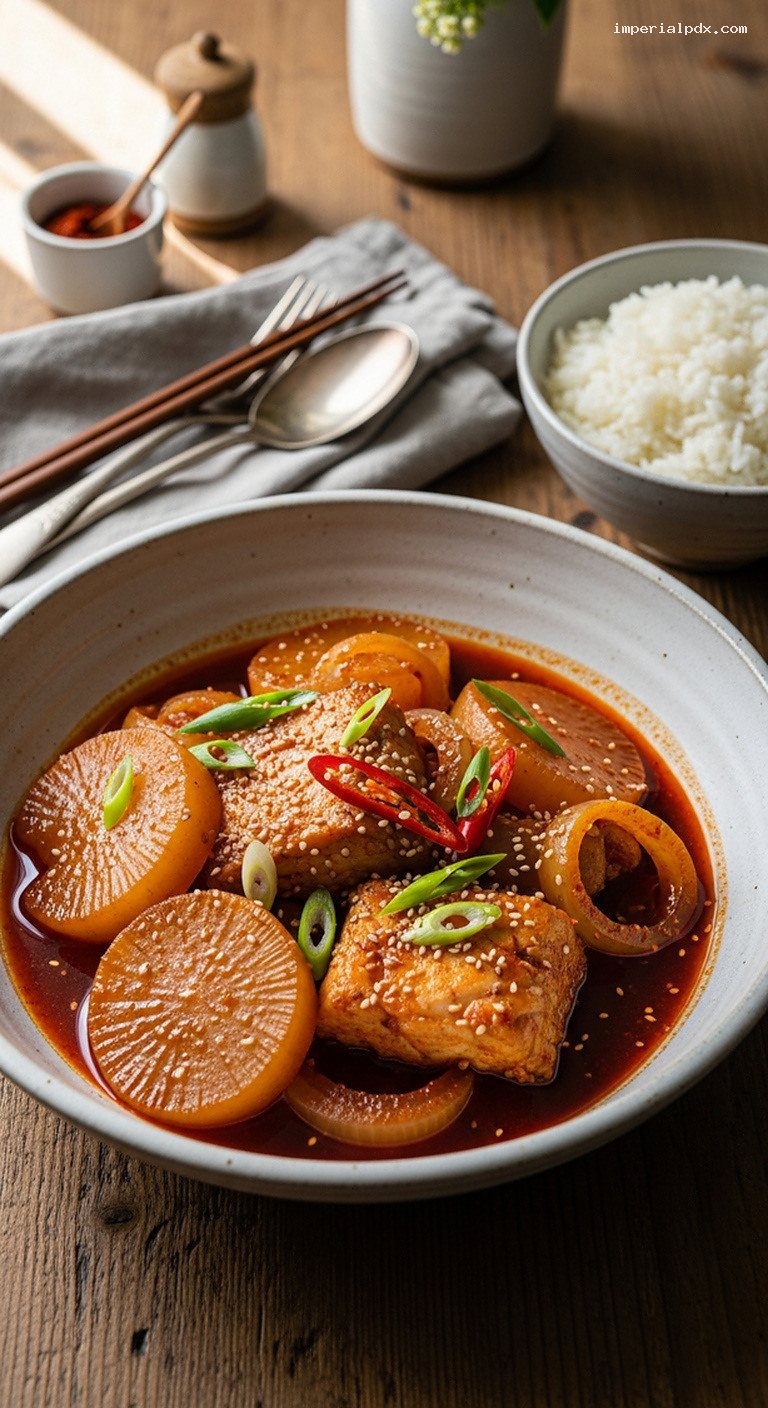
Quick Recipe Version (TL;DR)
Quick Ingredients
- 1.5 lb (680 g) pollock, cut into 2-inch chunks
- 12 oz (340 g) daikon radish, sliced (about 3 cups)
- 1 small onion, sliced
- 4 scallions, cut into 2-inch pieces (whites and greens separated)
- 4 garlic cloves, minced
- 2 tsp minced ginger
- 1 3/4 cups (420 ml) water or light anchovy/kelp stock
- 3 tbsp soy sauce
- 2 1/2 tbsp gochujang (Korean red chili paste)
- 1 1/2 tbsp gochugaru (Korean chili flakes)
- 1 1/2 tbsp mirin (or cooking rice wine)
- 2 tsp sugar
- 1 tbsp rice vinegar
- 1 tsp toasted sesame oil
- 1 tsp toasted sesame seeds (for garnish)
- Cooked short-grain rice, for serving
Do This
- 1. Prep pollock into 2-inch chunks; slice daikon and onion; cut scallions, keeping whites and greens separate; mince garlic and ginger.
- 2. Whisk together water/stock, soy sauce, gochujang, gochugaru, mirin, sugar, rice vinegar, sesame oil, and black pepper until smooth.
- 3. In a wide lidded pot, layer daikon, onion, garlic, ginger, and scallion whites. Place pollock pieces on top in a single layer.
- 4. Pour braising sauce evenly over everything. Cover and bring to a simmer over medium-high heat, then reduce to medium-low.
- 5. Gently simmer 15–18 minutes, until daikon is tender and pollock is flaky and opaque (internal temp about 145°F / 63°C).
- 6. Uncover and simmer 3–5 minutes more to slightly thicken and reduce the sauce. Stir in scallion greens.
- 7. Sprinkle with sesame seeds and serve hot over steamed rice, spooning plenty of spicy broth over the top.
Why You’ll Love This Recipe
- Deep, bold Korean flavors from gochujang, soy, garlic, and ginger in a comforting braised dish.
- Perfect one-pot main to spoon over hot steamed rice for a satisfying, homey meal.
- Uses affordable, lean pollock and simple vegetables, but tastes restaurant-worthy.
- Customizable heat level, plus it reheats beautifully for next-day lunches.
Grocery List
- Produce: Daikon radish, yellow onion, scallions, garlic, fresh ginger, optional fresh red chili, optional fresh herbs for garnish (e.g., perilla or cilantro).
- Dairy: None.
- Pantry: Pollock (fresh or frozen), soy sauce, gochujang, gochugaru, mirin or cooking rice wine, sugar or honey, rice vinegar, toasted sesame oil, toasted sesame seeds, short-grain rice, black pepper, water or light anchovy/kelp stock.
Full Ingredients
Pollock and Vegetables
- 1.5 lb (680 g) pollock fillets or steaks, skin-on if possible, pin bones removed, cut into roughly 2-inch (5 cm) chunks
- 12 oz (340 g) daikon radish, peeled and sliced into 1/4-inch (6 mm) thick half-moons (about 3 packed cups)
- 1 small yellow onion (about 4 oz / 115 g), thinly sliced
- 4 scallions (spring onions), cut into 2-inch (5 cm) pieces; keep white and green parts separate
- 4 garlic cloves, finely minced (about 4 tsp)
- 1-inch (2.5 cm) piece fresh ginger, peeled and finely minced (about 2 tsp)
- 1 small fresh red chili (optional), thinly sliced, for extra heat and color
Braising Sauce
- 1 3/4 cups (420 ml) water or light anchovy/kelp stock
- 3 tbsp soy sauce (regular, not dark)
- 2 1/2 tbsp gochujang (Korean red chili paste)
- 1 1/2 tbsp gochugaru (Korean red chili flakes; use 1 tbsp for medium heat, 2 tbsp for extra spicy)
- 1 1/2 tbsp mirin or Korean cooking rice wine
- 2 tsp sugar or mild honey
- 1 tbsp rice vinegar
- 1 tsp toasted sesame oil
- 1/4 tsp freshly ground black pepper
To Finish and Serve
- 1 tsp toasted sesame seeds
- Cooked short-grain rice (about 2 cups / 380 g uncooked rice to serve 4)
- Extra sliced scallions or red chili, for garnish (optional)
Step-by-Step Instructions
Step 1: Prep the Pollock and Vegetables
Pat the pollock dry with paper towels. Remove any visible pin bones with tweezers. Cut into 2-inch (5 cm) chunks that are fairly uniform so they cook evenly. If using frozen pollock, fully thaw in the refrigerator and drain off excess liquid before cutting.
Peel the daikon radish and slice into 1/4-inch (6 mm) thick rounds, then cut the rounds in half into half-moons. Slice the onion thinly. Cut the scallions into 2-inch (5 cm) pieces, keeping the white and green parts in separate piles. Finely mince the garlic and ginger. If using a fresh red chili, slice it thinly on the diagonal.
Step 2: Mix the Spicy Braising Sauce
In a medium bowl or large measuring jug, add the water or light stock, soy sauce, gochujang, gochugaru, mirin, sugar, rice vinegar, sesame oil, and black pepper. Whisk thoroughly until the gochujang dissolves and the sauce is smooth and uniform, with no large clumps. Taste a small spoonful (it will be strong and salty at this stage) and adjust the heat by adding more gochugaru if you like it spicier, or a touch more sugar if you prefer a slightly sweeter balance.
Step 3: Layer the Pot
Choose a wide, shallow pot or deep skillet with a tight-fitting lid, about 10–11 inches (25–28 cm) in diameter. A Korean earthenware pot (ttukbaegi) or a heavy-bottomed saucepan works very well.
Spread the sliced daikon evenly over the bottom of the pot in a single, slightly overlapping layer. Top with the sliced onion, minced garlic, minced ginger, and the white parts of the scallions. These vegetables form a flavorful “bed” that protects the delicate fish and allows the daikon to soak up the sauce.
Arrange the pollock pieces in a single layer over the vegetables. Tuck the optional sliced red chili around the fish if using.
Step 4: Add Sauce and Bring to a Simmer
Pour the braising sauce evenly over the fish and vegetables. Gently tilt the pot or use a spoon to make sure the sauce runs down into the daikon layer, but avoid stirring or moving the fish too much so it does not break apart.
Cover the pot with a lid and place over medium-high heat. Bring the mixture just up to a simmer; you should see steady, gentle bubbles around the edges. This will take about 5–7 minutes, depending on your stove. Once it reaches a simmer, immediately reduce the heat to medium-low to maintain a gentle simmer (around 190–200°F / 88–93°C in the liquid if you were to check with a thermometer).
Step 5: Gently Braise Until Tender
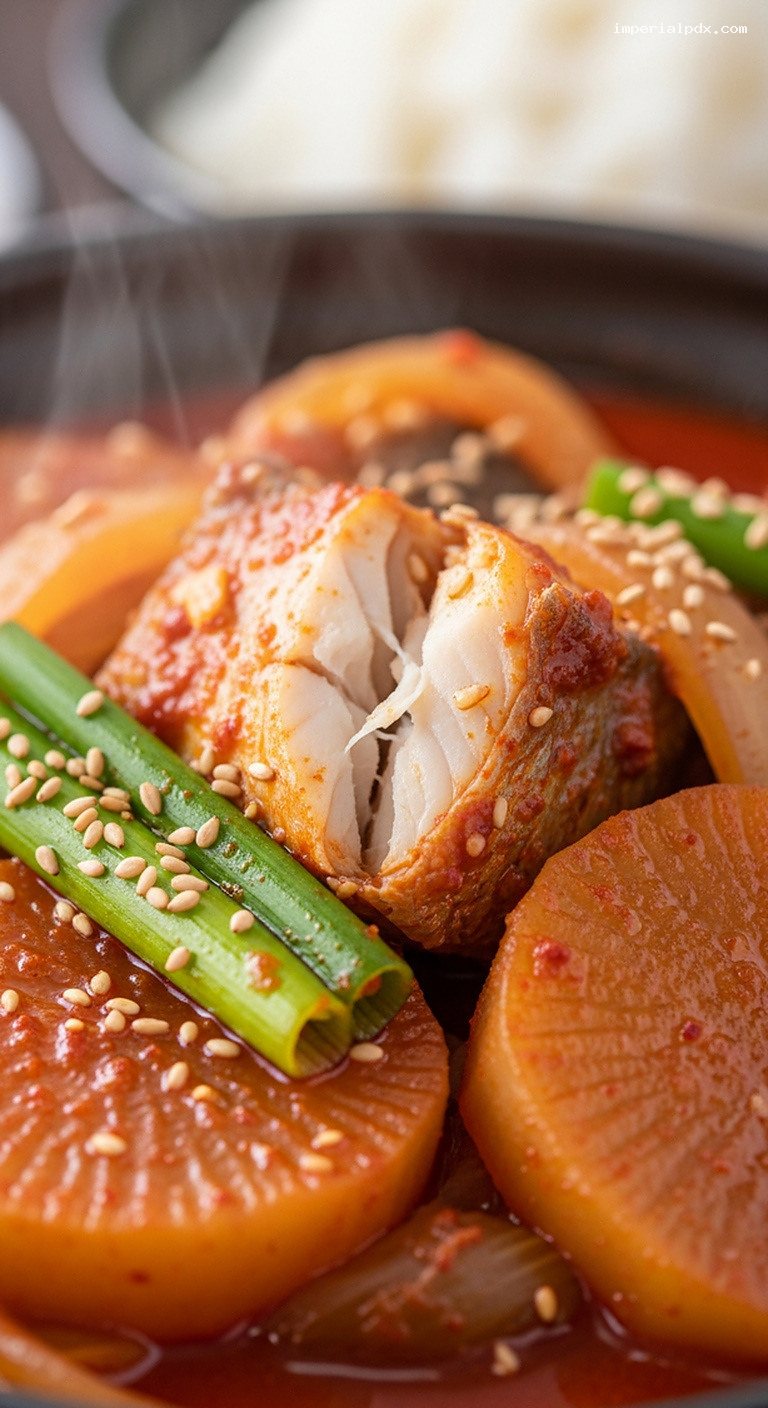
With the pot covered, let the pollock and vegetables braise at a gentle simmer for 15–18 minutes. Avoid boiling hard, as that can toughen the fish. During this time, the daikon should soften and turn slightly translucent, and the fish will turn opaque and flaky.
If you like, you can occasionally spoon some of the simmering sauce over the top of the fish to keep it moist and well coated, but do this carefully to avoid breaking up the pieces. The pollock is done when it flakes easily with a fork and reaches an internal temperature of about 145°F (63°C) at the thickest part.
Step 6: Reduce the Sauce and Finish with Scallions
Remove the lid and increase the heat slightly to medium. Simmer uncovered for an additional 3–5 minutes to concentrate and slightly thicken the sauce. You should see the liquid reduce a bit and become a deeper red with a glossy sheen. If at any point the liquid reduces too quickly, add a splash of water or stock.
Gently add the green parts of the scallions to the pot, letting them wilt in the hot sauce for 1–2 minutes. Taste the sauce and adjust if needed: add a small splash of soy sauce for more salt, a pinch of sugar for balance, or a dash of rice vinegar for extra brightness.
Step 7: Serve Over Steamed Rice
Turn off the heat. Sprinkle the top with toasted sesame seeds and extra sliced scallions or chili, if using. To serve, scoop some hot steamed short-grain rice into shallow bowls. Carefully lift out chunks of pollock and plenty of daikon, and spoon them over or beside the rice. Ladle generous spoonfuls of the spicy braising liquid over the fish and rice so the sauce soaks in.
Serve immediately while steaming hot, with additional rice on the side and any favorite Korean side dishes (banchan) if you have them.
Pro Tips
- Use a wide pot: A wider pot lets you keep the fish in a single layer so it cooks evenly and is less likely to break apart.
- Control the heat: Keep the braise at a gentle simmer, not a rolling boil. This keeps the pollock tender and prevents it from drying out.
- Adjust for spice level: For milder heat, reduce the gochugaru to 1 tbsp and slightly increase sugar to 2 1/2 tsp. For spicier, add up to 2 tbsp gochugaru.
- Start with good stock: Using light anchovy/kelp stock instead of plain water adds a subtle, savory depth very typical of Korean home cooking.
- Do not over-stir: Treat the pollock gently. Once it goes into the pot, avoid stirring; instead, tilt the pot or spoon sauce over the top to baste.
Variations
- Milder family-friendly version: Halve the gochugaru and replace 1/2 tbsp of the gochujang with doenjang (Korean soybean paste) for a softer, slightly nutty flavor with less heat.
- Mixed seafood jorim: Combine pollock with a few large shrimp or squid rings. Add the firmer seafood (squid) at the same time as the fish and add shrimp during the last 5–7 minutes of braising.
- Extra vegetable-heavy: Add a handful of napa cabbage chunks or thick slices of zucchini on top of the daikon layer for more vegetables and volume.
Storage & Make-Ahead
Cool leftovers to room temperature, then transfer to an airtight container with as much of the braising liquid as possible. Refrigerate for up to 2 days. Reheat gently in a covered saucepan over low to medium-low heat until the fish is warmed through and just starting to simmer; avoid hard boiling to keep the texture tender. You can also microwave individual portions, covered, at 50–70% power until hot.
The flavor often deepens by the next day as the daikon and fish absorb more of the sauce. This dish is best made fresh or up to 1 day ahead; it is not ideal for freezing, as the fish can become mushy once thawed.
Nutrition (per serving)
Approximate values for 1 of 4 servings (without rice): about 280 calories; 32 g protein; 7 g fat; 18 g carbohydrates; 6 g sugars; 2 g fiber; 900 mg sodium. Serving with 1 cup cooked rice adds roughly 200 calories and 45 g carbohydrates.