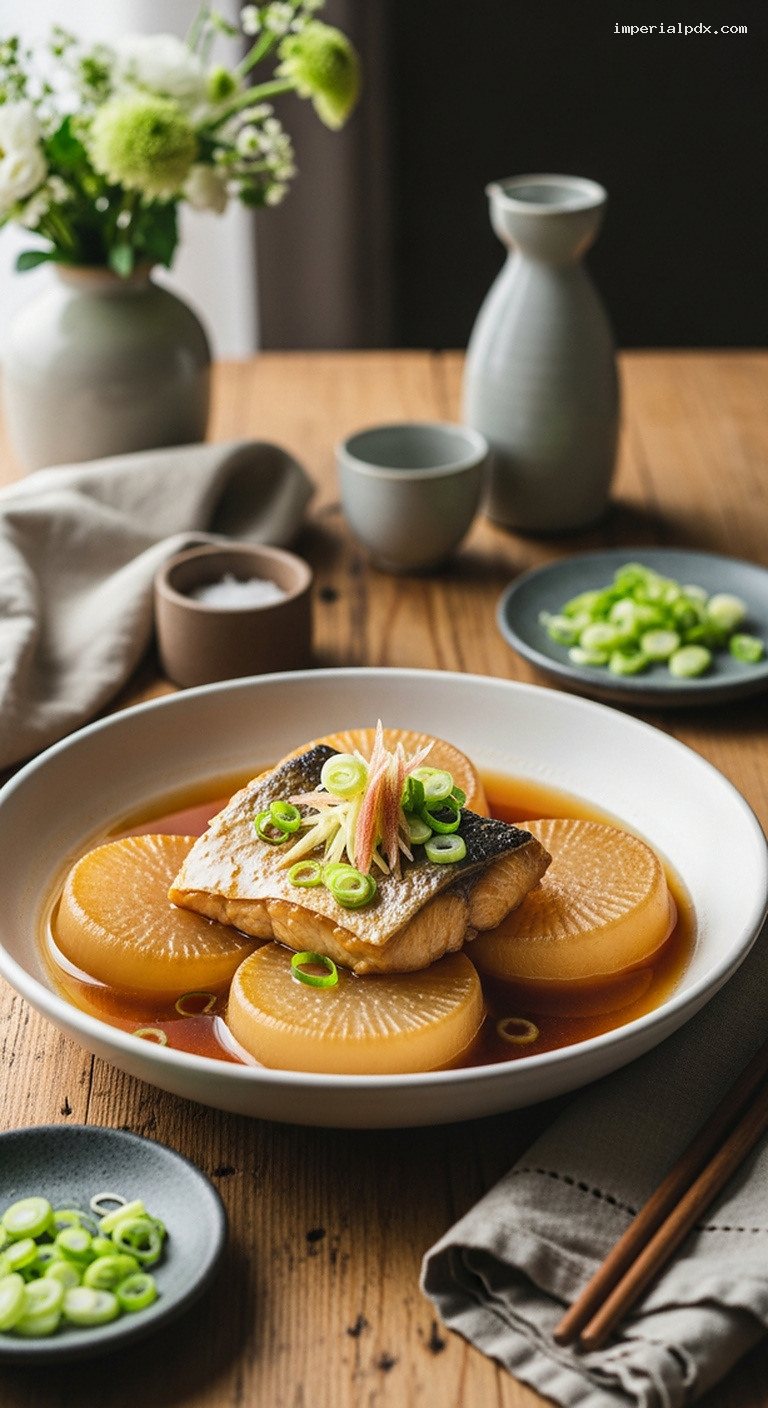
Quick Recipe Version (TL;DR)
Quick Ingredients
- 500 g yellowtail (buri) fillet or collar, cut into 8–10 chunks
- 600 g daikon radish (about 1 medium), peeled and cut into 2–3 cm rounds
- 480 ml (2 cups) dashi stock
- 120 ml (1/2 cup) sake
- 60 ml (1/4 cup) mirin
- 60 ml (1/4 cup) soy sauce
- 1.5 tbsp sugar
- 8–10 thin slices fresh ginger
- 2–3 scallions, thinly sliced (for garnish)
- Optional: 1 tbsp uncooked rice or rice-washing water for parboiling daikon
Do This
- 1) Peel daikon and cut into thick rounds; optionally halve into semicircles. Lightly score one side with a shallow crosshatch.
- 2) Parboil daikon in water (with 1 tbsp rice, optional) for 15 minutes until slightly tender. Drain and set aside.
- 3) Cut yellowtail into chunks. Pour boiling water over the fish for 10–15 seconds, then rinse under cold water and trim off any scum.
- 4) In a wide pot, combine dashi, sake, mirin, soy sauce, sugar, and ginger. Add daikon and bring to a gentle boil over medium heat.
- 5) Reduce heat to medium-low, cover with a drop lid (or parchment/foil), and simmer 15 minutes until daikon is tender.
- 6) Add yellowtail pieces on top of the daikon. Simmer gently 8–10 minutes, basting with broth and skimming foam.
- 7) Remove the lid and simmer 5–8 minutes to slightly reduce the sauce. Serve hot, topped with scallions.
Why You’ll Love This Recipe
- Classic Japanese home-style comfort food with deep soy-sake flavor and melt-in-your-mouth daikon.
- Uses simple pantry ingredients yet tastes like something from a traditional Japanese restaurant.
- Gently simmered fish means no splattering oil and a light, clean-tasting dish.
- Even better the next day as the yellowtail and daikon soak up more of the fragrant broth.
Grocery List
- Produce: Daikon radish, fresh ginger, scallions (green onions)
- Dairy: None
- Pantry: Yellowtail (fresh or frozen), dashi stock or dashi granules, sake, mirin, soy sauce, sugar, uncooked rice (optional for parboiling), salt (optional)
Full Ingredients
Main Dish
- 500 g yellowtail (buri) fillet or collar, skin-on if possible, cut into 8–10 equal chunks (about 4–5 cm each)
- 600 g daikon radish (about 1 medium), peeled
- 8–10 thin slices fresh ginger (about 20–25 g), peeled and sliced on the bias
- 2–3 scallions (green onions), thinly sliced on the bias, for garnish
Braising Broth
- 480 ml (2 cups) dashi stock
- Use homemade, or 2 cups water plus dashi granules according to package directions.
- 120 ml (1/2 cup) sake
- 60 ml (1/4 cup) mirin
- 60 ml (1/4 cup) soy sauce
- 1.5 tbsp granulated sugar (adjust to taste, 1–2 tbsp range)
For Parboiling (Optional but Recommended)
- 1 tbsp uncooked white rice or cloudy water from rinsing rice (enough to cover daikon in pot)
- Cold water to cover daikon
To Clean the Fish
- 500–750 ml (2–3 cups) boiling water (for blanching and cleaning the yellowtail)
- Cold water for rinsing
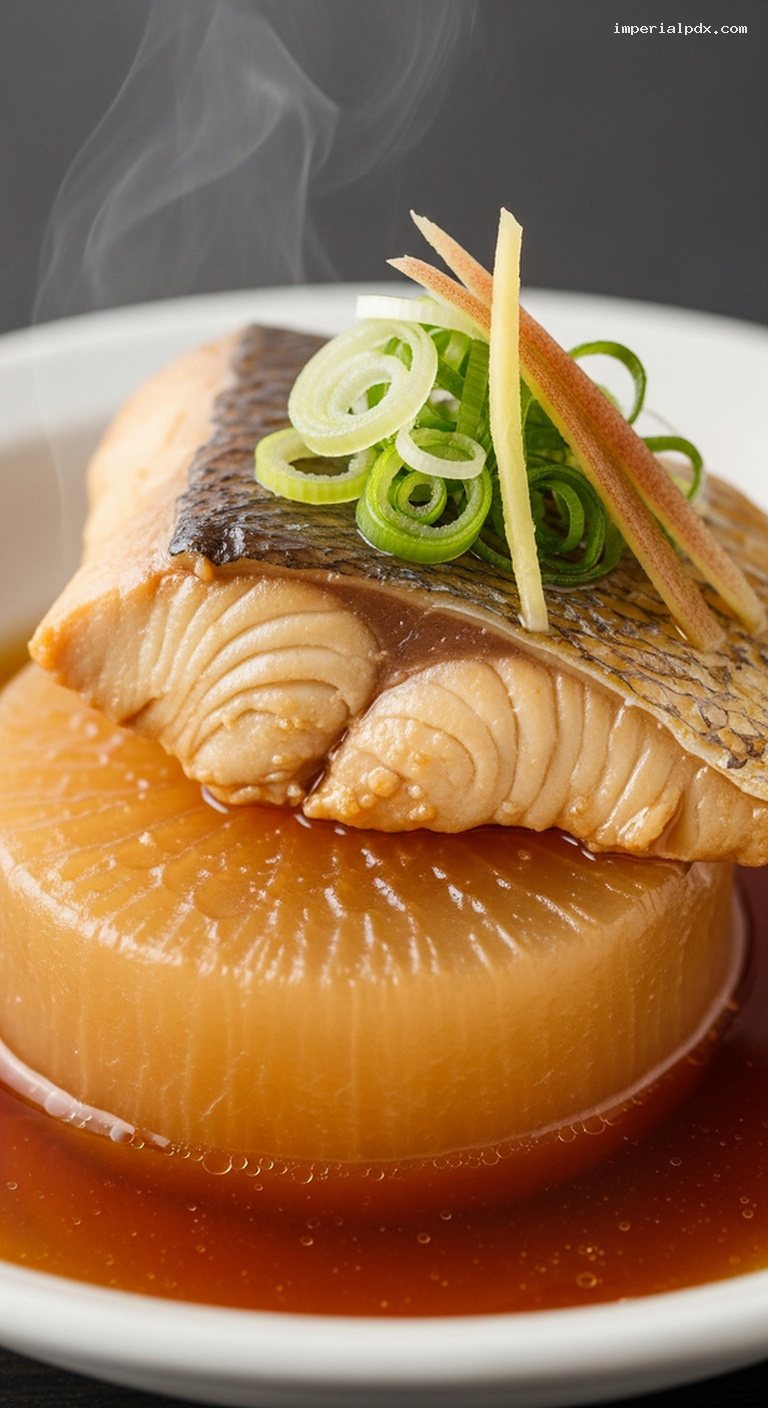
Step-by-Step Instructions
Step 1: Prepare and cut the daikon
Peel the daikon radish thoroughly, removing the tough outer skin. Slice it crosswise into rounds about 2–3 cm thick (just under 1 inch). For quicker cooking and easier eating, you can halve the thicker rounds into semicircles.
For a more traditional texture and look, lightly round off the sharp edges of each piece with your knife (this Japanese technique is called mentori and helps prevent the daikon from breaking apart). On one flat side of each piece, score a very shallow crosshatch pattern with the tip of your knife. Do not cut too deep; this helps the seasoning penetrate and the daikon cook evenly.
Step 2: Parboil the daikon for tenderness
Place the prepared daikon in a medium pot in a single layer if possible. Add enough cold water to cover the daikon by about 2.5 cm (1 inch). Add 1 tbsp uncooked white rice, or use the cloudy water left from rinsing rice. The starch helps remove any bitterness and results in a milder, creamier daikon.
Bring to a gentle boil over medium heat, then reduce to a simmer. Cook for about 15 minutes, or until a skewer or chopstick goes in with light resistance but the center is not yet fully tender. Drain the daikon and rinse briefly under warm water to remove any rice residue. Set aside.
Step 3: Prep and clean the yellowtail
While the daikon simmers, prepare the yellowtail. Pat the fish dry and cut into 8–10 evenly sized chunks, about 4–5 cm each. Removing pin bones now makes eating easier; use tweezers if needed.
To remove fishy odor and surface impurities, place the yellowtail pieces in a heatproof bowl in a single layer. Bring 500–750 ml (2–3 cups) of water to a boil. Slowly pour the boiling water over the fish until just covered. Let sit for 10–15 seconds, then immediately drain and rinse the fish gently under cold running water.
Using your fingers, lightly rub off any grayish or foamy bits from the surface. Pat the fish very dry with paper towels. This step helps the broth stay clear and gives the finished dish a clean, delicate flavor.
Step 4: Build the braising broth and start simmering the daikon
In a wide, shallow pot (such as a sauté pan or shallow casserole with lid), combine the dashi stock, sake, mirin, soy sauce, and sugar. Stir briefly to dissolve the sugar.
Add the parboiled daikon pieces in a single layer, scored side up if you made crosshatches. Add the ginger slices, tucking some between the daikon pieces and reserving a few for later if you like a fresher ginger aroma at the end.
Place the pot over medium heat and bring just to a gentle boil. Once boiling, reduce the heat to medium-low. Cover the daikon with a drop lid (otoshibuta) if you have one, or make one from parchment paper or aluminum foil with a few holes poked in it. This ensures even cooking and helps the daikon absorb flavor.
Simmer for about 15 minutes, or until the daikon is tender but not falling apart. A skewer should go through fairly easily.
Step 5: Add the yellowtail and gently poach
Once the daikon is nearly fully tender, carefully arrange the yellowtail pieces on top of the daikon in a single layer. Try not to overcrowd the pot; the fish should have a bit of room around each piece.
Re-cover with the drop lid and maintain a gentle simmer over medium-low heat. Avoid a rolling boil, which can toughen the fish. Simmer for 8–10 minutes, occasionally tilting the pot and using a spoon to baste the fish with the hot broth.
Skim off any foam or scum that rises to the surface with a spoon, especially during the first few minutes. This keeps the broth clear and the flavors clean. The fish is done when it turns opaque all the way through and flakes easily when gently pressed with chopsticks or a fork.
Step 6: Reduce the sauce to a glossy finish
When the fish is just cooked through, remove the drop lid. Taste the broth and adjust seasoning: add a splash more soy sauce if you prefer it saltier, or a pinch of sugar if you like a slightly sweeter glaze.
Increase the heat slightly to bring the liquid to a lively but controlled simmer. Cook uncovered for 5–8 minutes, occasionally spooning the reducing sauce over the fish and daikon. The goal is to concentrate the flavors and slightly thicken the broth so it becomes a light, glossy sauce that clings to the ingredients.
Take care not to over-reduce; you want enough liquid left to spoon over each portion. If at any point the fish looks like it might overcook, you can gently remove the pieces to a plate and return them to the pot just before serving to warm through.
Step 7: Garnish and serve
Turn off the heat and let the dish sit for 3–5 minutes; this brief rest helps the flavors settle and the fish relax, keeping it tender. Meanwhile, thinly slice the scallions on the bias for a delicate, restaurant-style garnish.
To serve, carefully transfer several pieces of daikon and 2–3 chunks of yellowtail to each shallow bowl. Spoon plenty of the soy-sake broth over the top. Garnish generously with sliced scallions and, if you saved any fresh ginger slices, a few on top for aroma.
Buri daikon is wonderful served with hot steamed rice and a side of pickles or a simple green vegetable. It also tastes even better after resting for a few hours or overnight, as the daikon and fish continue to absorb the broth.
Pro Tips
- Choose the right cut of fish: Yellowtail collar, belly, or pieces with skin and a bit of fat stay more succulent than very lean loin pieces.
- Do not skip the blanching step: Pouring boiling water over the fish removes blood and impurities, giving a clean-tasting broth and eliminating overly “fishy” aromas.
- Gentle heat is essential: Keep the braise at a gentle simmer, not a vigorous boil, to prevent the fish from turning tough and stringy.
- Let it rest: If time allows, let the dish cool to room temperature in its broth, then gently rewarm before serving. The daikon in particular becomes silkier and more deeply flavored.
- Adjust sweetness and saltiness at the end: Different soy sauces and mirin brands vary. Taste the sauce just before serving and fine-tune with tiny additions of soy or sugar.
Variations
- Salmon daikon: Substitute salmon fillet chunks for yellowtail. Shorten the fish-simmering time by a few minutes, as salmon cooks faster and can dry out if overcooked.
- Ginger-forward version: Double the ginger slices and add a little finely julienned ginger on top at the end for a brighter, more aromatic profile.
- Pressure cooker shortcut: Parboil the daikon as directed, then pressure cook daikon and broth for 3–4 minutes at high pressure, quick release, add the fish, and gently simmer on the stovetop for 5–6 minutes to finish.
Storage & Make-Ahead
Allow leftovers to cool to room temperature, then transfer daikon, fish, and broth to an airtight container. Refrigerate for up to 2 days. The flavors actually deepen as it rests, making it an excellent make-ahead dish. To reheat, warm gently in a covered pot over low heat until just steaming; avoid boiling to keep the fish tender.
Leftovers are best enjoyed within 24–48 hours for optimal texture. Freezing is not recommended, as both daikon and fish can become mushy and lose their delicate texture once thawed.
Nutrition (per serving)
Approximate values per serving (1/4 of the recipe): about 270–300 kcal; 24 g protein; 11 g fat; 15–18 g carbohydrates; 1–2 g dietary fiber; 900–1,100 mg sodium (varies with soy sauce brand and reduction level). To reduce sodium, use a reduced-sodium soy sauce and avoid over-reducing the broth.