Quick Recipe Version (TL;DR)
Quick Ingredients
- 2 lb (900 g) skin-on salmon fillet, pin bones removed
- 1/2 cup (100 g) kosher salt
- 1/3 cup (65 g) granulated sugar
- 2 tbsp light brown sugar
- 1 1/2 tsp freshly ground black pepper
- Zest of 1 lemon
- 1 large bunch dill (about 2 cups, chopped)
- 2 tbsp vodka or aquavit (optional)
- 3 tbsp Dijon mustard
- 1 tbsp whole-grain mustard
- 2 tbsp honey
- 2 tbsp white wine or apple cider vinegar
- 1/3 cup (80 ml) neutral oil
- 2 tbsp finely chopped dill
- Rye crispbreads, lemon wedges, extra dill to serve
Do This
- 1. Check salmon for pin bones, remove any with tweezers, and pat dry.
- 2. Mix salt, sugars, pepper, and lemon zest. Spread half in a lined dish, top with half the chopped dill.
- 3. Lay salmon skin-side down, sprinkle remaining cure and dill on top, drizzle with vodka/aquavit.
- 4. Wrap tightly in plastic, weigh down with a small pan, and refrigerate 24–48 hours, turning every 12 hours.
- 5. For sauce, whisk mustards, honey, and vinegar; slowly whisk in oil until thick, then stir in chopped dill, salt, and pepper.
- 6. Unwrap salmon, scrape off cure and dill, and pat dry. Slice very thinly on a slight angle.
- 7. Serve salmon slices on rye crispbreads with mustard-dill sauce, lemon wedges, and extra dill.
Why You’ll Love This Recipe
- Elegant and impressive, yet surprisingly easy to make at home with basic equipment.
- No cooking required: the salt cure gently transforms the salmon into silky, sliceable gravlax.
- The tangy mustard-dill sauce and rye crispbreads give it a classic Nordic feel.
- Perfect for entertaining: make it days ahead and simply slice and serve.
Grocery List
- Produce: 2 lb skin-on salmon fillet, 1 large bunch fresh dill, 1 lemon
- Dairy: None required
- Pantry: Kosher salt, granulated sugar, light brown sugar, black pepper, Dijon mustard, whole-grain mustard, honey, white wine or apple cider vinegar, neutral oil (canola, grapeseed, or light olive), vodka or aquavit (optional), rye crispbreads or dark rye bread
Full Ingredients
For the Gravlax-Style Cured Salmon
- 2 lb (900 g) center-cut salmon fillet, skin on, pin bones removed
- 1/2 cup (100 g) kosher salt (Diamond Crystal preferred; use less if using a finer salt)
- 1/3 cup (65 g) granulated sugar
- 2 tbsp (25 g) light brown sugar, packed
- 1 1/2 tsp freshly ground black pepper
- Zest of 1 lemon, finely grated
- 1 large bunch fresh dill, roughly chopped (about 2 cups loosely packed)
- 2 tbsp vodka or aquavit (optional, for classic Scandinavian flavor)
For the Mustard-Dill Sauce (Hovmästarsås)
- 3 tbsp Dijon mustard
- 1 tbsp whole-grain mustard
- 2 tbsp honey (or 1 1/2 tbsp sugar, to taste)
- 2 tbsp white wine vinegar or apple cider vinegar
- 1/3 cup (80 ml) neutral oil (canola, grapeseed, or light olive oil)
- 2 tbsp finely chopped fresh dill
- Pinch of kosher salt
- Freshly ground black pepper, to taste
To Serve
- Rye crispbreads or thinly sliced dark rye bread
- Lemon wedges
- Extra fresh dill sprigs
- (Optional) Thinly sliced cucumber or pickled red onions
Step-by-Step Instructions
Step 1: Prep the Salmon
Place the salmon fillet skin-side down on a cutting board. Run your fingertips gently along the surface of the flesh to feel for any pin bones. If you find any, use clean kitchen tweezers or small pliers to pull them out, tugging in the direction they are pointing so the flesh tears as little as possible. Pat the salmon very dry on both sides with paper towels. Dry fish cures more evenly and releases less water into the cure.
Trim any very thin, ragged edges if needed so the fillet is relatively even in thickness; this helps it cure consistently. Do not remove the skin.
Step 2: Mix the Cure
In a medium bowl, combine the kosher salt, granulated sugar, light brown sugar, and black pepper. Add the finely grated lemon zest and rub it into the mixture with your fingers to release the lemon oils. This simple cure will both season the salmon and draw out moisture, giving you that silky gravlax texture.
Line a shallow dish or small baking pan just large enough to hold the salmon with a long sheet of plastic wrap, leaving plenty of overhang on all sides. This will help contain the brine that forms during curing.
Step 3: Pack the Salmon in the Cure
Scatter about half of the salt-sugar mixture evenly over the plastic-lined dish in roughly the shape of the salmon fillet. Sprinkle half of the chopped dill over this layer. Lay the salmon on top, skin-side down, pressing it gently into the cure.
Spread the remaining cure mixture evenly over the flesh side of the salmon, pressing it lightly so it adheres. Cover the top generously with the remaining chopped dill, pressing it onto the surface. If using, drizzle the vodka or aquavit evenly over the salmon; it will add subtle flavor and help the cure penetrate.
Bring the plastic wrap up and over the salmon, tucking and wrapping tightly to enclose it completely. Add a second layer of plastic wrap if needed to prevent leaks.
Step 4: Weight and Cure the Salmon
Place a small cutting board, plate, or another flat object directly on top of the wrapped salmon to help press it evenly. Add a light weight on top, such as a couple of cans or a small skillet. This weighting encourages the fish to press and cure into a neat, firm piece that slices beautifully.
Refrigerate the wrapped, weighted salmon for 24–48 hours. Turn the package over every 12 hours and carefully pour off any accumulated liquid in the dish. For a lightly cured, softer texture and milder flavor, aim for around 24 hours. For a firmer, more traditional gravlax with a stronger cure, leave it for about 36–48 hours. For the timing in this recipe, 36 hours gives a nice balance.
Step 5: Make the Mustard-Dill Sauce
While the salmon cures, make the sauce. In a small bowl, whisk together the Dijon mustard, whole-grain mustard, honey, and vinegar until smooth. Slowly drizzle in the neutral oil in a thin stream while whisking constantly, forming a thick, glossy, spoon-coating sauce. It should look a bit like a loose mayonnaise or vinaigrette.
Stir in the finely chopped dill. Taste and season with a pinch of salt and a few grinds of black pepper. Adjust sweetness or acidity with a touch more honey or vinegar if desired. Cover and refrigerate until serving; the flavors will meld as it rests.
Step 6: Unwrap, Rinse, and Dry the Salmon
When the curing time is up, unwrap the salmon and discard the plastic and any liquid in the dish. The fillet should feel noticeably firmer and slightly smaller. Gently scrape off most of the salt, sugar, and dill mixture with the back of a knife or your fingers.
Rinse the salmon briefly but thoroughly under cold running water to remove the excess cure from the surface. Pat the fillet completely dry with paper towels. At this point, the salmon is cured and ready to slice. For the cleanest slices, you can refrigerate it uncovered for 30–60 minutes to let the surface dry slightly and firm up even more.
Step 7: Slice and Serve
Place the salmon on a cutting board, skin-side down, with the tail (narrow) end pointing toward your non-dominant hand. Using a very sharp, long knife, slice the salmon on a slight angle, cutting thin, wide slices from the top surface. Aim your knife almost parallel to the flesh, shaving off slices about 2–3 mm thick. Leave the skin behind as you slice; rotate the fish as needed to keep a comfortable angle.
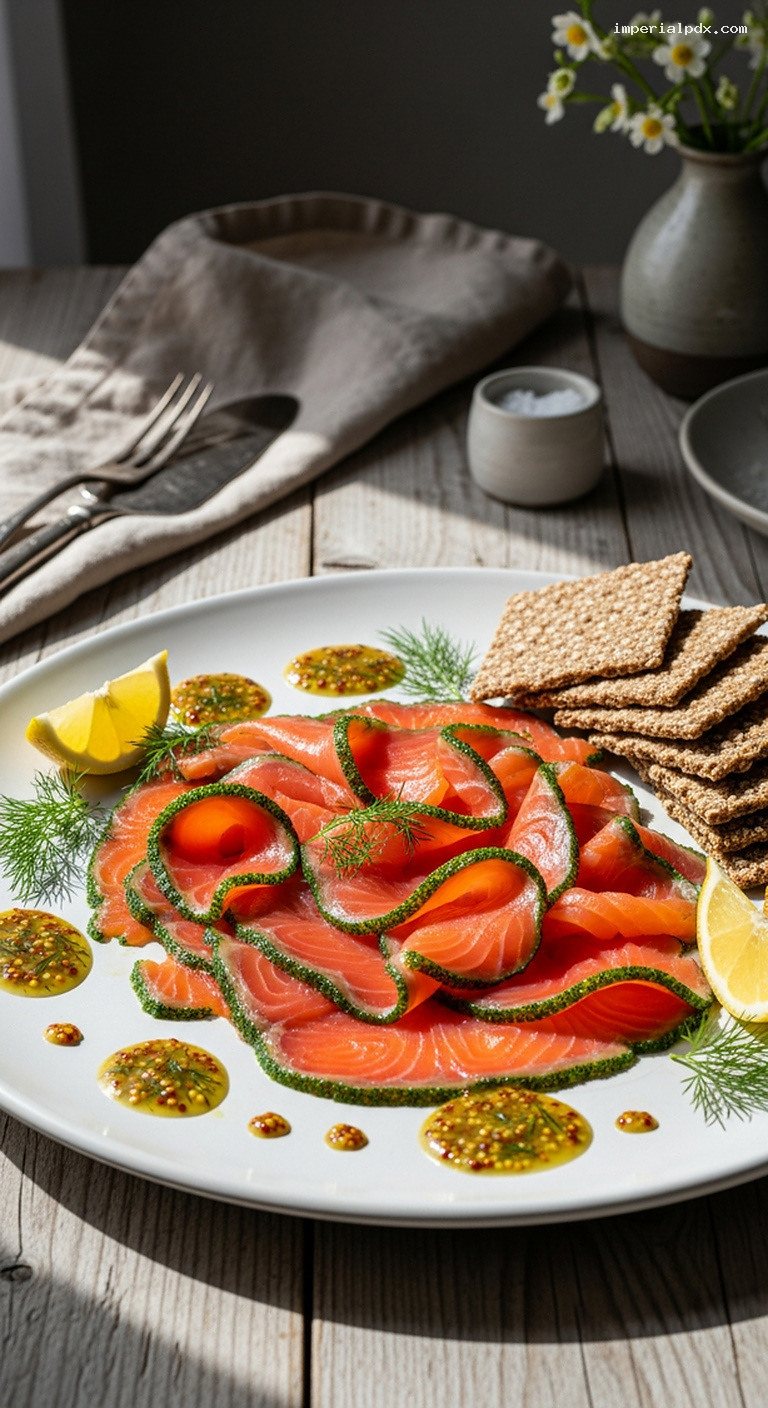
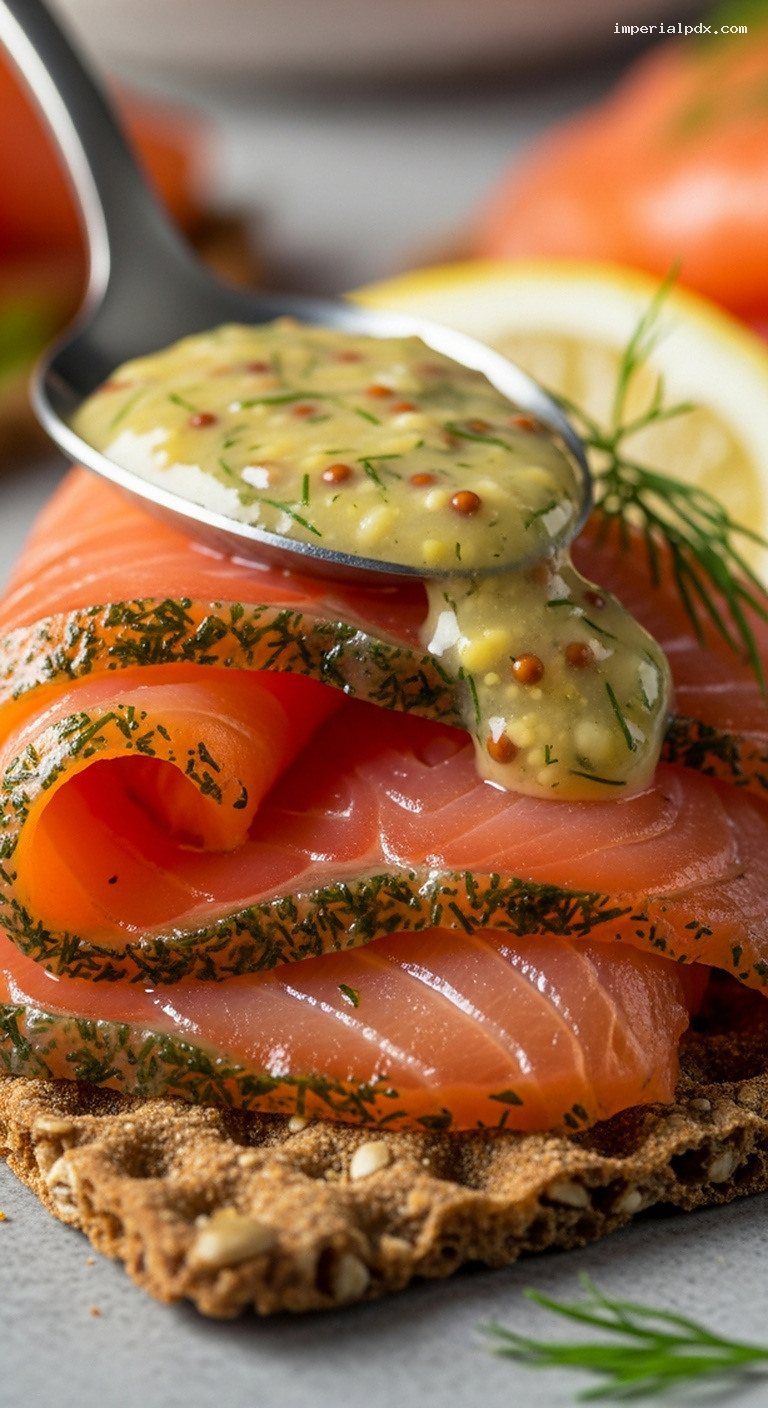
Arrange the slices in loose folds on a platter. Garnish with extra dill sprigs and lemon wedges. Serve with rye crispbreads or thinly sliced dark rye bread, and a bowl of the mustard-dill sauce on the side. Let everyone assemble their own bites: a crispbread topped with a ribbon of gravlax, a spoonful of sauce, and a squeeze of lemon.
Pro Tips
- Choose good salmon: Use the freshest, best-quality salmon you can find, preferably sushi-grade or from a trusted fishmonger. Mild-smelling, firm flesh and vibrant color are key.
- Salt type matters: This recipe is written for coarse kosher salt. If you only have fine sea salt or table salt, reduce the amount by about one-third to avoid an overly salty cure.
- Control the cure time: Shorter curing (around 24 hours) gives a softer, gentler result; longer curing (36–48 hours) makes the fish firmer and saltier. If you are unsure, start tasting a very thin slice around 24–30 hours.
- Slicing technique: A long, sharp slicing or chef’s knife makes a big difference. Use smooth, gentle strokes rather than sawing motions, and take your time for delicate, translucent slices.
- Serve slightly chilled: Gravlax is easiest to slice when cold, but has the best flavor when it has sat at room temperature for 5–10 minutes before serving.
Variations
- Beet-Cured Gravlax: Add 1 medium raw beet, coarsely grated, to the cure mixture and pack it all around the salmon. The beet will stain the outer layer a vivid magenta while adding gentle earthiness.
- Citrus and Herb Cure: Replace the lemon zest with a mix of lemon and orange zest, and add a handful of chopped fresh parsley or tarragon along with the dill for a brighter, more aromatic cure.
- Spicy Gravlax: Add 1–2 tsp crushed red pepper flakes or a teaspoon of freshly ground coriander and fennel seeds to the cure for a subtle, warm heat and extra complexity.
Storage & Make-Ahead
Gravlax is ideal for making ahead. You can keep the salmon in the cure for up to about 48 hours. Once cured, rinsed, and dried, wrap it tightly in plastic wrap and refrigerate for up to 3–4 days. Slice only what you plan to serve and keep the rest wrapped to prevent drying. The mustard-dill sauce can be prepared up to 5–7 days in advance and stored in an airtight container in the refrigerator; whisk briefly before serving if it separates. Leftover sliced gravlax should be refrigerated in a covered container and enjoyed within 2–3 days.
Nutrition (per serving)
Approximate values per appetizer serving (about 2.5–3 oz cured salmon plus some sauce, without bread): 220 calories; 17 g protein; 15 g fat; 3 g carbohydrates; 0 g fiber; 2 g sugar; 650 mg sodium. Values will vary based on curing time, exact salmon fat content, and how much cure is rinsed off.