Quick Recipe Version (TL;DR)
Quick Ingredients
- 150 g (3/4 cup) granulated sugar + 60 ml (1/4 cup) water for caramel
- 1 can (397 g / 14 oz) sweetened condensed milk
- 400 ml (1 3/4 cups) full-fat unsweetened coconut milk, well shaken
- 4 large eggs + 2 large egg yolks (room temperature)
- 50 g (1/2 cup) unsweetened finely shredded or desiccated coconut
- 1 tsp vanilla extract, 1–2 Tbsp dark rum (optional), 1/4 tsp fine salt
- Optional garnish: 2 Tbsp toasted shredded coconut, lime or orange zest
Do This
- 1. Preheat oven to 160°C / 320°F. Set a 20 cm (8 in) round cake pan inside a deep roasting pan for a water bath.
- 2. Make caramel: simmer sugar and water (plus a few drops of lime juice if you like) without stirring until deep amber. Immediately pour into cake pan, tilting to coat the bottom. Let firm up.
- 3. Lightly toast shredded coconut in a dry pan until just golden and fragrant; cool.
- 4. Whisk eggs, yolks, condensed milk, coconut milk, vanilla, rum, salt, and toasted coconut until smooth. Strain if you want an ultra-silky flan.
- 5. Pour custard gently over set caramel. Place roasting pan in oven, then pour in hot tap water until it comes halfway up the sides of the cake pan.
- 6. Bake 45–55 minutes until the edges are set and the center still wobbles slightly. Cool to room temperature, then chill at least 4 hours or overnight.
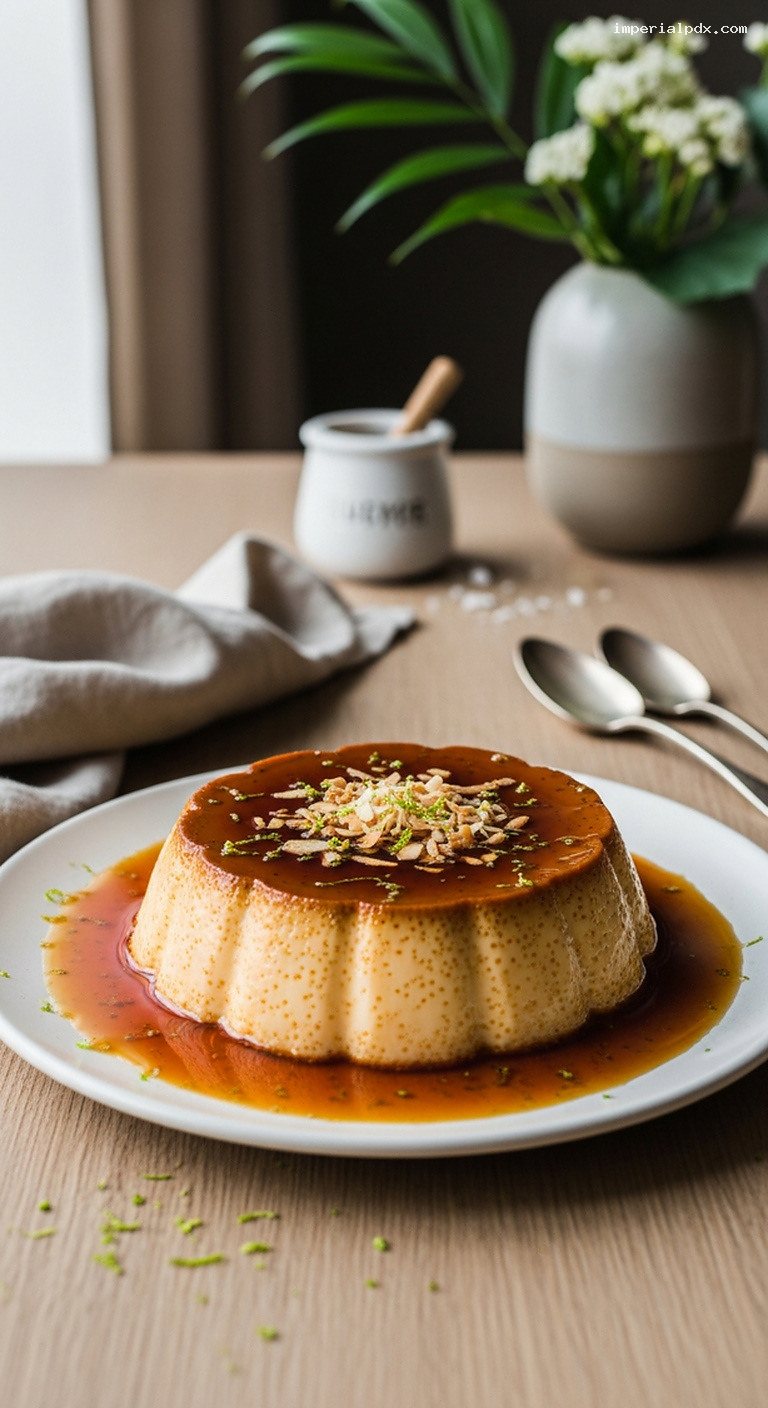
- 7. To unmold, run a thin knife around the edge, warm the bottom briefly in hot water, then invert onto a rimmed serving plate. Garnish and serve cold.
Why You’ll Love This Recipe
- Silky, gently jiggly custard with rich coconut flavor and a glossy caramel sauce.
- Classic French-Caribbean dessert that feels special but uses simple pantry ingredients.
- Perfect make-ahead dessert: it must be chilled, so it is ready and waiting for you.
- Water-bath method and clear cues help you avoid curdled or overbaked flan.
Grocery List
- Produce: 1 lime or orange (for optional zest or garnish)
- Dairy: 1 can sweetened condensed milk, 6 large eggs
- Pantry: Granulated sugar, canned full-fat coconut milk, unsweetened shredded or desiccated coconut, vanilla extract, dark rum (optional), fine sea salt
Full Ingredients
For the caramel
- 150 g granulated sugar (about 3/4 cup)
- 60 ml water (1/4 cup)
- 1 teaspoon fresh lime juice (optional, helps keep the caramel smooth)
For the coconut flan
- 1 can (397 g / 14 oz) sweetened condensed milk
- 400 ml full-fat unsweetened coconut milk, well shaken (about 1 3/4 cups; 1 standard can)
- 4 large eggs, room temperature
- 2 large egg yolks, room temperature
- 50 g unsweetened finely shredded or desiccated coconut (about 1/2 cup, lightly packed)
- 1 teaspoon pure vanilla extract
- 1–2 tablespoons dark rum, preferably agricole or amber (optional but very traditional)
- 1/4 teaspoon fine sea salt
For serving (optional but lovely)
- 2 tablespoons unsweetened shredded coconut, lightly toasted
- Finely grated lime or orange zest, or a few very thin strips/slices for decoration
Step-by-Step Instructions
Step 1: Prepare your pan and oven
Preheat your oven to 160°C / 320°F with a rack in the middle. Choose a 20 cm (8 inch) round metal cake pan or flan dish without a removable bottom, with a capacity of about 1.5 liters / 1.5 quarts. Avoid springform pans, which can leak in the water bath.
Set this cake pan inside a larger deep roasting pan or baking dish that can hold water around it (this is your bain-marie, or water bath). Put a clean kitchen towel on the counter where you will later place the hot caramel pan; it will keep it from sliding.
Step 2: Make the caramel base
In a small, light-colored saucepan, combine the sugar and water, adding the lime juice if using. Set over medium heat and stir gently just until the sugar is mostly dissolved. After that, stop stirring completely to avoid crystallizing the caramel. Let it cook at a lively simmer.
Watch closely as the syrup goes from clear to pale gold to a deep amber color. This usually takes 8–12 minutes, depending on your stove. As it colors, you can gently swirl the pan to even out the browning. When it reaches a rich amber (like dark honey), immediately remove from the heat and carefully pour the caramel into the cake pan. Working quickly, tilt and rotate the pan so the caramel coats the entire bottom in an even layer. Set aside to cool and firm up while you prepare the custard. It will crackle as it cools; that is normal.
Step 3: Toast the coconut (optional but recommended)
Place the shredded coconut for the custard in a small, dry skillet over medium-low heat. Stir frequently for 3–5 minutes, until the coconut turns just lightly golden and smells nutty and fragrant. Keep a close eye on it; it can go from perfect to burned very quickly.
Transfer the toasted coconut to a plate to cool completely. This step deepens the coconut flavor and adds a subtle texture to the flan. If you prefer an absolutely smooth custard, you can skip the coconut in the mixture entirely and simply use toasted coconut as a garnish at the end.
Step 4: Blend the coconut custard
In a large mixing bowl, whisk together the eggs and egg yolks until they are well blended but not frothy. Add the sweetened condensed milk and whisk until smooth and homogeneous. Then whisk in the coconut milk, vanilla extract, rum (if using), and salt until everything is fully combined.
Fold in the cooled toasted coconut. For an exceptionally smooth flan, pour the mixture through a fine-mesh sieve into a large jug, pressing gently on the coconut to extract flavor, then discarding or reserving the solids for garnish. Let the custard sit for a minute, then skim off any large bubbles from the surface with a spoon.
Step 5: Assemble the bain-marie
Make sure the caramel in your cake pan has hardened and is no longer hot enough to melt the custard. Place the roasting pan (with the caramel-lined cake pan inside) on the oven rack, pulled out slightly for easy access. Gently pour the custard over the set caramel in the cake pan. If you still see many bubbles, tap the pan lightly on the counter or in the roasting pan to bring them to the surface.
Carefully pour hot tap water into the roasting pan, around the cake pan, until the water comes about halfway up the sides of the cake pan. This water bath ensures a gently, evenly cooked custard that stays silky instead of curdling. Slide the oven rack back in very gently so you do not splash water into the custard.
Step 6: Bake the flan until just set
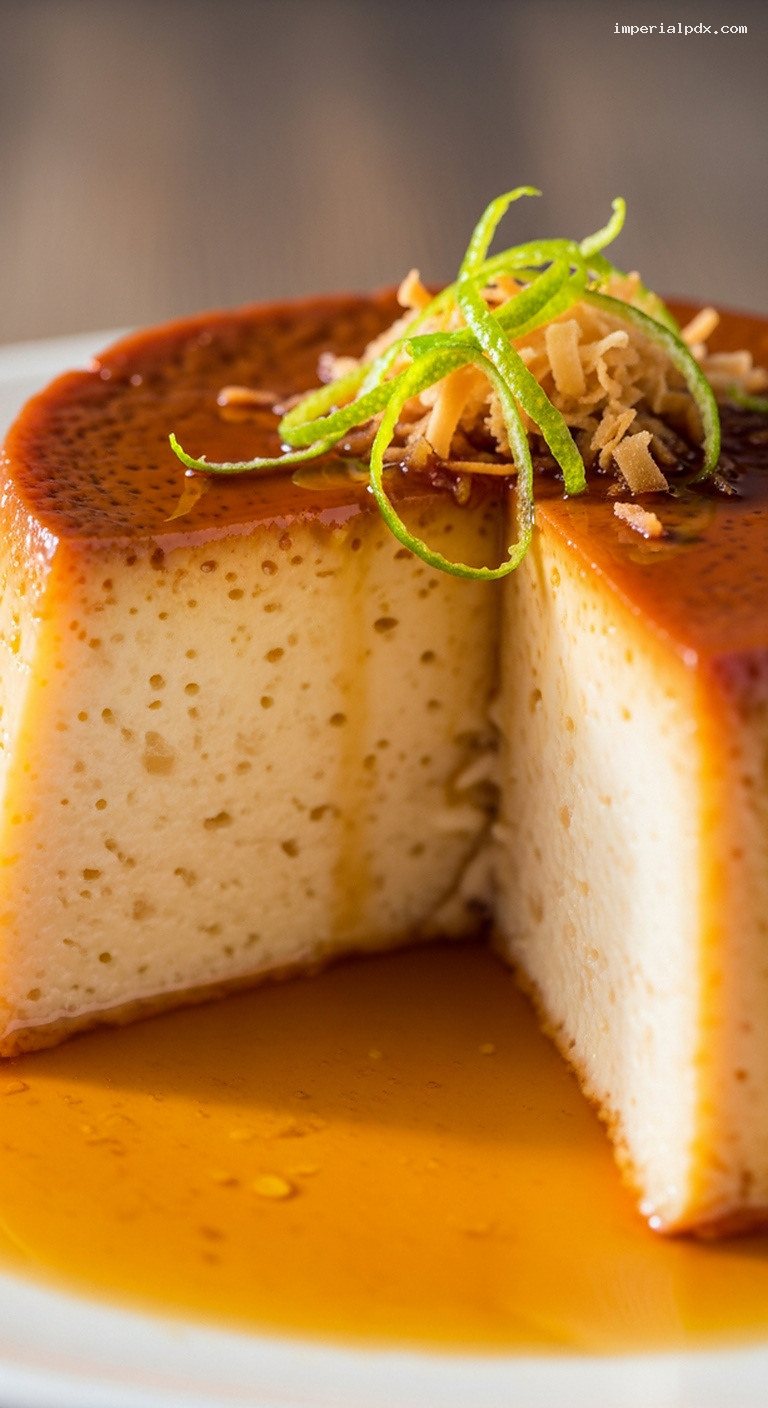
Bake for 45–55 minutes, checking from about 40 minutes onward. The exact time will depend on your oven and the depth of your pan. The flan is done when the edges look set but the center still trembles softly like gelatin when you jiggle the pan gently. If it sloshes like liquid, it needs more time; if it is completely firm, it is overbaked and may be a bit grainy.
Once done, carefully remove the roasting pan from the oven. Use oven mitts to lift the cake pan out of the water and place it on a rack. Let the flan cool to room temperature for 45–60 minutes. Do not try to unmold while warm; it will break apart.
Step 7: Chill, unmold, and serve
When the flan has cooled to room temperature, cover the pan tightly with plastic wrap or foil and refrigerate for at least 4 hours, preferably overnight. Chilling is essential for the custard to fully set and for the flavors to develop.
To unmold, run a thin, flexible knife around the inside edge of the pan to loosen the flan. Fill a larger dish or your sink with a few centimeters of very hot tap water and briefly dip the bottom of the cake pan in it for 10–15 seconds to soften the caramel. Dry the outside of the pan. Place a rimmed serving plate (one that can catch the caramel sauce) upside down over the pan, hold them tightly together, and invert in one confident motion. You should hear the flan release with a soft thud and see the caramel sauce flow over and around it. Garnish with toasted coconut and citrus zest, slice into wedges, and serve well chilled.
Pro Tips
- Do not overcook the caramel: Pull it off the heat as soon as it is a rich amber. If it goes too dark, it will taste bitter once cooled.
- Low and slow is key: The gentle 160°C / 320°F oven plus a water bath prevents the eggs from scrambling and keeps the custard ultra-smooth.
- Strain for silkiness: If you want a perfectly smooth, almost glassy texture, strain the custard through a fine sieve before pouring it into the caramel-lined pan.
- Watch the wobble: Take the flan out of the oven as soon as the center has a soft jiggle. It will continue to set as it cools and chills.
- Chill thoroughly: Flan coco tastes best after an overnight rest in the fridge; the texture becomes creamier and the coconut and caramel flavors meld beautifully.
Variations
- Extra-coconut flan: Leave the toasted coconut in the custard for more texture, and sprinkle additional toasted coconut on top after unmolding for a bolder coconut experience.
- Citrus-kissed flan coco: Add 1–2 teaspoons of finely grated lime or orange zest to the custard mixture and strain before baking. Serve with fresh citrus segments for a bright, tropical twist.
- Spiced Caribbean flan: Add a pinch of ground cinnamon, nutmeg, or allspice (or a mix of all three) to the custard along with the vanilla to echo classic island spice blends.
Storage & Make-Ahead
Flan coco antillais is an excellent make-ahead dessert. Once baked and cooled, keep it covered in the refrigerator, still in its pan, for up to 3 days. The caramel syrup will continue to melt and baste the custard, keeping it moist. You can unmold it up to a few hours before serving; once unmolded, cover lightly and refrigerate until needed. Avoid freezing, as this tends to damage the silky texture and can cause the custard to weep liquid when thawed.
Nutrition (per serving)
Approximate values for 1 of 8 servings: about 420 calories; 9 g protein; 40 g carbohydrates; 24 g fat; 15 g saturated fat; 0.5 g fiber; 125 mg cholesterol; 160 mg sodium. These numbers are estimates and will vary based on the exact ingredients and brands you use.