Quick Recipe Version (TL;DR)
Quick Ingredients
- 1 bone-in lamb shoulder (1.8–2.2 kg / 4–5 lb)
- 3 tsp kosher salt, 1.5 tsp black pepper
- 1 tsp ground cumin, 1 tsp dried thyme or oregano
- 4 garlic cloves, crushed; 2 tbsp olive oil; juice of 1 lemon
- 1 cup (240 ml) water for roasting pan
- 1.5 cups (300 g) long-grain rice; 1/3 cup (60 g) orzo
- 3 tbsp butter; 2 tbsp olive oil; 1 small onion, finely chopped
- 2.5 cups (600 ml) hot chicken or vegetable stock; 1 tsp salt
- 6–8 long green “village” peppers; 1 tbsp olive oil; salt
- Fresh parsley, lemon wedges for serving
Do This
- 1. Rub lamb with salt, pepper, cumin, thyme, garlic, olive oil, and lemon. Marinate at least 30 minutes (up to overnight in the fridge).
- 2. Sear lamb in a heavy pan until browned. Place in a roasting pan with 1 cup water. Cover tightly with foil.
- 3. Roast at 150°C / 300°F for 3.5–4 hours until the meat is very tender and almost falling off the bone.
- 4. Uncover, baste with pan juices, and roast 15–20 minutes more to lightly brown. Rest 20 minutes, then pull meat into large chunks.
- 5. While lamb finishes, toast orzo in butter and oil, add onion, then rice. Stir in hot stock and salt; simmer covered 15 minutes. Rest off heat 10 minutes, then fluff.
- 6. Toss peppers with olive oil and salt. Roast alongside lamb or under a hot grill/broiler until blistered and soft, 10–15 minutes.
- 7. Serve lamb over fluffy pilaf with pan juices spooned on top, roasted peppers on the side, and fresh parsley and lemon wedges.
Why You’ll Love This Recipe
- Classic Turkish-style kuzu tandır: deeply flavored, fall-apart lamb with minimal fuss.
- The oven does almost all the work while you prepare a simple, comforting pilaf.
- Roasted village peppers and lemon cut through the richness for a perfectly balanced plate.
- Great for gatherings: impressive to serve, but surprisingly straightforward for home cooks.
Grocery List
- Produce: 1 small onion, 4 garlic cloves, 6–8 long green peppers (village peppers, Italian frying peppers, or similar), 1 lemon, small bunch fresh flat-leaf parsley
- Dairy: Butter (unsalted preferred)
- Pantry: Bone-in lamb shoulder (4–5 lb), long-grain rice, orzo (or small pasta/vermicelli), olive oil, chicken or vegetable stock, kosher salt, black pepper, ground cumin, dried thyme or oregano, bay leaf (optional for pilaf)
Full Ingredients
For the Slow-Roasted Lamb (Kuzu Tandır)
- 1 bone-in lamb shoulder (1.8–2.2 kg / 4–5 lb), excess surface fat trimmed
- 3 tsp kosher salt (or 2 tsp fine sea salt)
- 1.5 tsp freshly ground black pepper
- 1 tsp ground cumin
- 1 tsp dried thyme or dried oregano
- 4 garlic cloves, crushed to a paste
- 2 tbsp olive oil
- Juice of 1 medium lemon
- 1 cup (240 ml) water (for the roasting pan)
For the Fluffy Pilaf
- 1.5 cups (300 g) long-grain rice (Turkish baldo, jasmine, or basmati), rinsed until water runs mostly clear
- 1/3 cup (60 g) orzo pasta (or broken vermicelli noodles)
- 3 tbsp unsalted butter
- 2 tbsp olive oil
- 1 small onion, very finely chopped
- 2.5 cups (600 ml) hot chicken or vegetable stock (or water)
- 1 tsp kosher salt (or to taste; adjust if stock is salty)
- 1/4 tsp freshly ground black pepper
- 1 bay leaf (optional)
For the Roasted Village Peppers
- 6–8 long green “village” peppers (Turkish sivri biber) or Italian frying peppers / Anaheim / similar mild peppers
- 1 tbsp olive oil
- 1/2 tsp kosher salt
To Serve
- Small bunch fresh flat-leaf parsley, roughly chopped
- Extra lemon wedges
- Optional: a pinch of ground sumac or Aleppo pepper flakes for sprinkling
Step-by-Step Instructions
Step 1: Season the Lamb Shoulder
Pat the lamb shoulder dry with paper towels. This helps it brown instead of steam. With a sharp knife, lightly score the fatty side in a crosshatch pattern, cutting just through the fat but not deep into the meat. This allows the seasoning to penetrate and the fat to render more easily.
In a small bowl, mix together the salt, black pepper, ground cumin, dried thyme or oregano, crushed garlic, olive oil, and lemon juice to form a paste. Rub this mixture all over the lamb, making sure to work it into the scored fat and any crevices around the bone.
Place the lamb in a roasting pan or a deep baking dish just large enough to hold it. Cover and let it rest at room temperature for at least 30 minutes while you preheat the oven, or refrigerate for up to 24 hours for deeper flavor. If refrigerating, bring it back to room temperature for about 45–60 minutes before cooking.
Step 2: Sear the Lamb for Deep Flavor
Preheat your oven to 150°C / 300°F with a rack in the lower-middle position.
For best flavor, sear the lamb before roasting. Heat a large, heavy skillet (cast iron or stainless steel) over medium-high heat. When hot, add a thin film of oil (only if your pan is very dry; the lamb has some oil on it already). Sear the lamb, fatty side down first, for 3–4 minutes until well browned, then sear the other sides for 2–3 minutes each. Use tongs to rotate the shoulder carefully.
Return the lamb to the roasting pan (fatty side up). Pour 1 cup (240 ml) water into the bottom of the pan, being careful not to wash off the seasoning. This liquid will keep the meat moist and become the base of your pan juices.
Cover the roasting pan very tightly with a double layer of foil or a snug-fitting lid. You want to trap the steam so the lamb becomes meltingly tender.
Step 3: Slow-Roast Until Fall-Apart Tender
Place the covered lamb in the preheated 150°C / 300°F oven. Roast for 3.5–4 hours, or until the meat is extremely tender and almost falling off the bone. If you have a meat thermometer, the internal temperature in the thickest part will be around 93°C / 200°F when it is truly pull-apart soft.
After about 2 hours, quickly peek under the foil to check the liquid level. If the pan looks dry, add another 1/4–1/2 cup hot water, then reseal tightly and continue roasting. Try to open the oven and pan as little as possible to maintain steady, gentle heat and moisture.
Once the lamb is very tender, remove the foil, baste the top with some of the pan juices, and return to the oven, uncovered, for 15–20 minutes to lightly caramelize and deepen the color. Watch that the juices in the pan do not burn; add a splash of water if needed.
Step 4: Rest, Pull, and Finish the Lamb
Transfer the lamb to a large platter or cutting board. Tent loosely with foil and let it rest for at least 20 minutes. Resting allows the juices to redistribute and makes the meat easier to pull.
Meanwhile, tilt the roasting pan and spoon off excess fat from the surface of the juices. You want a glossy, savory sauce, not a thick layer of oil. Taste the juices and adjust seasoning with a little salt or lemon juice if needed.
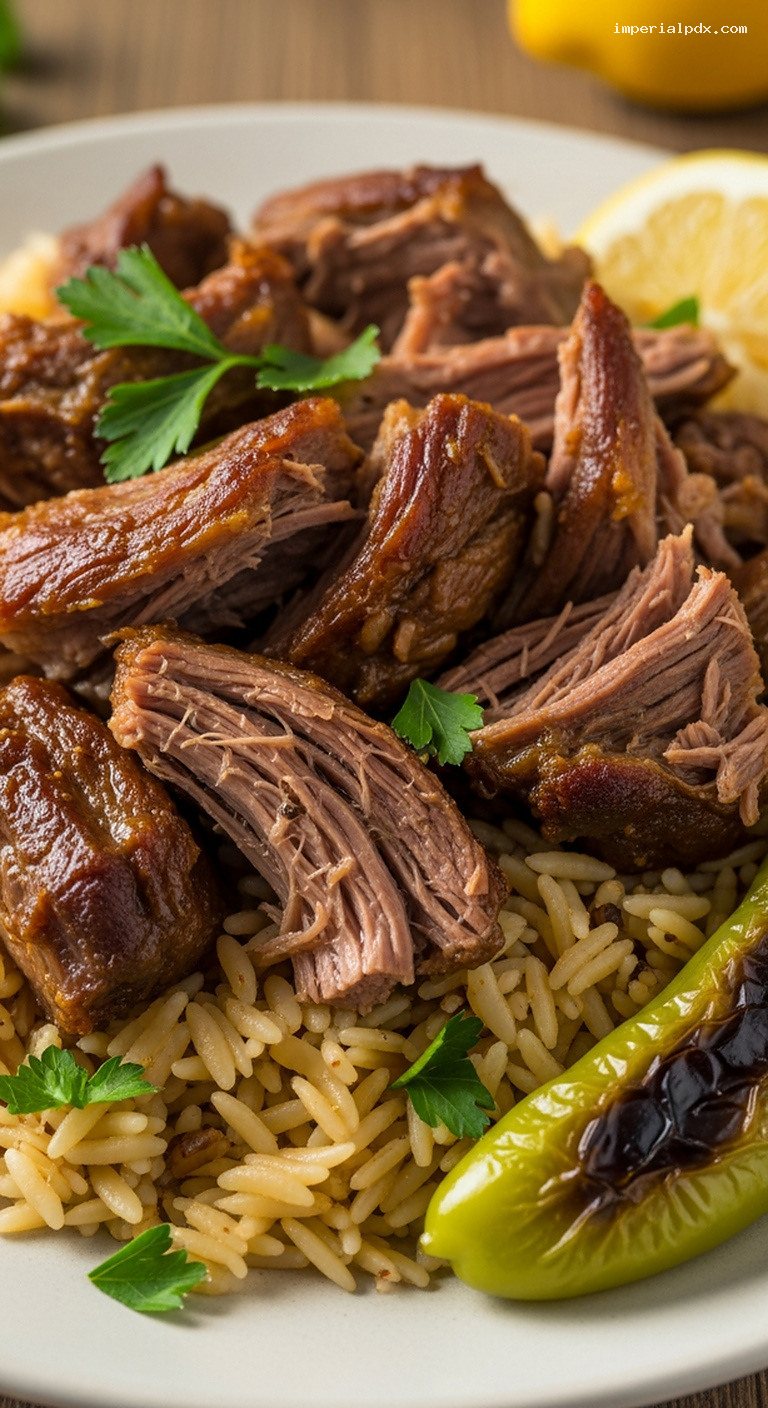
Using two forks or clean hands, gently pull the lamb into large, rustic chunks. Discard any large pieces of fat, sinew, or bone. Lightly drizzle some of the warm pan juices over the meat to keep it moist and flavorful. Cover loosely to keep warm while you prepare the pilaf and peppers. If necessary, you can keep the lamb in a low oven (100°C / 210°F) for up to 30–40 minutes.
Step 5: Cook the Fluffy Pilaf
While the lamb finishes roasting (or during its resting time), prepare the pilaf. Rinse the rice in several changes of cold water until it runs mostly clear, then drain very well. This helps achieve a light, fluffy texture.
In a medium saucepan with a tight-fitting lid, heat the butter and olive oil over medium heat. Add the orzo and cook, stirring often, for 3–4 minutes until it turns golden brown and smells nutty. Keep an eye on it so it does not burn.
Add the finely chopped onion and cook for 3–4 minutes more, stirring, until the onion is soft and translucent. Stir in the drained rice, salt, pepper, and bay leaf (if using). Toast the rice for 1–2 minutes, coating every grain with the buttery oil.
Pour in the hot stock, stir once to distribute, and bring to a gentle simmer. Reduce the heat to low, cover tightly, and cook without lifting the lid for 15 minutes. After 15 minutes, turn off the heat and let the pilaf sit, still covered, for another 10 minutes to steam.
Remove the lid, discard the bay leaf, and gently fluff the pilaf with a fork, separating the grains without mashing them.
Step 6: Roast the Village Peppers
While the pilaf cooks or steams, roast the peppers. Increase the oven temperature to 200°C / 400°F (or switch on the grill/broiler to high).
Rinse and dry the peppers. Leave them whole with stems on; this makes them easy to serve and eat. Place them on a baking tray, drizzle with 1 tbsp olive oil, and sprinkle with 1/2 tsp salt. Toss to coat evenly and spread in a single layer.
Roast in the hot oven for 10–15 minutes, turning once or twice, until the skins are blistered and lightly charred in spots and the peppers are tender. Under a grill/broiler, this may take slightly less time—watch closely so they do not burn completely.
Transfer the roasted peppers to a plate. They can be served hot or warm; their sweetness and gentle smokiness are wonderful alongside the rich lamb.
Step 7: Plate and Serve Your Kuzu Tandır Feast
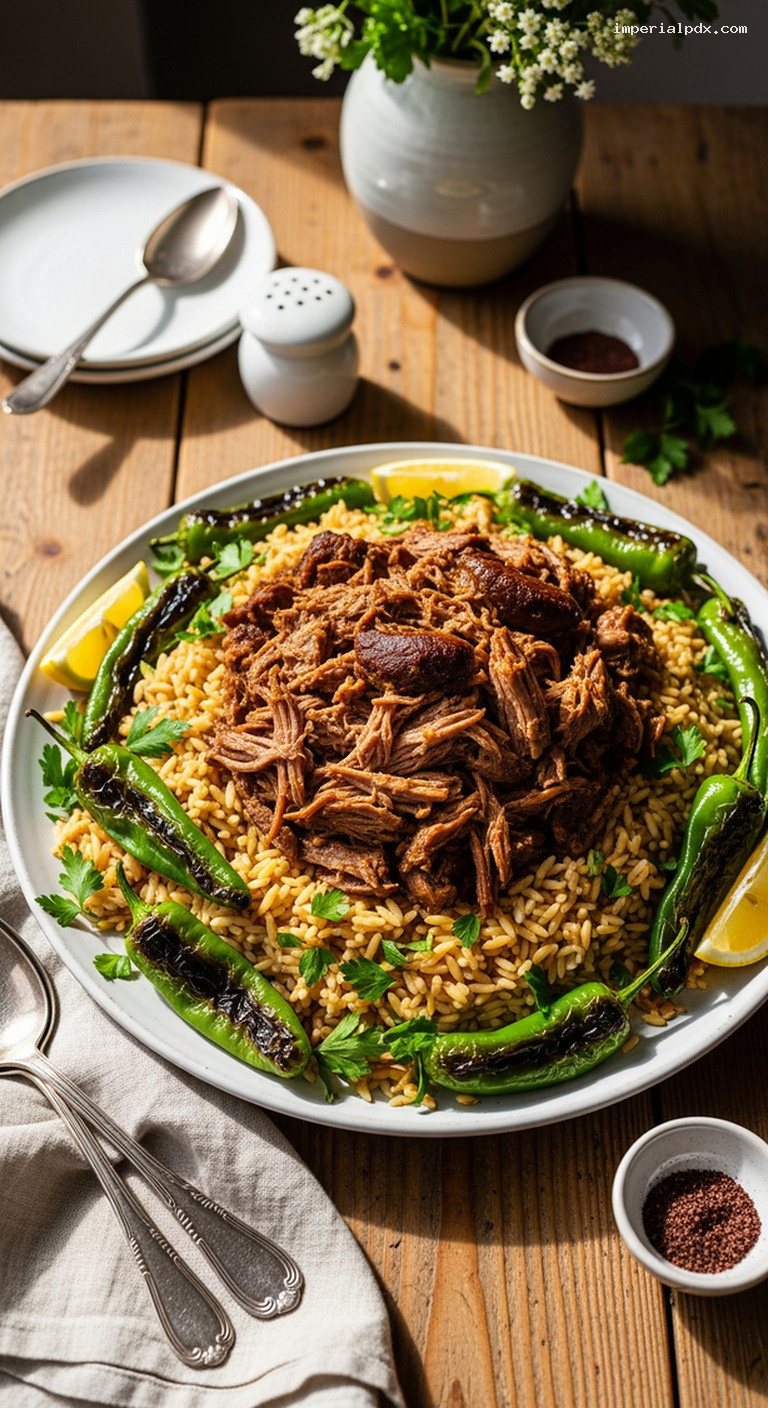
To serve, spoon a generous bed of fluffy pilaf onto each plate or onto a large shared platter. Pile the pulled lamb shoulder on top, letting some of the juices drip down into the rice.
Spoon some of the reserved warm pan juices over the lamb and pilaf. Arrange the roasted village peppers around the edges. Scatter chopped fresh parsley over the top for brightness and color, and add lemon wedges on the side for squeezing.
If you like, finish with a light sprinkling of ground sumac or Aleppo pepper flakes for a gentle tang and warmth. Serve immediately while everything is hot and aromatic.
Pro Tips
- Season ahead for deeper flavor: If you can, season the lamb shoulder the day before and refrigerate it uncovered or loosely covered. This dry brine helps the meat stay juicy and enhances flavor.
- Low and slow is non-negotiable: Do not be tempted to rush the roasting time. True kuzu tandır tenderness comes from gentle heat over several hours.
- Do not stir the rice while cooking: Once you add the stock and cover the pan, leave the pilaf alone. Lifting the lid or stirring can make it sticky instead of fluffy.
- Use the pan juices wisely: Skim off excess fat, but keep the flavorful juices. They are liquid gold for spooning over the lamb and pilaf.
- Adjust for your oven: Every oven runs a bit differently. If the lamb seems to be browning too quickly, reduce the temperature slightly or add a splash more water to the pan.
Variations
- Spicier Anatolian style: Add 1 tsp sweet paprika and 1/2 tsp Aleppo pepper or mild chili flakes to the lamb rub for a gentle heat and deeper color.
- Vegetable-packed pan roast: During the last 1.5 hours of lamb roasting, add chunks of onion, carrot, and potato around the shoulder to roast in the juices.
- Slow-cooker option: Sear the lamb as directed, then cook in a slow cooker on low for 8–9 hours with the water. Finish uncovered under a hot grill/broiler for 5–8 minutes to brown the top.
Storage & Make-Ahead
Leftover lamb, pilaf, and peppers all keep well and make excellent next-day meals. Cool everything to room temperature, then refrigerate in airtight containers for up to 3–4 days. For longer storage, freeze the lamb (with a little pan juice to keep it moist) for up to 3 months; thaw overnight in the refrigerator before reheating.
Reheat the lamb gently in a covered dish in a 160°C / 325°F oven with a splash of water or stock until hot and tender, about 15–20 minutes. The pilaf can be reheated on the stovetop with a tablespoon or two of water, covered, over low heat; fluff again before serving. Roasted peppers reheat quickly in a hot pan or under a grill/broiler for a few minutes.
You can also fully cook the lamb a day ahead, shred it, and store it in its juices. Reheat covered in the oven just before serving, then cook fresh pilaf and peppers on the day for the best texture.
Nutrition (per serving)
Approximate values for 1 of 6 servings (lamb, a portion of pilaf, and peppers): about 850–900 calories; 50–55 g protein; 50–60 g total fat; 40–50 g carbohydrates; 2–3 g fiber; 170–220 mg cholesterol; 900–1100 mg sodium (will vary depending on exact salt use and stock brand). These figures are estimates and should be used as a rough guide only.