Quick Recipe Version (TL;DR)
Quick Ingredients
- 4 medium leeks (about 750 g), white and light green parts only
- 2 medium carrots, peeled and sliced
- 1 small yellow onion, finely chopped
- 1/4 cup (60 ml) extra-virgin olive oil, plus 2–3 tbsp to finish
- 1/4 cup (about 45 g) long-grain rice, rinsed
- 1 1/2 cups (360 ml) water
- Juice of 1 large lemon (about 3 tbsp), plus wedges to serve
- 1 1/2 tsp fine sea salt, or to taste
- 1/2 tsp sugar
- Freshly ground black pepper (optional)
- 2 tbsp chopped fresh dill or flat-leaf parsley
Do This
- 1. Clean leeks thoroughly: trim dark greens and roots, slice into 1.5–2 cm pieces, and rinse well to remove grit.
- 2. In a wide pot, warm 1/4 cup olive oil over medium heat. Soften onion with a pinch of salt for 4–5 minutes, without browning.
- 3. Add sliced carrots and cook 3–4 minutes. Stir in leeks, salt, sugar, and pepper. Cover and let them wilt for about 5 minutes.
- 4. Add rinsed rice, 1 1/2 cups water, and about half the lemon juice. Bring to a gentle simmer.
- 5. Cover, reduce heat to low, and cook 20–25 minutes, until leeks are very tender and rice is cooked, adding a splash of hot water if needed.
- 6. Taste and adjust salt and lemon. Let cool in the pot until just warm; the leeks will soak up the flavorful olive-oil broth.
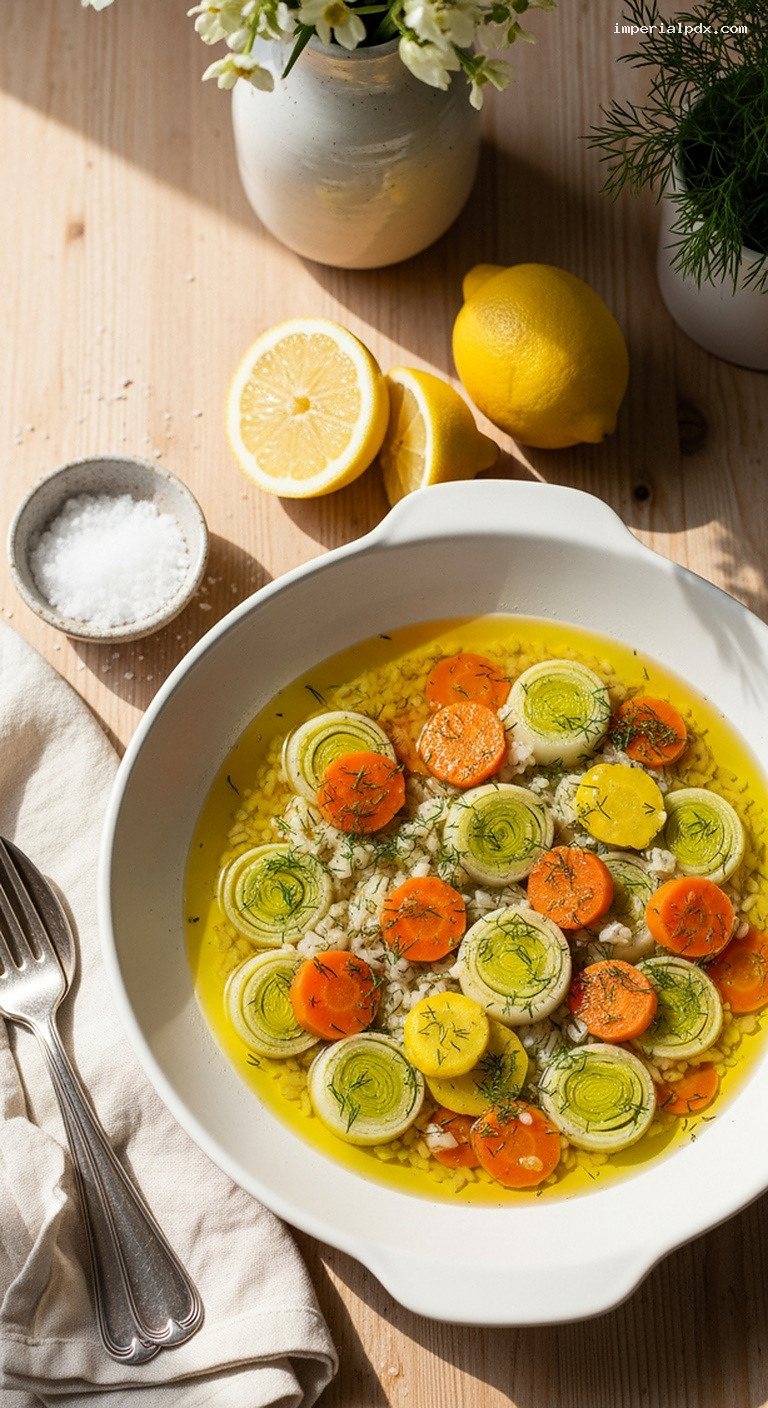
- 7. Transfer to a shallow dish, drizzle with extra olive oil, sprinkle with dill or parsley, and chill or serve at cool room temperature with lemon wedges.
Why You’ll Love This Recipe
- A classic Turkish zeytinyağlı: light, lemony, and served cool, perfect for warm days or as a refreshing starter.
- Simple pantry ingredients transform into a silky, aromatic dish with almost no hands-on work.
- Vegan, naturally dairy-free (unless you add yogurt on the side), and packed with vegetables and olive oil.
- Tastes even better the next day, making it ideal for make-ahead meals, mezze spreads, or lunch boxes.
Grocery List
- Produce: Leeks, carrots, yellow onion, lemons, fresh dill or flat-leaf parsley.
- Dairy: Plain thick yogurt for serving (optional).
- Pantry: Extra-virgin olive oil, long-grain rice, fine sea salt, sugar, black pepper (optional).
Full Ingredients
For the olive-oil braised leeks
- 4 medium leeks (about 750 g), white and light green parts only
- 2 medium carrots, peeled and sliced into 0.5 cm thick coins (slightly on the diagonal)
- 1 small yellow onion, finely chopped
- 1/4 cup (60 ml) extra-virgin olive oil
- 1/4 cup (about 45 g) uncooked long-grain rice, rinsed until the water runs mostly clear
- 1 1/2 cups (360 ml) water, plus a little more as needed
- Juice of 1 large lemon (about 3 tbsp), divided (about half for cooking, half for finishing and serving)
- 1 1/2 tsp fine sea salt, plus more to taste
- 1/2 tsp sugar (traditional in zeytinyağlı dishes to balance the acidity)
- 1/4 tsp freshly ground black pepper (optional, some traditional versions omit it)
- Optional: finely grated zest of 1/2 lemon for a brighter citrus aroma
To finish and serve
- 2–3 tbsp extra-virgin olive oil, for drizzling over the cooled dish
- 2 tbsp finely chopped fresh dill or flat-leaf parsley
- Lemon wedges, to squeeze over at the table
- Plain thick yogurt, for serving on the side (optional but lovely)
Step-by-Step Instructions
Step 1: Prep and clean the leeks thoroughly
Trim off the dark green tops of the leeks (save them for stock if you like) and the root ends. Slice the remaining white and light green parts into 1.5–2 cm thick rounds on a slight diagonal. Leeks tend to trap soil between their layers, so place the slices in a large bowl of cold water. Swish them around with your hands to dislodge any grit, then lift the leeks out into a colander, leaving the dirt at the bottom of the bowl. Rinse again if needed and drain well.
Step 2: Prepare the other vegetables and rice
Peel the carrots and slice them into 0.5 cm thick coins, cutting on a diagonal for a more elegant look. Finely chop the onion. Place the rice in a fine-mesh strainer and rinse it under cold running water until the water runs mostly clear; this helps keep the grains separate and prevents the dish from becoming overly starchy. Let the rice drain while you start cooking.
Step 3: Gently soften the onion and carrots in olive oil
Choose a wide, shallow pot or sauté pan with a lid; the leeks cook more evenly when they are not piled too high. Add 1/4 cup (60 ml) olive oil to the pot and warm over medium heat. Add the chopped onion with a small pinch of salt and cook, stirring often, for 4–5 minutes until translucent and sweet but not browned. Lower the heat slightly if needed to keep the color pale. Add the sliced carrots and cook for another 3–4 minutes, stirring occasionally, until they just begin to soften at the edges.
Step 4: Add leeks and seasonings and let them wilt
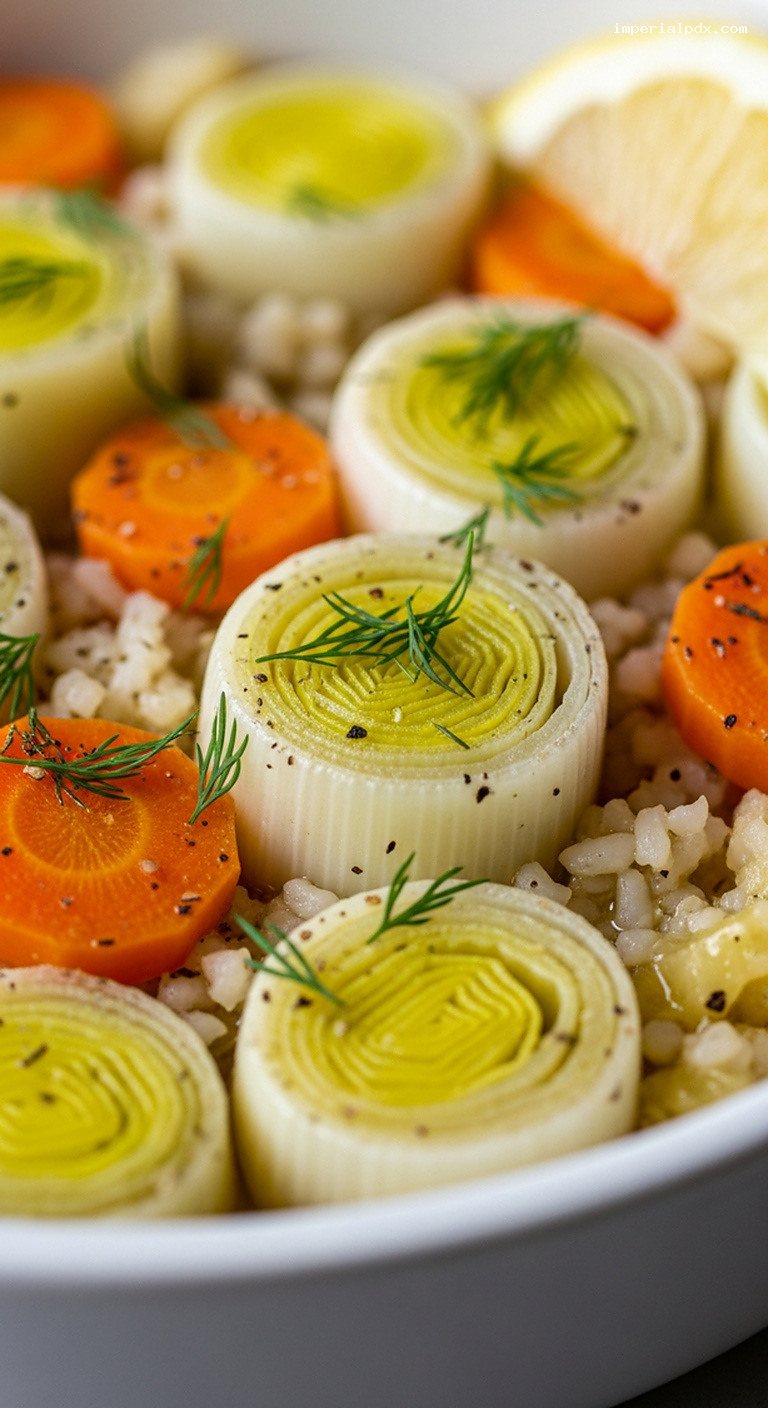
Add the drained leek slices to the pot. Sprinkle over the 1 1/2 tsp salt, the 1/2 tsp sugar, and the black pepper if using. If you are using lemon zest, add it now as well. Gently toss or fold the vegetables together so everything is coated in the seasoned olive oil, taking care not to break up the leeks too much. Cover the pot and cook over medium-low heat for about 5 minutes. The leeks should begin to soften and turn glossy, releasing some of their own moisture.
Step 5: Add rice, water, and lemon; then braise gently
Stir in the rinsed and drained rice, distributing it evenly among the vegetables. Pour in 1 1/2 cups (360 ml) water and about half of the lemon juice (roughly 1 1/2 tbsp). The liquid should come just about level with the vegetables; if your pot is very wide and things look a bit dry, add another 2–3 tbsp water. Increase the heat to bring the mixture to a gentle simmer, then immediately reduce the heat to low, cover tightly, and cook for 20–25 minutes. Try to maintain a very soft simmer, not a full boil, so the leeks stay tender and silky rather than falling apart.
Step 6: Check texture, adjust seasoning, and cool in the pot
After about 15 minutes, briefly lift the lid and check the liquid level. If the pot looks dry or the rice is not yet tender, add 2–4 tbsp hot water, cover again, and continue to cook. When the rice is cooked and the leeks and carrots are very tender, remove the pot from the heat. The braising liquid should be lightly thickened and glossy, just covering the vegetables; if it seems watery, simmer uncovered for a few minutes more over low heat. Taste and adjust: add more salt, a pinch more sugar, and some or all of the remaining lemon juice until the flavors are balanced—softly sweet from the leeks and carrots, bright from the lemon, and rounded by the olive oil. Let the dish cool in the pot, uncovered, until just warm, about 20–30 minutes. During this time the leeks will absorb more of the seasoned oil and broth.
Step 7: Transfer, garnish, chill, and serve
Once the leeks have cooled to warm or room temperature, gently transfer everything to a shallow serving dish, trying to keep the leek slices as intact as possible. Pour all of the remaining cooking liquid over the top; it is full of flavor and should lightly coat the vegetables. Drizzle with 2–3 tbsp extra-virgin olive oil for a rich, fruity finish, and sprinkle evenly with the chopped dill or parsley. If you have time, cover and chill the dish for at least 1 hour or up to overnight; zeytinyağlı dishes are traditionally served cool or at room temperature, and the flavors deepen as they rest. Before serving, let the dish sit at room temperature for 20–30 minutes, then offer lemon wedges and, if you like, a bowl of thick plain yogurt on the side. Serve as a light main with bread, or as part of a mezze spread.
Pro Tips
- Use a wide pot: A broad, shallow pan allows the leeks to cook in a more or less single layer, giving them a silky texture and helping the rice cook evenly.
- Do not brown the vegetables: Keep the heat moderate so the onion and leeks stay pale. Traditional zeytinyağlı dishes have a gentle, clean flavor and light color.
- Clean the leeks well: Grit between the layers can ruin the dish. Soaking and swishing in a bowl of water is more effective than rinsing under the tap.
- Balance the flavors: The small amount of sugar is not for sweetness, but to round out the lemon’s acidity. Adjust salt, lemon, and sugar at the end until it tastes lively but not sharp.
- Serve cool, not cold from the fridge: The olive oil firms up when very cold. Let the dish warm slightly so the oil becomes silky and the flavors open up.
Variations
- Orange-scented pırasa (portakallı pırasa): Replace 1/2 cup (120 ml) of the water with freshly squeezed orange juice. Use a bit less sugar, and finish with both lemon and orange zest for a fragrant, slightly sweeter version.
- With celery root: Add 1 small celery root (celeriac), peeled and cut into 1.5 cm cubes, along with the carrots. Increase water by 1/4 cup (60 ml) and add an extra pinch of salt.
- Without rice, or with bulgur: For a lighter, more vegetable-forward dish, simply omit the rice and reduce the water to about 1 cup (240 ml). Or substitute the rice with 3 tbsp fine bulgur, added at the same stage; it will gently swell in the braising liquid.
Storage & Make-Ahead
Let the pırasa yemeği cool completely, then transfer it (with all of its flavorful oil and juices) to an airtight container. Refrigerate for up to 3 days. The dish actually improves as it rests, making it ideal for preparing a day in advance. To serve, remove from the refrigerator 20–30 minutes ahead so it can lose its chill and the olive oil can soften. Give it a gentle stir, adjust lemon and salt if needed, and garnish with a little fresh dill or parsley. Freezing is not recommended, as the leeks and rice can turn mushy and the texture of the olive oil can suffer.
Nutrition (per serving)
Approximate values for 1 of 4 servings: about 230 calories; 4 g protein; 26 g carbohydrates; 13 g fat (mostly from heart-healthy olive oil); 3 g fiber; 450 mg sodium (will vary with salt used); plus vitamin A from the carrots and vitamin K from the leeks and herbs. Serving with yogurt will add additional protein and calcium.