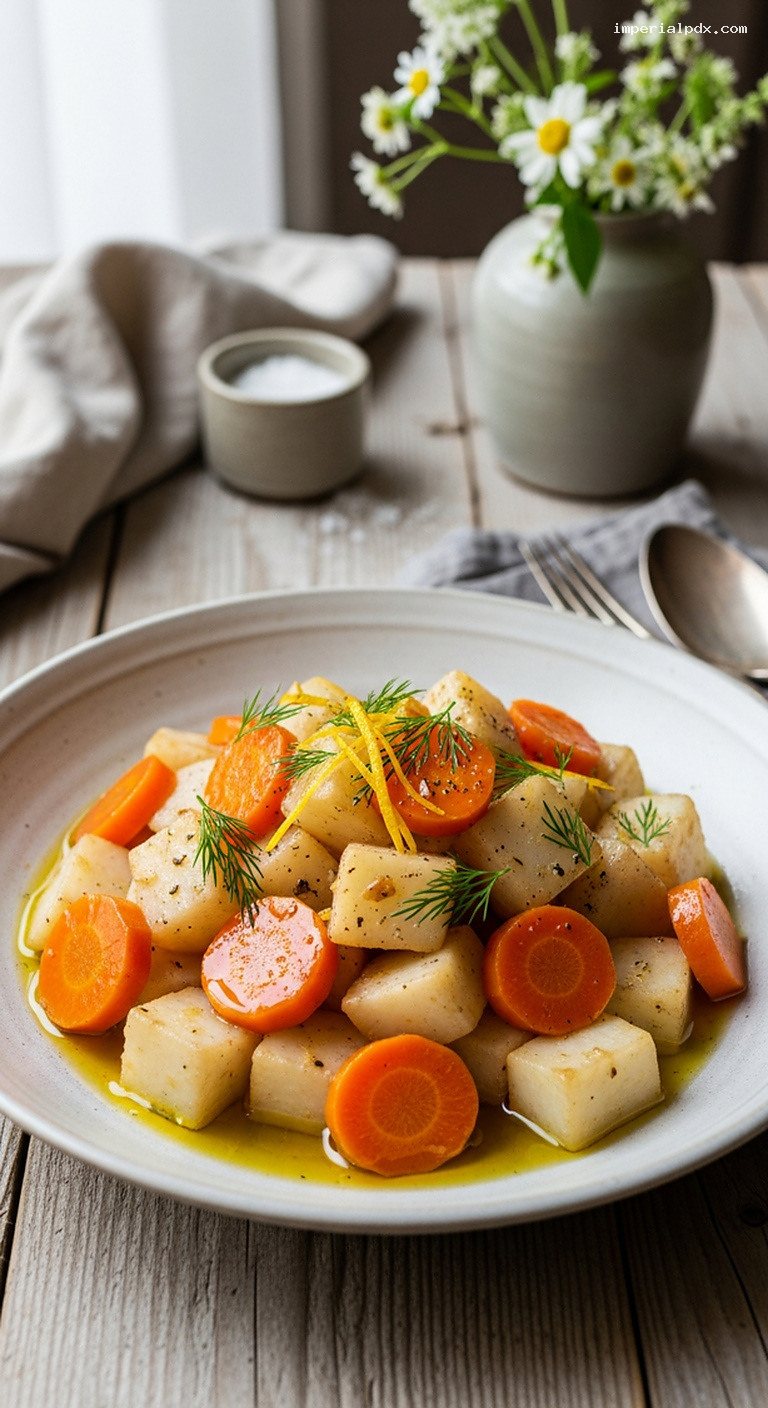
Quick Recipe Version (TL;DR)
Quick Ingredients
- 1 large celery root (750–800 g), peeled and cut into 2 cm cubes
- 2 lemons (juice divided; 1 for soaking water, 1 for braise)
- 1 medium orange (zest and juice)
- 1 medium onion, thinly sliced
- 1 medium carrot, sliced into rounds
- 3 tbsp extra-virgin olive oil, plus more to finish
- 2 tbsp grape molasses (üzüm pekmezi)
- 1 cup water or vegetable broth
- 1 bay leaf
- 1¼ tsp fine sea salt (plus more to taste)
- ¼ tsp freshly ground black pepper
- 2 tbsp chopped fresh dill or parsley, for serving
Do This
- 1. Fill a large bowl with cold water and the juice of 1 lemon. Peel and cube the celery root, dropping cubes into the lemon water to prevent browning.
- 2. In a wide, heavy pot, gently cook the sliced onion and carrot in 3 tbsp olive oil over medium-low heat for 5–7 minutes until softened but not browned.
- 3. Drain the celery root and add to the pot with salt, pepper, bay leaf, orange zest, grape molasses, and juice of the remaining lemon.
- 4. Pour in orange juice and water/broth. Liquid should come about halfway up the vegetables; add a bit more water if needed. Bring just to a gentle simmer.
- 5. Cover, lower heat, and braise on low for 25–30 minutes, until the celery root is completely tender and the juices are slightly syrupy.
- 6. Remove from heat and let cool to room temperature in the pot. Adjust seasoning, drizzle with extra olive oil, sprinkle with dill or parsley, and serve at room temperature or lightly chilled.
Why You’ll Love This Recipe
- A classic Turkish-style olive oil braise with a twist of grape molasses for deep, rounded sweetness.
- The celery root becomes silky and tender, bathed in a bright citrus-pekmez glaze.
- Serves beautifully as a make-ahead starter, side dish, or part of a meze spread.
- Simple ingredients and gentle cooking: most of the work is just chopping and letting the pot simmer.
Grocery List
- Produce: 1 large celery root, 2 lemons, 1 orange, 1 onion, 1 carrot, fresh dill or parsley.
- Dairy: None.
- Pantry: Extra-virgin olive oil, grape molasses (üzüm pekmezi), bay leaf, fine sea salt, black pepper, water or vegetable broth.
Full Ingredients
Main Braise
- 1 large celery root (about 750–800 g / 1.7 lb), peeled and cut into 2 cm (¾ in) cubes
- 2 lemons
- Juice of 1 lemon for the soaking water
- Juice of 1 lemon for the braise
- 1 medium orange
- Finely grated zest of 1 orange (about 1 tsp, avoid the white pith)
- Freshly squeezed juice of 1 orange (about 60 ml / ¼ cup)
- 1 medium yellow onion, halved and thinly sliced (about 150 g)
- 1 medium carrot, peeled and sliced into 5 mm (¼ in) thick rounds (about 80–100 g)
- 3 tbsp extra-virgin olive oil
- 2 tbsp grape molasses (üzüm pekmezi)
- 1 cup (240 ml) water or unsalted vegetable broth, plus 2–4 tbsp more if needed
- 1 bay leaf
- 1¼ tsp fine sea salt, or to taste
- ¼ tsp freshly ground black pepper
To Finish & Serve
- 1–2 tbsp extra-virgin olive oil, for drizzling
- 2 tbsp finely chopped fresh dill or flat-leaf parsley (or a mix)
- Optional: a few extra thin strips of orange zest or lemon zest for garnish
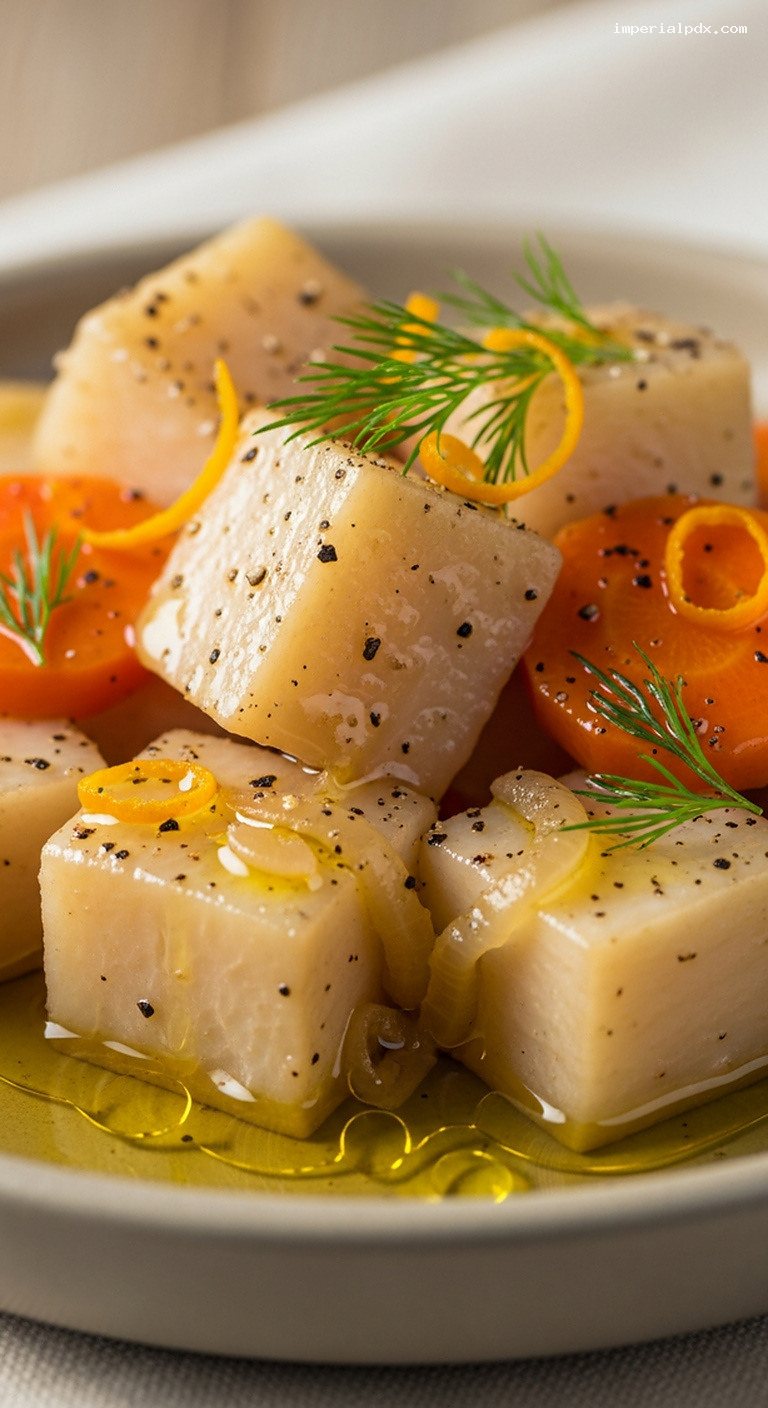
Step-by-Step Instructions
Step 1: Prepare the citrus water and celery root
Fill a large mixing bowl about halfway with cold water. Squeeze in the juice of 1 lemon, dropping the squeezed halves into the bowl as well. This acidulated water will keep the celery root from turning brown. Working one piece at a time, trim the knobbly skin from the celery root with a sharp knife or sturdy peeler, cutting deeply enough to remove all fibrous, brown areas. Rinse briefly if needed, then cut the celery root into even 2 cm (¾ in) cubes. As you cut, immediately transfer the cubes into the lemon water and stir to coat. Set aside while you start the aromatics.
Step 2: Soften the onion and carrot in olive oil
Place a wide, heavy-bottomed pot or shallow Dutch oven over medium-low heat. Add 3 tablespoons of extra-virgin olive oil. When the oil is gently warm but not smoking, add the sliced onion and carrot rounds. Sprinkle with a small pinch of salt to help them soften. Cook, stirring occasionally, for 5–7 minutes until the onions turn translucent and the carrots lose their raw edge. The vegetables should soften without taking on any color; if they start to brown, lower the heat slightly and stir more often.
Step 3: Add celery root and build flavor
Drain the celery root cubes well and shake off excess water. Add them to the pot, spreading them over the onions and carrots. Season with 1¼ teaspoons fine sea salt and ¼ teaspoon freshly ground black pepper. Add the bay leaf, the finely grated orange zest, 2 tablespoons grape molasses, and the juice of the remaining lemon. Gently toss or stir so the celery root is lightly coated in the oil and seasonings, being careful not to smash the cubes. Let everything warm together for about 1 minute to wake up the aromas.
Step 4: Add citrus and liquid for braising
Pour the freshly squeezed orange juice into the pot, then add 1 cup (240 ml) water or vegetable broth. The liquid should come roughly halfway up the vegetables; if your pot is very wide or the level is low, add 2–4 tablespoons more water. Increase the heat to medium and bring the mixture just to a gentle simmer. As soon as small bubbles appear around the edges, give the pot a light swirl to distribute the liquids and aromatics evenly.
Step 5: Braise gently until tender
Once the braising liquid is gently simmering, reduce the heat to low and cover the pot with a tight-fitting lid. Cook for 25–30 minutes, checking occasionally. Every 8–10 minutes, uncover and tilt the pot or gently stir from the edges so the top pieces of celery root get bathed in the liquid. Avoid vigorous stirring so the cubes stay intact. The dish is done when the celery root is completely tender when pierced with the tip of a knife, and the liquid has reduced to a glossy, slightly syrupy sauce. If the pot seems dry before the celery root is tender, add a splash of hot water and continue cooking.
Step 6: Cool in the braising juices
When the celery root is tender and the sauce lightly coats the vegetables, remove the pot from the heat. Taste the braising liquid and adjust with a pinch more salt, pepper, or a drizzle of grape molasses if you like it sweeter. Leave the bay leaf in for now. Let the pekmezli kereviz cool, uncovered, to room temperature right in the pot; this resting time allows the flavors to deepen and the celery root to absorb more of the citrusy, molasses-infused juices. Once cooled, remove and discard the bay leaf.
Step 7: Finish, garnish, and serve
To serve, gently transfer the celery root, carrots, and onions to a shallow serving dish, spooning plenty of the braising juices over the top. Drizzle with 1–2 tablespoons of good extra-virgin olive oil for a silky finish. Sprinkle generously with chopped fresh dill or parsley, and, if you like, garnish with a few thin strips of orange or lemon zest for color and fragrance. This dish is traditionally served at cool room temperature or lightly chilled as part of a vegetable course or meze spread, but you can also enjoy it slightly warm. Offer with crusty bread to mop up the sweet–savory citrus-pekmez sauce.
Pro Tips
- Choose the right pot: A wide, shallow pot or braiser helps the liquid reduce to a glossy glaze and keeps the celery root in a single layer for even cooking.
- Work quickly when peeling: Celery root oxidizes fast. Keep your knife moving and drop each cube straight into the lemon water to keep it creamy white.
- Balance sweetness and acidity: Grape molasses can vary. If your dish tastes too tangy, add an extra 1–2 teaspoons of pekmez. If it tastes too sweet, brighten it with a squeeze of fresh lemon juice.
- Gentle simmer only: A hard boil can break the celery root into mush. Keep the heat low so the surface just shivers with small bubbles.
- Let it rest: Like many olive-oil braised Turkish dishes, this tastes even better after a few hours or the next day as the flavors meld.
Variations
- With chickpeas: Add ½ cup (80 g) cooked chickpeas during the last 10 minutes of braising for extra protein and a heartier dish.
- Orange-forward version: Replace half of the water with additional orange juice, and garnish with extra orange zest for a brighter, fruitier profile.
- Spiced pekmezli kereviz: Add ½ teaspoon ground coriander and a pinch of mild red pepper flakes (such as Aleppo or pul biber) with the salt and pepper for gentle warmth.
Storage & Make-Ahead
Allow the pekmezli kereviz to cool completely in its braising liquid. Transfer to an airtight container, making sure the vegetables are mostly submerged in the sauce to prevent drying out. Store in the refrigerator for up to 3–4 days. This dish is ideal for making ahead: the flavor improves after a night in the fridge. To serve, bring to room temperature for 30–45 minutes, or gently warm over very low heat just until slightly above room temperature (do not boil, to avoid overcooking the celery root). If the sauce has thickened too much in the fridge, stir in 1–2 tablespoons of water to loosen before serving.
Nutrition (per serving)
Approximate values per serving (1 of 4): about 170–190 kcal; 11 g fat (mostly from olive oil); 0 mg cholesterol; 22 g carbohydrates; 3–4 g fiber; 10–12 g natural sugars (from vegetables, citrus, and grape molasses); 2–3 g protein; approximately 350–450 mg sodium, depending on the exact salt used. These numbers are estimates and will vary with brand of grape molasses, broth vs. water, and your final seasoning.