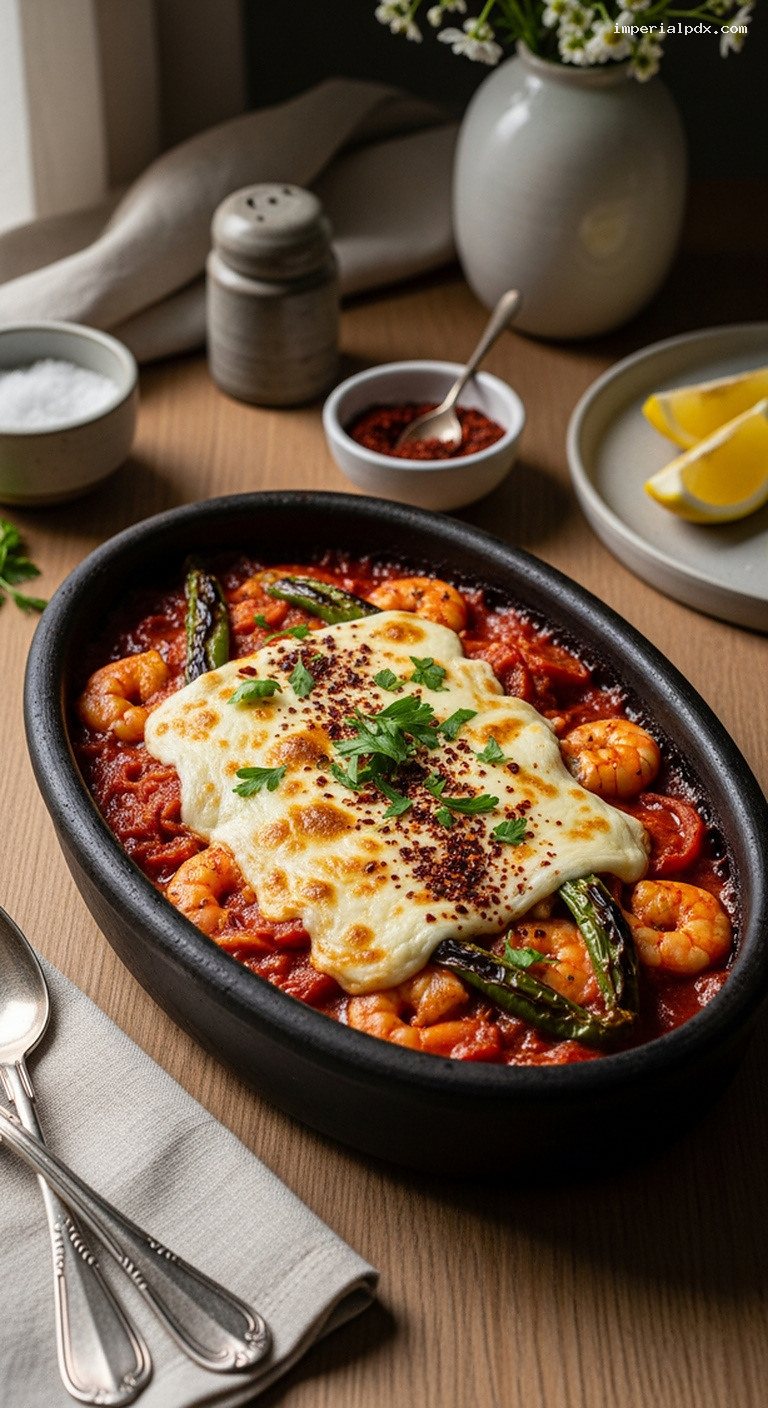
Quick Recipe Version (TL;DR)
Quick Ingredients
- 500 g (1 lb) raw medium shrimp, peeled and deveined
- 2 tbsp olive oil
- 2 tbsp unsalted butter, plus extra for greasing
- 1 small onion, finely chopped
- 2 cloves garlic, finely chopped
- 2 Turkish green peppers or mild green chilies, sliced
- 2 medium ripe tomatoes, grated or finely chopped
- 1 tbsp tomato paste
- 1 tsp sweet paprika
- 1 tsp pul biber (Aleppo or Turkish red pepper flakes), to taste
- 150 g (about 1½ cups) grated kasar cheese or low-moisture mozzarella
- Salt and freshly ground black pepper
- 2 tbsp chopped fresh parsley + lemon wedges for serving
Do This
- 1. Heat oven to 220°C / 425°F. Place 4 small clay güveç dishes or 1 medium baking dish on a tray and lightly butter them.
- 2. Pat shrimp dry and season with salt, pepper, and half the paprika; set aside.
- 3. In a pan, warm olive oil and 1 tbsp butter. Sauté onion and green peppers until softened, about 4–5 minutes.
- 4. Add garlic, tomato paste, remaining paprika, and pul biber; cook 1 minute. Stir in tomatoes, salt, and pepper; simmer 3–4 minutes until slightly thickened.
- 5. Divide the tomato-pepper mixture among dishes, nestle shrimp into the sauce, and dot with remaining butter.
- 6. Top evenly with grated kasar cheese. Bake 10–12 minutes until shrimp are just cooked and cheese is bubbling and lightly golden.
- 7. Sprinkle with parsley, add a final pinch of pul biber if you like heat, and serve sizzling with lemon wedges and crusty bread.
Why You’ll Love This Recipe
- It delivers that classic Turkish restaurant experience at home: bubbling hot, aromatic, and served straight from the clay dish.
- Fast enough for a weeknight but impressive enough for guests as a meze or starter.
- Uses simple, easy-to-find ingredients that transform into a rich, garlicky, cheesy sauce.
- Customizable heat level and cheese choice, so you can make it exactly how you like it.
Grocery List
- Produce: Shrimp, onion, garlic, green peppers, tomatoes, parsley, lemon
- Dairy: Unsalted butter, kasar cheese (or mozzarella / similar melting cheese)
- Pantry: Olive oil, tomato paste, sweet paprika, pul biber (or red pepper flakes), salt, black pepper
Full Ingredients
Shrimp & Sauce Base
- 500 g (1 lb) raw medium shrimp, peeled and deveined, tails on or off
- 2 tbsp olive oil
- 2 tbsp unsalted butter, divided (plus a little extra for greasing dishes)
- 1 small yellow onion, finely chopped (about 75 g / ½ cup)
- 2 Turkish green peppers (sivri biber) or 1 long mild green chili, thinly sliced (seeds removed if you prefer mild)
- 2 large cloves garlic, finely chopped or minced
- 2 medium ripe tomatoes, grated on the large holes of a box grater or finely chopped (about 300 g / 1½ cups)
- 1 tbsp tomato paste
- 1 tsp sweet paprika
- 1 tsp pul biber (Turkish red pepper flakes) or Aleppo pepper, plus more to taste
- ½ tsp fine sea salt, plus more to taste
- ¼ tsp freshly ground black pepper, plus more to taste
Cheese Topping
- 150 g (about 1½ cups loosely packed) grated kasar cheese
- Optional: 30 g (¼ cup) grated kashkaval or low-moisture mozzarella, mixed in for extra stretch
For Serving & Garnish
- 2 tbsp finely chopped fresh flat-leaf parsley
- Lemon wedges, for squeezing over the finished dish
- Extra pul biber or red pepper flakes, to taste
- Crusty bread, pide, or simit, for dipping into the sauce
Step-by-Step Instructions
Step 1: Prep the shrimp and vegetables
Pat the shrimp very dry with paper towels; this helps them sear gently in the hot sauce instead of steaming. Place them in a bowl and season lightly with a pinch of salt, a pinch of black pepper, and about half of the sweet paprika. Toss to coat and set aside while you prepare the base.
Finely chop the onion and garlic. Slice the green peppers thinly on the diagonal. Grate the tomatoes on the large holes of a box grater (discard most of the skin that remains in your hand), or finely chop them if you prefer more texture. Chop the parsley and cut the lemons into wedges so everything is ready to go.
Step 2: Preheat the oven and prepare the dishes
Preheat your oven to 220°C / 425°F. If your oven has a top heating element or broiler, make sure the rack is in the upper-middle position so the cheese can brown nicely at the end.
Place 4 individual clay güveç dishes (or other small ovenproof dishes, 10–12 cm / 4–5 inches wide) on a rimmed baking sheet. If you do not have individual dishes, use one medium oval or round baking dish (about 20–23 cm / 8–9 inches). Lightly grease the insides of the dishes with a little butter to prevent sticking and to add flavor.
Step 3: Cook the tomato-pepper base
In a medium skillet or sauté pan, heat the olive oil and 1 tablespoon of the butter over medium heat. When the butter has melted and is just starting to foam, add the chopped onion and sliced green peppers. Cook, stirring occasionally, until softened and lightly translucent, about 4–5 minutes.
Add the garlic and cook for 30–60 seconds until fragrant but not browned. Stir in the tomato paste, remaining sweet paprika, and pul biber. Cook this mixture for about 1 minute to caramelize the paste slightly; this deepens the flavor.
Pour in the grated or chopped tomatoes, along with ½ teaspoon salt and ¼ teaspoon black pepper. Stir well, bring to a gentle simmer, and cook for 3–4 minutes until the sauce thickens slightly but is still juicy. Taste and adjust seasoning with more salt, pepper, or pul biber as you like. Turn off the heat.
Step 4: Assemble the casserole in the clay dishes
Spoon the hot tomato-pepper mixture evenly into the prepared clay dishes or the single baking dish, spreading it into an even layer. The sauce should come about halfway up the sides of the dish; it will bubble as it bakes.
Nestle the seasoned shrimp into the sauce in a single layer, tucking them in so they are mostly in contact with the tomato mixture. Cut the remaining 1 tablespoon of butter into small pieces and dot them over the top of the shrimp and sauce. This extra butter helps create that classic rich, sizzling effect.
Step 5: Add the cheese topping
Sprinkle the grated kasar cheese evenly over the shrimp and sauce. If you are using a mix of cheeses, toss them together first, then scatter over the top. Try not to pile the cheese too thickly in the center; an even layer melts and browns more attractively.
Leave a small gap (about 0.5 cm / ¼ inch) around the very rim of each clay dish if possible. This lets the sauce bubble up around the edges, giving you those delicious caramelized spots without overflowing too much.
Step 6: Bake until sizzling, bubbly, and golden
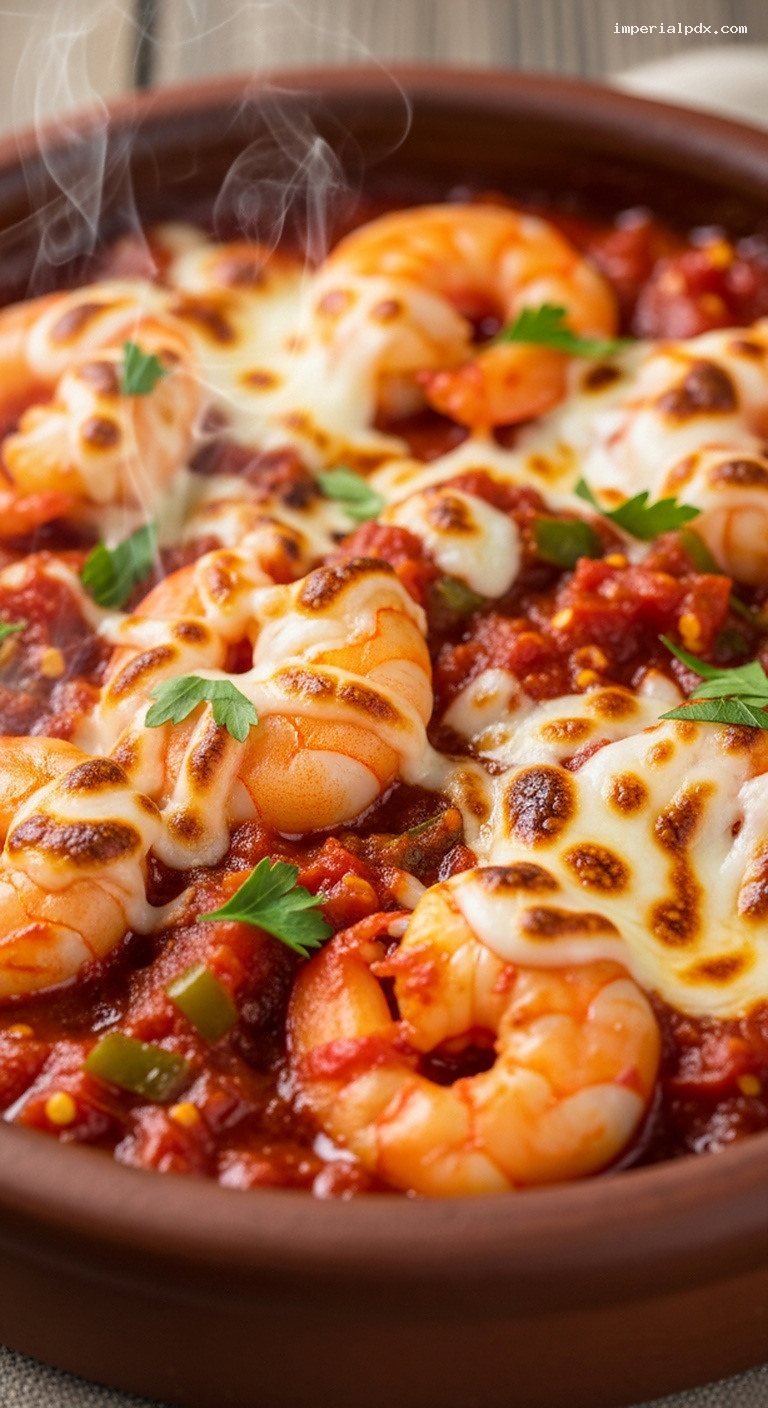
Carefully slide the baking sheet with the dishes into the preheated oven. Bake for 10–12 minutes, or until the shrimp are just cooked through and the cheese is melted, bubbling, and starting to turn golden in spots.
If the cheese is melted but not browned to your liking, switch the oven to broil/grill for 1–2 minutes, watching closely so it does not burn. The sauce should be visibly sizzling around the edges when you remove the dishes. Be very careful: the clay dishes will be extremely hot.
Step 7: Finish with fresh herbs and serve sizzling
Remove the baking sheet from the oven and let the dishes sit for 2–3 minutes; the sauce will still be bubbling and the shrimp will finish cooking gently. Sprinkle each portion with chopped fresh parsley and, if you like extra heat, a light pinch more pul biber.
Serve the karides güveç straight in the clay dishes, set on small plates or wooden boards to protect the table. Add lemon wedges on the side for squeezing over the top. Offer plenty of crusty bread or Turkish pide to scoop up the rich, garlicky, cheesy sauce. Eat while hot and sizzling for the full experience.
Pro Tips
- Do not overcook the shrimp. They cook very quickly in the hot sauce. As soon as they turn pink and opaque all the way through (no grey), they are done.
- Use high heat for a good sizzle. Baking at 220°C / 425°F helps the sauce bubble and the cheese brown before the shrimp overcook.
- Grate your own cheese. Freshly grated kasar or mozzarella melts more smoothly than pre-shredded, which often contains anti-caking agents.
- Keep the sauce slightly thick. If the tomato base is too watery before baking, simmer it a bit longer; a thicker base gives a richer, more concentrated flavor.
- Serve in the dish you bake in. Part of the charm of karides güveç is the sizzling clay dish presentation. Just remind everyone that the dishes are very hot.
Variations
- Spicier version: Add ½–1 tsp extra pul biber to the sauce and a finely chopped hot chili pepper along with the green peppers for more heat.
- Mixed seafood güveç: Replace half the shrimp with small pieces of firm white fish, scallops, or calamari. Keep pieces similar in size so they cook evenly.
- No-oven stovetop version: Prepare the sauce in a small cast-iron or other oven-safe pan, add the shrimp and cheese, cover with a tight lid, and cook over medium-low heat until the shrimp are done and the cheese is melted.
Storage & Make-Ahead
Karides güveç is best eaten fresh, straight from the oven, while the shrimp are tender and the cheese is bubbling. However, you can make parts of it ahead:
Prepare the tomato-pepper base up to 1 day in advance and store it in an airtight container in the refrigerator. When ready to cook, rewarm the sauce slightly on the stove, assemble with the raw shrimp and cheese in the clay dishes, and bake as directed. Avoid pre-cooking the shrimp, as reheating can make them rubbery.
Leftovers (if any) can be cooled completely, transferred to an airtight container, and refrigerated for up to 1 day. Reheat gently in a small covered dish in a 180°C / 350°F oven until just warmed through. The texture of the shrimp will be firmer, but the flavors will still be delicious. Freezing is not recommended, as shrimp and cheese do not thaw and reheat well in this style of dish.
Nutrition (per serving)
Approximate values per serving (1 of 4 servings, without bread): about 350 calories, 26 g protein, 24 g fat, 6 g carbohydrates, 1 g fiber, and 900 mg sodium. Exact values will vary depending on the specific cheese, butter, and salt levels you use.